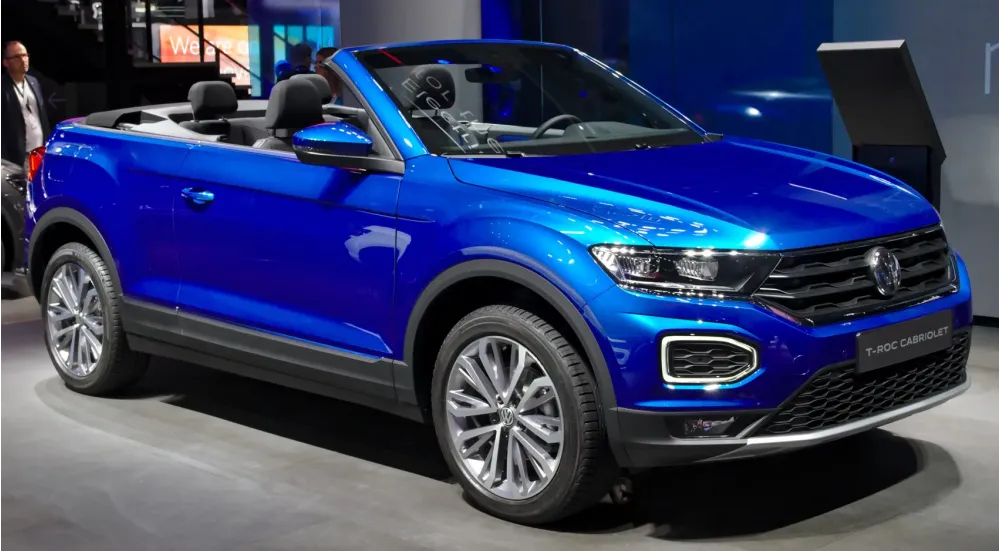
Click on image to view the full photo gallery
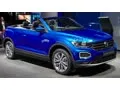
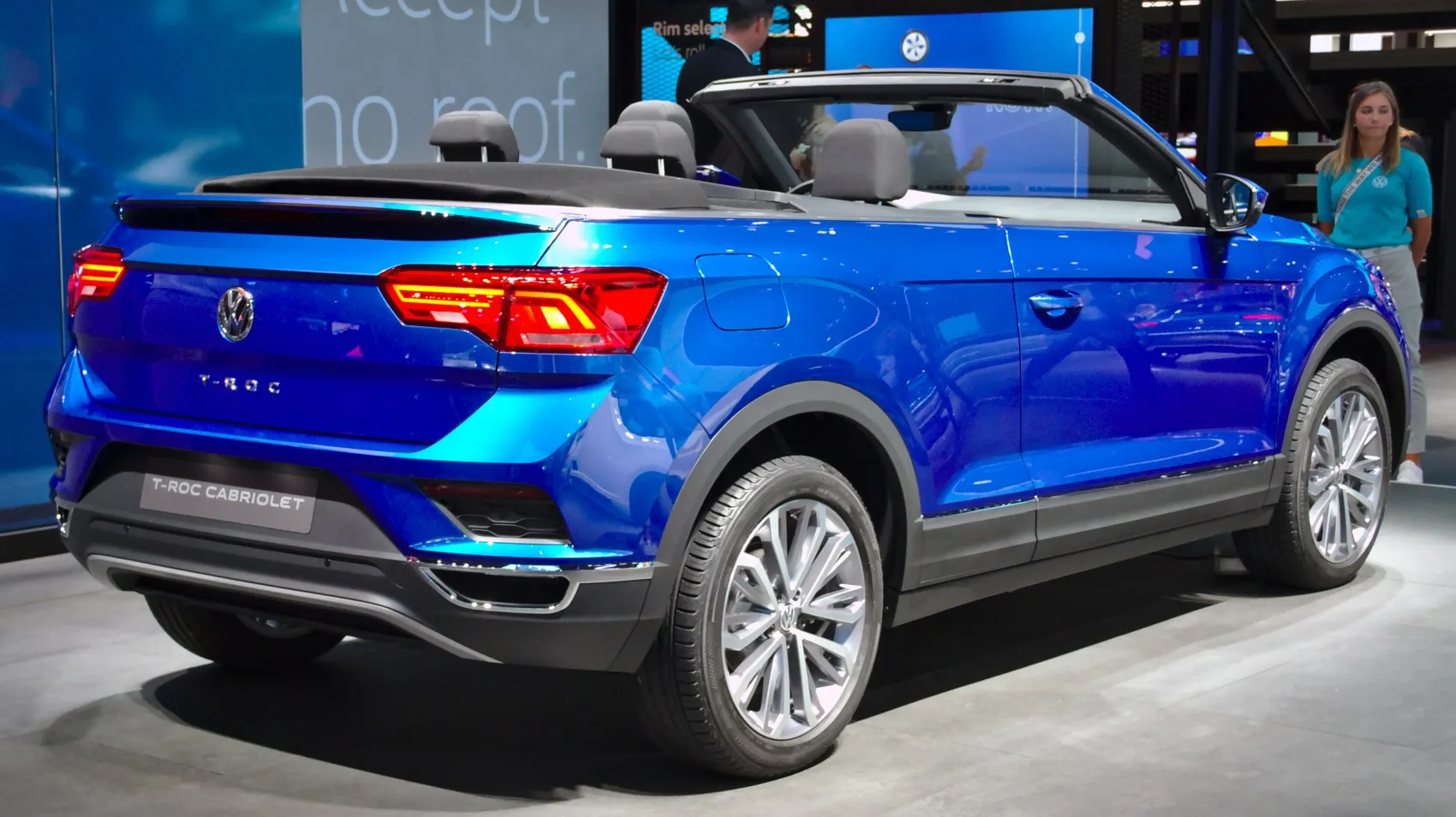
Volkswagen T-Roc Cabriolet 1.5 TSI (150 Hp) ACT OPF DSG
Overall Rating
Volkswagen T-Roc:
The Volkswagen T-Roc is a subcompact crossover SUV manufactured by German automaker Volkswagen. It was unveiled at the 2017 Frankfurt Motor Show, and launched in November 2017. It is based on the Volkswagen Group MQB A1 platform, and generally has been considered as the SUV equivalent of the C-segment Golf. It is positioned between the Tiguan and the slightly smaller T-Cross, while being approximately the same size as the less expensive Taigo.
The T-Roc was previewed as a concept car with the same name at the 2014 Geneva Motor Show. It features an all-wheel drive drivetrain....(Read more on Wikipedia)
Cabriolet Overview:
Volkswagen T-Roc (Cabriolet). With 250 Nm of torque, it offers ample pulling power. It has moderate fuel consumption (~6.4 l/100km). With a weight of 1465 kg, it falls in the mid‑range. Front‑wheel drive delivers efficiency and easy handling. Acceleration is relatively slow (0–100 km/h in 9.5 s). The top speed reaches 205 km/h. A convertible car with a retractable roof, offering open-air driving experiences. A sport utility vehicle offering higher ground clearance and versatile cargo space. Seating for 4 makes it ideal for daily use.
The T-Roc Cabriolet benefits from the robust safety platform of the standard T-Roc SUV, which achieved an excellent 5-star Euro NCAP rating in 2017, ensuring high levels of occupant protection.
1.5 TSI (150 Hp) ACT OPF DSG Verdict:

Performance Verdict
A significant step up in power, this 1.5-liter engine provides much more confident acceleration and effortless cruising. The DSG gearbox ensures smooth and rapid shifts, enhancing the driving experience.
Fuel Economy
Despite the increased power, the ACT (Active Cylinder Technology) helps maintain impressive fuel efficiency by deactivating cylinders under light loads. Combined with DSG, it's very efficient.
Pros and Cons:
Pros:
- • Unique convertible SUV body style
- • Efficient and capable TSI engines
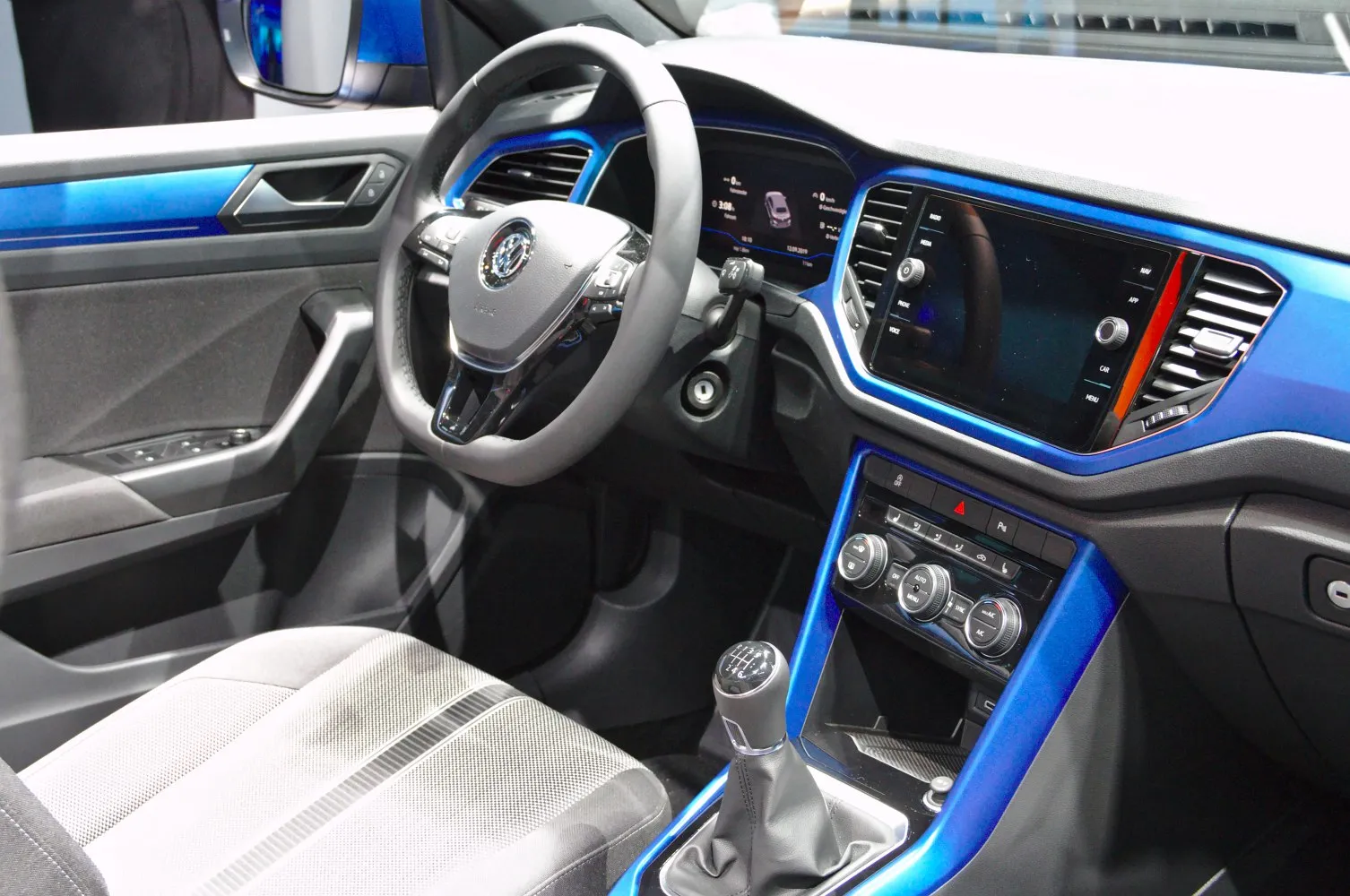
- • Good build quality and interior ergonomics
- • Strong safety rating (based on T-Roc SUV)
Cons:
- • Limited boot space compared to standard SUV
- • Rear visibility can be compromised with the roof down
- • Higher price point than conventional compact SUVs
- • Rear seats are tight for adults on long journeys
Specifications:
Specifications are compared to those of the previous generation(T-Roc: 2019 - October, 2021).
| General: | |
|---|---|
| Brand: | Volkswagen |
| Model: | T-Roc |
| Generation: | Cabriolet |
| Modification (Engine): | 1.5 TSI (150 Hp) ACT OPF DSG |
| Start of production: | 2020 |
| End of production: | October, 2021 |
| Powertrain Architecture: | Internal Combustion engine |
| Body type: | Cabriolet, SUV |
| Seats: | 4 |
| Doors: | 2 |
| Engine: | |
|---|---|
| Engine systems: | Start & Stop System |
| Power: | 150 Hp @ 5000 rpm. Same horsepower |
| Power per litre: | 100.1 Hp/l [27mm more] |
| Torque: | 250 Nm @ 1500-3500 rpm. |
| Engine Model/Code: | DPCA More details about the engine DPCA |
| Engine displacement: | 1498 |
| Number of cylinders: | 4 |
| Engine configuration: | Inline |
| Number of valves per cylinder: | 4 |
| Fuel injection system: | Direct injection |
| Engine aspiration: | Turbocharger, Intercooler |
| Engine oil capacity: | 4.3 l |
| Engine layout: | Front, Transverse |
| Performance: | |
|---|---|
| Fuel Type: | Petrol (Gasoline) |
| Fuel consumption (economy) - urban: | 6.3-6.5 l/100 km |
| Fuel consumption (economy) - extra urban: | 5.0-5.3 l/100 km |
| Combined fuel consumption (WLTP): | 6.7 l/100 km |
| Fuel consumption (economy) - combined (NEDC): | 5.5-5.7 l/100 km |
| Fuel consumption at Low speed (WLTP): | 8.7 l/100 km |
| Fuel consumption at Medium speed (WLTP): | 6.5 l/100 km |
| Fuel consumption at high speed (WLTP): | 5.7 l/100 km |
| Fuel consumption at very high speed (WLTP): | 7.0 l/100 km |
| Fuel consumption (economy) - urban (NEDC): | 6.3-6.5 l/100 km |
| Fuel consumption (economy) - extra urban (NEDC): | 5.0-5.3 l/100 km |
| Fuel consumption (economy) - combined: | 5.5-5.7 l/100 km |
| Emission standard: | Euro 6d-ISC-FCM |
| Acceleration 0 - 100 km/h: | 9.5 sec |
| Acceleration 0 - 62 mph: | 9.5 sec |
| Maximum speed: | 205 km/h |
| Weight-to-power ratio: | 9.8 kg/Hp, 102.4 Hp/tonne |
| Weight-to-torque ratio: | 5.9 kg/Nm, 170.6 Nm/tonne |
| Acceleration 0 - 60 mph: | 9 sec |
| Space: | |
|---|---|
| Kerb Weight: | 1465 |
| Max. weight: | 1900 |
| Max load: | 435 |
| Trunk (boot) space - minimum: | 284 l |
| Permitted trailer load with brakes (12%): | 1500 kg |
| Fuel tank capacity: | 50 l |
| Permitted trailer load without brakes: | 750 kg |
| Permitted towbar download: | 80 kg |
| Permitted trailer load with brakes (8%): | 1700 kg |
| Size: | |
|---|---|
| Length: | 4268 mm mm [27mm more] |
| Width: | 1811 mm mm [8mm less] |
| Height: | 1522 mm mm [40mm less] |
| Wheelbase: | 2630 mm mm [35mm more] |
| Width including mirrors: | 1998 mm |
| Front track: | 1538-1546 mm |
| Rear (Back) track: | 1539-1547 mm |
| Minimum turning circle (turning diameter): | 11 m [above average] |
| Powertrain: | |
|---|---|
| Drivetrain Architecture | The Internal combustion engine (ICE) drives the front wheels of the vehicle. |
| Drive wheel | Front wheel drive |
| Number of gears | 7 |
| Transmission type | Automatic |
| Gearbox type | DSG |
| Front brakes | Ventilated discs [Best for performance and cooling.] |
| Rear brakes | Disc [above average] |
| Assisting systems | ABS (Anti-lock braking system) |
| Steering type | Steering rack and pinion |
| Power steering | Electric Steering |
| Tires size | 215/55 R17 |
| Wheel rims size | 7J x 17 |
| Front suspension | Independent type McPherson |
| Rear suspension | Independent multi-link suspension |












Help others decide – share your experience!