
Click on image to view the full photo gallery
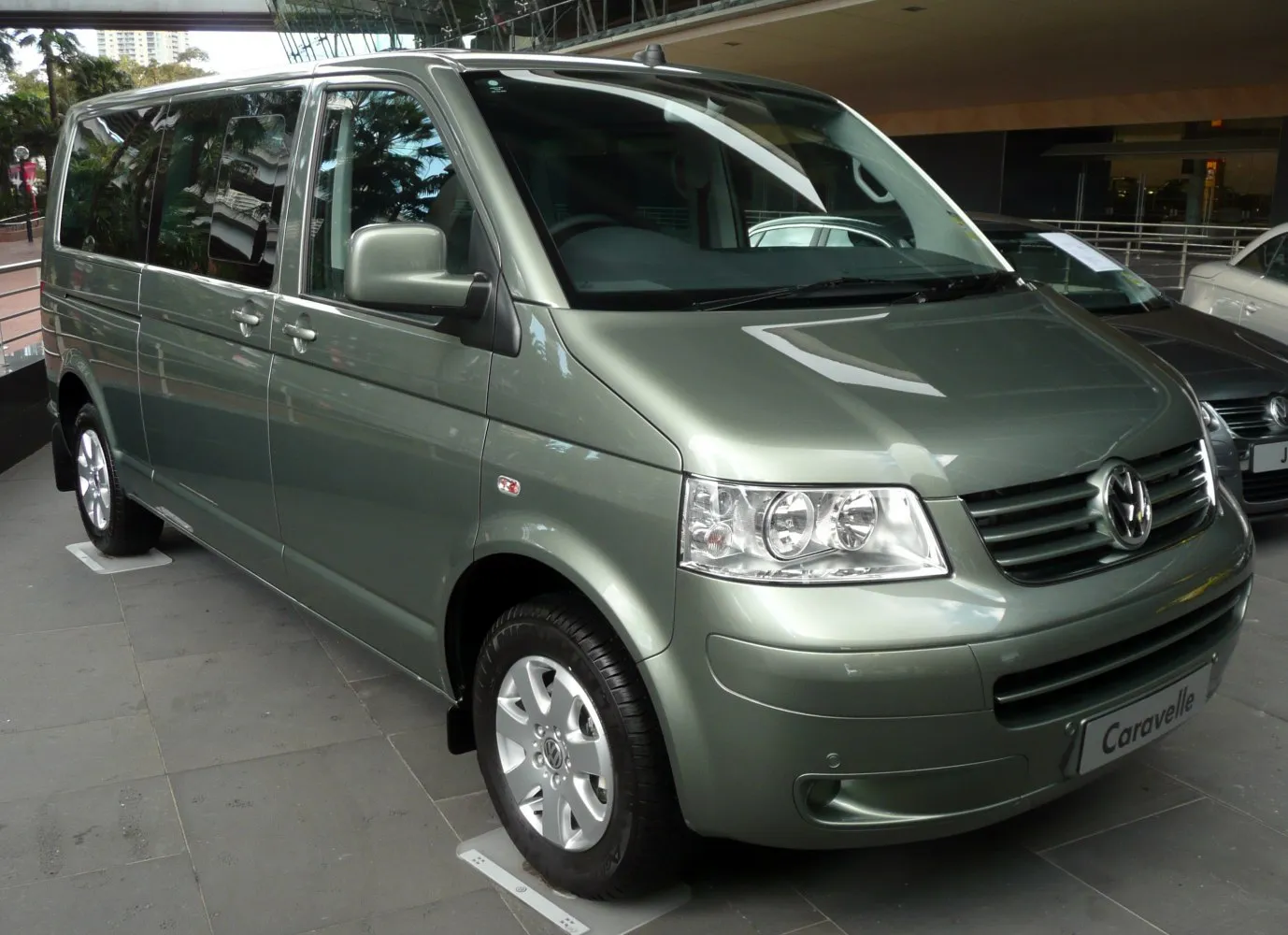
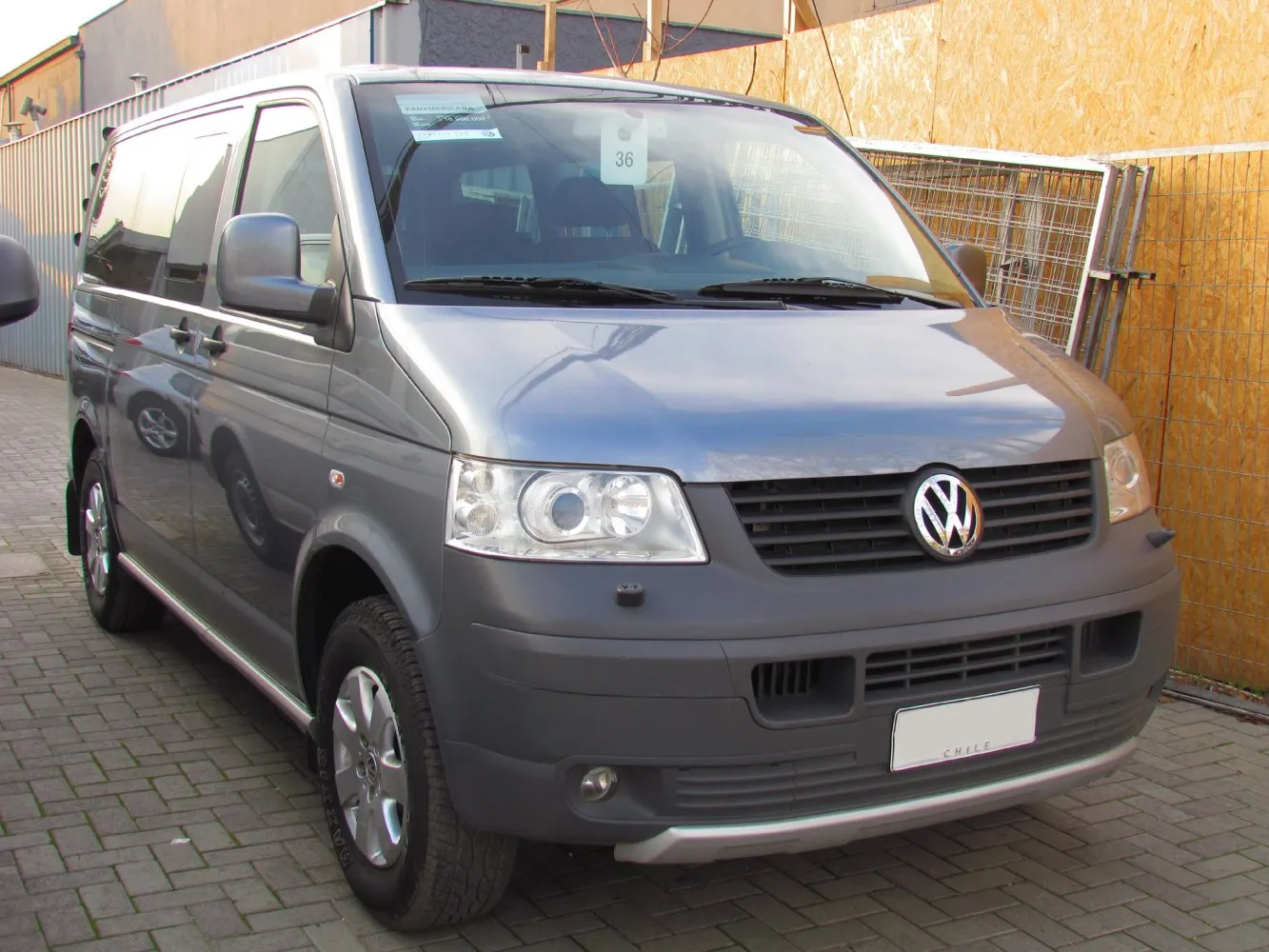
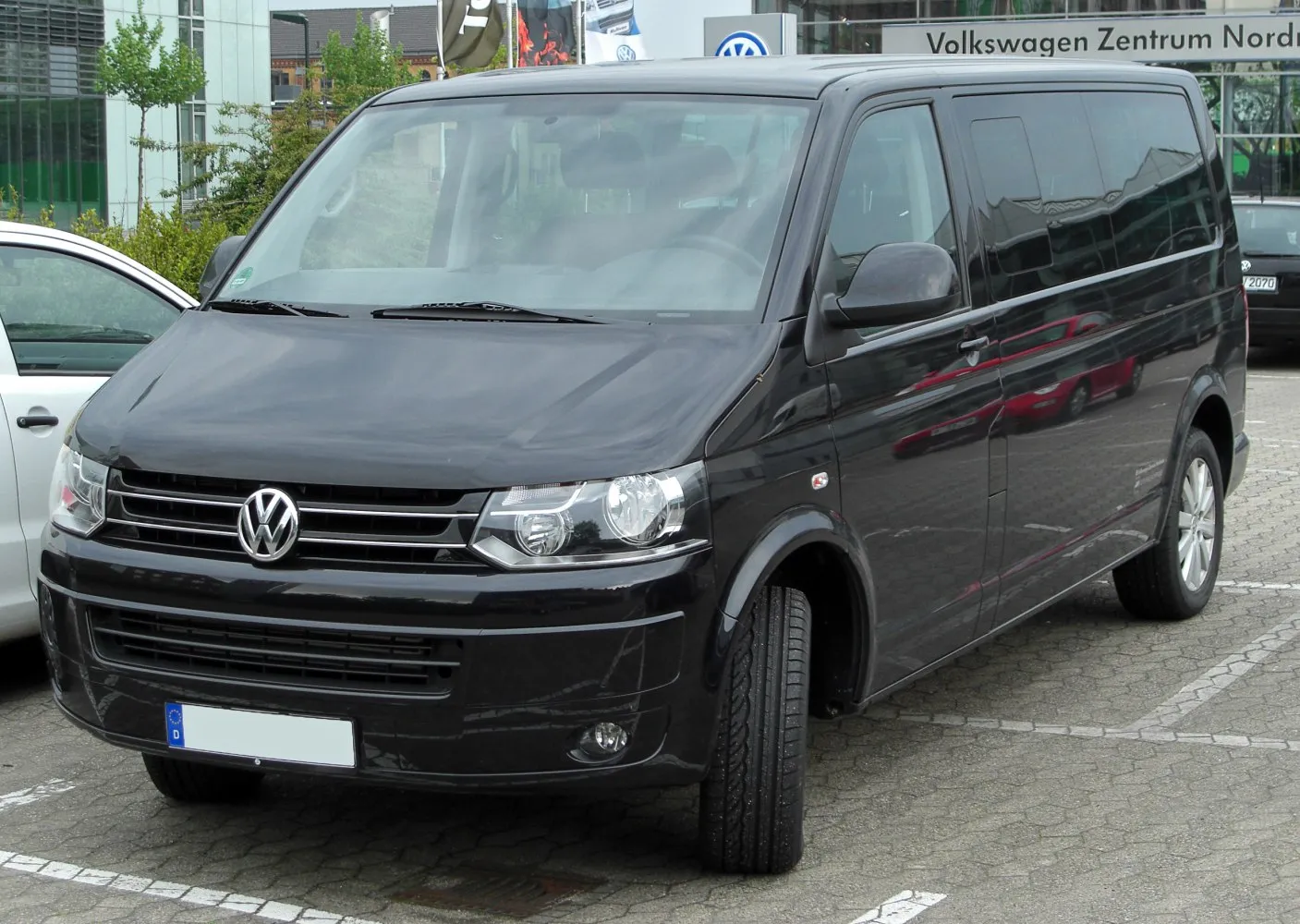
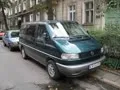
Volkswagen Caravelle (T5, facelift 2009) Long 2.0 (116 Hp)
Overall Rating
Volkswagen Caravelle:
Volkswagen Caravelle is the nameplate of a van based on the Volkswagen Transporter. For information about the Caravelle, refer to the regular Transporter articles:....(Read more on Wikipedia)
(T5, facelift 2009) Long Overview:
Volkswagen Caravelle ((T5, facelift 2009) Long). With 170 Nm of torque, it offers ample pulling power. At around 2062 kg, it’s on the heavier side. Front‑wheel drive delivers efficiency and easy handling. Acceleration is relatively slow (0–100 km/h in 17.3 s). The top speed reaches 163 km/h. A large vehicle designed for transporting goods or groups of people. Seating for 4 makes it ideal for daily use.
2.0 (116 Hp) Verdict:

Performance Verdict
Very modest performance, likely a naturally aspirated engine, struggling with the Caravelle's weight, resulting in slow acceleration.
Fuel Economy
High fuel consumption for the power output, making it an expensive option to run compared to more modern engines.
 Community Verdict
This rating is based on comments found on Reddit, scanned using artificial intelligence, and may not accurately reflect reality.

3.6 / 5
Based on AI analysis of 14 discussions
Read What Owners Say
Pros and Cons:
Pros:
- • Spacious and highly versatile interior, ideal for large families or shuttle services.
- • Comfortable ride quality for a van, suitable for long journeys.
- • Wide range of efficient and powerful TDI (diesel) engines.
- • Strong resale value and robust build quality.
- • Available 4MOTION all-wheel drive enhances capability in varied conditions.
Cons:
- • Can be expensive, especially for higher trims and optional extras.
- • Large dimensions make city parking and maneuvering challenging.
- • Some diesel engines, particularly early DPF systems, can have reliability concerns.
- • Petrol variants have significantly higher fuel consumption.
- • Basic models can feel underpowered for a vehicle of this size.
Specifications:
Specifications are compared to those of the previous generation((T5) Long: 2003 - 2009).
| General: | |
|---|---|
| Brand: | Volkswagen |
| Model: | Caravelle |
| Generation: | (T5, facelift 2009) Long |
| Modification (Engine): | 2.0 (116 Hp) |
| Start of production: | 2009 |
| End of production: | 2013 |
| Powertrain Architecture: | Internal Combustion engine |
| Body type: | Van |
| Seats: | 4-8 |
| Doors: | 4-5 |
| Engine: | |
|---|---|
| Power: | 116 Hp @ 5200 rpm. Same horsepower |
| Power per litre: | 58.5 Hp/l [2mm more] |
| Torque: | 170 Nm @ 2700-4700 rpm. |
| Engine Model/Code: | EA113 / AXA More details about the engine EA113 / AXA |
| Engine displacement: | 1984 |
| Number of cylinders: | 4 |
| Engine configuration: | Inline |
| Number of valves per cylinder: | 2 |
| Fuel injection system: | Multi-port manifold injection |
| Engine aspiration: | Naturally aspirated engine |
| Valvetrain: | SOHC |
| Engine oil capacity: | 5 l |
| Coolant: | 7.1 l |
| Engine layout: | Front, Transverse |
| Cylinder Bore: | 82.5 mm mm |
| Piston Stroke: | 92.8 mm mm |
| Compression ratio: | 10.5:1 |
| Performance: | |
|---|---|
| Fuel Type: | Petrol (Gasoline) |
| Fuel consumption (economy) - urban: | 13.6 l/100 km |
| Fuel consumption (economy) - extra urban: | 8.6 l/100 km |
| Fuel consumption (economy) - combined (NEDC): | 10.4 l/100 km |
| Fuel consumption (economy) - urban (NEDC): | 13.6 l/100 km |
| Fuel consumption (economy) - extra urban (NEDC): | 8.6 l/100 km |
| Fuel consumption (economy) - combined: | 10.4 l/100 km |
| Emission standard: | Euro 5 |
| Acceleration 0 - 100 km/h: | 17.3 sec |
| Acceleration 0 - 62 mph: | 17.3 sec |
| Maximum speed: | 163 km/h |
| Weight-to-power ratio: | 16.7 kg/Hp, 59.9 Hp/tonne |
| Weight-to-torque ratio: | 11.4 kg/Nm, 87.7 Nm/tonne |
| Acceleration 0 - 60 mph: | 16.4 sec |
| Space: | |
|---|---|
| Kerb Weight: | 1938-2186 |
| Max. weight: | 2850 |
| Max. roof load: | 100 kg |
| Max load: | 664-912 |
| Trunk (boot) space - maximum: | 6700 l |
| Permitted trailer load with brakes (12%): | 2000 kg |
| Fuel tank capacity: | 80 l |
| Permitted trailer load without brakes: | 750 kg |
| Permitted towbar download: | 100 kg |
| Size: | |
|---|---|
| Length: | 5292 mm mm [2mm more] |
| Width: | 1904 mm mm [Same width.] |
| Height: | 1990 mm mm [31mm more] |
| Wheelbase: | 3400 mm mm [Same wheelbase.] |
| Width including mirrors: | 2283 mm |
| Front overhang: | 896 mm |
| Rear overhang: | 996 mm |
| Ride height (ground clearance): | 165 mm |
| Minimum turning circle (turning diameter): | 13.2 m [above average] |
| Powertrain: | |
|---|---|
| Drivetrain Architecture | The Internal combustion engine (ICE) drives the front wheels of the vehicle. |
| Drive wheel | Front wheel drive |
| Number of gears | 5 |
| Transmission type | Manual |
| Front brakes | Ventilated discs, 308x29.5 mm [Best for performance and cooling.] |
| Rear brakes | Ventilated discs, 294x22 mm [Best for performance and cooling.] |
| Assisting systems | ABS (Anti-lock braking system) |
| Steering type | Steering rack and pinion |
| Power steering | Hydraulic Steering |
| Tires size | 215/65 R16 |
| Wheel rims size | 6.5J x 16 |
| Front suspension | Independent, type McPherson with coil spring and anti-roll bar |
| Rear suspension | Independent coil spring, Transverse stabilizer, Trailing arm |










What’s the best feature of the Volkswagen Caravelle? Tell us in the comments!