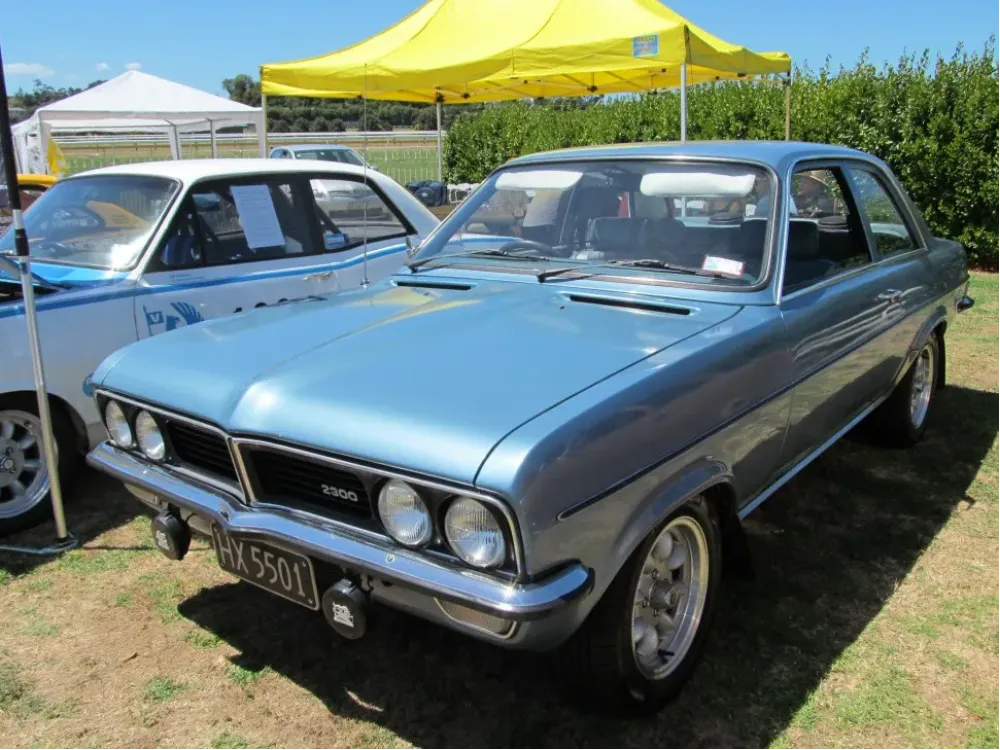
Click on image to view the full photo gallery
Vauxhall Magnum Coupe 2300 (110 Hp)
Overall Rating
Vauxhall Magnum:
The Vauxhall Magnum is a car which was manufactured by Vauxhall from 1973 to 1978. First seen at the London Motor Show in October 1973, the Magnum was an HC Viva with a larger engine, more luxurious interior, higher trim level and four rather than two headlights. It shared its suspension and drive train with the larger-engined variants of the Vauxhall Viva and Firenza.
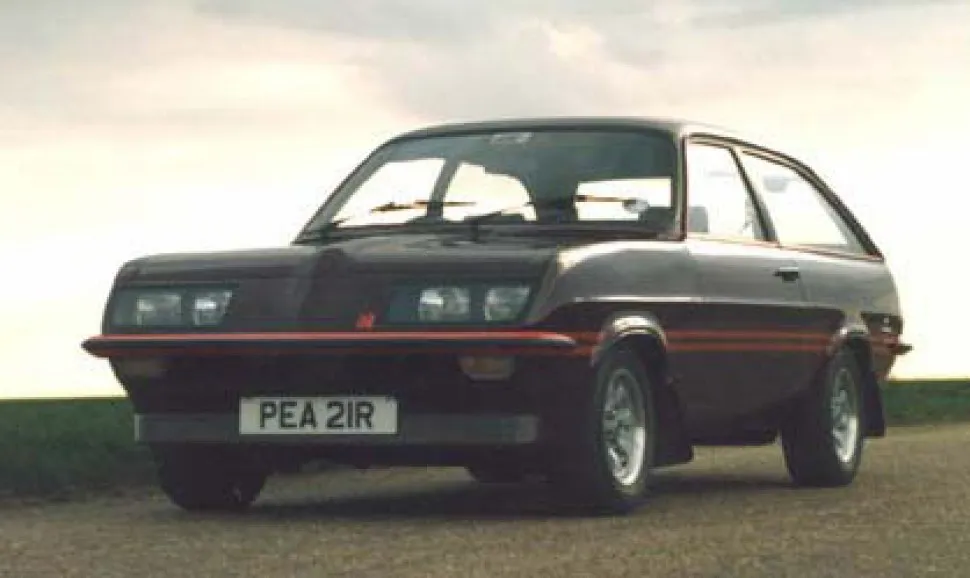
The smaller-engined version used the 1800 cc Slant-Four engine, and a twin-dial instrument panel, while the more powerful version used the 2279 cc Slant-Four and had a seven-dial instrument panel. Both were available in 2- and 4-door versions, a 3-door fastback estate and a coupé. All had "Rostyle" wheels. Confusingly, it was also possible to buy certain Viva models with the larger engines, but with vinyl interior trim. The continuing lack of coherency of the model range during that period was one of Vauxhall's main marketing problems. Late in the model's life there was a mild "upgrade" which saw the 2300 switch from twin to single carb with a drop of 2 hp to 108 hp, although the 1800 jumped from 77 hp to 88 hp which cut the 0–60 mph time by 3s to 12. 5s, and raised the top speed to 100 mph from 93 mph previously....(Read more on Wikipedia)
Coupe Overview:
Vauxhall Magnum (Coupe). With 190 Nm of torque, it offers ample pulling power. Weighing only 976 kg, it’s quite light. Front‑wheel drive delivers efficiency and easy handling. A two-door car with a fixed roof, known for its sporty design and dynamic performance. Seating for 5 makes it ideal for daily use.
The 1973 Vauxhall Magnum Coupe predates modern Euro NCAP testing standards. Safety features were rudimentary by today's measures, focusing on basic structural integrity and seatbelts.
2300 (110 Hp) Verdict:

Performance Verdict
Offering 110 Hp from its 2.3L engine, this trim provided respectable performance for its time, suitable for both spirited driving and comfortable cruising.
Fuel Economy
As a carbureted engine from the 1970s, fuel economy would be modest by modern standards, typical for vehicles of this era and displacement.
Pros and Cons:
Pros:
- • Distinctive classic British coupe styling.
- • Respectable performance for its era.
- • Engaging driving dynamics for its time.
- • Relatively practical with 5 seats.
- • Potential for appreciating classic car value.
Cons:
- • Fuel economy is poor by modern standards.
- • Lack of modern safety features.
- • Finding parts can be challenging due to age.
- • Rust can be a significant issue for unrestored examples.
Specifications:
| General: | |
|---|---|
| Brand: | Vauxhall |
| Model: | Magnum |
| Generation: | Coupe |
| Modification (Engine): | 2300 (110 Hp) |
| Start of production: | 1973 |
| End of production: | 1975 |
| Powertrain Architecture: | Internal Combustion engine |
| Body type: | Coupe |
| Seats: | 5 |
| Doors: | 2 |
| Engine: | |
|---|---|
| Power: | 110 Hp @ 5000 rpm. |
| Power per litre: | 48.3 Hp/l |
| Torque: | 190 Nm @ 3000 rpm. |
| Engine displacement: | 2279 |
| Number of cylinders: | 4 |
| Engine configuration: | Inline |
| Fuel injection system: | Carburettor |
| Engine aspiration: | Naturally aspirated engine |
| Valvetrain: | OHC |
| Engine oil capacity: | 4.6 l |
| Coolant: | 8 l |
| Engine layout: | Front, Transverse |
| Cylinder Bore: | 97.54 mm mm |
| Piston Stroke: | 76.2 mm mm |
| Compression ratio: | 8.5:1 |
| Performance: | |
|---|---|
| Fuel Type: | Petrol (Gasoline) |
| Weight-to-power ratio: | 8.9 kg/Hp, 112.7 Hp/tonne |
| Weight-to-torque ratio: | 5.1 kg/Nm, 194.7 Nm/tonne |
| Space: | |
|---|---|
| Kerb Weight: | 976 |
| Fuel tank capacity: | 54 l |
| Powertrain: | |
|---|---|
| Drivetrain Architecture | The Internal combustion engine (ICE) drives the front wheels of the vehicle. |
| Drive wheel | Front wheel drive |
| Number of gears | 4 |
| Transmission type | Manual |
| Front brakes | Disc |
| Rear brakes | Drum |
| Steering type | Steering rack and pinion |




Have you ever driven an Vauxhall Magnum?
How was your experience with it? Share with us: