
Click on image to view the full photo gallery
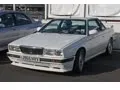
TVR 400 3.9 (272 Hp)
Overall Rating
TVR 400:
The TVR Griffith Series 400 is a 2-door coupe sports car produced by Griffith Motor Company in Plainview, New York , between 1964 and 1967. It was the successor to the TVR Griffith 200, featuring improved cooling via a larger radiator with twin electric fans, redesigned rear suspension, and a redesigned rear with better visibility and the round taillights sourced from the Ford Cortina Mark I.
The standard engine in the 400 was the more powerful Ford 289 'HiPo' Windsor engine producing 271 hp that was available in the Series 200 as an option. The 400 weighed a few more pounds than the 200 due mostly to the new Salisbury independent differential with a higher gear ratio giving it a higher top speed....(Read more on Wikipedia)
400 Overview:
TVR 400 (400). With 366 Nm of torque, it offers ample pulling power. Weighing only 1120 kg, it’s quite light. Rear‑wheel drive offers dynamic handling and sporty feedback. Acceleration is good (0–100 km/h in 6.5 s). The top speed reaches 220 km/h. A convertible car with a retractable roof, offering open-air driving experiences. Seating for 2 makes it ideal for daily use.
As a vehicle from the late 1980s, the TVR 400 predates modern safety standards and was not subjected to Euro NCAP testing. Safety features are minimal compared to contemporary vehicles, focusing more on driving dynamics than passive safety.
3.9 (272 Hp) Verdict:

Performance Verdict
The 3.9-liter V8 delivers robust performance, characteristic of TVR's raw power philosophy. With 272 Hp and a 0-100 km/h time of 6.5 seconds, it offers exhilarating acceleration and a thrilling driving experience for its era.
Fuel Economy
Fuel economy is typical for a powerful V8 sports car of its time, with urban consumption around 16 l/100 km. It's not an economical choice, but acceptable for a performance-oriented vehicle.
Pros and Cons:
Pros:
- • Exhilarating V8 performance and sound
- • Distinctive and timeless British sports car styling
- • Engaging and raw driving experience
- • Relative exclusivity and classic appeal
- • Lightweight and agile handling
Cons:
- • High fuel consumption
- • Challenging reliability and maintenance demands
- • Limited practicality and comfort for daily use
- • Lack of modern safety features and driver aids
- • Potentially expensive parts and specialized servicing
Specifications:
| General: | |
|---|---|
| Brand: | TVR |
| Model: | 400 |
| Generation: | 400 |
| Modification (Engine): | 3.9 (272 Hp) |
| Start of production: | 1988 |
| End of production: | 1991 |
| Powertrain Architecture: | Internal Combustion engine |
| Body type: | Cabriolet |
| Seats: | 2 |
| Doors: | 2 |
| Engine: | |
|---|---|
| Power: | 272 Hp @ 5500 rpm. |
| Power per litre: | 68.9 Hp/l |
| Torque: | 366 Nm @ 3500 rpm. |
| Engine displacement: | 3947 |
| Number of cylinders: | 8 |
| Engine configuration: | V-engine |
| Number of valves per cylinder: | 2 |
| Fuel injection system: | Multi-port manifold injection |
| Engine aspiration: | Naturally aspirated engine |
| Engine layout: | Front, Longitudinal |
| Cylinder Bore: | 94 mm mm |
| Piston Stroke: | 71.1 mm mm |
| Compression ratio: | 9.75:1 |
| Performance: | |
|---|---|
| Fuel Type: | Petrol (Gasoline) |
| Fuel consumption (economy) - urban: | 16 l/100 km |
| Fuel consumption (economy) - extra urban: | 10 l/100 km |
| Acceleration 0 - 100 km/h: | 6.5 sec |
| Acceleration 0 - 62 mph: | 6.5 sec |
| Maximum speed: | 220 km/h |
| Weight-to-power ratio: | 4.1 kg/Hp, 242.9 Hp/tonne |
| Weight-to-torque ratio: | 3.1 kg/Nm, 326.8 Nm/tonne |
| Acceleration 0 - 60 mph: | 6.2 sec |
| Space: | |
|---|---|
| Kerb Weight: | 1120 |
| Max. weight: | 1425 |
| Max load: | 305 |
| Trunk (boot) space - minimum: | 225 l |
| Size: | |
|---|---|
| Length: | 4015 mm mm |
| Width: | 1730 mm mm |
| Height: | 1205 mm mm |
| Wheelbase: | 2385 mm mm |
| Front track: | 1450 mm |
| Rear (Back) track: | 1480 mm |
| Minimum turning circle (turning diameter): | 9.6 m |
| Powertrain: | |
|---|---|
| Drivetrain Architecture | The Internal combustion engine (ICE) drives the rear wheels of the vehicle. |
| Drive wheel | Rear wheel drive |
| Number of gears | 5 |
| Transmission type | Manual |
| Front brakes | Ventilated discs |
| Rear brakes | Disc |
| Assisting systems | ABS (Anti-lock braking system) |
| Steering type | Steering rack and pinion |
| Tires size | 225/50 R15 |
| Wheel rims size | 8J x 15 |
| Front suspension | Double wishbone |
| Rear suspension | Double wishbone |






Have you ever driven an TVR 400?
How was your experience with it? Share with us: