
Click on image to view the full photo gallery
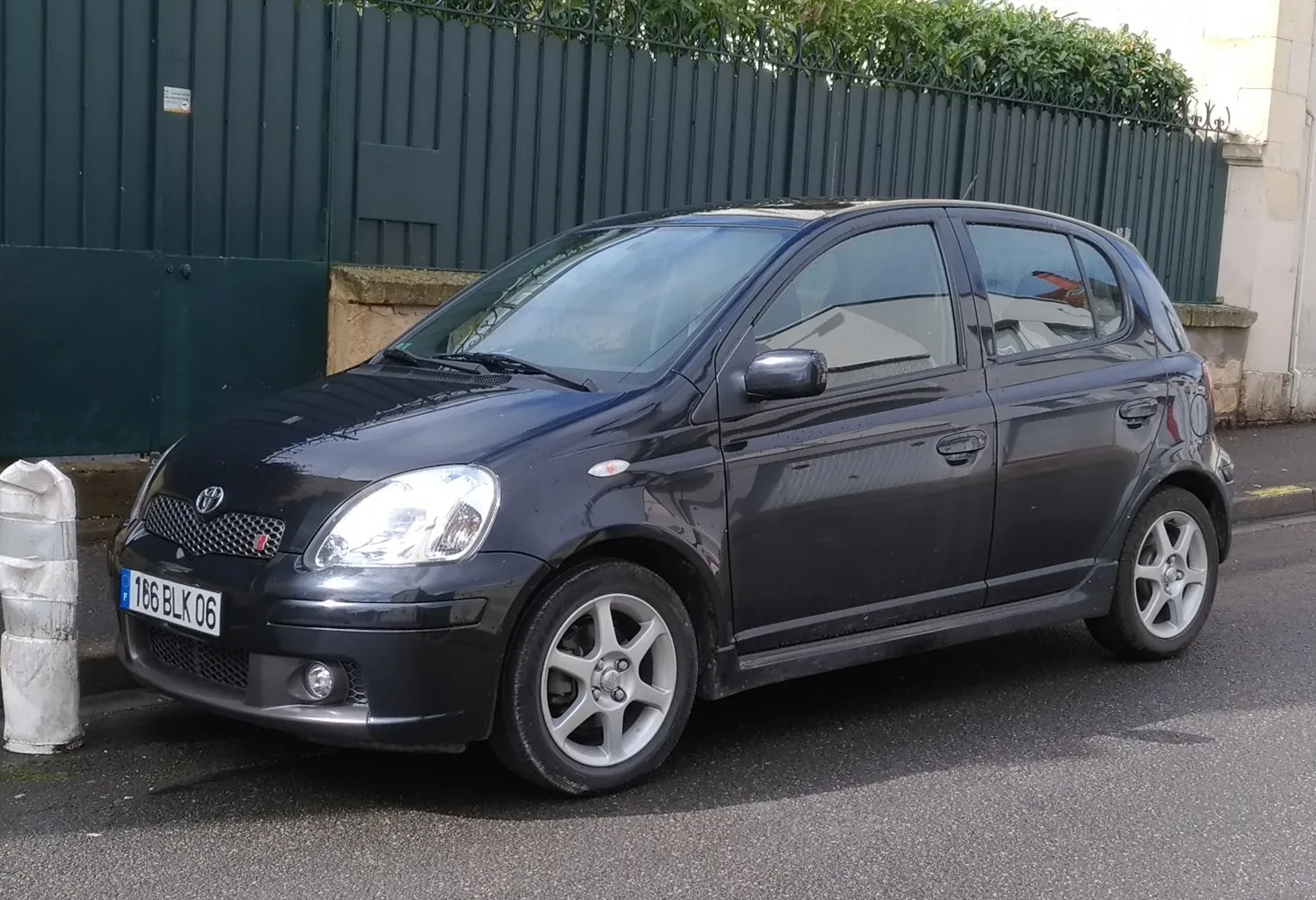
Toyota Yaris iA 1.5 (106 Hp)
Overall Rating
Toyota Yaris:
The Toyota Yaris is a supermini/subcompact car sold by Toyota since 1999, replacing the Starlet and Tercel.
Up to 2019, Toyota had used the Yaris nameplate on export versions of various Japanese-market models, with some markets receiving the same vehicles under the Toyota Echo name through 2005. Starting in 2020, the Yaris nameplate began to be used in Japan, which replaced the Vitz nameplate.
The Yaris nameplate has also been applied to other vehicles. From 1999 to 2005, the nameplate had been used for the Yaris Verso mini MPV sold in Europe, where it was known in Japan as the FunCargo. Since 2020, the nameplate has also been used for the subcompact crossover SUV offering called Yaris Cross. In North America, most Yaris sedan models sold from 2015 to 2020 and Yaris hatchbacks sold from 2019 until 2020 were restyled versions of the Mazda2, produced and developed by Mazda....(Read more on Wikipedia)
iA Overview:
Toyota Yaris (iA). With 140 Nm of torque, it offers ample pulling power. It has moderate fuel consumption (~7.8 l/100km). Weighing only 1082 kg, it’s quite light. Front‑wheel drive delivers efficiency and easy handling. A four-door car with a separate trunk, ideal for families and daily commuting. Seating for 5 makes it ideal for daily use.
Based on the Mazda 2's 2015 Euro NCAP test, the Yaris iA offers a respectable 4-star safety rating, with strong adult occupant protection for its class.
1.5 (106 Hp) Verdict:

Performance Verdict
Offers the same adequate power as the automatic but with the added engagement of a manual transmission, allowing for more driver control and a slightly more dynamic feel.
Fuel Economy
Very good fuel economy, slightly higher than the automatic in official figures but still highly competitive for its class.
Pros and Cons:
Pros:
- • Exceptional fuel economy for its class
- • Renowned Toyota/Mazda reliability and low maintenance costs
- • Agile handling and responsive steering (Mazda DNA)
- • Good standard features for the price point
- • Compact size makes it easy to maneuver and park in urban environments
Cons:
- • Modest engine power, not suited for spirited driving
- • Rear drum brakes are a cost-cutting measure
- • Limited rear passenger space for adults on longer journeys
- • Noticeable road and wind noise at highway speeds
- • Sedan-only body style limits cargo versatility compared to hatchbacks
Specifications:
Specifications are compared to those of the previous generation(XP210, facelift 2024: April, 2024 - ).
| General: | |
|---|---|
| Brand: | Toyota |
| Model: | Yaris |
| Generation: | iA |
| Modification (Engine): | 1.5 (106 Hp) |
| Start of production: | August, 2016 |
| End of production: | 2018 |
| Powertrain Architecture: | Internal Combustion engine |
| Body type: | Sedan |
| Seats: | 5 |
| Doors: | 4 |
| Engine: | |
|---|---|
| Power: | 106 Hp @ 6000 rpm. Same horsepower |
| Power per litre: | 70.9 Hp/l [366mm more] |
| Torque: | 140 Nm @ 4000 rpm. |
| Engine Model/Code: | P5 More details about the engine P5 |
| Engine displacement: | 1496 |
| Number of cylinders: | 4 |
| Engine configuration: | Inline |
| Number of valves per cylinder: | 4 |
| Fuel injection system: | Direct injection |
| Engine aspiration: | Naturally aspirated engine |
| Valvetrain: | DOHC, VVT-i |
| Engine oil capacity: | 4.2 l |
| Coolant: | 5.4 l |
| Engine layout: | Front, Transverse |
| Cylinder Bore: | 76 mm mm |
| Piston Stroke: | 82.6 mm mm |
| Compression ratio: | 12:1 |
| Performance: | |
|---|---|
| Fuel Type: | Petrol (Gasoline) |
| Fuel consumption (economy) - urban: | 7.8 l/100 km |
| Fuel consumption (economy) - extra urban: | 6 l/100 km |
| Fuel consumption (economy) - combined: | 6.9 l/100 km |
| Weight-to-power ratio: | 10.2 kg/Hp, 98 Hp/tonne |
| Weight-to-torque ratio: | 7.7 kg/Nm, 129.4 Nm/tonne |
| Space: | |
|---|---|
| Kerb Weight: | 1082 |
| Trunk (boot) space - minimum: | 382 l |
| Fuel tank capacity: | 44 l |
| Size: | |
|---|---|
| Length: | 4361 mm mm [366mm more] |
| Width: | 1694 mm mm [111mm less] |
| Height: | 1486 mm mm [31mm more] |
| Wheelbase: | 2570 mm mm [10mm more] |
| Front track: | 1496 mm |
| Rear (Back) track: | 1486 mm |
| Ride height (ground clearance): | 140 mm |
| Minimum turning circle (turning diameter): | 9.8 m [above average] |
| Powertrain: | |
|---|---|
| Drivetrain Architecture | The Internal combustion engine (ICE) drives the front wheels of the vehicle. |
| Drive wheel | Front wheel drive |
| Number of gears | 6 |
| Transmission type | Manual |
| Front brakes | Ventilated discs [Best for performance and cooling.] |
| Rear brakes | Drum [bad for performance and cooling.] |
| Assisting systems | ABS (Anti-lock braking system) |
| Steering type | Steering rack and pinion |
| Power steering | Electric Steering |
| Tires size | 185/60 R16 |
| Wheel rims size | 16 |
| Front suspension | Independent, type McPherson with coil spring and anti-roll bar |
| Rear suspension | Torsion |











Is it love at first sight with the Toyota Yaris? Tell us your story!