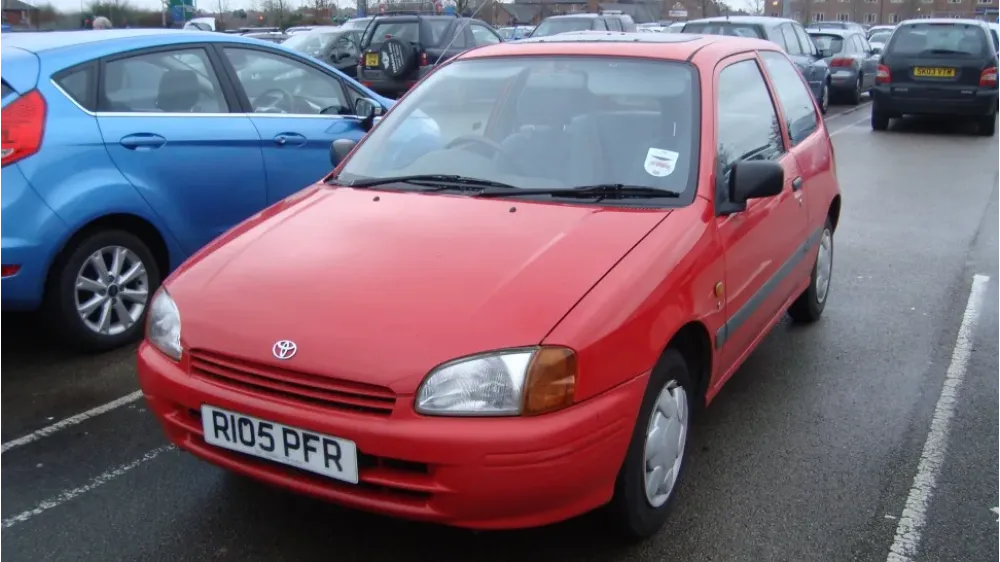
Click on image to view the full photo gallery
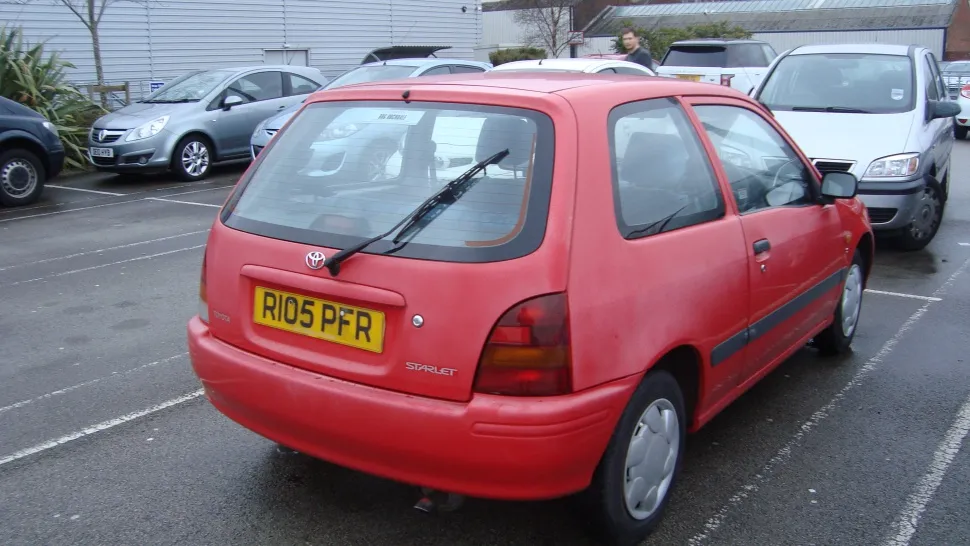
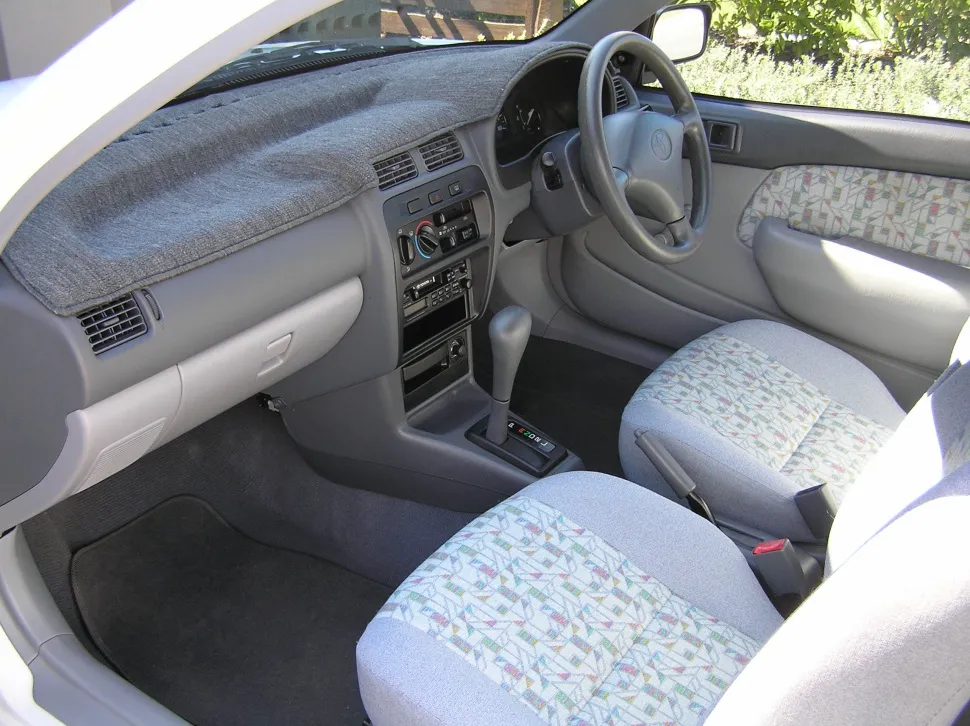
Toyota Starlet V 1.3i 16V (75 Hp) Automatic
Overall Rating
Toyota Starlet:
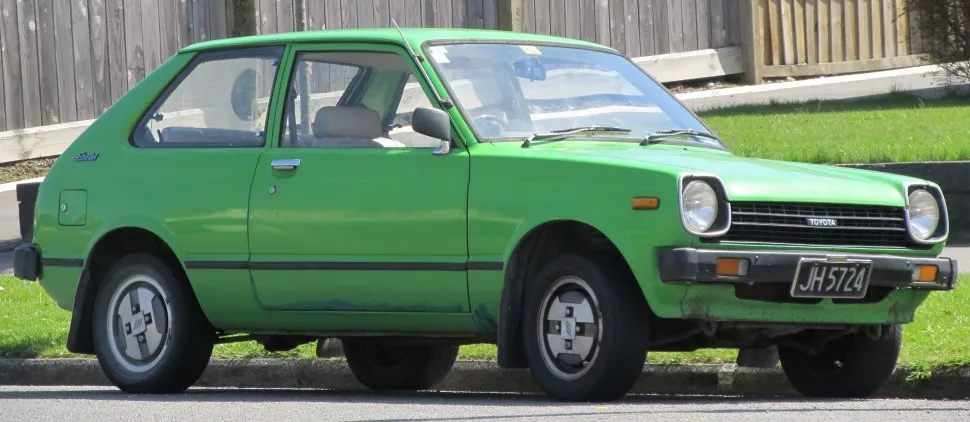
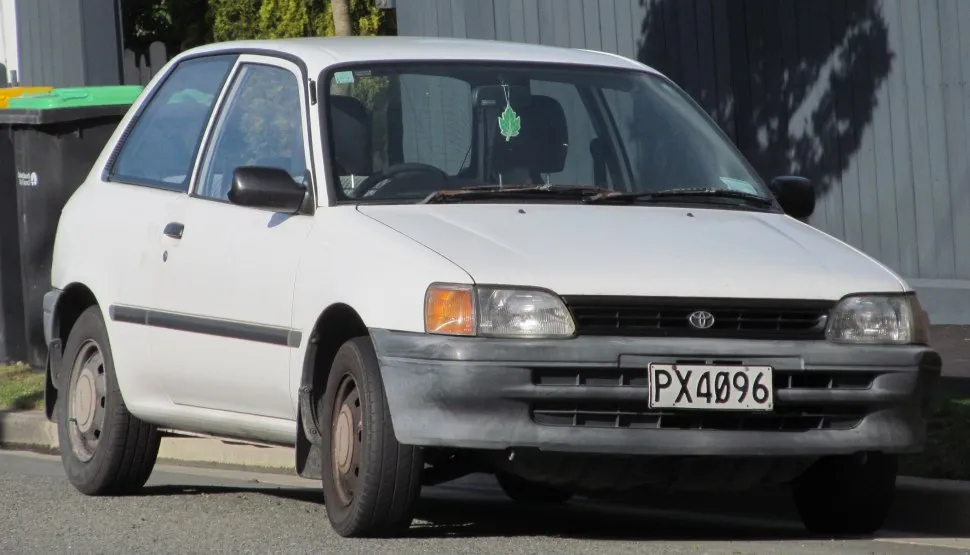
The Toyota Starlet is a subcompact car manufactured by Toyota from 1973 until 1999, replacing the Publica, but retaining the Publica's "P" code and generation numbering. The first generation Starlet was sold as the Publica Starlet in some markets. In Japan, it was exclusive to Toyota Auto Store dealers.
It is the first subcompact car from a Japanese automaker to offer a high-performance variant. These were available in three generations: the 1986–1989 Turbo S , the 1990–1995 GT Turbo , and the 1996–1999 Glanza V. Another variant was the Toyota Sera, a sport compact made in the early 1990s and officially sold only in Japan; the Sera had a unique two-door coupé body and butterfly doors but shared the Starlet's chassis and mechanicals....(Read more on Wikipedia)
V Overview:
Toyota Starlet (V). With 115 Nm of torque, it offers ample pulling power. Weighing only 905 kg, it’s quite light. Front‑wheel drive delivers efficiency and easy handling. Acceleration is relatively slow (0–100 km/h in 11.2 s). The top speed reaches 170 km/h. A compact car with a rear door that swings upward to provide access to the cargo area. Seating for 5 makes it ideal for daily use.
The Toyota Starlet V generation was not tested by Euro NCAP, which began its testing program in 1997. As a compact car from the mid-to-late 90s, its safety features would be basic by modern standards.
1.3i 16V (75 Hp) Automatic Verdict:

Performance Verdict
Adequate performance for city driving, with 75 Hp providing sufficient power for its light weight. The automatic transmission prioritizes convenience over outright speed, making it smooth for urban commutes.
Fuel Economy
Offers reasonable fuel economy for an automatic of its era, achieving 6.5 l/100 km. It's a cost-effective option for daily driving.
Pros and Cons:
Pros:
- • Exceptional reliability and low maintenance costs
- • Excellent fuel economy for its class
- • Compact size makes it ideal for city driving and parking
- • Simple, robust engineering ensures longevity
- • Good value for money on the used market
Cons:
- • Basic interior and limited features by modern standards
- • Modest performance, not designed for spirited driving
- • Limited rear passenger and boot space
- • Safety features are rudimentary compared to newer vehicles
- • Road noise can be noticeable at higher speeds
Specifications:
Specifications are compared to those of the previous generation(IV: 1989 - 1996).
| General: | |
|---|---|
| Brand: | Toyota |
| Model: | Starlet |
| Generation: | V |
| Modification (Engine): | 1.3i 16V (75 Hp) Automatic |
| Start of production: | 1996 |
| End of production: | 1999 |
| Powertrain Architecture: | Internal Combustion engine |
| Body type: | Hatchback |
| Seats: | 5 |
| Doors: | 3/5 |
| Engine: | |
|---|---|
| Power: | 75 Hp @ 5400 rpm. |
| Power per litre: | 56.3 Hp/l |
| Torque: | 115 Nm @ 4300 rpm. |
| Engine displacement: | 1332 |
| Number of cylinders: | 4 |
| Engine configuration: | Inline |
| Number of valves per cylinder: | 4 |
| Fuel injection system: | Multi-port manifold injection |
| Engine aspiration: | Naturally aspirated engine |
| Valvetrain: | DOHC |
| Engine layout: | Front, Transverse |
| Cylinder Bore: | 74 mm |
| Piston Stroke: | 77.4 mm |
| Compression ratio: | 9.6:1 |
| Performance: | |
|---|---|
| Fuel Type: | Petrol (Gasoline) |
| Fuel consumption (economy) - combined: | 6.5 l/100 km |
| Acceleration 0 - 100 km/h: | 11.2 sec |
| Acceleration 0 - 62 mph: | 11.2 sec |
| Maximum speed: | 170 km/h |
| Weight-to-power ratio: | 12.1 kg/Hp, 82.9 Hp/tonne |
| Weight-to-torque ratio: | 7.9 kg/Nm, 127.1 Nm/tonne |
| Acceleration 0 - 60 mph: | 10.6 sec |
| Space: | |
|---|---|
| Kerb Weight: | 905 |
| Max. weight: | 1345 |
| Max load: | 440 |
| Trunk (boot) space - minimum: | 214 l |
| Fuel tank capacity: | 45 l |
| Size: | |
|---|---|
| Length: | 3740 mm [20mm more] |
| Width: | 1635 mm [35mm more] |
| Height: | 1400 mm [20mm more] |
| Wheelbase: | 2300 mm [Same wheelbase.] |
| Front track: | 1400 mm |
| Rear (Back) track: | 1405 mm |
| Powertrain: | |
|---|---|
| Drivetrain Architecture | The Internal combustion engine (ICE) drives the front wheels of the vehicle. |
| Drive wheel | Front wheel drive |
| Number of gears | 3 |
| Transmission type | Automatic |
| Front brakes | Ventilated discs [Best for performance and cooling.] |
| Rear brakes | Drum [bad for performance and cooling.] |
| Assisting systems | ABS (Anti-lock braking system) |
| Steering type | Steering rack and pinion |
| Power steering | Hydraulic Steering |
| Tires size | 165/70 R13 |
| Wheel rims size | 13 |
| Front suspension | Wishbone |
| Rear suspension | Coil spring |


Is the Toyota Starlet worth every penny? Give us your honest ROI.