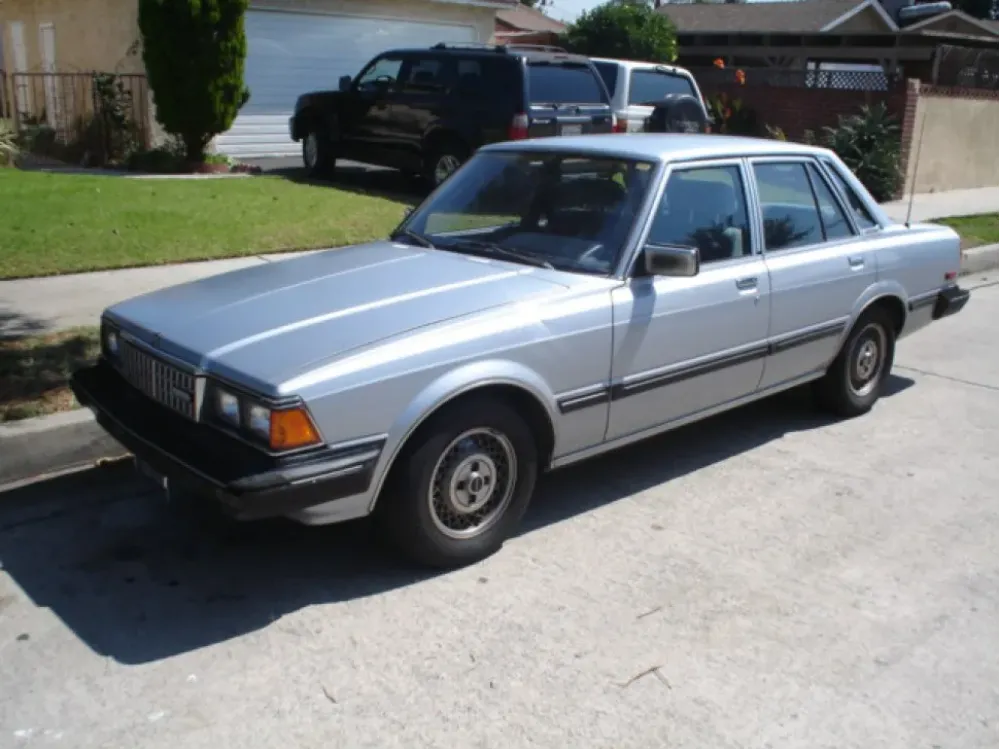
Click on image to view the full photo gallery
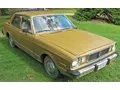
Toyota Cressida X6 2.0 (RX60) (105 Hp)
Overall Rating
Toyota Cressida:
The Toyota Mark II is a compact, later mid-size sedan manufactured and marketed in Japan by Toyota between 1968 and 2004. Prior to 1972, the model was marketed as the Toyota Corona Mark II. In most export markets, Toyota marketed the vehicle as the Toyota Cressida between 1976 and 1992 across four generations. Toyota replaced the rear-wheel-drive Cressida in North America with the front-wheel-drive Avalon. Every Mark II and Cressida was manufactured at the Motomachi plant at Toyota, Aichi, Japan from September 1968 to October 1993, and later at Toyota Motor Kyushu's Miyata plant from December 1992 to October 2000, with some models also assembled in Jakarta, Indonesia and Parañaque, Philippines as the Cressida....(Read more on Wikipedia)
X6 Overview:
Toyota Cressida (X6). A four-door car with a separate trunk, ideal for families and daily commuting. Seating for 5 makes it ideal for daily use.
The Toyota Cressida X6 was produced before the establishment of modern crash testing protocols like Euro NCAP (which began in 1997). Therefore, no official Euro NCAP rating is available, and its safety features would be considered basic by contemporary standards.
2.0 (RX60) (105 Hp) Verdict:

Performance Verdict
Offers a competent and smooth driving experience, providing a good balance of power for daily driving and occasional highway trips.
Fuel Economy
Average fuel economy for a 2.0L petrol engine of the early 1980s; can be somewhat thirsty in city driving conditions.
Pros and Cons:
Pros:
- • Exceptional reliability and durability, a hallmark of Toyota from this era.
- • Comfortable and spacious interior, well-suited for long journeys.
- • Smooth and refined inline-six engine option (GLi-6) offering a premium feel.
- • Solid build quality and straightforward mechanicals for easy maintenance.
- • Good long-term value due to longevity and low running costs (excluding fuel by modern standards).
Cons:
- • Modest performance, especially from the diesel and base petrol engines, by modern standards.
- • Outdated safety features compared to contemporary vehicles.
- • Fuel efficiency is not competitive with modern cars, particularly the petrol variants.
- • Styling can be considered conservative, lacking the flair of some European rivals.
- • Rust can be a significant issue on unpreserved examples due to age.
Specifications:
Specifications are compared to those of the previous generation(RX3: 1976 - 1980).
| General: | |
|---|---|
| Brand: | Toyota |
| Model: | Cressida |
| Generation: | X6 |
| Modification (Engine): | 2.0 (RX60) (105 Hp) |
| Start of production: | 1980 |
| End of production: | 1984 |
| Powertrain Architecture: | Internal Combustion engine |
| Body type: | Sedan |
| Seats: | 5 |
| Doors: | 4 |
| Engine: | |
|---|---|
| Power: | 105 Hp Same horsepower |
| Engine Model/Code: | 21R More details about the engine 21R |
| Engine aspiration: | Naturally aspirated engine |
| Engine oil capacity: | 4.3 l |
| Coolant: | 8 l |
| Performance: | |
|---|---|
| Fuel Type: | Petrol (Gasoline) |
| Space: | |
|---|---|
| Fuel tank capacity: | 65 l |






Your first impression of the Toyota Cressida in one word? Go!