
Click on image to view the full photo gallery
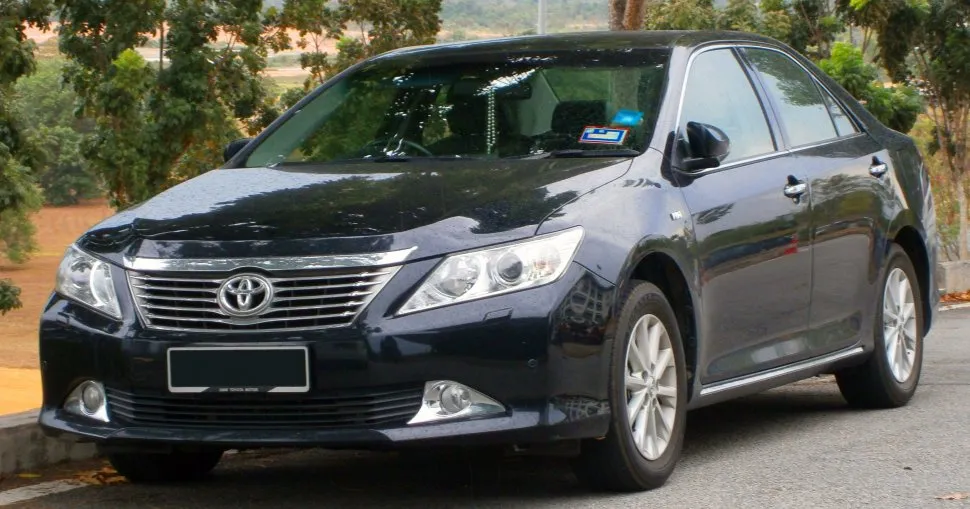
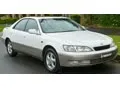
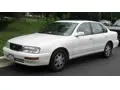
Toyota Camry V (XV30) 3.0 V6 (186 Hp) Automatic
Overall Rating
Toyota Camry:
The Toyota Camry is an automobile sold internationally by the Japanese auto manufacturer Toyota since 1982, spanning multiple generations. Originally compact in size , the Camry has grown since the 1990s to fit the mid-size classification —although the two widths co-existed in that decade. Since the release of the wide-bodied versions, Camry has been extolled by Toyota as the firm's second "world car" after the Corolla. As of 2022, the Camry is positioned above the Corolla and below the Avalon or Crown in several markets....(Read more on Wikipedia)
V (XV30) Overview:
Toyota Camry (V (XV30)). With 273 Nm of torque, it offers ample pulling power. With a weight of 1500 kg, it falls in the mid‑range. Front‑wheel drive delivers efficiency and easy handling. Acceleration is relatively slow (0–100 km/h in 9.1 s). The top speed reaches 225 km/h. A four-door car with a separate trunk, ideal for families and daily commuting. Seating for 5 makes it ideal for daily use.
3.0 V6 (186 Hp) Automatic Verdict:

Performance Verdict
Offers strong, smooth V6 power, providing confident acceleration and effortless highway cruising. The automatic transmission is well-matched.
Fuel Economy
Fuel economy is typical for a V6 of this size and era, leaning towards higher consumption than 4-cylinder models but acceptable for the performance.
Pros and Cons:
Pros:
- • Exceptional reliability and durability
- • Spacious and comfortable interior with a smooth ride
- • Quiet cabin, ideal for long journeys
- • Strong and refined V6 engine options
- • Good resale value and low running costs for 4-cylinder models
Cons:
- • Uninspired driving dynamics, not designed for sportiness
- • Some interior plastics can feel dated by modern standards
- • Four-cylinder engine can feel underpowered when fully loaded or at higher speeds
- • Fuel economy for V6 models can be relatively high
- • Lack of advanced safety features compared to newer vehicles
Specifications:
Specifications are compared to those of the previous generation(IV (XV20, facelift 2000): 2000 - 2001).
| General: | |
|---|---|
| Brand: | Toyota |
| Model: | Camry |
| Generation: | V (XV30) |
| Modification (Engine): | 3.0 V6 (186 Hp) Automatic |
| Start of production: | 2001 |
| End of production: | 2004 |
| Powertrain Architecture: | Internal Combustion engine |
| Body type: | Sedan |
| Seats: | 5 |
| Doors: | 4 |
| Engine: | |
|---|---|
| Power: | 186 Hp @ 5300 rpm. |
| Power per litre: | 62.1 Hp/l |
| Torque: | 273 Nm @ 4300 rpm. |
| Engine Model/Code: | 1MZ-FE [Same engine] More details about the engine 1MZ-FE |
| Engine displacement: | 2995 |
| Number of cylinders: | 6 |
| Engine configuration: | V-engine |
| Number of valves per cylinder: | 4 |
| Fuel injection system: | Multi-port manifold injection |
| Engine aspiration: | Naturally aspirated engine |
| Valvetrain: | DOHC |
| Engine oil capacity: | 4.7 l |
| Coolant: | 9.2 l |
| Engine layout: | Front, Transverse |
| Cylinder Bore: | 87.5 mm mm |
| Piston Stroke: | 83 mm mm |
| Compression ratio: | 10.5:1 |
| Performance: | |
|---|---|
| Fuel Type: | Petrol (Gasoline) |
| Fuel consumption (economy) - urban: | 15.7 l/100 km |
| Fuel consumption (economy) - extra urban: | 8.3 l/100 km |
| Fuel consumption (economy) - combined: | 11 l/100 km |
| Emission standard: | Euro 3 |
| Acceleration 0 - 100 km/h: | 9.1 sec |
| Acceleration 0 - 62 mph: | 9.1 sec |
| Maximum speed: | 225 km/h |
| Weight-to-power ratio: | 8.1 kg/Hp, 124 Hp/tonne |
| Weight-to-torque ratio: | 5.5 kg/Nm, 182 Nm/tonne |
| Acceleration 0 - 60 mph: | 8.6 sec |
| Space: | |
|---|---|
| Kerb Weight: | 1500 |
| Max. weight: | 2015 |
| Max. roof load: | 100 kg |
| Max load: | 515 |
| Trunk (boot) space - minimum: | 587 l |
| Permitted trailer load with brakes (12%): | 1600 kg |
| Fuel tank capacity: | 70 l |
| Permitted trailer load without brakes: | 500 kg |
| Size: | |
|---|---|
| Length: | 4815 mm mm [27mm more] |
| Width: | 1795 mm mm [15mm more] |
| Height: | 1500 mm mm [93mm more] |
| Wheelbase: | 2720 mm mm [48mm more] |
| Front track: | 1550 mm |
| Rear (Back) track: | 1535 mm |
| Minimum turning circle (turning diameter): | 10.6 m [above average] |
| Powertrain: | |
|---|---|
| Drivetrain Architecture | The Internal combustion engine (ICE) drives the front wheels of the vehicle. |
| Drive wheel | Front wheel drive |
| Number of gears | 4 |
| Transmission type | Automatic |
| Front brakes | Ventilated discs [Best for performance and cooling.] |
| Rear brakes | Disc [above average] |
| Assisting systems | ABS (Anti-lock braking system) |
| Steering type | Steering rack and pinion |
| Power steering | Hydraulic Steering |
| Tires size | 215/60 R16 |
| Wheel rims size | 6.5J x 16 |
| Front suspension | Independent, type McPherson with coil spring and anti-roll bar |
| Rear suspension | Independent multi-link spring suspension with stabilizer |














Is the Toyota Camry the king of its class? Share your thoughts.