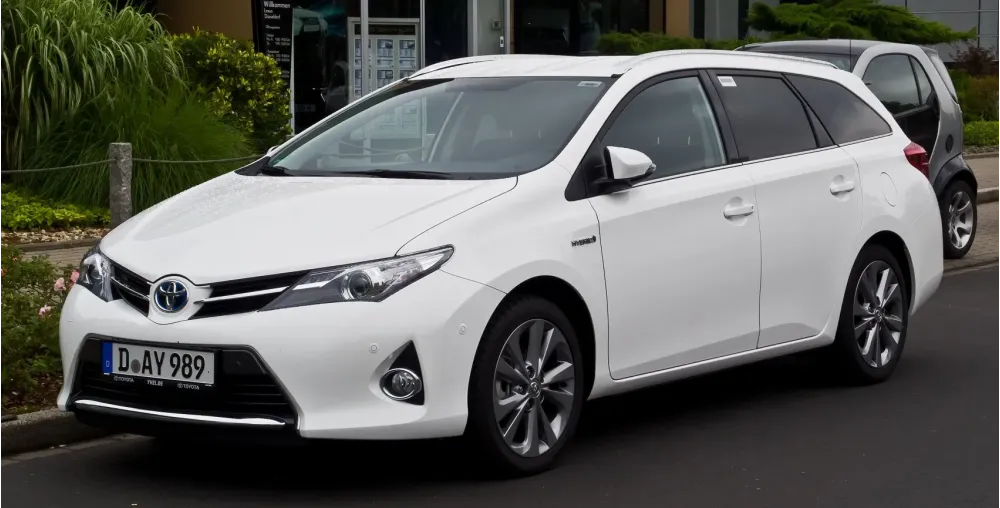
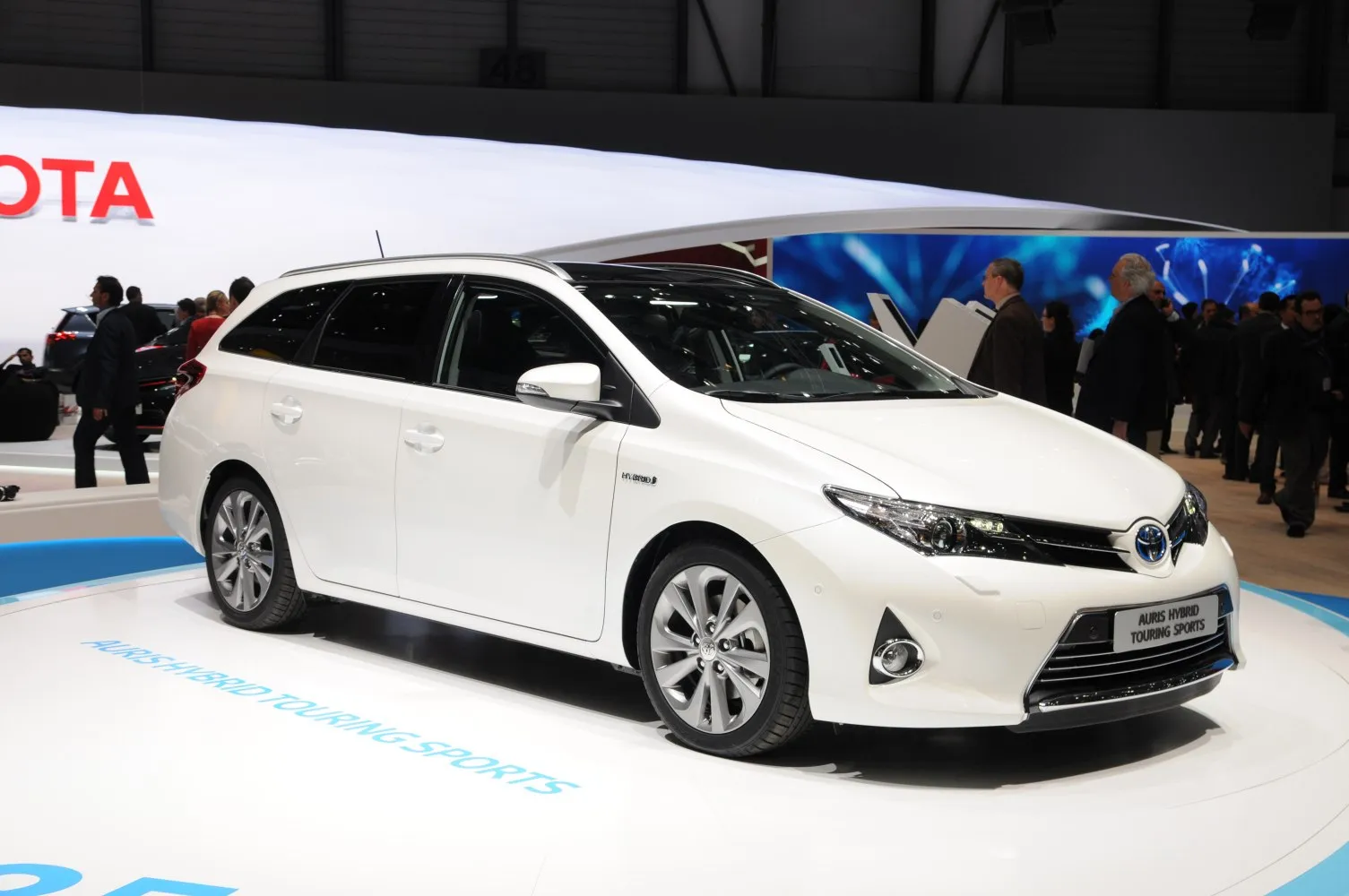
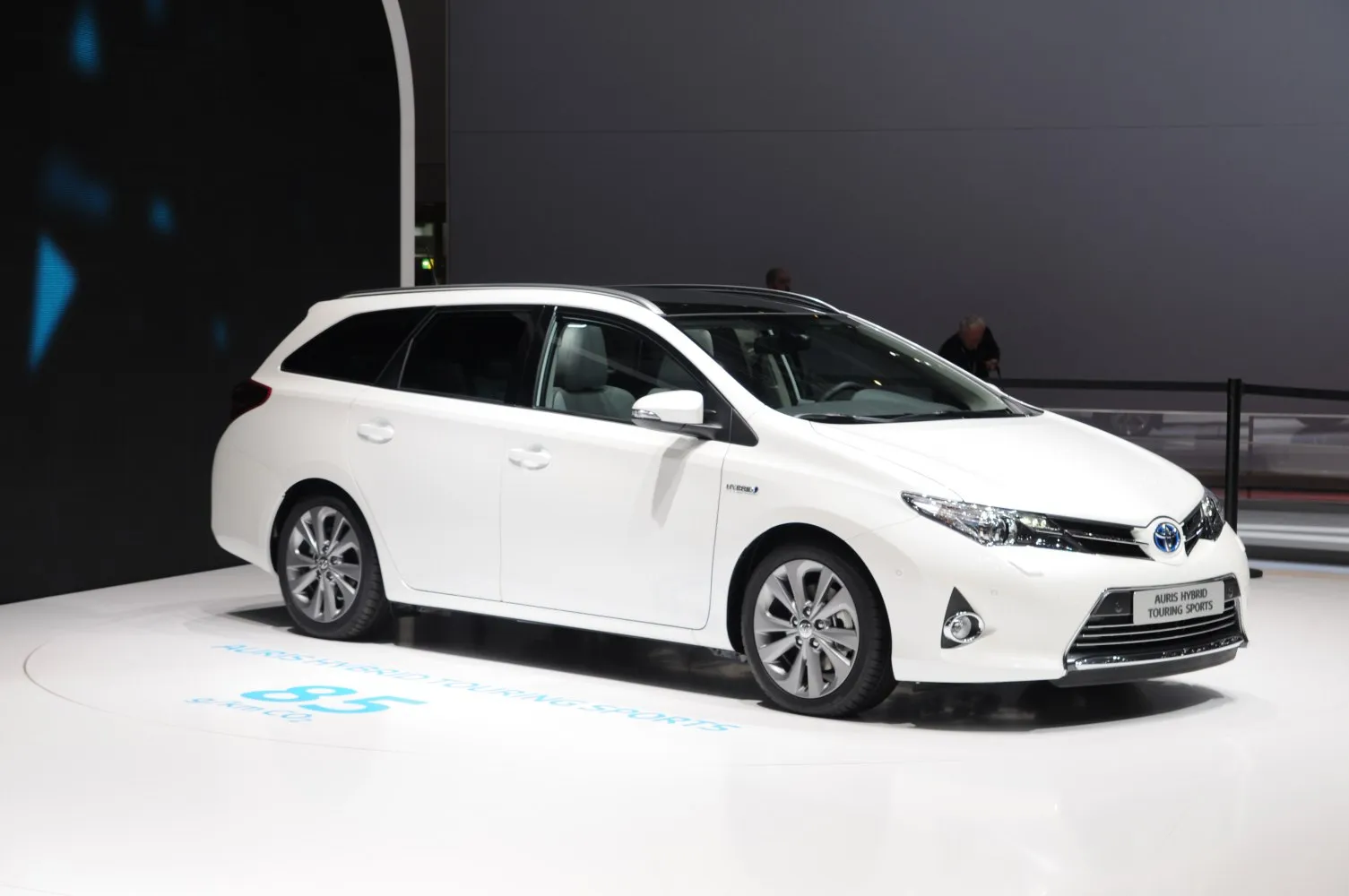
Toyota Auris II Touring Sports 1.8 VVT-i (136 Hp) Hybrid e-CVT
People\'s Opinion
N/A / 5
Toyota Auris:
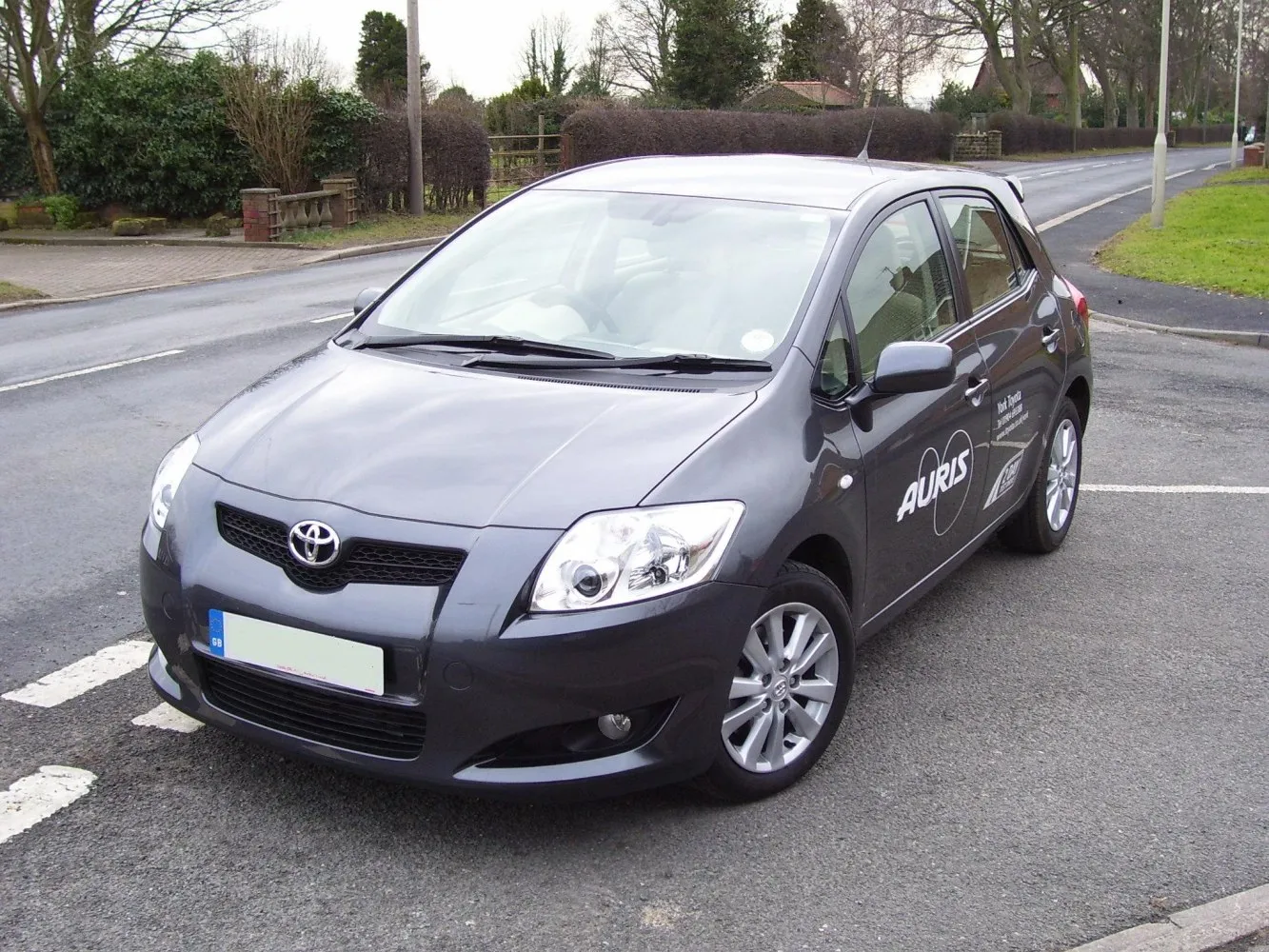
The Toyota Auris is a compact car derived from the Corolla, manufactured and sold by Toyota. Introduced in 2006, the first generation three/five-door hatchback shared the platform with the E150 series Corolla, while the second generation five-door hatchback and estate car called "Touring Sports" uses the E180 platform. The "Auris" name is based on the Latin word for "gold", "aurum".
In Europe, Toyota positioned the Auris as the replacement for the Corolla hatchback, while the saloon car version continued with the Corolla nameplate. Starting with the E210 model, the Auris nameplate was discontinued and used the Corolla nameplate instead, except for Taiwan, retained the Auris nameplate for the hatchback version until July 2020....(Read more on Wikipedia)
II Touring Sports Overview:
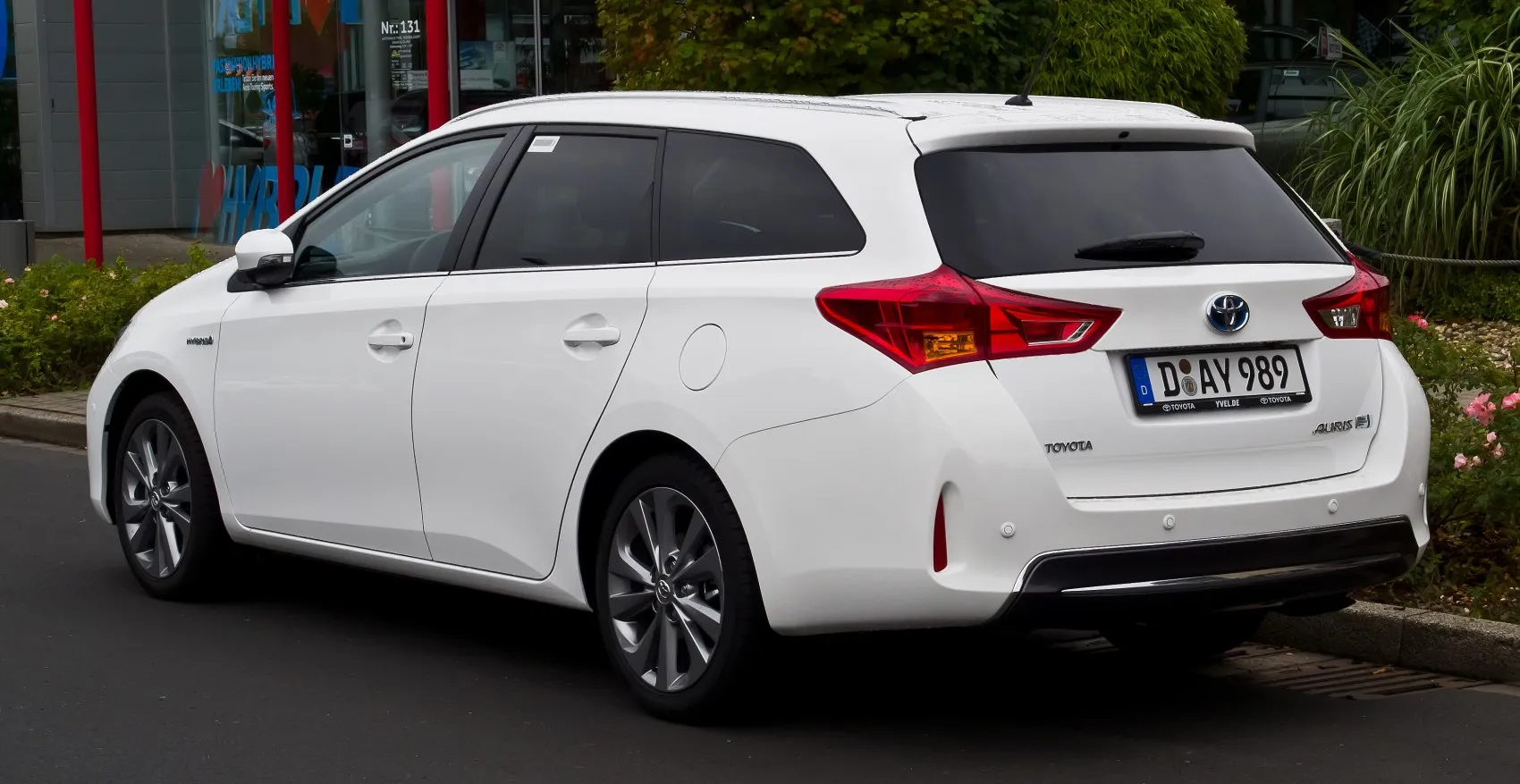
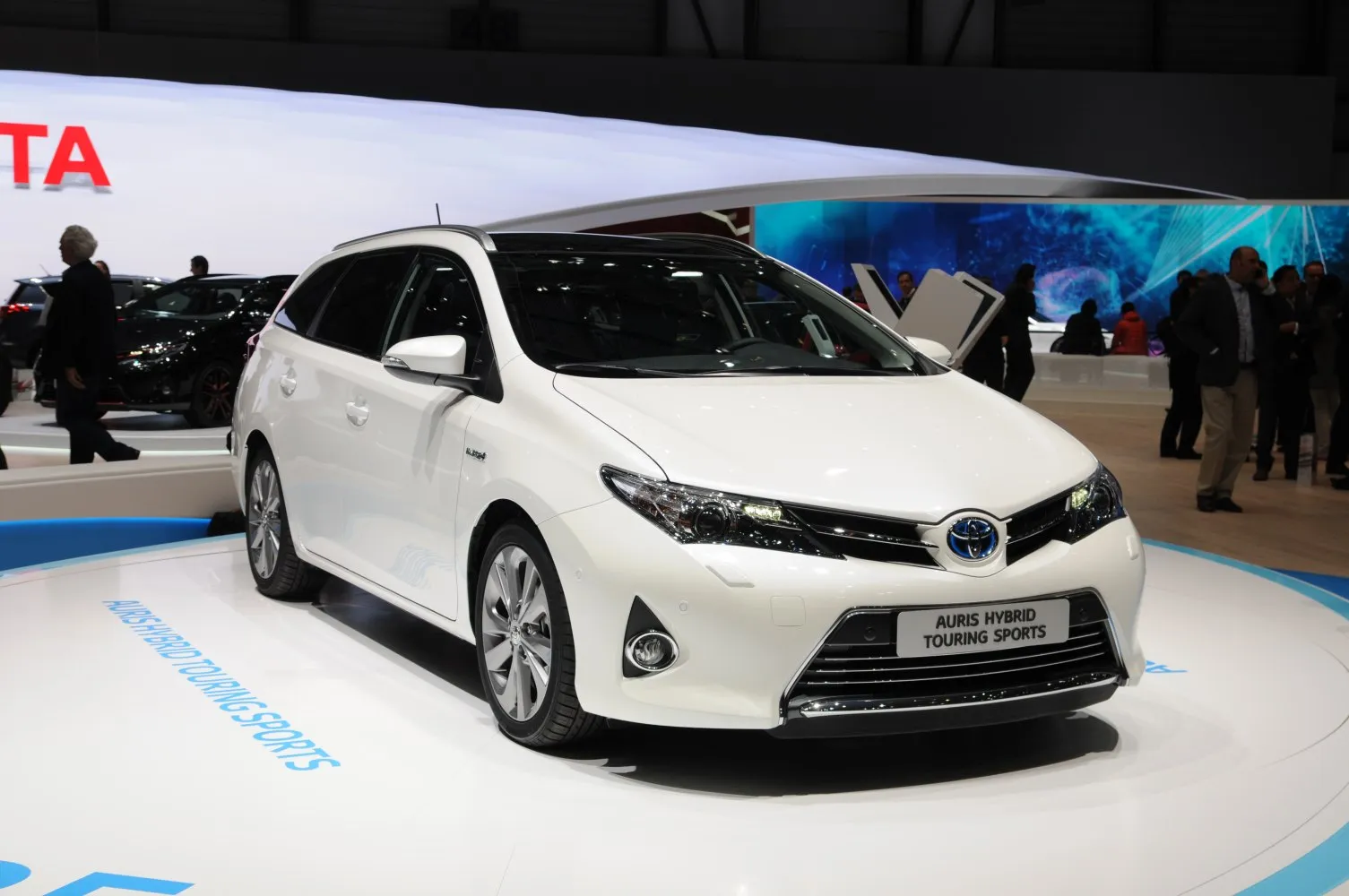
Toyota Auris (II Touring Sports). With 142 Nm of torque, it offers ample pulling power. It boasts low fuel consumption (~3.7 l/100km). With a weight of 1335 kg, it falls in the mid‑range. Front‑wheel drive delivers efficiency and easy handling. Acceleration is relatively slow (0–100 km/h in 11.2 s). The top speed reaches 175 km/h. A car with an extended rear cargo area, combining passenger comfort with increased storage. Seating for 5 makes it ideal for daily use.
Performance Verdict
Offers smooth and responsive acceleration, with a combined system output of 136 Hp and a respectable 0-100 km/h in 11.2 seconds, ideal for relaxed driving.
Fuel Economy
Outstanding fuel efficiency, achieving a remarkable 3.8 l/100 km combined, making it the most economical choice in the lineup.
Best Use Case:
Mixed Driving / Eco-conscious Commuting
Pros and Cons:
Pros:
- • Exceptional Toyota reliability and low running costs
- • Highly practical and spacious Touring Sports body style
- • Excellent fuel economy, especially with hybrid and diesel options
- • Comfortable ride quality for long journeys
- • Strong Euro NCAP safety rating
Cons:
- • Some petrol engines can feel underpowered
- • Interior design can be perceived as bland compared to rivals
- • Driving dynamics are more focused on comfort than sportiness
- • Certain interior plastics feel less premium than competitors
Specifications:
Specifications are compared to those of the previous generation(facelift 2010: 2010 - 2012).
| General: |
| Brand: | Toyota |
|---|
| Model: | Auris |
|---|
| Generation: | II Touring Sports |
|---|
| Modification (Engine): | 1.8 VVT-i (136 Hp) Hybrid e-CVT |
|---|
| Start of production: | 2012 |
|---|
| End of production: | 2015 |
|---|
| Powertrain Architecture: | FHEV (Full Hybrid Electric Vehicle) |
|---|
| Body type: | Station wagon (estate) |
|---|
| Seats: | 5 |
|---|
| Doors: | 5 |
|---|
| Engine: |
| Power: | 99 Hp @ 5200 rpm. Same horsepower |
|---|
| Power per litre: | 55.1 Hp/l [315mm more] |
|---|
| Torque: | 142 Nm @ 4000 rpm. |
|---|
| Engine Model/Code: | 2ZR-FXE More details about the engine 2ZR-FXE |
|---|
| Engine displacement: | 1798 |
|---|
| Number of cylinders: | 4 |
|---|
| Engine configuration: | Inline |
|---|
| Number of valves per cylinder: | 4 |
|---|
| Fuel injection system: | Multi-port manifold injection |
|---|
| Engine aspiration: | Naturally aspirated engine |
|---|
| Valvetrain: | DOHC |
|---|
| Engine oil capacity: | 4.2 l |
|---|
| Coolant: | 7 l |
|---|
| Engine layout: | Front, Transverse |
|---|
| Cylinder Bore: | 80.5 mm mm |
|---|
| Piston Stroke: | 88.3 mm mm |
|---|
| Performance: |
| Fuel Type: | Petrol (Gasoline) |
|---|
| Fuel consumption (economy) - urban: | 3.7 l/100 km |
|---|
| Fuel consumption (economy) - extra urban: | 3.8 l/100 km |
|---|
| Fuel consumption (economy) - combined: | 3.8 l/100 km |
|---|
| Emission standard: | Euro 5 |
|---|
| Acceleration 0 - 100 km/h: | 11.2 sec |
|---|
| Acceleration 0 - 62 mph: | 11.2 sec |
|---|
| Maximum speed: | 175 km/h |
|---|
| Weight-to-power ratio: | 9.8 kg/Hp, 101.9 Hp/tonne |
|---|
| Weight-to-torque ratio: | 9.4 kg/Nm, 106.4 Nm/tonne |
|---|
| Acceleration 0 - 60 mph: | 10.6 sec |
|---|
| Space: |
| Kerb Weight: | 1335 |
|---|
| Max. weight: | 1815 |
|---|
| Max load: | 480 |
|---|
| Trunk (boot) space - maximum: | 672 l |
|---|
| Trunk (boot) space - minimum: | 530 l |
|---|
| Fuel tank capacity: | 45 l |
|---|
| Permitted towbar download: | 55 kg |
|---|
| Size: |
| Length: | 4560 mm mm [315mm more] |
|---|
| Width: | 1760 mm mm [Same width.] |
|---|
| Height: | 1460 mm mm [55mm less] |
|---|
| Wheelbase: | 2600 mm mm [Same wheelbase.] |
|---|
| Front track: | 1515-1535 mm |
|---|
| Rear (Back) track: | 1505-1525 mm |
|---|
| Powertrain: |
| Drivetrain Architecture | The Internal combustion engine (ICE) and electric motor drive the front wheels of the car with the ability to work in full electric or mixed mode. |
|---|
| Drive wheel | Front wheel drive |
|---|
| Transmission type | Automatic |
|---|
| Gearbox type | e-CVT |
|---|
| Front brakes | Ventilated discs [Best for performance and cooling.] |
|---|
| Rear brakes | Disc |
|---|
| Assisting systems | ABS (Anti-lock braking system) |
|---|
| Steering type | Steering rack and pinion |
|---|
| Power steering | Electric Steering |
|---|
| Tires size | 195/65 R15; 205/55 R16; 225/45 R17 |
|---|
| Wheel rims size | 6J x 15; 6.5J x 16; 7J x 17 |
|---|
| Front suspension | Independent, type McPherson with coil spring and anti-roll bar |
|---|
| Rear suspension | Double wishbone |
|---|
| Electric: |
| Gross battery capacity: | 1.31 kWh |
|---|
| Battery technology: | Nickel-metal hydride (NiMH) |
|---|
| Battery location: | Under the rear seats |
|---|
| System power: | 136 Hp @ 5200 rpm. |
|---|
| System torque: | 142 Nm @ 4000 rpm. |
|---|
| Electric motor power: | 82 Hp |
|---|
| Electric motor Torque: | 207 Nm |
|---|
| Electric motor location: | Integrated into the transmission |
|---|
| Battery voltage: | 201.6 V |
|---|













Better than its competitors? Tell us why the Toyota Auris stands out.