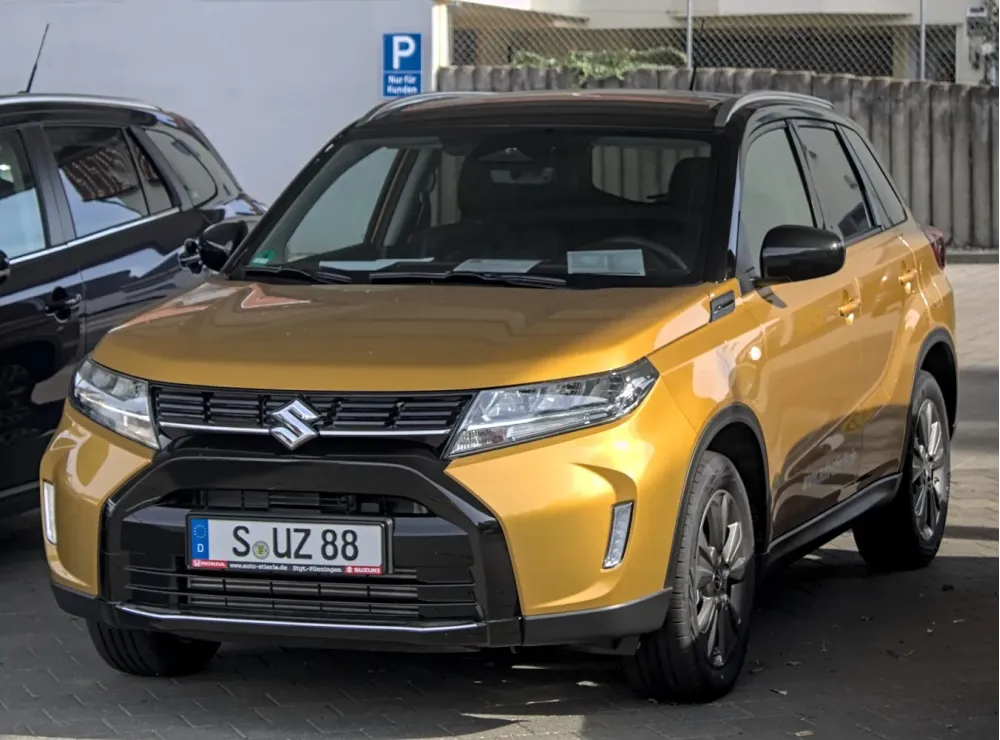
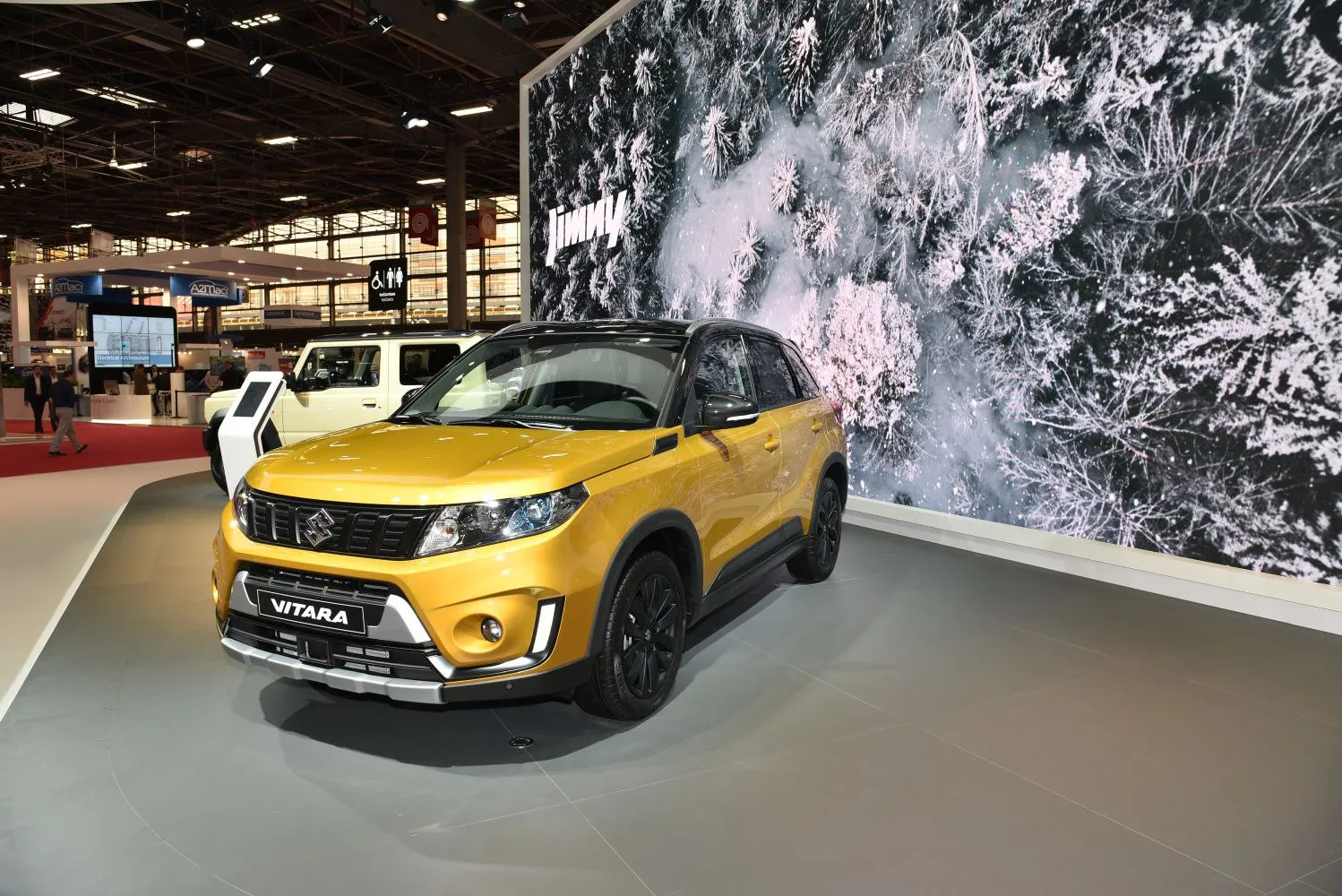
Suzuki Vitara IV (facelift 2024) 1.4 BOOSTERJET (129 Hp) Mild Hybrid ALLGRIP
People\'s Opinion
N/A / 5
Suzuki Vitara:
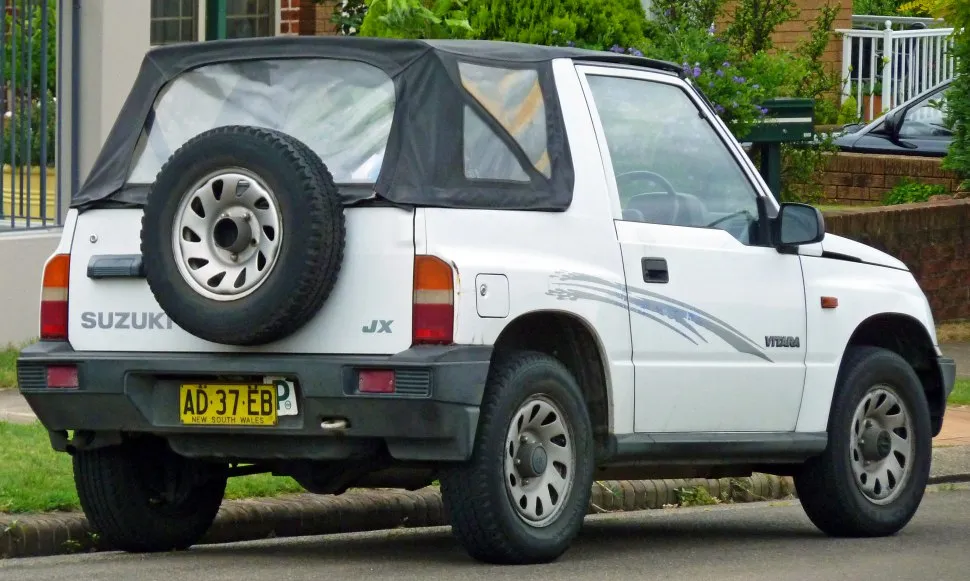
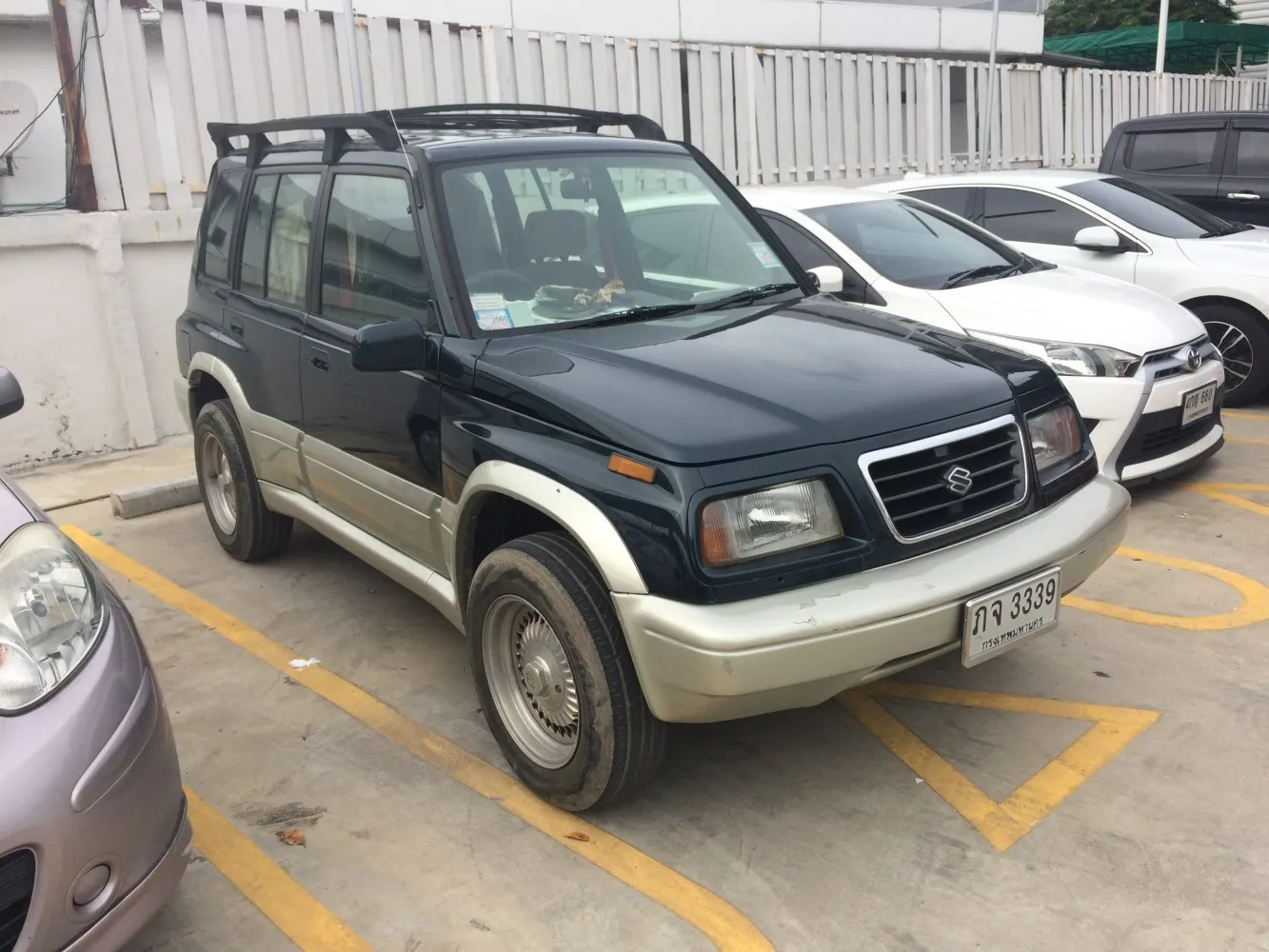
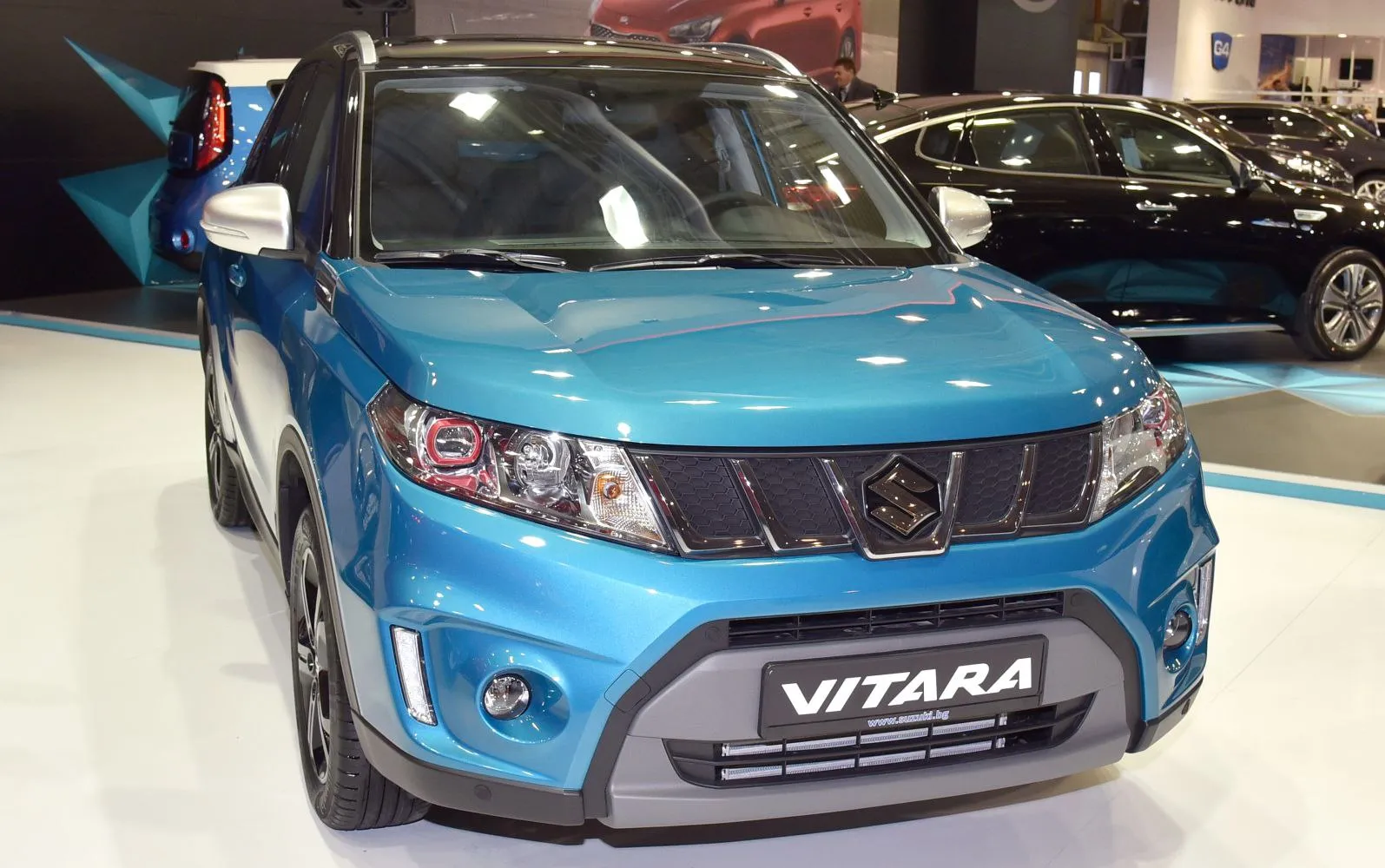
The Suzuki Vitara is a series of SUVs produced by Suzuki in five generations since 1988. The second and third generation were known as the Suzuki Grand Vitara, while the fourth generation eschewed the "Grand" prefix. In Japan and a number of other markets, all generations have used the name Suzuki Escudo until 2024.
The choice of the name "Vitara" was inspired by the Latin word vita, as in the English word vitality. "Escudo", the name primarily used in the Japanese market, refers to the "escudo", the monetary unit of Portugal before adoption of the Euro. The original series was designed to fill the slot above the Suzuki Jimny. The first generation was known as Suzuki Sidekick in the United States. The North American version was produced as a joint venture between Suzuki and General Motors known as CAMI. It was also sold as the Santana 300 and 350 in Spain and in the Japanese market, and in select markets was rebadged as the Mazda Proceed Levante as well....(Read more on Wikipedia)
IV (facelift 2024) Overview:
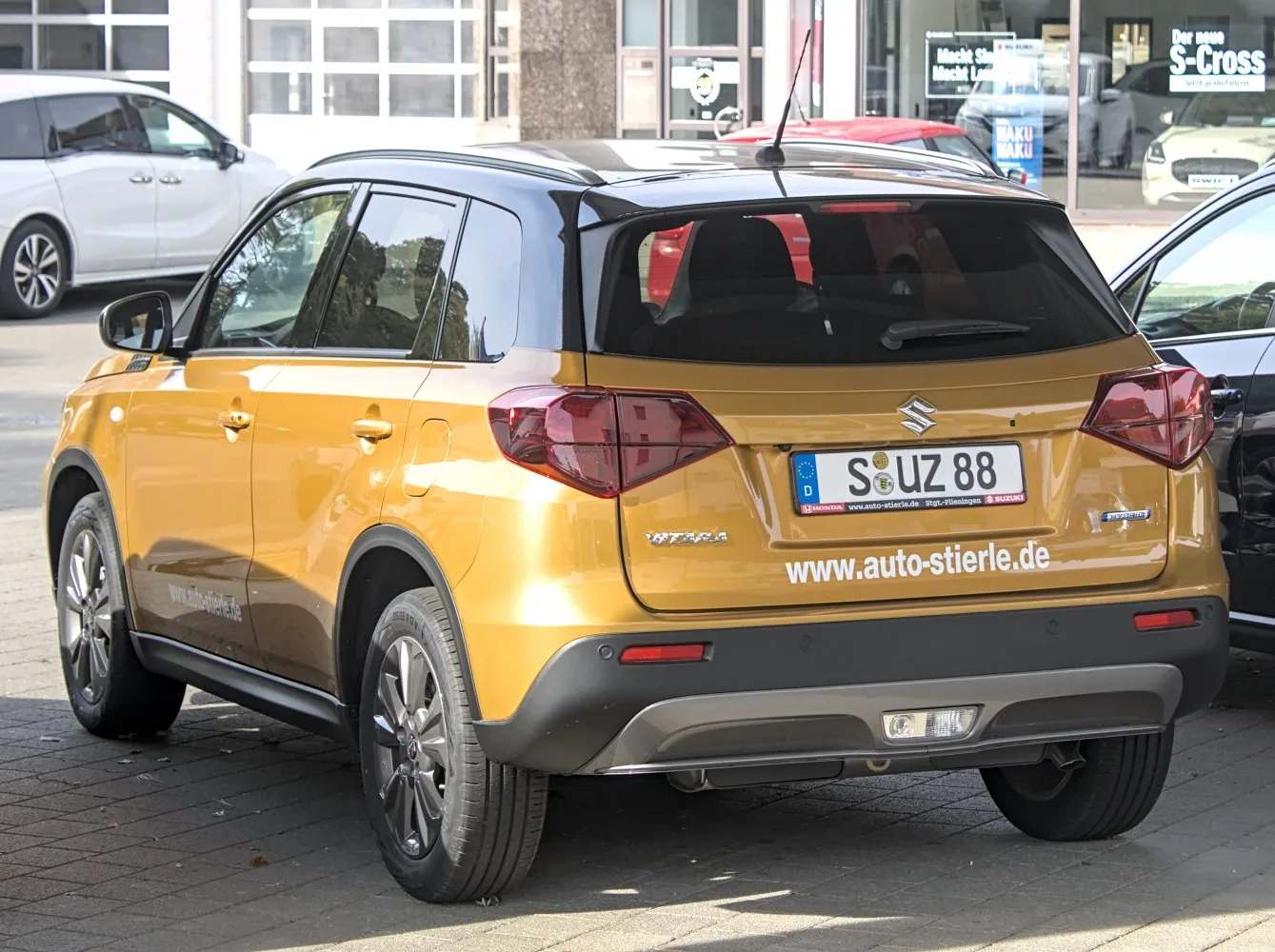
Suzuki Vitara (IV (facelift 2024)). With 235 Nm of torque, it offers ample pulling power. Weighing only 1270 kg, it’s quite light. All‑wheel drive provides excellent grip, ideal for off‑road use. The top speed reaches 195 km/h. A sport utility vehicle offering higher ground clearance and versatile cargo space. Seating for 5 makes it ideal for daily use.
Performance Verdict
Offers a good balance of power and torque for its class, with the turbocharger providing responsive acceleration. The 129 Hp is adequate for daily driving and highway cruising.
Fuel Economy
The 48V mild-hybrid system effectively aids fuel efficiency, especially in urban stop-start traffic, contributing to a respectable combined WLTP consumption of 5.4 l/100 km.
Best Use Case:
Mixed driving conditions, including city, highway, and light off-road excursions thanks to the ALLGRIP system.
Pros and Cons:
Pros:
- • Diverse powertrain options including mild-hybrid, full-hybrid, and all-electric
- • Optional ALLGRIP system for enhanced traction and light off-road capability
- • Compact dimensions make it agile in urban environments
- • Suzuki's reputation for reliability and durability
- • Good fuel economy from hybrid variants
- • Competitive pricing in its segment
Cons:
- • AGS transmission in full-hybrid models may not appeal to all drivers
- • Interior design, while refreshed, might still feel less premium than some rivals
- • Limited rear legroom for taller passengers
- • Ride comfort can be firm on rougher surfaces
- • Some competitors offer more advanced infotainment systems
Specifications:
Specifications are compared to those of the previous generation(IV (facelift 2018): April, 2020 - April, 2024).
| General: |
| Brand: | Suzuki |
|---|
| Model: | Vitara |
|---|
| Generation: | IV (facelift 2024) |
|---|
| Modification (Engine): | 1.4 BOOSTERJET (129 Hp) Mild Hybrid ALLGRIP |
|---|
| Start of production: | April, 2024 |
|---|
| Powertrain Architecture: | MHEV (Mild Hybrid Electric Vehicle, power-assist hybrid, battery-assisted hybrid vehicles, BAHV) |
|---|
| Body type: | SUV |
|---|
| Seats: | 5 |
|---|
| Doors: | 5 |
|---|
| Engine: |
| Engine systems: | Start & Stop System |
|---|
| Power: | 129 Hp @ 5500 rpm. |
|---|
| Power per litre: | 94 Hp/l |
|---|
| Torque: | 235 Nm @ 2000-3000 rpm. |
|---|
| Engine Model/Code: | K14D [Same engine] More details about the engine K14D |
|---|
| Engine displacement: | 1373 |
|---|
| Number of cylinders: | 4 |
|---|
| Engine configuration: | Inline |
|---|
| Number of valves per cylinder: | 4 |
|---|
| Fuel injection system: | Direct injection |
|---|
| Engine aspiration: | Turbocharger, Intercooler |
|---|
| Valvetrain: | Dual VVT |
|---|
| Engine oil capacity: | 3.6 l |
|---|
| Coolant: | 6.7 l |
|---|
| Engine layout: | Front, Transverse |
|---|
| Cylinder Bore: | 73 mm mm |
|---|
| Piston Stroke: | 82 mm mm |
|---|
| Compression ratio: | 10.9:1 |
|---|
| Performance: |
| Fuel Type: | Petrol (Gasoline) |
|---|
| Combined fuel consumption (WLTP): | 5.4 l/100 km |
|---|
| Fuel consumption at Low speed (WLTP): | 6.3 l/100 km |
|---|
| Fuel consumption at Medium speed (WLTP): | 5.0 l/100 km |
|---|
| Fuel consumption at high speed (WLTP): | 4.7 l/100 km |
|---|
| Fuel consumption at very high speed (WLTP): | 5.7-5.9 l/100 km |
|---|
| Emission standard: | Euro 6d |
|---|
| Maximum speed: | 195 km/h |
|---|
| Weight-to-power ratio: | 9.7 kg/Hp, 103.2 Hp/tonne |
|---|
| Weight-to-torque ratio: | 5.3 kg/Nm, 188 Nm/tonne |
|---|
| Space: |
| Kerb Weight: | 1250-1290 |
|---|
| Max. weight: | 1720 |
|---|
| Max load: | 430-470 |
|---|
| Trunk (boot) space - maximum: | 1119 l |
|---|
| Trunk (boot) space - minimum: | 362 l |
|---|
| Fuel tank capacity: | 47 l |
|---|
| Size: |
| Length: | 4185 mm mm [10mm more] |
|---|
| Width: | 1775 mm mm [Same width.] |
|---|
| Height: | 1600 mm mm [10mm less] |
|---|
| Wheelbase: | 2500 mm mm [Same wheelbase.] |
|---|
| Front track: | 1535 mm |
|---|
| Rear (Back) track: | 1505 mm |
|---|
| Ride height (ground clearance): | 175 mm |
|---|
| Minimum turning circle (turning diameter): | 10.4 m [above average] |
|---|
| Powertrain: |
| Drivetrain Architecture | The Internal combustion engine (ICE) and the electric motor permanently drive the front wheels of the vehicle, capable of running only in mixed mode, and if necessary through the electrically or mechanically controlled clutch, the rear wheels are driven. |
|---|
| Drive wheel | All wheel drive (4x4) |
|---|
| Number of gears | 6 |
|---|
| Transmission type | Manual |
|---|
| Front brakes | Ventilated discs [Best for performance and cooling.] |
|---|
| Rear brakes | Disc [above average] |
|---|
| Assisting systems | ABS (Anti-lock braking system) |
|---|
| Steering type | Steering rack and pinion |
|---|
| Power steering | Electric Steering |
|---|
| Tires size | 215/55 R17 |
|---|
| Wheel rims size | 17 |
|---|
| Front suspension | Coil spring, Independent type McPherson |
|---|
| Rear suspension | Coil spring, Torsion |
|---|
| Electric: |
| Battery technology: | Lithium-ion (Li-Ion) |
|---|
| Battery location: | Below the floor, between front and rear seats |
|---|
| Electric motor power: | 14 Hp |
|---|
| Electric motor Torque: | 50 Nm |
|---|
| Electric motor location: | Integrated into the transmission |
|---|
| Electric motor type: | Synchronous |
|---|
| Battery voltage: | 48 V |
|---|







If you could change one thing about the Suzuki Vitara, what would it be?