
Click on image to view the full photo gallery
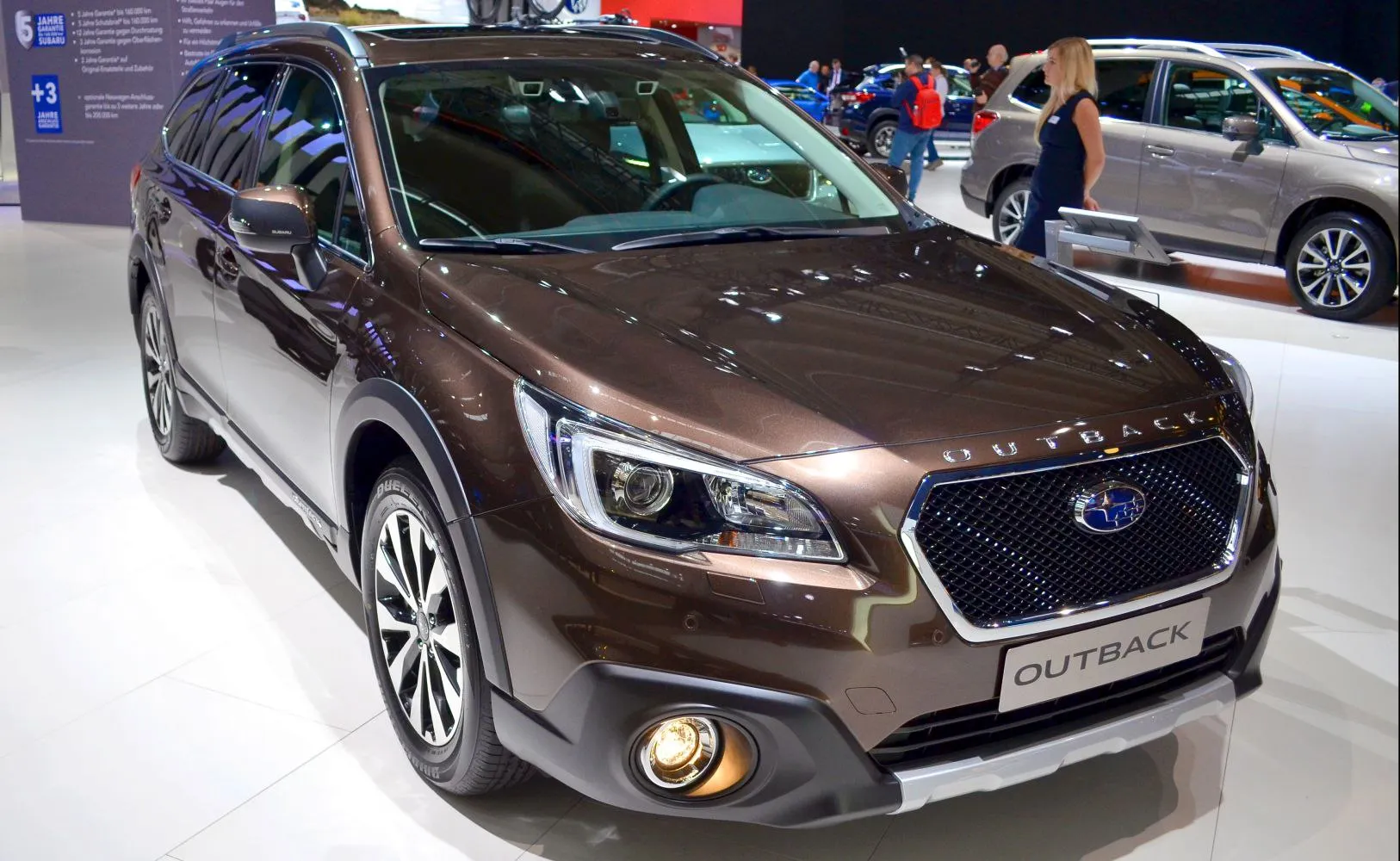
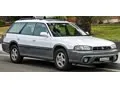
Subaru Outback I 2.5i 4WD (165 Hp)
Overall Rating
Subaru Outback:
The Subaru Outback is an automotive nameplate used by the Japanese automaker Subaru for two different themed vehicles: a Legacy-derived station wagon, the Outback in some markets), and an Impreza-derived off-road themed hatchback, the Outback Sport.
Most versions of the Outback wagon and Outback Sport have had all-wheel drive as standard equipment.
The original Outback station wagon was derived from the wagon variant of the second-generation Subaru Legacy. The first-generation Legacy, which made its debut in 1989, did not receive the cosmetic and suspension modifications to create an Outback version, although Subaru offered an Outdoor option package for the 1994 model year Legacy L all-wheel drive model, which added a compressed air strut height adjustable suspension, a luggage rack, a skidplate, and mud flaps....(Read more on Wikipedia)
I Overview:
Subaru Outback (I). With 226 Nm of torque, it offers ample pulling power. With a weight of 1480 kg, it falls in the mid‑range. All‑wheel drive provides excellent grip, ideal for off‑road use. A car with an extended rear cargo area, combining passenger comfort with increased storage. Seating for 5 makes it ideal for daily use.
The first-generation Subaru Outback was produced before widespread Euro NCAP testing for this vehicle type. While it met contemporary safety standards, it lacks the advanced active and passive safety features found in modern vehicles.
2.5i 4WD (165 Hp) Verdict:

Performance Verdict
The most engaging option, offering the best balance of power and driver control. The manual transmission allows for better utilization of the 165 hp.
Fuel Economy
Similar to the automatic 2.5i at 11 l/100 km (approx. 21 MPG US), but a skilled driver might achieve slightly better results with the manual.
Pros and Cons:
Pros:
- • Excellent Symmetrical All-Wheel Drive capability
- • Spacious and practical wagon body style
- • Good ground clearance for light off-roading
- • Distinctive boxer engine sound and character
- • Generally robust and durable construction
Cons:
- • Fuel economy can be mediocre, especially with the 2.5L engine and automatic
- • Performance of the 2.2L engine is only adequate
- • Early EJ25D engines (2.5L) are prone to head gasket failures
- • Dated interior design and safety features compared to modern vehicles
- • Some interior materials feel basic
Specifications:
| General: | |
|---|---|
| Brand: | Subaru |
| Model: | Outback |
| Generation: | I |
| Modification (Engine): | 2.5i 4WD (165 Hp) |
| Start of production: | 1994 |
| End of production: | 1999 |
| Powertrain Architecture: | Internal Combustion engine |
| Body type: | Station wagon (estate) |
| Seats: | 5 |
| Doors: | 5 |
| Engine: | |
|---|---|
| Power: | 165 Hp @ 5600 rpm. |
| Power per litre: | 67.2 Hp/l |
| Torque: | 226 Nm @ 4400 rpm. |
| Engine Model/Code: | EJ25 |
| Engine displacement: | 2457 |
| Number of cylinders: | 4 |
| Engine configuration: | Boxer |
| Number of valves per cylinder: | 4 |
| Fuel injection system: | Multi-port manifold injection |
| Engine aspiration: | Naturally aspirated engine |
| Valvetrain: | OHC |
| Engine oil capacity: | 4.5 l |
| Engine layout: | Front, Longitudinal |
| Cylinder Bore: | 99.5 mm mm |
| Piston Stroke: | 79 mm mm |
| Compression ratio: | 10:1 |
| Performance: | |
|---|---|
| Fuel Type: | Petrol (Gasoline) |
| Fuel consumption (economy) - urban: | 14 l/100 km |
| Fuel consumption (economy) - extra urban: | 9 l/100 km |
| Fuel consumption (economy) - combined: | 11 l/100 km |
| Emission standard: | EURO 1 |
| Weight-to-power ratio: | 9 kg/Hp, 111.5 Hp/tonne |
| Weight-to-torque ratio: | 6.5 kg/Nm, 152.7 Nm/tonne |
| Space: | |
|---|---|
| Kerb Weight: | 1480 |
| Fuel tank capacity: | 60 l |
| Size: | |
|---|---|
| Length: | 4719 mm mm |
| Width: | 1715 mm mm |
| Height: | 1600 mm mm |
| Wheelbase: | 2629 mm mm |
| Powertrain: | |
|---|---|
| Drive wheel | All wheel drive (4x4) |
| Number of gears | 5 |
| Transmission type | Manual |









The hidden gems or the annoying flaws? Expose the truth about the Subaru Outback!