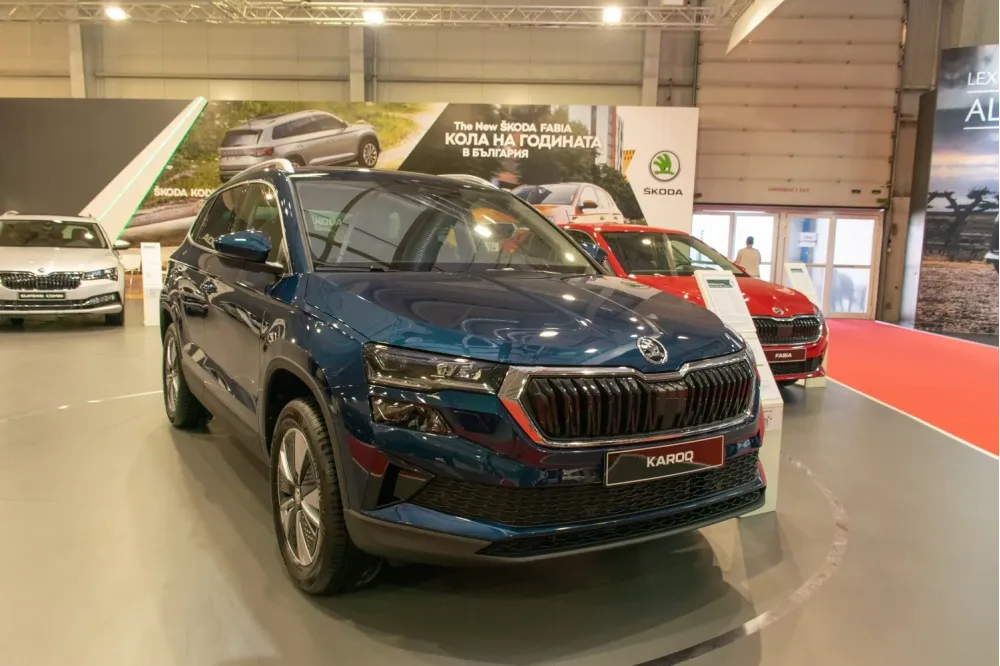
Click on image to view the full photo gallery
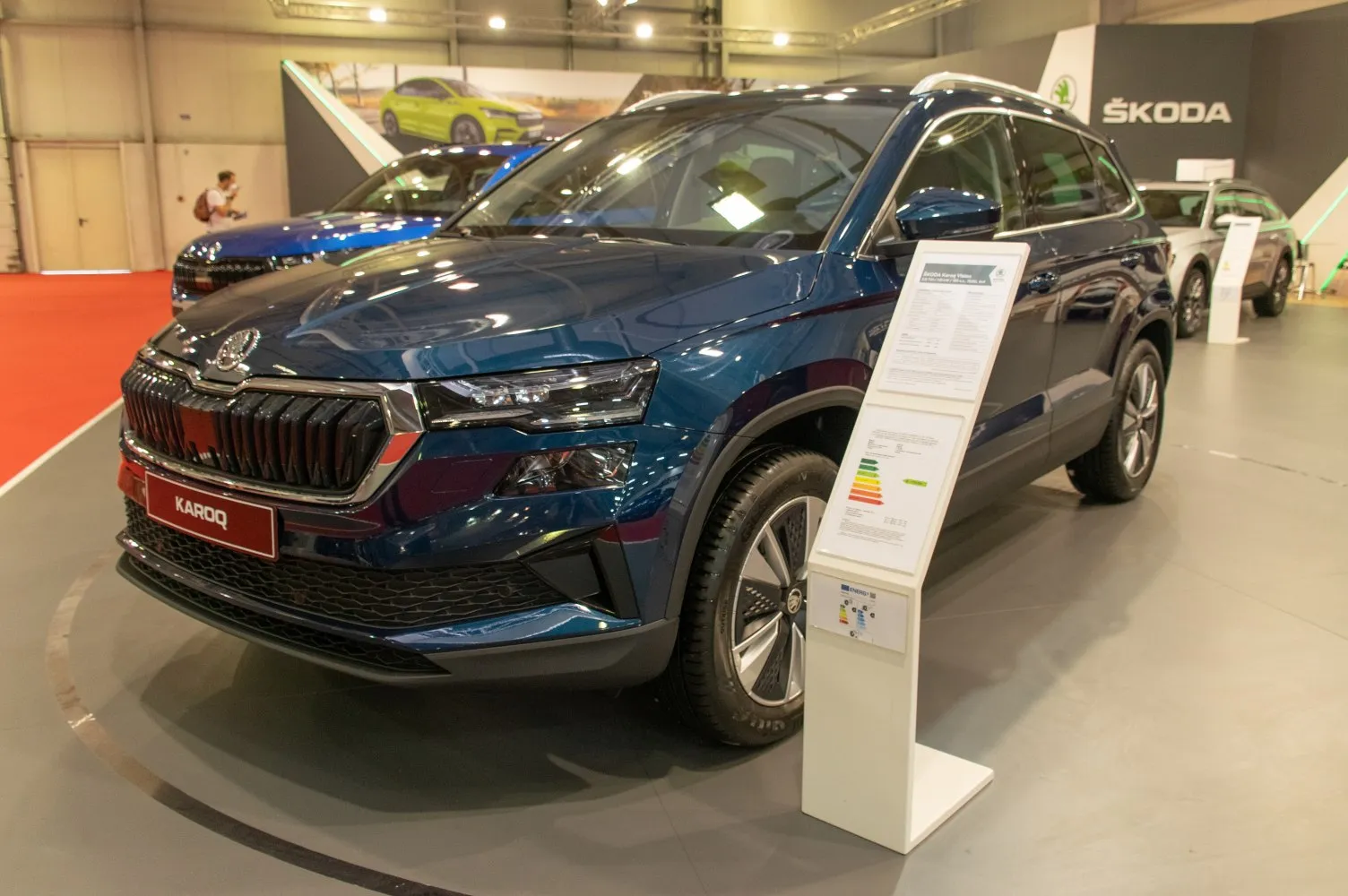
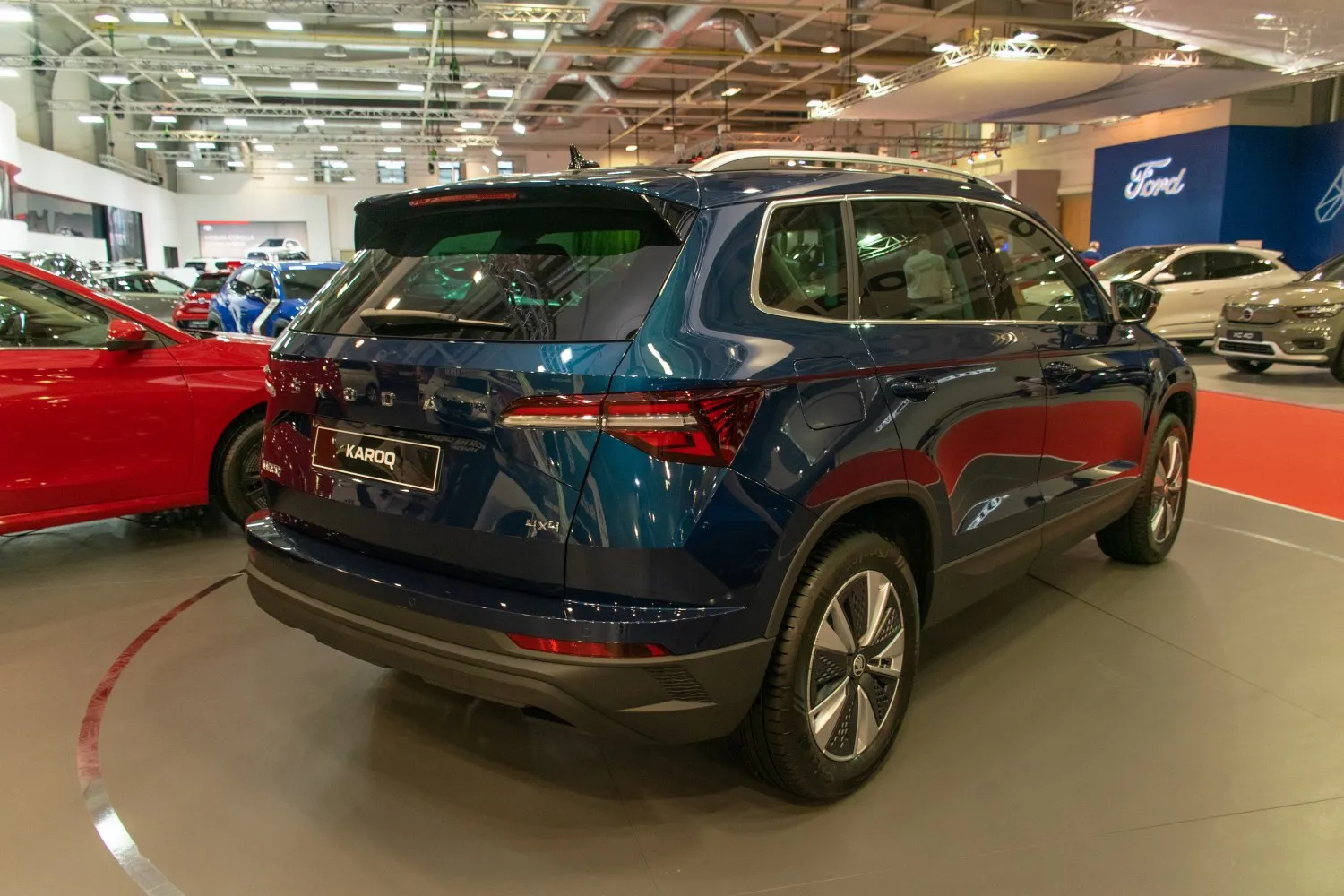
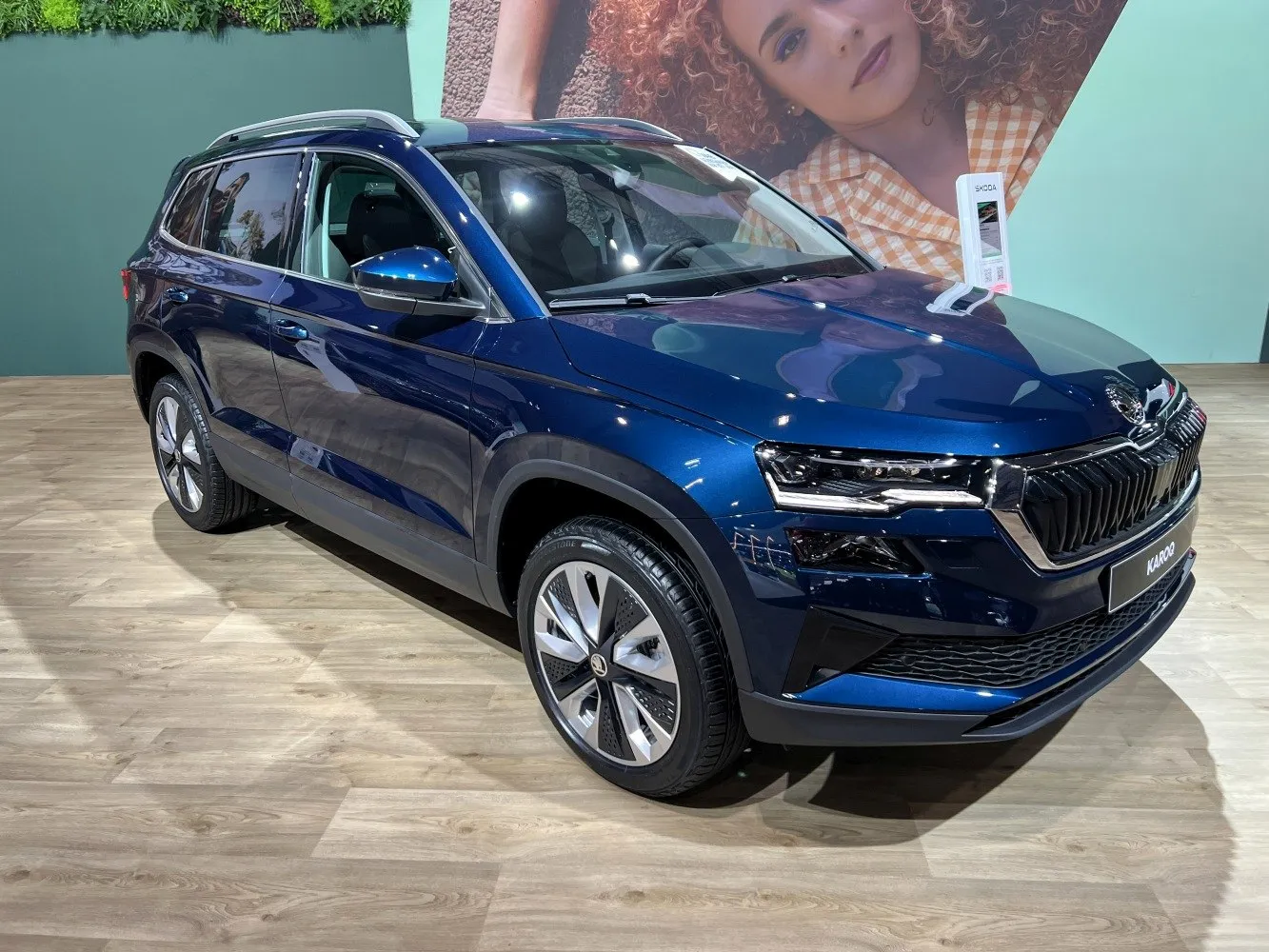
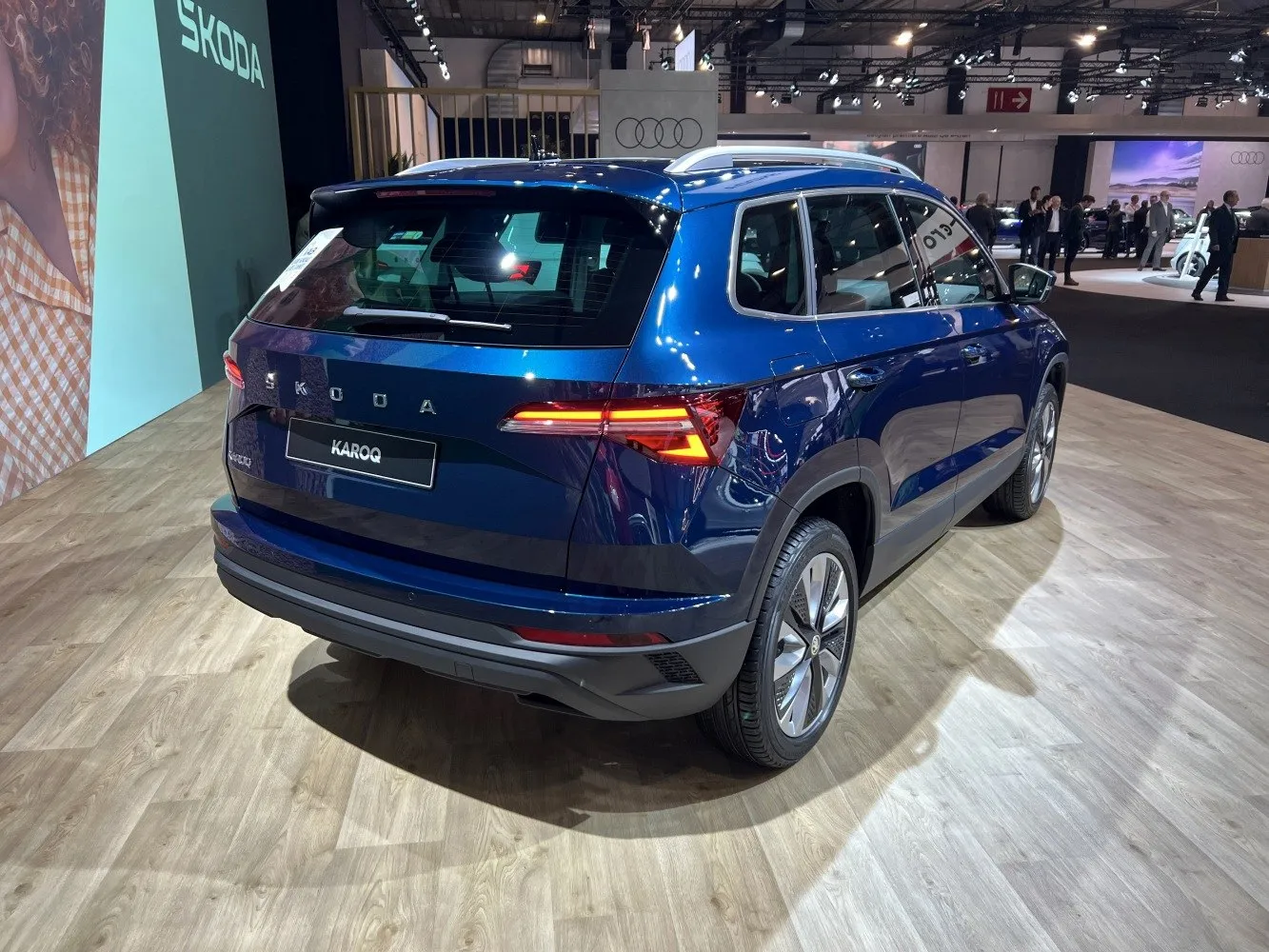
Skoda Karoq facelift 2021 2.0 TDI (150 Hp) 4x4 DSG
Overall Rating
Skoda Karoq:
The Škoda Karoq is a compact crossover SUV designed and built by the Czech car manufacturer Škoda Auto. Introduced in 2017, the vehicle is based on the Volkswagen Group MQB A1 platform, and since replaced the Škoda Yeti. As of 2019, it slots between the smaller Kamiq and the larger Kodiaq in Škoda SUV lineup.
The name Karoq is derived from the Aleutian language, spoken by the native inhabitants of the Alaskan island of Kodiak. It is a combination of the Aleutian words "kaa'raq" and "ruq", a car and an arrow, which are the elements of the Škoda logo. It is the second Škoda model to have a name inspired by the Aleuts, after the Kodiaq....(Read more on Wikipedia)
facelift 2021 Overview:
Skoda Karoq (facelift 2021). With 360 Nm of torque, it offers ample pulling power. It boasts low fuel consumption (~5.7 l/100km). With a weight of 1597 kg, it falls in the mid‑range. All‑wheel drive provides excellent grip, ideal for off‑road use. Acceleration is good (0–100 km/h in 8.7 s). The top speed reaches 204 km/h. A sport utility vehicle offering higher ground clearance and versatile cargo space. Seating for 5 makes it ideal for daily use.
2.0 TDI (150 Hp) 4x4 DSG Verdict:

Performance Verdict
An excellent all-rounder, combining strong diesel torque with the traction of 4x4 and the convenience of DSG, perfect for varied terrain and towing.
Fuel Economy
Impressive fuel economy for a 4x4 diesel, offering a practical balance between capability and running costs.
Pros and Cons:
Pros:
- • Wide range of efficient and capable engines, including 4x4 options.
- • Excellent practicality with a spacious interior and large boot capacity.
- • High safety ratings and comprehensive driver assistance systems.
- • Comfortable ride quality, well-suited for long journeys.
- • Strong value for money in the compact SUV segment.
Cons:
- • Interior design, while functional, can feel less premium than some rivals.
- • Base engines might feel underpowered when fully loaded or on steep inclines.
- • Infotainment system, while updated, may lack the cutting-edge feel of newer competitors.
- • Some road noise can be noticeable at higher speeds.
Specifications:
Specifications are compared to those of the previous generation(Karoq: November, 2020 - November, 2021).
| General: | |
|---|---|
| Brand: | Skoda |
| Model: | Karoq |
| Generation: | facelift 2021 |
| Modification (Engine): | 2.0 TDI (150 Hp) 4x4 DSG |
| Start of production: | November, 2021 |
| Powertrain Architecture: | Internal Combustion engine |
| Body type: | SUV |
| Seats: | 5 |
| Doors: | 5 |
| Engine: | |
|---|---|
| Engine systems: | Start & Stop System |
| Power: | 150 Hp Same horsepower |
| Power per litre: | 76.2 Hp/l [2mm more] |
| Torque: | 360 Nm @ 1600-2750 rpm. |
| Engine Model/Code: | EA288 / DFFA More details about the engine EA288 / DFFA |
| Engine displacement: | 1968 |
| Number of cylinders: | 4 |
| Engine configuration: | Inline |
| Number of valves per cylinder: | 4 |
| Fuel injection system: | Diesel Commonrail |
| Engine aspiration: | Turbocharger, Intercooler |
| Engine oil capacity: | 4.7 l |
| Engine layout: | Front, Transverse |
| Cylinder Bore: | 81 mm mm |
| Piston Stroke: | 95.5 mm mm |
| Performance: | |
|---|---|
| Fuel Type: | Diesel |
| Fuel consumption (economy) - urban: | 5.7 l/100 km |
| Fuel consumption (economy) - extra urban: | 4.2 l/100 km |
| Combined fuel consumption (WLTP): | 5.5 l/100 km |
| Fuel consumption at Low speed (WLTP): | 5.5 l/100 km |
| Fuel consumption at Medium speed (WLTP): | 5.5 l/100 km |
| Fuel consumption at high speed (WLTP): | 5.5 l/100 km |
| Fuel consumption at very high speed (WLTP): | 5.5 l/100 km |
| Fuel consumption (economy) - combined: | 4.7 l/100 km |
| Emission standard: | Euro 6d |
| Acceleration 0 - 100 km/h: | 8.7 sec |
| Acceleration 0 - 62 mph: | 8.7 sec |
| Maximum speed: | 204 km/h |
| Weight-to-power ratio: | 10.3 kg/Hp, 97.1 Hp/tonne |
| Weight-to-torque ratio: | 4.3 kg/Nm, 233 Nm/tonne |
| Acceleration 0 - 60 mph: | 8.3 sec |
| Space: | |
|---|---|
| Kerb Weight: | 1545-1649 |
| Max. weight: | 2188 |
| Max. roof load: | 75 kg |
| Max load: | 539-643 |
| Trunk (boot) space - maximum: | 1630 l |
| Trunk (boot) space - minimum: | 521 l |
| Permitted trailer load with brakes (12%): | 2100 kg |
| Fuel tank capacity: | 50 l |
| Permitted trailer load without brakes: | 750 kg |
| Permitted towbar download: | 90 kg |
| Size: | |
|---|---|
| Length: | 4384 mm mm [2mm more] |
| Width: | 1841 mm mm [Same width.] |
| Height: | 1632 mm mm [29mm more] |
| Wheelbase: | 2630 mm mm [8mm less] |
| Front track: | 1576 mm |
| Rear (Back) track: | 1547 mm |
| Minimum turning circle (turning diameter): | 10.9 m [above average] |
| Powertrain: | |
|---|---|
| Drivetrain Architecture | The Internal combustion engine (ICE) drives the front wheels permanently, and the rear wheels are driven through an electrically or mechanically operated clutch if necessary. |
| Drive wheel | All wheel drive (4x4) |
| Number of gears | 7 |
| Transmission type | Automatic |
| Gearbox type | DSG |
| Front brakes | Ventilated discs [Best for performance and cooling.] |
| Rear brakes | Disc [above average] |
| Assisting systems | ABS (Anti-lock braking system) |
| Steering type | Steering rack and pinion |
| Power steering | Electric Steering |
| Tires size | 225/55 R17 97V |
| Wheel rims size | 7J x 17 |








Help others decide – share your experience!