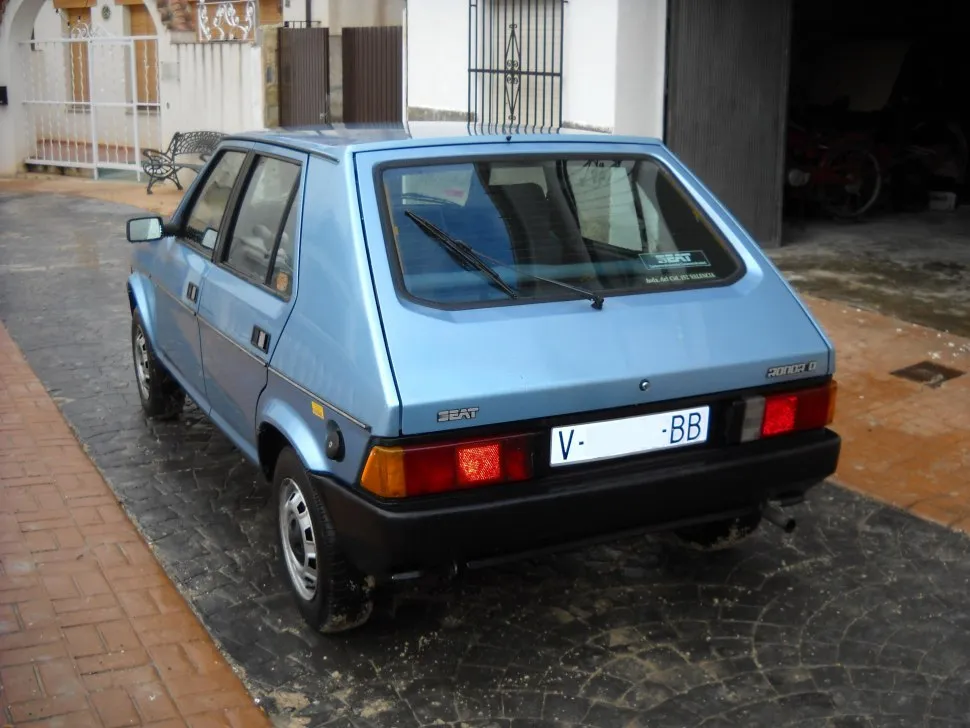
Seat Ronda 022A 1.7 Diesel (56 Hp)
Seat Ronda:
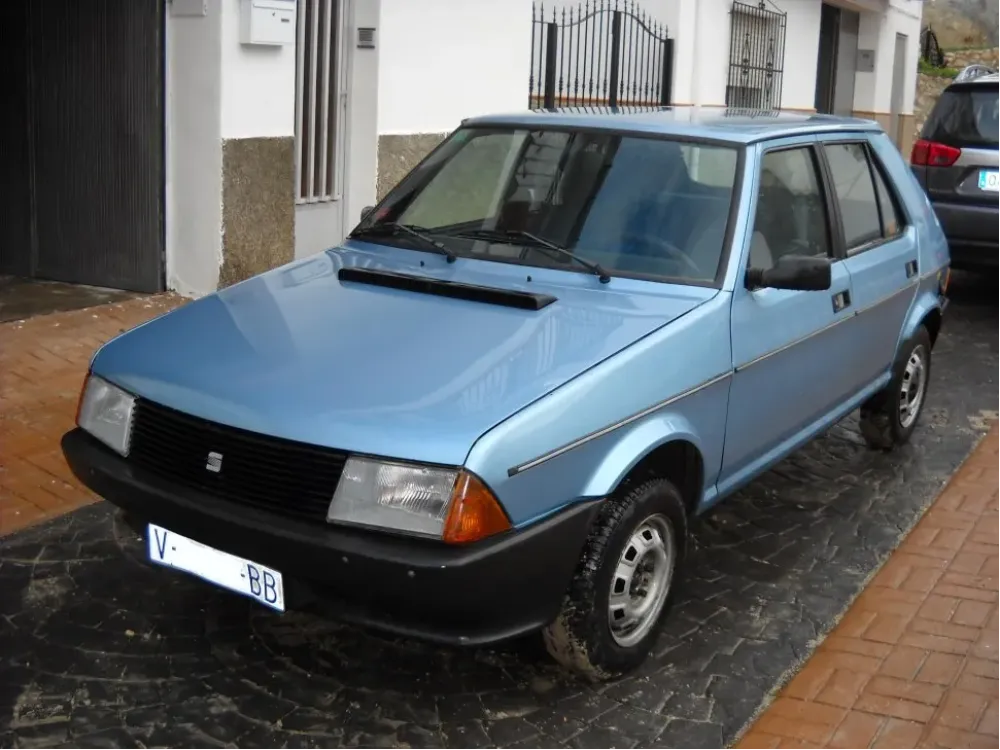
The SEAT Ronda is a small family car produced by the Spanish automaker SEAT from 1982 to 1986, and styled by Tom Tjaarda at Rayton Fissore in collaboration with the Technical Centre in Martorell. The Ronda was the first SEAT model named after a Spanish city. 177,869 Rondas were built in total.
The SEAT Ronda was a restyled SEAT Ritmo which in its turn derived from the Fiat Ritmo. The most visible external design differences between a Ritmo and a Ronda are rectangular headlights on the Ronda in place of the round ones featured on the Ritmo, different tail lights and panels, and changed door handles. Mechanically, there were also some minor differences, mostly due to the use of Spanish-built engines and other parts....(Read more on Wikipedia)
022A Overview:
Seat Ronda (022A). With 98 Nm of torque, it offers ample pulling power. It has moderate fuel consumption (~8.3 l/100km). Weighing only 971 kg, it’s quite light. Front‑wheel drive delivers efficiency and easy handling. Acceleration is relatively slow (0–100 km/h in 21.5 s). The top speed reaches 144 km/h. A compact car with a rear door that swings upward to provide access to the cargo area. Seating for 5 makes it ideal for daily use.
Pros and Cons:
Pros:
- • Efficiency-focused engine (95 hp), ideal for city commuting.
Cons:
- • Previous generation model; may lack the latest driver-assist technologies.
Specifications:
Specifications are compared to those of the previous generation(022A: 1984 - 1986).
| General: |
| Brand: | Seat |
|---|
| Model: | Ronda |
|---|
| Generation: | 022A |
|---|
| Modification (Engine): | 1.7 Diesel (56 Hp) |
|---|
| Start of production: | August, 1983 |
|---|
| End of production: | September, 1985 |
|---|
| Powertrain Architecture: | Internal Combustion engine |
|---|
| Body type: | Hatchback |
|---|
| Seats: | 5 |
|---|
| Doors: | 5 |
|---|
| Engine: |
| Power: | 56 Hp @ 4500 rpm. Same horsepower |
|---|
| Power per litre: | 32.7 Hp/l [worst than previous generation] |
|---|
| Torque: | 98 Nm @ 3000 rpm. |
|---|
| Engine displacement: | 1714 |
|---|
| Number of cylinders: | 4 |
|---|
| Engine configuration: | Inline |
|---|
| Number of valves per cylinder: | 2 |
|---|
| Fuel injection system: | Precombustion chamber injection |
|---|
| Engine aspiration: | Naturally aspirated engine |
|---|
| Valvetrain: | SOHC |
|---|
| Engine layout: | Front, Transverse |
|---|
| Compression ratio: | 20:1 |
|---|
| Performance: |
| Fuel Type: | Diesel |
|---|
| Fuel consumption (economy) - urban: | 8.3 l/100 km |
|---|
| Fuel consumption (economy) - extra urban: | 5 l/100 km |
|---|
| Acceleration 0 - 100 km/h: | 21.5 sec |
|---|
| Acceleration 0 - 62 mph: | 21.5 sec |
|---|
| Maximum speed: | 144 km/h |
|---|
| Weight-to-power ratio: | 17.3 kg/Hp, 57.7 Hp/tonne |
|---|
| Weight-to-torque ratio: | 9.9 kg/Nm, 100.9 Nm/tonne |
|---|
| Acceleration 0 - 60 mph: | 20.4 sec |
|---|
| Space: |
| Kerb Weight: | 971 |
|---|
| Max. weight: | 1450 |
|---|
| Max load: | 479 |
|---|
| Trunk (boot) space - maximum: | 1250 l |
|---|
| Trunk (boot) space - minimum: | 370 l |
|---|
| Fuel tank capacity: | 46 l |
|---|
| Size: |
| Length: | 4011 mm mm |
|---|
| Width: | 1650 mm mm |
|---|
| Height: | 1400 mm mm |
|---|
| Wheelbase: | 2448 mm mm |
|---|
| Minimum turning circle (turning diameter): | 9.4 m [above average] |
|---|
| Powertrain: |
| Drivetrain Architecture | The Internal combustion engine (ICE) drives the front wheels of the vehicle. |
|---|
| Drive wheel | Front wheel drive |
|---|
| Number of gears | 5 |
|---|
| Transmission type | Manual |
|---|
| Front brakes | Disc [bad for performance and cooling.] |
|---|
| Rear brakes | Drum [bad for performance and cooling.] |
|---|
| Steering type | Steering rack and pinion |
|---|
| Power steering | Hydraulic Steering |
|---|
| Front suspension | Independent type McPherson |
|---|
| Rear suspension | Independent coil spring |
|---|






Every driver has a story. What’s yours with the Seat Ronda?