
Click on image to view the full photo gallery
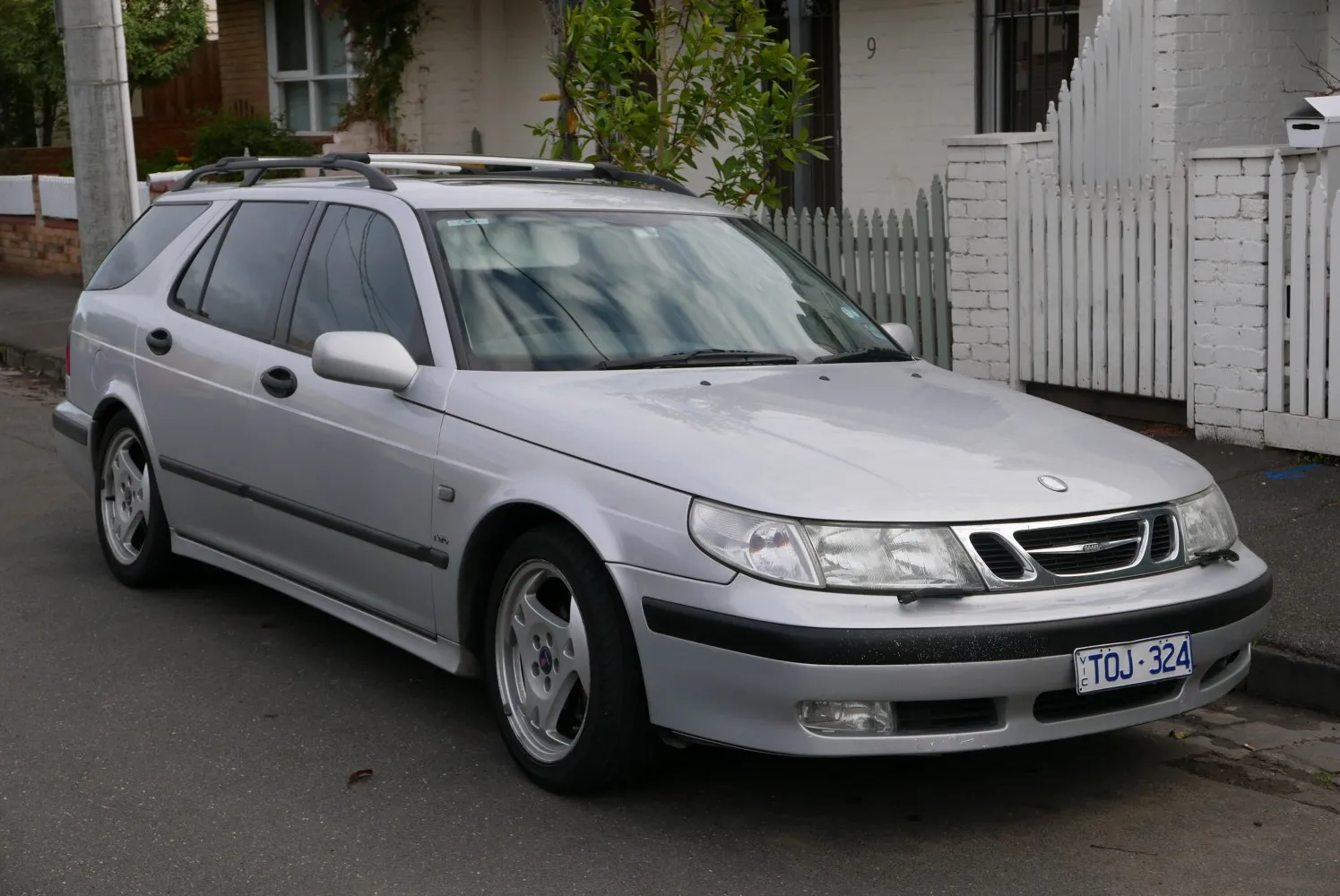
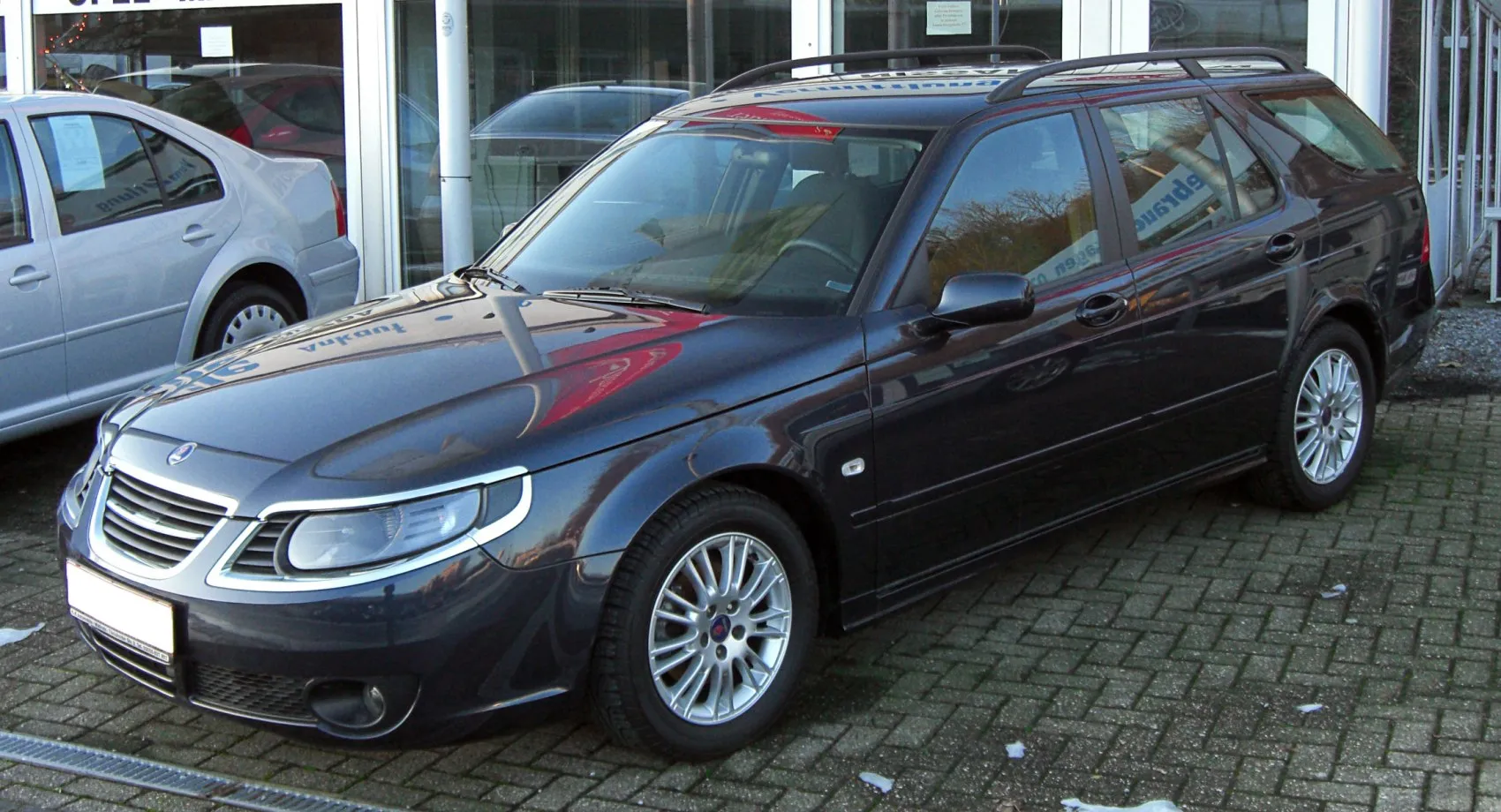
Saab 9-5 Sport Combi (facelift 2005) 2.3t (185 Hp)
Overall Rating
Saab 9-5:
The Saab 9-5 is an executive car, manufactured and marketed by Saab from 1997 to 2012, across two generations.
The first generation 9-5 was introduced in 1997 for the 1998 model year, as the replacement of the Saab 9000. At the time, the car represented a significant development for the manufacturer. In the United States, the 9-5 was introduced in the spring of 1998, for the 1999 model year.
The second generation was presented at the Frankfurt Motor Show on September 15, 2009 and production began in March 2010. It was the first Saab automobile launched under Spyker Cars' ownership, though developed almost entirely under GM's ownership. Production ceased in 2012 amid Saab's liquidation....(Read more on Wikipedia)
Sport Combi (facelift 2005) Overview:
Saab 9-5 (Sport Combi (facelift 2005)). With 280 Nm of torque, it offers ample pulling power. Front‑wheel drive delivers efficiency and easy handling. Acceleration is good (0–100 km/h in 8.8 s). The top speed reaches 225 km/h. A car with an extended rear cargo area, combining passenger comfort with increased storage. Seating for 5 makes it ideal for daily use.
2.3t (185 Hp) Verdict:

Performance Verdict
A strong and flexible engine with good mid-range torque, offering a balanced driving experience with the manual gearbox.
Fuel Economy
Decent fuel economy for a turbo petrol, notably better than its automatic counterpart.
Pros and Cons:
Pros:
- • Distinctive and timeless styling
- • Exceptional comfort, especially the seats
- • Strong and characterful turbocharged engines (especially Aero models)
- • Practical and spacious Sport Combi body style
- • Good value on the used market
Cons:
- • Fuel economy can be high on petrol automatic models
- • Some known reliability issues (e.g., DI cassette, potential for 'sludge' if oil changes neglected)
- • Interior plastics can feel dated compared to German rivals
- • Front-wheel drive only, lacking AWD options of some competitors
- • Automatic transmissions can feel slow and less refined than modern units
Specifications:
Specifications are compared to those of the previous generation(Sport Combi (facelift 2001): 2002 - 2005).
| General: | |
|---|---|
| Brand: | Saab |
| Model: | 9-5 |
| Generation: | Sport Combi (facelift 2005) |
| Modification (Engine): | 2.3t (185 Hp) |
| Start of production: | 2005 |
| End of production: | 2010 |
| Powertrain Architecture: | Internal Combustion engine |
| Body type: | Station wagon (estate) |
| Seats: | 5 |
| Doors: | 5 |
| Engine: | |
|---|---|
| Power: | 185 Hp @ 5500 rpm. Same horsepower |
| Power per litre: | 80.8 Hp/l [33mm more] |
| Torque: | 280 Nm @ 1800-3500 rpm. |
| Engine Model/Code: | B235E More details about the engine B235E |
| Engine displacement: | 2290 |
| Number of cylinders: | 4 |
| Engine configuration: | Inline |
| Number of valves per cylinder: | 4 |
| Fuel injection system: | Multi-port manifold injection |
| Engine aspiration: | Turbocharger, Intercooler |
| Valvetrain: | DOHC |
| Engine oil capacity: | 4 l |
| Coolant: | 7.4 l |
| Engine layout: | Front, Transverse |
| Cylinder Bore: | 90 mm mm |
| Piston Stroke: | 90 mm mm |
| Performance: | |
|---|---|
| Fuel Type: | Petrol (Gasoline) |
| Fuel consumption (economy) - urban: | 13 l/100 km |
| Fuel consumption (economy) - extra urban: | 6.8 l/100 km |
| Fuel consumption (economy) - combined (NEDC): | 9.1 l/100 km |
| Fuel consumption (economy) - urban (NEDC): | 13 l/100 km |
| Fuel consumption (economy) - extra urban (NEDC): | 6.8 l/100 km |
| Fuel consumption (economy) - combined: | 9.1 l/100 km |
| Emission standard: | Euro 4 |
| Acceleration 0 - 100 km/h: | 8.8 sec |
| Acceleration 0 - 62 mph: | 8.8 sec |
| Maximum speed: | 225 km/h |
| Acceleration 0 - 60 mph: | 8.4 sec |
| Space: | |
|---|---|
| Max. roof load: | 100 kg |
| Trunk (boot) space - maximum: | 1490 l |
| Trunk (boot) space - minimum: | 416 l |
| Permitted trailer load with brakes (12%): | 1800 kg |
| Fuel tank capacity: | 75 l |
| Permitted trailer load without brakes: | 750 kg |
| Size: | |
|---|---|
| Length: | 4841 mm mm [33mm more] |
| Width: | 1792 mm mm [Same width.] |
| Height: | 1459 mm mm [33mm less] |
| Wheelbase: | 2703 mm mm [Same wheelbase.] |
| Width including mirrors: | 2070 mm |
| Front track: | 1522 mm |
| Rear (Back) track: | 1528 mm |
| Front overhang: | 1031 mm |
| Rear overhang: | 1106 mm |
| Minimum turning circle (turning diameter): | 10.8 m [above average] |
| Powertrain: | |
|---|---|
| Drivetrain Architecture | The Internal combustion engine (ICE) drives the front wheels of the vehicle. |
| Drive wheel | Front wheel drive |
| Number of gears | 5 |
| Transmission type | Manual |
| Front brakes | Ventilated discs, 308 mm [Best for performance and cooling.] |
| Rear brakes | Disc, 286 mm [above average] |
| Assisting systems | ABS (Anti-lock braking system) |
| Steering type | Steering rack and pinion |
| Power steering | Hydraulic Steering |
| Tires size | 215/55 R16; 225/45 R17 |
| Wheel rims size | 6.5J x 16; 7J x 17 |
| Front suspension | Independent type McPherson, Transverse stabilizer |
| Rear suspension | Independent multi-link suspension, Transverse stabilizer |










Fuel, speed, and comfort: How does the Saab 9-5 rank in your book?