
Click on image to view the full photo gallery
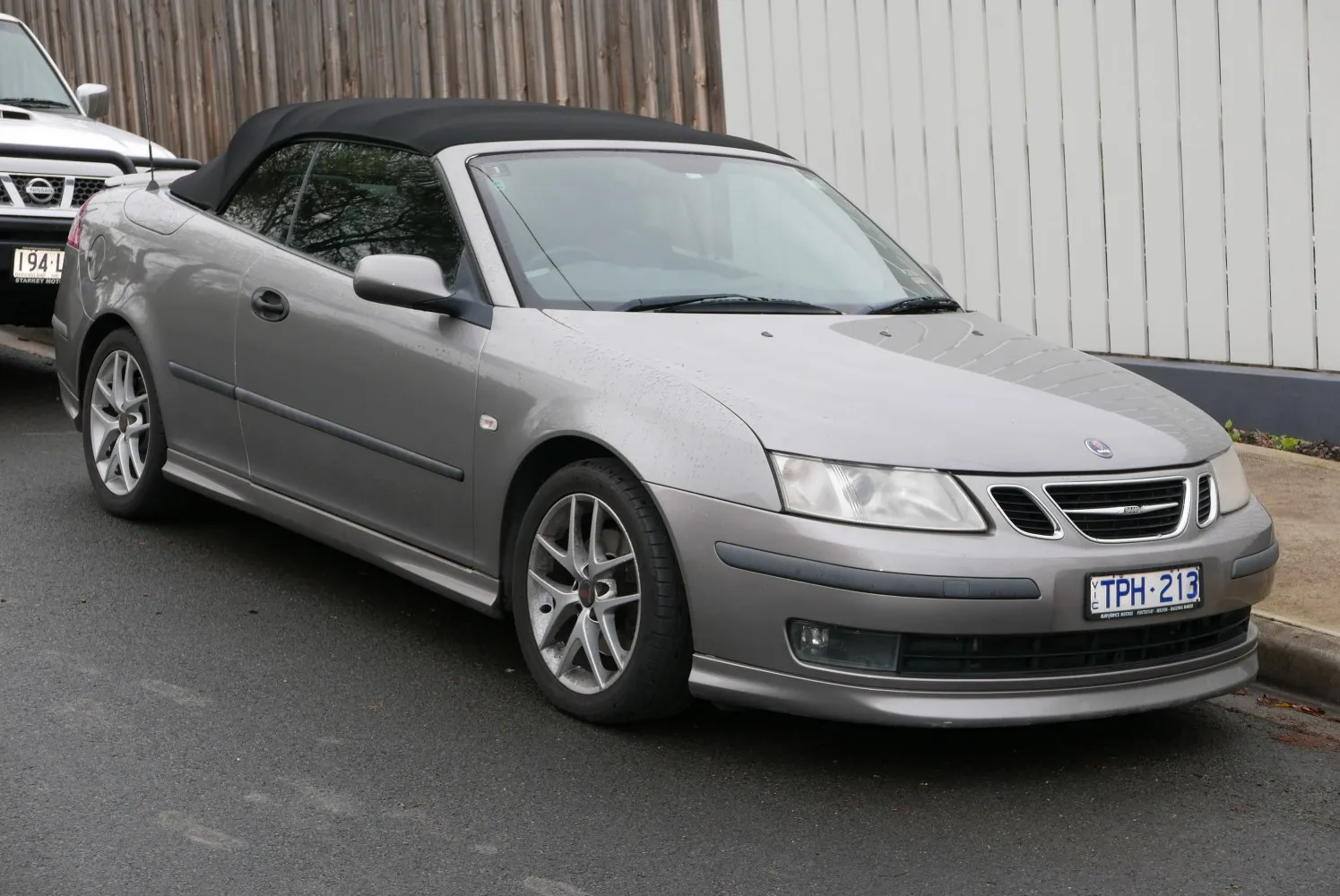
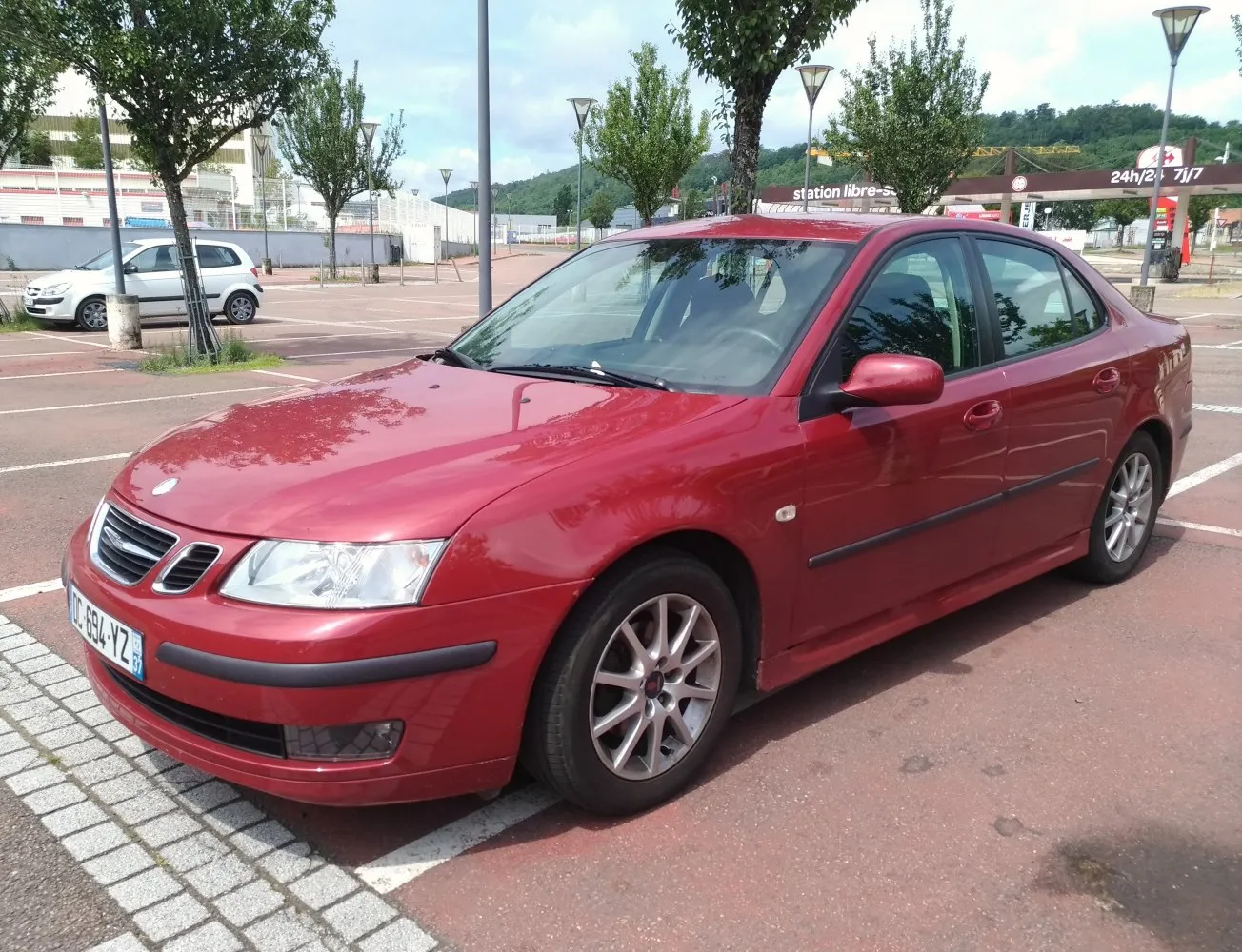
Saab 9-3 Sport Combi II (facelift 2007) 2.0t BioPower (200 Hp)
Overall Rating
Saab 9-3:
The Saab 9-3 is a compact executive car initially developed and manufactured by the Swedish automaker Saab.
The first generation 9-3 is based on the GM2900 platform, changing to the GM Epsilon platform with the introduction of the second-generation car. Other vehicles using this platform include the Opel Vectra, Chevrolet Malibu, and Cadillac BLS.
National Electric Vehicle Sweden , Saab's then parent company briefly assembled a few 9-3 sedans during 2013 and 2014....(Read more on Wikipedia)
Sport Combi II (facelift 2007) Overview:
Saab 9-3 (Sport Combi II (facelift 2007)). With 300 Nm of torque, it offers ample pulling power. It has moderate fuel consumption (~11.5 l/100km). With a weight of 1580 kg, it falls in the mid‑range. Front‑wheel drive delivers efficiency and easy handling. Acceleration is good (0–100 km/h in 8.1 s). The top speed reaches 225 km/h. A car with an extended rear cargo area, combining passenger comfort with increased storage. Seating for 5 makes it ideal for daily use.
2.0t BioPower (200 Hp) Verdict:

Performance Verdict
Strong performance, especially when running on E85, offering a noticeable power boost and quick acceleration.
Fuel Economy
Good fuel economy on petrol, though E85 consumption will be higher due to its lower energy density.
Pros and Cons:
Pros:
- • Distinctive and stylish design, standing out from competitors.
- • Excellent safety record and robust build quality.
- • Practical and versatile Sport Combi body style with good cargo space.
- • Wide range of powerful and efficient (including BioPower) engine options.
- • Comfortable and ergonomic interior, ideal for long journeys.
Cons:
- • Brand uncertainty and eventual demise can affect parts availability and specialist support.
- • Some interior plastics feel less premium than German rivals.
- • Fuel economy can be high on larger engines, especially with automatic transmissions.
- • Resale values can be lower compared to more mainstream premium brands.
Specifications:
Specifications are compared to those of the previous generation(Sport Combi II: 2006 - 2007).
| General: | |
|---|---|
| Brand: | Saab |
| Model: | 9-3 |
| Generation: | Sport Combi II (facelift 2007) |
| Modification (Engine): | 2.0t BioPower (200 Hp) |
| Start of production: | 2007 |
| End of production: | 2010 |
| Powertrain Architecture: | Internal Combustion engine |
| Body type: | Station wagon (estate) |
| Seats: | 5 |
| Doors: | 5 |
| Engine: | |
|---|---|
| Power: | 200 Hp @ 5500 rpm. Same horsepower |
| Power per litre: | 100.1 Hp/l [16mm more] |
| Torque: | 300 Nm @ 2500 rpm. |
| Engine Model/Code: | B207L More details about the engine B207L |
| Engine displacement: | 1998 |
| Number of cylinders: | 4 |
| Engine configuration: | Inline |
| Number of valves per cylinder: | 4 |
| Fuel injection system: | Multi-port manifold injection |
| Engine aspiration: | Turbocharger, Intercooler |
| Valvetrain: | DOHC |
| Engine oil capacity: | 6 l |
| Coolant: | 7.1 l |
| Engine layout: | Front, Transverse |
| Cylinder Bore: | 86 mm mm |
| Piston Stroke: | 86 mm mm |
| Compression ratio: | 9.5:1 |
| Performance: | |
|---|---|
| Fuel Type: | Petrol / Ethanol - E85 |
| Fuel consumption (economy) - urban: | 11.5 l/100 km |
| Fuel consumption (economy) - extra urban: | 6.4 l/100 km |
| Fuel consumption (economy) - combined (NEDC): | 8.3 l/100 km |
| Fuel consumption (economy) - urban (NEDC): | 11.5 l/100 km |
| Fuel consumption (economy) - extra urban (NEDC): | 6.4 l/100 km |
| Fuel consumption (economy) - combined: | 8.3 l/100 km |
| Emission standard: | Euro 4 |
| Acceleration 0 - 100 km/h: | 8.1 sec |
| Acceleration 0 - 62 mph: | 8.1 sec |
| Maximum speed: | 225 km/h |
| Weight-to-power ratio: | 7.9 kg/Hp, 126.6 Hp/tonne |
| Weight-to-torque ratio: | 5.3 kg/Nm, 189.9 Nm/tonne |
| Acceleration 0 - 60 mph: | 7.7 sec |
| Space: | |
|---|---|
| Kerb Weight: | 1580 |
| Max. weight: | 2030 |
| Max. roof load: | 100 kg |
| Max load: | 450 |
| Trunk (boot) space - maximum: | 1273 l |
| Trunk (boot) space - minimum: | 419 l |
| Permitted trailer load with brakes (12%): | 1600 kg |
| Fuel tank capacity: | 61 l |
| Permitted trailer load without brakes: | 750 kg |
| Size: | |
|---|---|
| Length: | 4670 mm mm [16mm more] |
| Width: | 1762 mm mm [Same width.] |
| Height: | 1496 mm mm [4mm more] |
| Wheelbase: | 2675 mm mm [Same wheelbase.] |
| Width including mirrors: | 2038 mm |
| Front track: | 1524 mm |
| Rear (Back) track: | 1506 mm |
| Front overhang: | 981 mm |
| Rear overhang: | 1014 mm |
| Ride height (ground clearance): | 127 mm |
| Minimum turning circle (turning diameter): | 10.8 m [above average] |
| Powertrain: | |
|---|---|
| Drivetrain Architecture | The Internal combustion engine (ICE) drives the front wheels of the vehicle. |
| Drive wheel | Front wheel drive |
| Number of gears | 6 |
| Transmission type | Manual |
| Front brakes | Ventilated discs, 302 mm [Best for performance and cooling.] |
| Rear brakes | Ventilated discs, 292 mm [Best for performance and cooling.] |
| Assisting systems | ABS (Anti-lock braking system) |
| Steering type | Steering rack and pinion |
| Power steering | Hydraulic Steering |
| Tires size | 195/65 R15; 215/55 R16; 235/45 R17 |
| Wheel rims size | 6.5J x 15; 6.5J x 16; 7.5J x 17 |
| Front suspension | Independent type McPherson, Transverse stabilizer |
| Rear suspension | Independent multi-link suspension, Transverse stabilizer |




Describe your experience with the Saab 9-3 using only emojis!