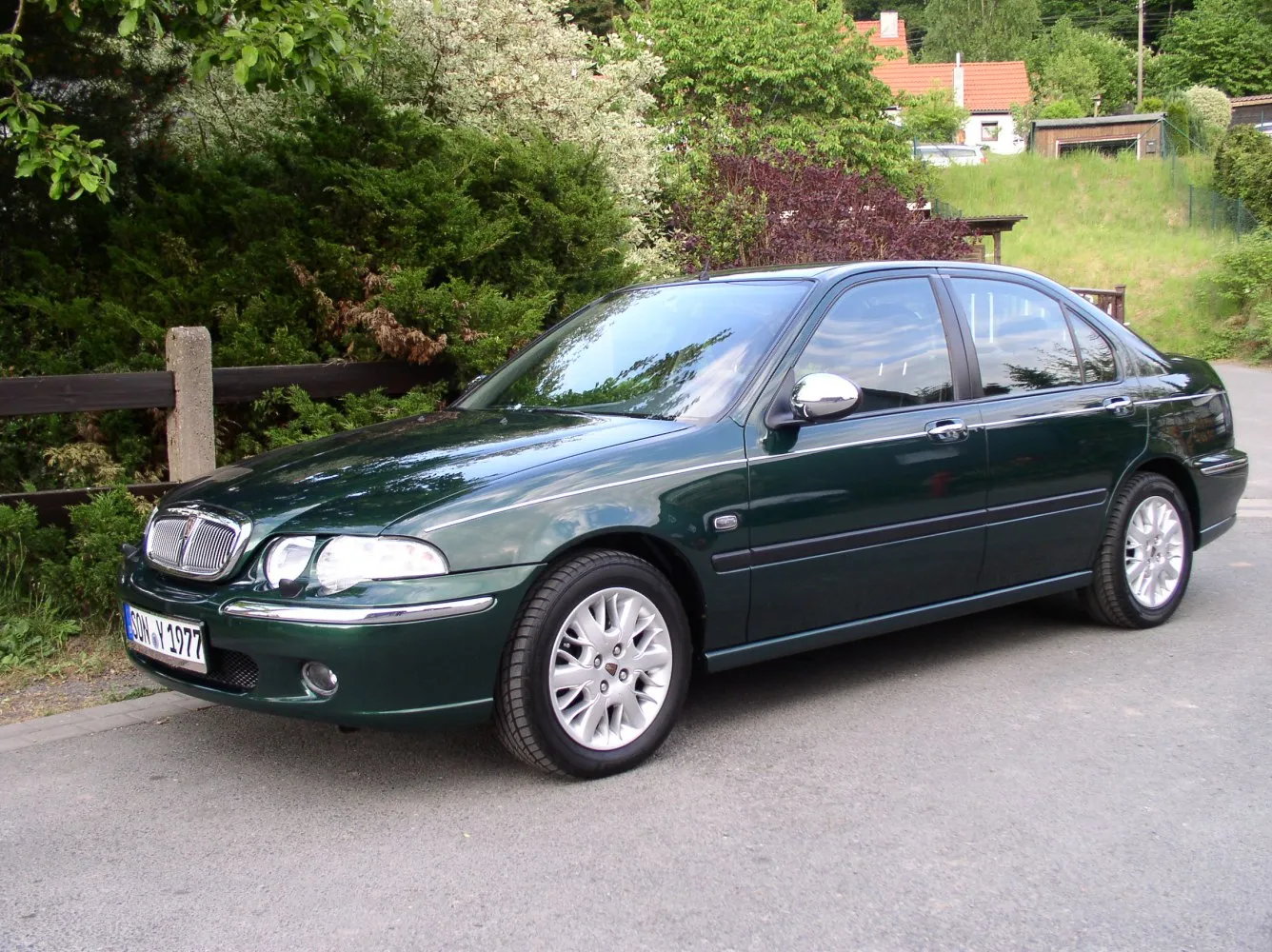
Rover 45 Hatchback (RT) 2.0 TD (101 Hp)
People\'s Opinion
N/A / 5
Rover 45:
The Rover 400 Series, and later the Rover 45, are a series of small family cars that were produced by the British manufacturer Rover from 1990 to 2005. The cars were co-developed as part of Rover's collaboration with Honda. The first-generation 400 was based on the Honda Concerto, and the Mark II 400 was based on the Honda Domani/Civic.
Honda petrol engines were used in some Rover models, while the market competitive Rover L-series diesel engine was used from the mid-1990s in Hondas, before they designed their own diesel engine....(Read more on Wikipedia)
Hatchback (RT) Overview:
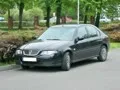
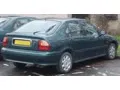
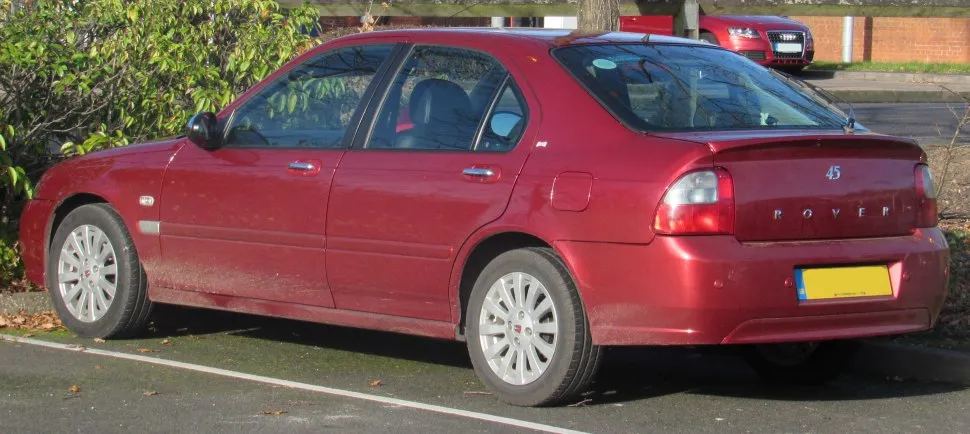
Rover 45 (Hatchback (RT)). With 240 Nm of torque, it offers ample pulling power. It has moderate fuel consumption (~7.1 l/100km). With a weight of 1305 kg, it falls in the mid‑range. Front‑wheel drive delivers efficiency and easy handling. Acceleration is relatively slow (0–100 km/h in 10.6 s). The top speed reaches 185 km/h. A compact car with a rear door that swings upward to provide access to the cargo area. Seating for 5 makes it ideal for daily use.
Performance Verdict
Offers strong low-end torque for effortless driving, particularly effective for motorway journeys and general daily use.
Fuel Economy
Outstanding fuel economy, making it the most economical choice for long-distance travel and reducing running costs significantly.
Best Use Case:
Highway Driving / Commuting
Pros and Cons:
Pros:
- • Comfortable ride quality, especially on longer journeys
- • Spacious interior for its class with good rear legroom
- • Traditional British styling with a classic appeal
- • Affordable on the used market, offering good value
- • Range of efficient diesel engines for low running costs
Cons:
- • Dated interior design and material quality compared to rivals
- • Known reliability issues, particularly with the K-series head gasket
- • Poor Euro NCAP safety rating (based on predecessor's platform)
- • Limited modern features and technology
- • Significant depreciation and challenging resale value
Specifications:
| General: |
| Brand: | Rover |
|---|
| Model: | 45 |
|---|
| Generation: | Hatchback (RT) |
|---|
| Modification (Engine): | 2.0 TD (101 Hp) |
|---|
| Start of production: | 1999 |
|---|
| End of production: | 2005 |
|---|
| Powertrain Architecture: | Internal Combustion engine |
|---|
| Body type: | Hatchback |
|---|
| Seats: | 5 |
|---|
| Doors: | 5 |
|---|
| Engine: |
| Power: | 101 Hp @ 4200 rpm. |
|---|
| Power per litre: | 50.7 Hp/l |
|---|
| Torque: | 240 Nm @ 2000 rpm. |
|---|
| Engine Model/Code: | L |
|---|
| Engine displacement: | 1994 |
|---|
| Number of cylinders: | 4 |
|---|
| Engine configuration: | Inline |
|---|
| Number of valves per cylinder: | 2 |
|---|
| Fuel injection system: | Diesel Commonrail |
|---|
| Engine aspiration: | Turbocharger |
|---|
| Valvetrain: | OHC |
|---|
| Engine oil capacity: | 5 l |
|---|
| Coolant: | 7 l |
|---|
| Engine layout: | Front, Transverse |
|---|
| Cylinder Bore: | 84.5 mm mm |
|---|
| Piston Stroke: | 88.9 mm mm |
|---|
| Compression ratio: | 19.5:1 |
|---|
| Performance: |
| Fuel Type: | Diesel |
|---|
| Fuel consumption (economy) - urban: | 7.1 l/100 km |
|---|
| Fuel consumption (economy) - extra urban: | 4.3 l/100 km |
|---|
| Fuel consumption (economy) - combined: | 5.4 l/100 km |
|---|
| Acceleration 0 - 100 km/h: | 10.6 sec |
|---|
| Acceleration 0 - 62 mph: | 10.6 sec |
|---|
| Maximum speed: | 185 km/h |
|---|
| Weight-to-power ratio: | 12.9 kg/Hp, 77.4 Hp/tonne |
|---|
| Weight-to-torque ratio: | 5.4 kg/Nm, 183.9 Nm/tonne |
|---|
| Acceleration 0 - 60 mph: | 10.1 sec |
|---|
| Space: |
| Kerb Weight: | 1305 |
|---|
| Max. weight: | 1720 |
|---|
| Max load: | 415 |
|---|
| Trunk (boot) space - maximum: | 717 l |
|---|
| Trunk (boot) space - minimum: | 380 l |
|---|
| Fuel tank capacity: | 55 l |
|---|
| Size: |
| Length: | 4362 mm mm |
|---|
| Width: | 1696 mm mm |
|---|
| Height: | 1394 mm mm |
|---|
| Wheelbase: | 2620 mm mm |
|---|
| Front track: | 1475 mm |
|---|
| Rear (Back) track: | 1465 mm |
|---|
| Powertrain: |
| Drivetrain Architecture | The Internal combustion engine (ICE) drives the front wheels of the vehicle. |
|---|
| Drive wheel | Front wheel drive |
|---|
| Number of gears | 5 |
|---|
| Transmission type | Manual |
|---|
| Front brakes | Ventilated discs |
|---|
| Rear brakes | Disc |
|---|
| Assisting systems | ABS (Anti-lock braking system) |
|---|
| Steering type | Steering rack and pinion |
|---|
| Power steering | Hydraulic Steering |
|---|
| Tires size | 175/70 R14 T |
|---|
| Front suspension | Wishbone |
|---|
| Rear suspension | Spring Strut |
|---|










Rate the Rover 45 from 1 to 10!