
Click on image to view the full photo gallery
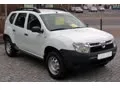
Renault Kaptur facelift 2020 1.3 TCe (150 Hp) 4x4 CVT X-Tronic
Overall Rating
Renault Kaptur:
The Renault Captur is a series of subcompact crossover SUVs manufactured by the French automaker Renault. The production version of the first one, based on the B platform, made its debut at the 2013 Geneva Motor Show and started to be marketed in France during April 2013. The Captur Concept was first shown at the 2011 Geneva Motor Show.
Under the "same skin with different specification" strategy adopted by Renault, the Captur was made in a larger version based on the low-cost B0 platform shared with the Duster. It uses the similar styling with the first-generation Captur but with an extended wheelbase, greater ground clearance and all-wheel-drive drivetrain. Referred internally as the "Captur Global Access", the vehicle was produced in Russia, Brazil and India....(Read more on Wikipedia)
facelift 2020 Overview:
Renault Kaptur (facelift 2020). With 250 Nm of torque, it offers ample pulling power. It has moderate fuel consumption (~9.4 l/100km). With a weight of 1424 kg, it falls in the mid‑range. All‑wheel drive provides excellent grip, ideal for off‑road use. Acceleration is relatively slow (0–100 km/h in 10.4 s). The top speed reaches 188 km/h. A vehicle that combines characteristics of SUVs and hatchbacks for versatility. Seating for 5 makes it ideal for daily use.
1.3 TCe (150 Hp) 4x4 CVT X-Tronic Verdict:

Performance Verdict
Combines strong turbocharged performance with the added traction of 4x4. Acceleration is slightly tempered by the AWD system but remains robust.
Fuel Economy
Good fuel economy for an AWD crossover with this power. The 4x4 system adds a slight consumption penalty but is justified by enhanced capability.
Pros and Cons:
Pros:
- • High ground clearance (205 mm) for varied road conditions
- • Available all-wheel-drive (AWD) enhances versatility
- • Modern and efficient 1.3 TCe turbocharged engine option
- • Spacious interior and practical boot capacity
- • Robust suspension setup designed for tougher roads
Cons:
- • Base 1.6L engine can feel underpowered, especially with CVT
- • CVT transmission can be noisy under hard acceleration
- • Interior materials, while durable, may lack a premium feel
- • Rear drum brakes on some trims are a dated feature
- • No direct Euro NCAP safety rating for this specific Kaptur model
Specifications:
Specifications are compared to those of the previous generation(Kaptur: April, 2016 - May, 2020).
| General: | |
|---|---|
| Brand: | Renault |
| Model: | Kaptur |
| Generation: | facelift 2020 |
| Modification (Engine): | 1.3 TCe (150 Hp) 4x4 CVT X-Tronic |
| Start of production: | May, 2020 |
| Powertrain Architecture: | Internal Combustion engine |
| Body type: | Crossover |
| Seats: | 5 |
| Doors: | 5 |
| Engine: | |
|---|---|
| Engine systems: | Start & Stop System |
| Power: | 150 Hp @ 5250 rpm. Same horsepower |
| Power per litre: | 112.6 Hp/l [Same length.] |
| Torque: | 250 Nm @ 1700 rpm. |
| Engine Model/Code: | H5H More details about the engine H5H |
| Engine displacement: | 1332 |
| Number of cylinders: | 4 |
| Engine configuration: | Inline |
| Number of valves per cylinder: | 4 |
| Fuel injection system: | Direct injection |
| Engine aspiration: | Turbocharger, Intercooler |
| Engine layout: | Front, Transverse |
| Cylinder Bore: | 72.21 mm mm |
| Piston Stroke: | 81.41 mm mm |
| Compression ratio: | 10.5:1 |
| Performance: | |
|---|---|
| Fuel Type: | Petrol (Gasoline) |
| Fuel consumption (economy) - urban: | 9.4 l/100 km |
| Fuel consumption (economy) - extra urban: | 6.1 l/100 km |
| Fuel consumption (economy) - combined: | 7.4 l/100 km |
| Emission standard: | Euro 5 |
| Acceleration 0 - 100 km/h: | 10.4 sec |
| Acceleration 0 - 62 mph: | 10.4 sec |
| Maximum speed: | 188 km/h |
| Weight-to-power ratio: | 9.4 kg/Hp, 106.1 Hp/tonne |
| Weight-to-torque ratio: | 5.7 kg/Nm, 176.8 Nm/tonne |
| Acceleration 0 - 60 mph: | 9.9 sec |
| Space: | |
|---|---|
| Kerb Weight: | 1414-1435 |
| Max. weight: | 1883 |
| Max load: | 448-469 |
| Trunk (boot) space - maximum: | 1200 l |
| Trunk (boot) space - minimum: | 387 l |
| Permitted trailer load with brakes (12%): | 1200 kg |
| Fuel tank capacity: | 50 l |
| Permitted trailer load without brakes: | 740 kg |
| Size: | |
|---|---|
| Length: | 4333 mm mm [Same length.] |
| Width: | 1813 mm mm [Same width.] |
| Height: | 1613 mm mm [Same height.] |
| Wheelbase: | 2673 mm mm [Same wheelbase.] |
| Front track: | 1564 mm |
| Rear (Back) track: | 1570 mm |
| Front overhang: | 850 mm |
| Rear overhang: | 808 mm |
| Ride height (ground clearance): | 205 mm |
| Minimum turning circle (turning diameter): | 10.9 m [above average] |
| Approach angle: | 20° |
| Departure angle: | 31° |
| Powertrain: | |
|---|---|
| Drivetrain Architecture | The Internal combustion engine (ICE) drives the front wheels permanently, and the rear wheels are driven through an electrically or mechanically operated clutch if necessary. |
| Drive wheel | All wheel drive (4x4) |
| Number of gears | 7 |
| Transmission type | Automatic |
| Gearbox type | CVT X-Tronic |
| Front brakes | Ventilated discs, 269x22 mm [Best for performance and cooling.] |
| Rear brakes | Drum, 229 mm [bad for performance and cooling.] |
| Assisting systems | ABS (Anti-lock braking system) |
| Steering type | Steering rack and pinion |
| Power steering | Electric Steering |
| Tires size | 215/65 R16; 215/60 R17 |
| Wheel rims size | 16; 17 |
| Front suspension | Independent, type McPherson with coil spring and anti-roll bar |
| Rear suspension | Independent multi-link spring suspension with stabilizer |














Does the Renault Kaptur live up to the hype? Give us your verdict!