
Click on image to view the full photo gallery
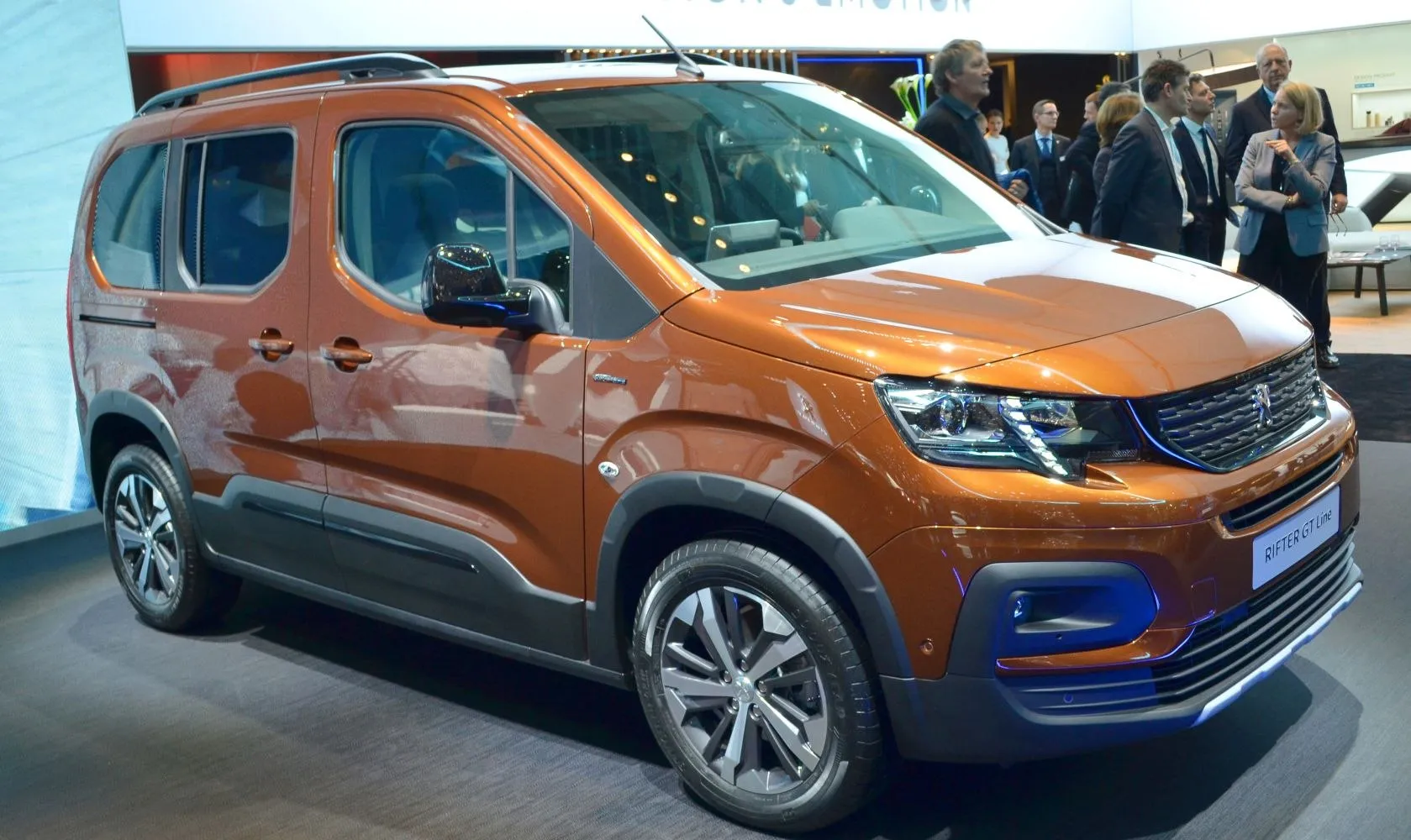
Peugeot Rifter L2 1.5 BlueHDi (131 Hp)
Overall Rating
Peugeot Rifter:
The Citroën Berlingo and Peugeot Partner are a range of minivans produced since 1996 and marketed under the Citroën and Peugeot marque. They are sold as light commercial vehicles or as a passenger multi-purpose-vehicle variant with rear seats and windows. They were initially a product of the French PSA Group, which later became part of the multinational Stellantis conglomerate. The third generation has also been sold under the Opel and Vauxhall Motors marques as the Combo, by Toyota as the Proace City from 2019, and by Fiat as the Doblò from 2022....(Read more on Wikipedia)
L2 Overview:
Peugeot Rifter (L2). With 300 Nm of torque, it offers ample pulling power. With a weight of 1540 kg, it falls in the mid‑range. Front‑wheel drive delivers efficiency and easy handling. Acceleration is relatively slow (0–100 km/h in 10.9 s). The top speed reaches 187 km/h. A spacious vehicle designed to transport passengers comfortably, often with sliding doors. With seating for 7, it’s perfect for larger families.
The Rifter (tested as the standard wheelbase) achieved a commendable 4-star Euro NCAP rating in 2018, demonstrating strong adult occupant protection and a good suite of safety assist systems for its segment.
1.5 BlueHDi (131 Hp) Verdict:

Performance Verdict
A significant step up in performance (10.9 sec 0-100km/h), offering strong acceleration and effortless cruising, especially when fully loaded.
Fuel Economy
Maintains excellent fuel efficiency despite the increased power, making it a highly economical choice for all types of driving.
Pros and Cons:
Pros:
- • Exceptional interior space and practicality, especially the L2 variant with 7 seats and huge boot.
- • Comfortable ride quality, soaking up road imperfections well.
- • Wide range of efficient engine options, including electric.
- • High ground clearance and SUV-inspired styling for a robust look.
- • Excellent value for money considering its versatility and features.
Cons:
- • Interior materials can feel utilitarian in lower trims.
- • Driving dynamics are more focused on comfort than agility.
- • Some engine options can feel underpowered when fully loaded.
- • Exterior styling may not appeal to everyone, being very boxy.
- • Electric range of the e-Rifter might be insufficient for some long-distance drivers.
Specifications:
Specifications are compared to those of the previous generation(4x4 Concept: 2018 - 2018).
| General: | |
|---|---|
| Brand: | Peugeot |
| Model: | Rifter |
| Generation: | L2 |
| Modification (Engine): | 1.5 BlueHDi (131 Hp) |
| Start of production: | April, 2020 |
| End of production: | March, 2024 |
| Powertrain Architecture: | Internal Combustion engine |
| Body type: | Minivan |
| Seats: | 7 |
| Doors: | 5 |
| Engine: | |
|---|---|
| Engine systems: | Start & Stop System |
| Power: | 131 Hp @ 3750 rpm. |
| Power per litre: | 87.4 Hp/l |
| Torque: | 300 Nm @ 1750 rpm. |
| Engine Model/Code: | YHZ DV5RC [Same engine] More details about the engine YHZ DV5RC |
| Engine displacement: | 1499 |
| Number of cylinders: | 4 |
| Engine configuration: | Inline |
| Number of valves per cylinder: | 4 |
| Fuel injection system: | Diesel Commonrail |
| Engine aspiration: | Turbocharger, Intercooler |
| Engine oil capacity: | 4 l |
| Engine layout: | Front, Transverse |
| Performance: | |
|---|---|
| Fuel Type: | Diesel |
| Combined fuel consumption (WLTP): | 5-5.9 l/100 km |
| Fuel consumption at Low speed (WLTP): | 5-5.8 l/100 km |
| Fuel consumption at Medium speed (WLTP): | 4.6-5.5 l/100 km |
| Fuel consumption at high speed (WLTP): | 4.3-5.2 l/100 km |
| Fuel consumption at very high speed (WLTP): | 5.7-6.7 l/100 km |
| Emission standard: | Euro 6d-ISC |
| Acceleration 0 - 100 km/h: | 10.9 sec |
| Acceleration 0 - 62 mph: | 10.9 sec |
| Maximum speed: | 187 km/h |
| Weight-to-power ratio: | 11.8 kg/Hp, 85.1 Hp/tonne |
| Weight-to-torque ratio: | 5.1 kg/Nm, 194.8 Nm/tonne |
| Acceleration 0 - 60 mph: | 10.4 sec |
| Space: | |
|---|---|
| Kerb Weight: | 1540 |
| Max. weight: | 2320 |
| Max load: | 780 |
| Trunk (boot) space - maximum: | 3500 l |
| Trunk (boot) space - minimum: | 1050 l |
| Permitted trailer load with brakes (12%): | 1250 kg |
| Fuel tank capacity: | 51 l |
| AdBlue tank: | 17 l |
| Permitted towbar download: | 74 kg |
| Size: | |
|---|---|
| Length: | 4753 mm mm [303mm more] |
| Width: | 1848 mm mm [252mm less] |
| Height: | 1879-1882 mm mm [21mm less] |
| Wheelbase: | 2975 mm mm |
| Width with mirrors folded: | 1921 mm |
| Width including mirrors: | 2107 mm |
| Front track: | 1553 mm |
| Rear (Back) track: | 1567 mm |
| Front overhang: | 892 mm |
| Rear overhang: | 886 mm |
| Ride height (ground clearance): | 216 mm |
| Approach angle: | 17.5° |
| Departure angle: | 25.7° |
| Powertrain: | |
|---|---|
| Drivetrain Architecture | The Internal combustion engine (ICE) drives the front wheels of the vehicle. |
| Drive wheel | Front wheel drive |
| Number of gears | 6 |
| Transmission type | Manual |
| Front brakes | Disc |
| Rear brakes | Disc |
| Assisting systems | ABS (Anti-lock braking system) |
| Steering type | Steering rack and pinion |
| Tires size | 215/65 R16 95U; 215/60 R17 95U |
| Wheel rims size | 6.5J x 16 ET47; 7.0J x 17 ET44 |
| Front suspension | Independent type McPherson |
| Rear suspension | Wishbone |









What’s the best feature of the Peugeot Rifter? Tell us in the comments!