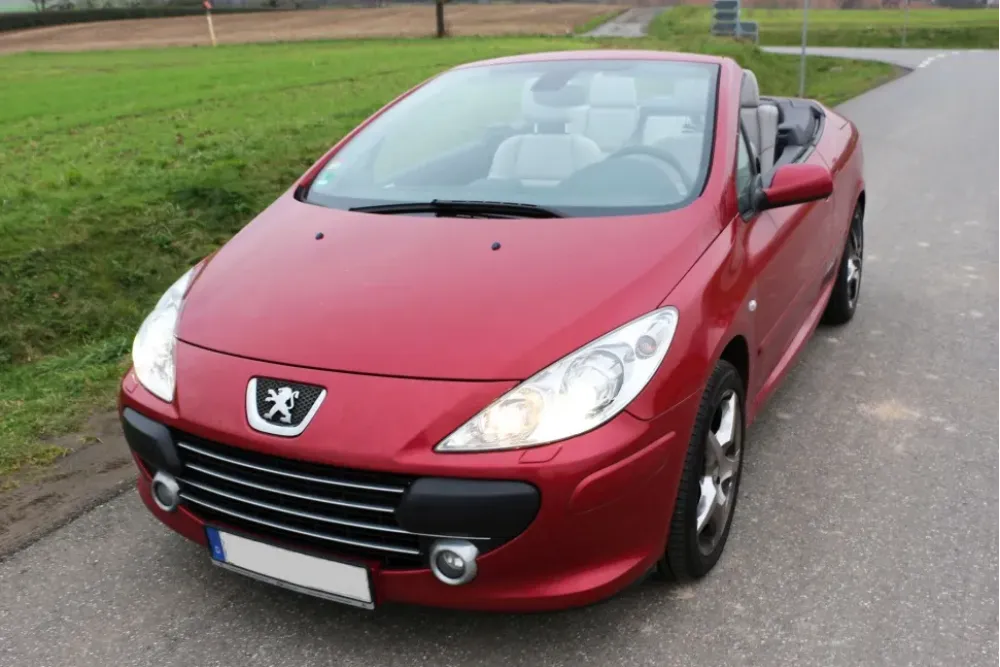
Click on image to view the full photo gallery
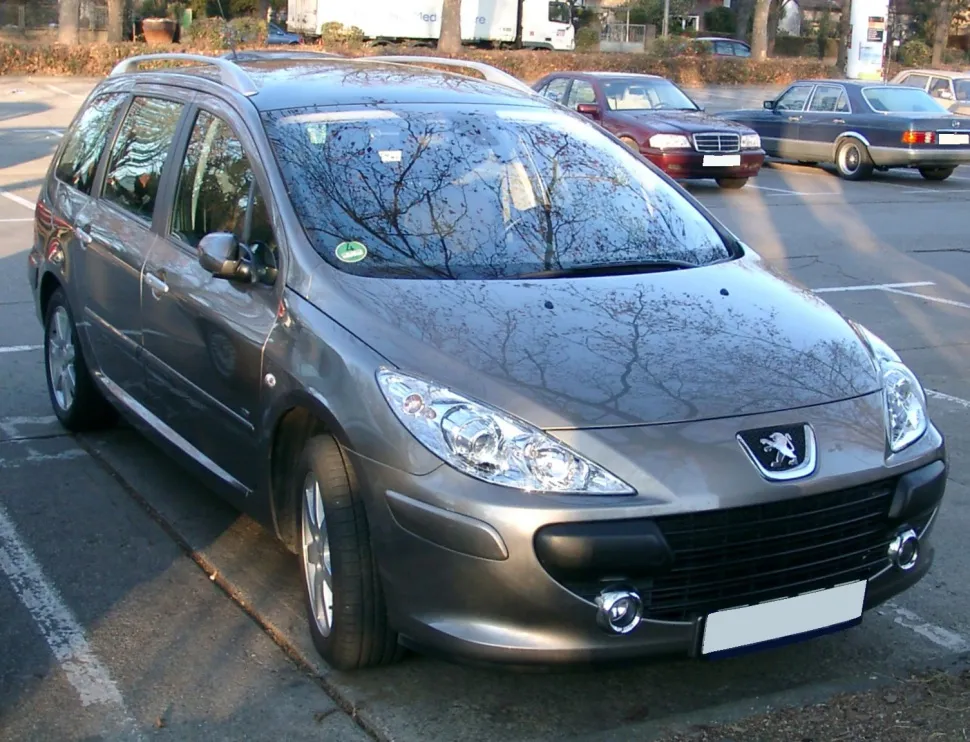
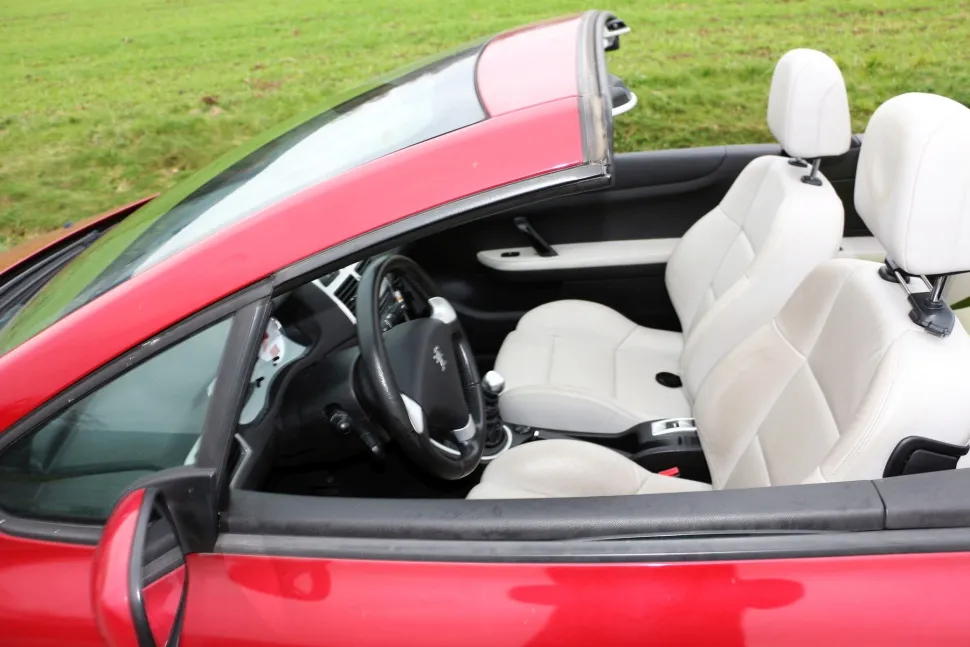
Peugeot 307 CC (facelift 2005) 2.0i (140 Hp)
Overall Rating
Peugeot 307:
The Peugeot 307 is a small family car produced by the French automaker PSA Peugeot Citroën under their Peugeot marque, from 2001 to 2008 in Europe, and was the successor to the Peugeot 306, which was discontinued in 2002 after being in production for nine years. Using the PSA PF2 platform, it was awarded the European Car of the Year title for 2002, and continued to be offered in China and certain South American markets through 2014, despite the September 2007 French launch of the 308 , which is built on the same platform....(Read more on Wikipedia)
CC (facelift 2005) Overview:
Peugeot 307 (CC (facelift 2005)). With 200 Nm of torque, it offers ample pulling power. It has moderate fuel consumption (~11.3 l/100km). With a weight of 1468 kg, it falls in the mid‑range. Front‑wheel drive delivers efficiency and easy handling. Acceleration is relatively slow (0–100 km/h in 10.1 s). The top speed reaches 205 km/h. A convertible with a retractable hardtop, offering the benefits of both coupe and cabriolet. Seating for 4 makes it ideal for daily use.
2.0i (140 Hp) Verdict:

Performance Verdict
A well-balanced petrol engine, offering adequate power for daily driving and comfortable cruising without being overly aggressive.
Fuel Economy
Improved fuel efficiency compared to the 177 Hp version, making it a more economical choice for mixed driving.
Pros and Cons:
Pros:
- • Stylish hard-top convertible design offers coupe security and open-air freedom.
- • Comfortable ride quality, well-suited for cruising.
- • Decent boot space with the roof up, practical for a convertible.
- • Range of engines caters to different needs, from economical to spirited.
- • Good value on the used market.
Cons:
- • Heavier than its hatchback counterpart, impacting performance and economy.
- • Complex folding roof mechanism can be prone to issues over time.
- • Some petrol engines (especially 1.6i) can feel underpowered for the car's weight.
- • Interior quality, while improved, still lags behind some rivals.
- • Mixed reliability reputation, particularly concerning electronics and roof operation.
Specifications:
Specifications are compared to those of the previous generation(307: 2004 - 2005).
| General: | |
|---|---|
| Brand: | Peugeot |
| Model: | 307 |
| Generation: | CC (facelift 2005) |
| Modification (Engine): | 2.0i (140 Hp) |
| Start of production: | 2005 |
| End of production: | 2009 |
| Powertrain Architecture: | Internal Combustion engine |
| Body type: | Coupe - Cabriolet |
| Seats: | 4 |
| Doors: | 2 |
| Engine: | |
|---|---|
| Power: | 140 Hp @ 6000 rpm. Same horsepower |
| Power per litre: | 70.1 Hp/l [158mm more] |
| Torque: | 200 Nm @ 4000 rpm. |
| Engine Model/Code: | RFJ EW10A, RFN EW10J4 More details about the engine RFJ EW10A, RFN EW10J4 |
| Engine displacement: | 1997 |
| Number of cylinders: | 4 |
| Engine configuration: | Inline |
| Number of valves per cylinder: | 4 |
| Fuel injection system: | Multi-port manifold injection |
| Engine aspiration: | Naturally aspirated engine |
| Valvetrain: | DOHC |
| Engine oil capacity: | 4.3 l |
| Coolant: | 6.2 l |
| Engine layout: | Front, Transverse |
| Cylinder Bore: | 85 mm mm |
| Piston Stroke: | 88 mm mm |
| Compression ratio: | 10.8:1 |
| Performance: | |
|---|---|
| Fuel Type: | Petrol (Gasoline) |
| Fuel consumption (economy) - urban: | 11.3 l/100 km |
| Fuel consumption (economy) - extra urban: | 6.2 l/100 km |
| Fuel consumption (economy) - combined: | 8.1 l/100 km |
| Emission standard: | Euro 4 |
| Acceleration 0 - 100 km/h: | 10.1 sec |
| Acceleration 0 - 62 mph: | 10.1 sec |
| Maximum speed: | 205 km/h |
| Weight-to-power ratio: | 10.5 kg/Hp, 95.4 Hp/tonne |
| Weight-to-torque ratio: | 7.3 kg/Nm, 136.2 Nm/tonne |
| Acceleration 0 - 60 mph: | 9.6 sec |
| Space: | |
|---|---|
| Kerb Weight: | 1468 |
| Max. weight: | 1880 |
| Max load: | 412 |
| Trunk (boot) space - maximum: | 350 l |
| Trunk (boot) space - minimum: | 204 l |
| Permitted trailer load with brakes (12%): | 1320 kg |
| Fuel tank capacity: | 60 l |
| Permitted trailer load without brakes: | 750 kg |
| Size: | |
|---|---|
| Length: | 4360 mm mm [158mm more] |
| Width: | 1759 mm mm [29mm more] |
| Height: | 1424 mm mm [88mm less] |
| Wheelbase: | 2608 mm mm [Same wheelbase.] |
| Front track: | 1497 mm |
| Rear (Back) track: | 1492 mm |
| Ride height (ground clearance): | 120 mm |
| Minimum turning circle (turning diameter): | 11.1 m [above average] |
| Powertrain: | |
|---|---|
| Drivetrain Architecture | The Internal combustion engine (ICE) drives the front wheels of the vehicle. |
| Drive wheel | Front wheel drive |
| Number of gears | 5 |
| Transmission type | Manual |
| Front brakes | Ventilated discs [Best for performance and cooling.] |
| Rear brakes | Disc [above average] |
| Assisting systems | ABS (Anti-lock braking system) |
| Steering type | Steering rack and pinion |
| Tires size | 205/55 R16 V |
| Wheel rims size | 16 |

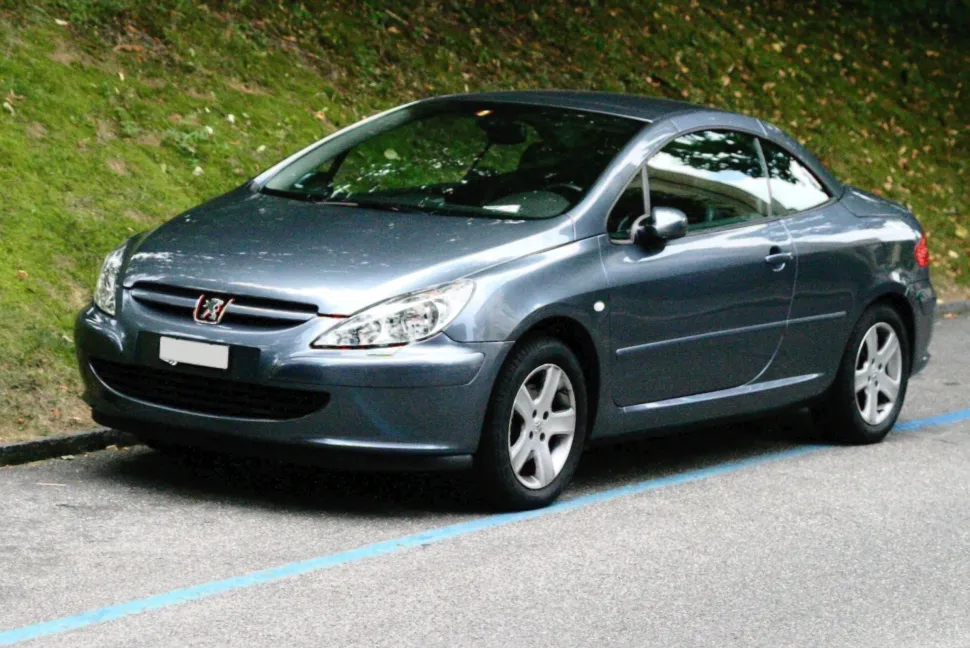
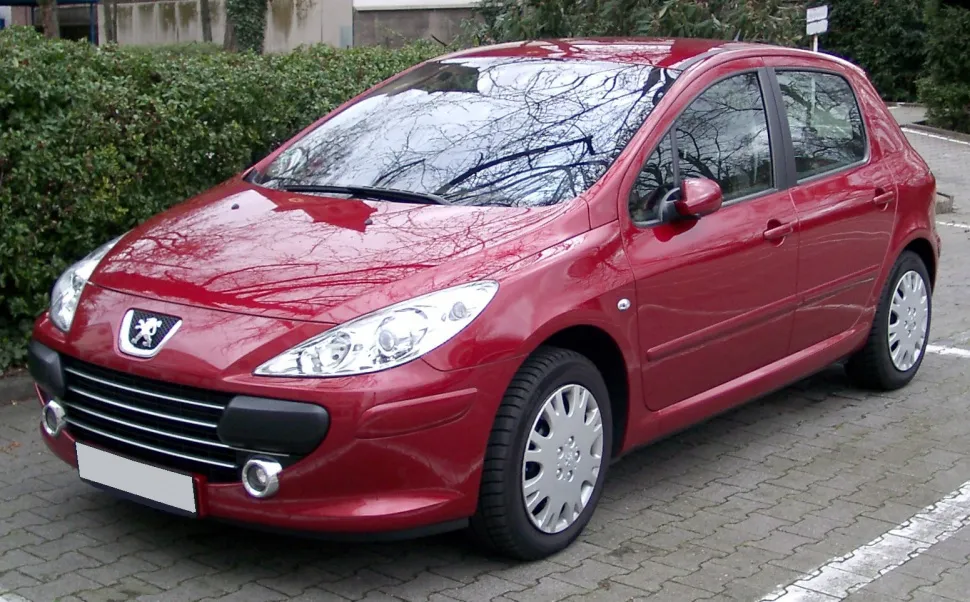
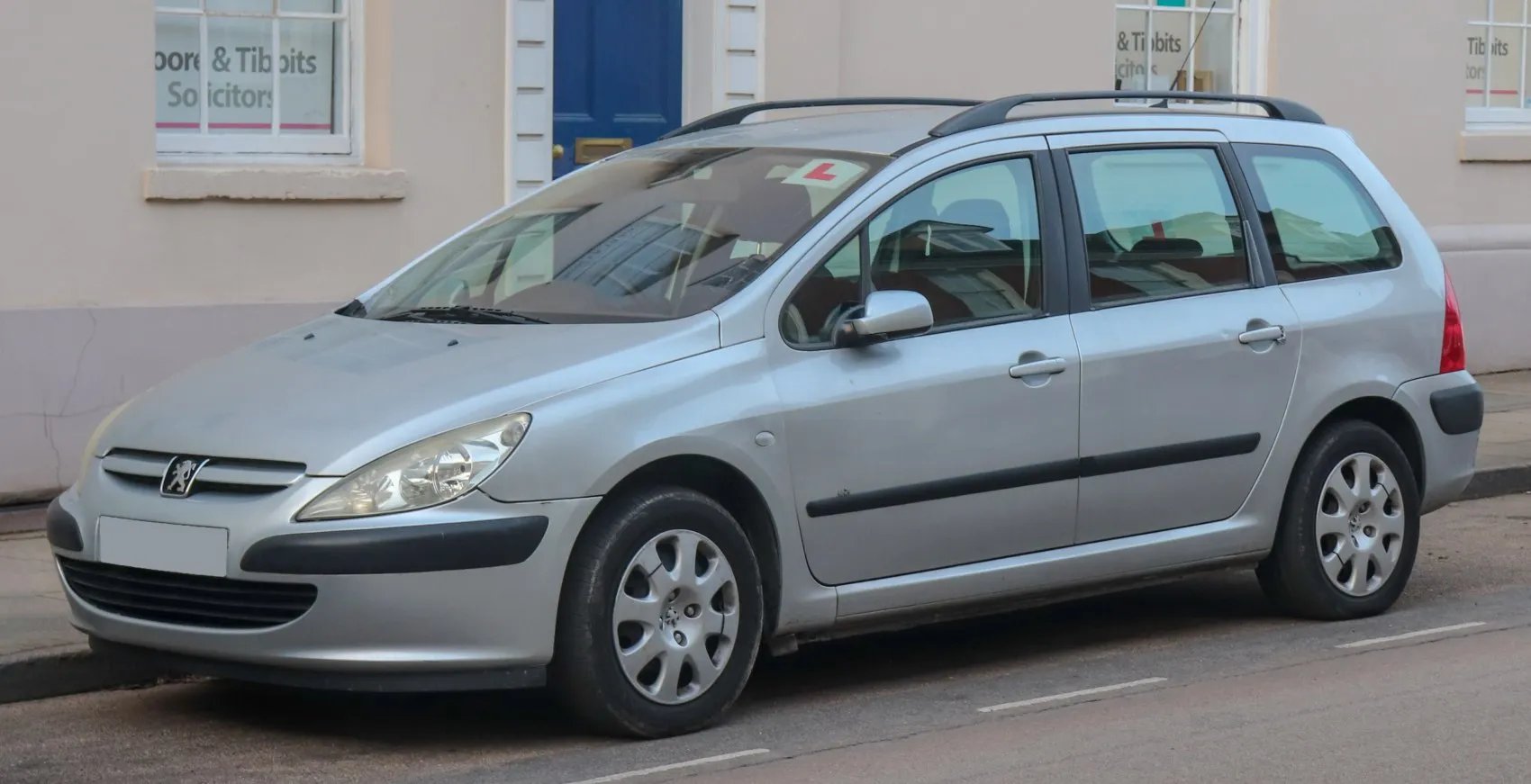




Have you ever driven an Peugeot 307?
How was your experience with it? Share with us: