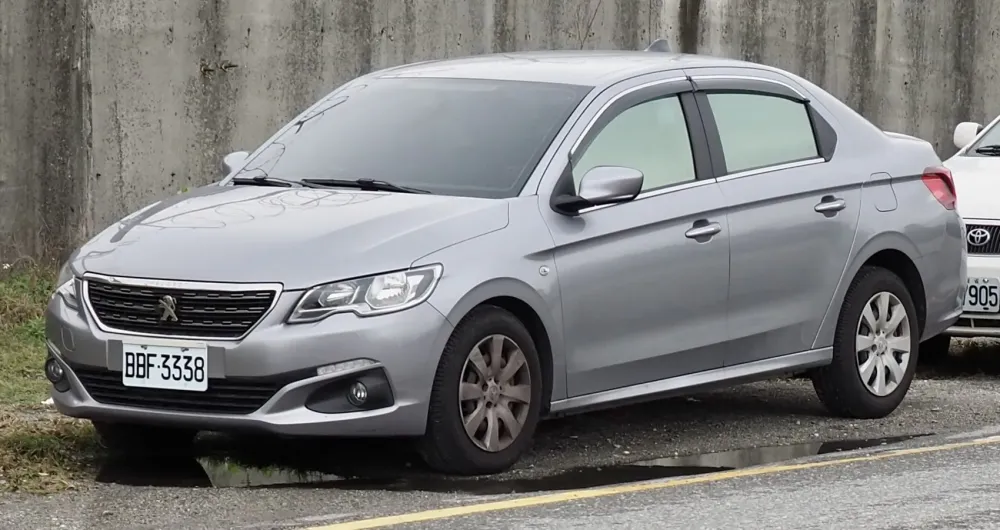
Click on image to view the full photo gallery
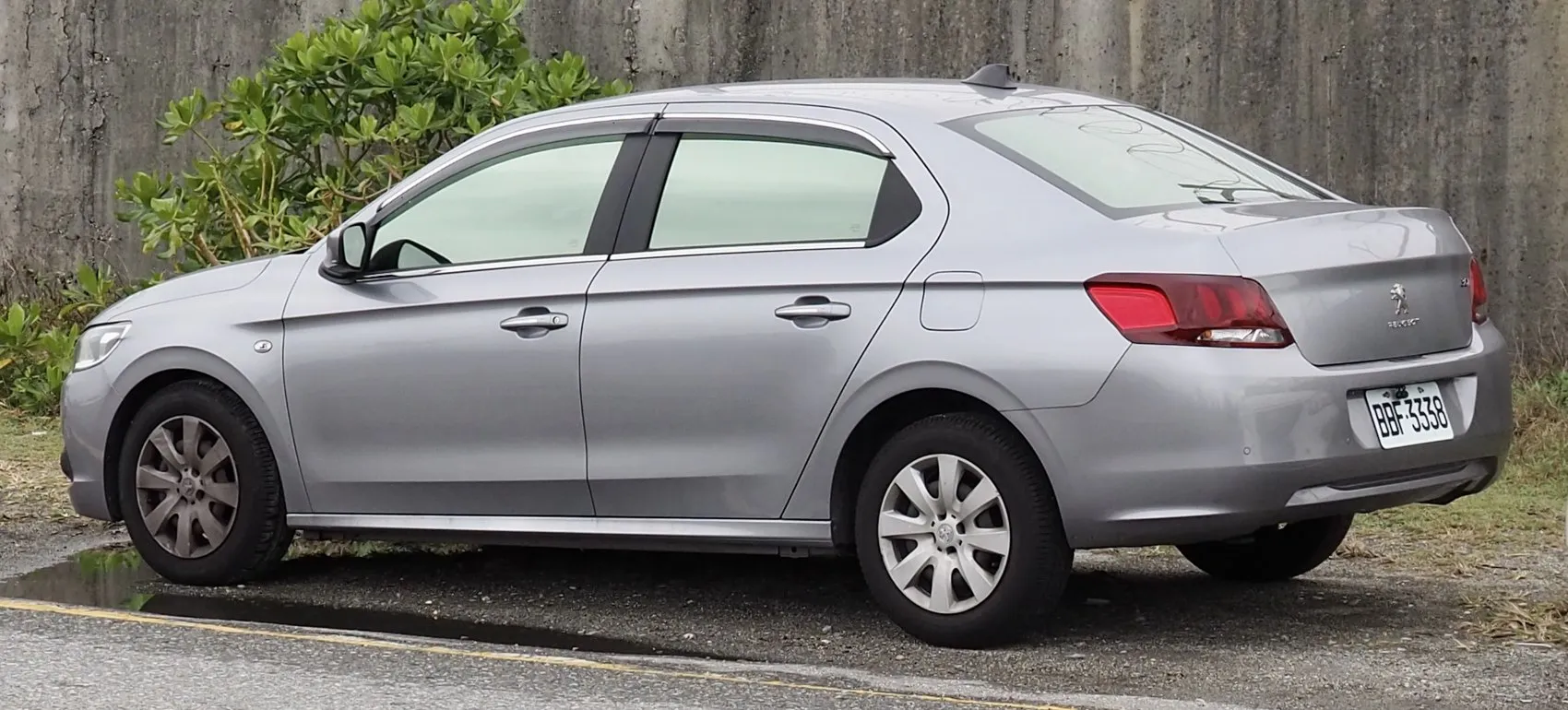
Peugeot 301 facelift 2017 1.6 VTi (115 Hp)
Overall Rating
Peugeot 301:
The Peugeot 301 is a subcompact sedan produced by the French automaker Peugeot since 2012. It was announced to the public in May 2012, with an official launch that took place at the Paris Motor Show in September. The 301 is built at Peugeot's Vigo plant in Spain, alongside its twin Citroën C-Elysée, and has been manufactured in China since November 2013. It is also assembled as a CKD in other markets such as Kazakhstan and Nigeria.
Sales of the 301 commenced in November 2012, initially in Turkey, and later in other markets in Western Asia , Africa, Latin America, Central Europe, Eastern Europe and Greece. Designed specifically for emerging markets, the 301 is not sold in core Western European markets or RHD markets....(Read more on Wikipedia)
facelift 2017 Overview:
Peugeot 301 (facelift 2017). With 150 Nm of torque, it offers ample pulling power. It has moderate fuel consumption (~8.7 l/100km). Weighing only 1090 kg, it’s quite light. Front‑wheel drive delivers efficiency and easy handling. Acceleration is relatively slow (0–100 km/h in 10.3 s). The top speed reaches 188 km/h. A four-door car with a separate trunk, ideal for families and daily commuting. Seating for 5 makes it ideal for daily use.
1.6 VTi (115 Hp) Verdict:

Performance Verdict
Lively and responsive, this manual variant offers better acceleration and a more engaging driving experience than its automatic counterpart.
Fuel Economy
Reasonable fuel consumption for a naturally aspirated petrol engine, offering a good balance between performance and running costs.
Pros and Cons:
Pros:
- • Spacious interior for its class
- • Very large boot capacity
- • Comfortable and compliant ride quality
- • Excellent fuel economy from diesel engines
- • Strong value proposition in target markets
- • Simple, robust mechanicals
Cons:
- • Basic interior materials and design
- • Limited advanced safety and driver-assist technologies
- • Uninspiring driving dynamics and steering feel
- • Not available in all global markets
- • Petrol engines can feel underpowered at highway speeds (especially 1.2 PureTech)
Specifications:
Specifications are compared to those of the previous generation(301: 2012 - 2017).
| General: | |
|---|---|
| Brand: | Peugeot |
| Model: | 301 |
| Generation: | facelift 2017 |
| Modification (Engine): | 1.6 VTi (115 Hp) |
| Start of production: | 2017 |
| Powertrain Architecture: | Internal Combustion engine |
| Body type: | Sedan |
| Seats: | 5 |
| Doors: | 4 |
| Engine: | |
|---|---|
| Power: | 115 Hp @ 6050 rpm. Same horsepower |
| Power per litre: | 72.5 Hp/l [3mm more] |
| Torque: | 150 Nm @ 4000 rpm. |
| Engine Model/Code: | NFP EC5 More details about the engine NFP EC5 |
| Engine displacement: | 1587 |
| Number of cylinders: | 4 |
| Engine configuration: | Inline |
| Number of valves per cylinder: | 4 |
| Fuel injection system: | Multi-port manifold injection |
| Engine aspiration: | Naturally aspirated engine |
| Valvetrain: | DOHC |
| Engine oil capacity: | 3.25 l |
| Engine layout: | Front, Transverse |
| Cylinder Bore: | 78.5 mm mm |
| Piston Stroke: | 82 mm mm |
| Performance: | |
|---|---|
| Fuel Type: | Petrol (Gasoline) |
| Fuel consumption (economy) - urban: | 8.7 l/100 km |
| Fuel consumption (economy) - extra urban: | 5 l/100 km |
| Fuel consumption (economy) - combined: | 6.4 l/100 km |
| Emission standard: | Euro 6 |
| Acceleration 0 - 100 km/h: | 10.3 sec |
| Acceleration 0 - 62 mph: | 10.3 sec |
| Maximum speed: | 188 km/h |
| Weight-to-power ratio: | 9.5 kg/Hp, 105.5 Hp/tonne |
| Weight-to-torque ratio: | 7.3 kg/Nm, 137.6 Nm/tonne |
| Acceleration 0 - 60 mph: | 9.8 sec |
| Space: | |
|---|---|
| Kerb Weight: | 1090 |
| Max. weight: | 1524 |
| Max load: | 434 |
| Trunk (boot) space - maximum: | 1332 l |
| Trunk (boot) space - minimum: | 506 l |
| Permitted trailer load with brakes (12%): | 750 kg |
| Fuel tank capacity: | 50 l |
| Permitted trailer load without brakes: | 580 kg |
| Permitted towbar download: | 55 kg |
| Size: | |
|---|---|
| Length: | 4445 mm mm [3mm more] |
| Width: | 1748 mm mm [Same width.] |
| Height: | 1466 mm mm [Same height.] |
| Wheelbase: | 2652 mm mm [Same wheelbase.] |
| Width including mirrors: | 1953 mm |
| Front track: | 1501 mm |
| Rear (Back) track: | 1478 mm |
| Front overhang: | 819 mm |
| Rear overhang: | 974 mm |
| Ride height (ground clearance): | 165 mm |
| Powertrain: | |
|---|---|
| Drivetrain Architecture | The Internal combustion engine (ICE) drives the front wheels of the vehicle. |
| Drive wheel | Front wheel drive |
| Number of gears | 5 |
| Transmission type | Manual |
| Front brakes | Ventilated discs, 266 mm [Best for performance and cooling.] |
| Rear brakes | Drum [bad for performance and cooling.] |
| Assisting systems | ABS (Anti-lock braking system) |
| Steering type | Steering rack and pinion |
| Power steering | Electric Steering |
| Tires size | 185/65 R15; 195/55 R16 |
| Wheel rims size | 15; 16 |
| Front suspension | Independent type McPherson |
| Rear suspension | Torsion |






Would you recommend the Peugeot 301 ? Tell us why or why not!