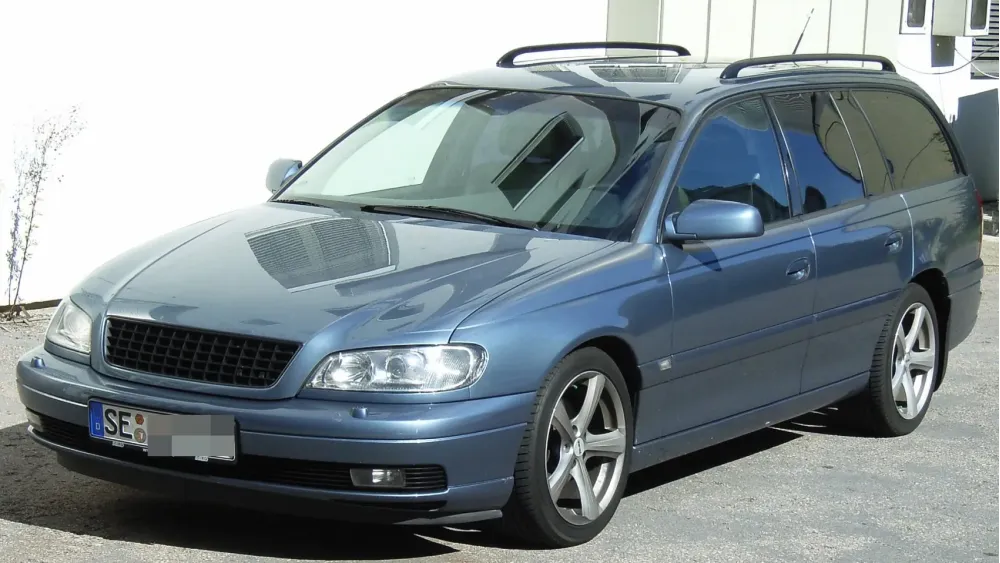
Click on image to view the full photo gallery
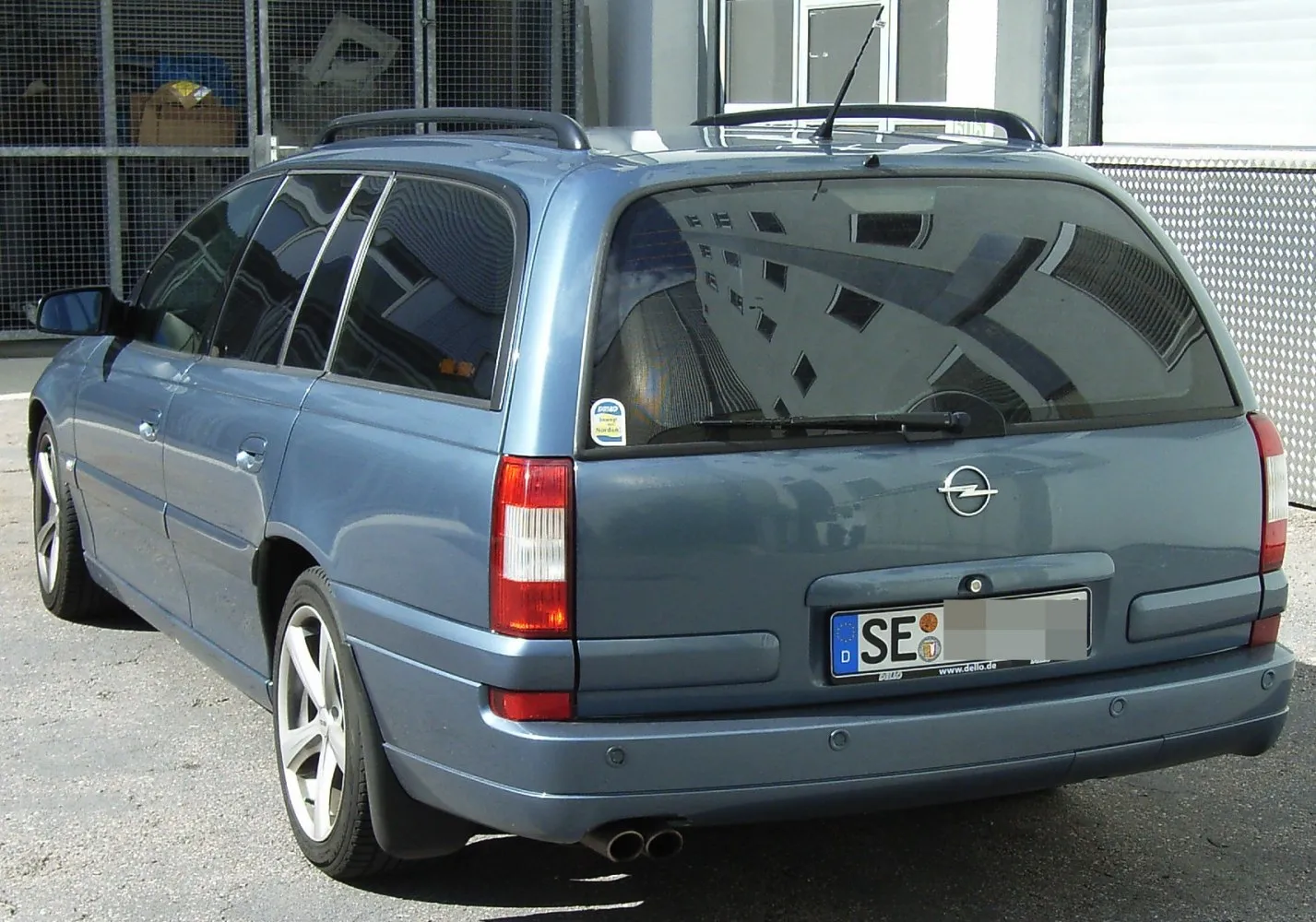
Opel Omega B Caravan (facelift 1999) 2.5 DTI (150 Hp) Automatic
Overall Rating
Opel Omega:
The Opel Omega is an executive car engineered and manufactured by German automaker Opel between 1986 and 2003. The first generation, the Omega A , superseded the Opel Rekord. It was voted European Car of the Year for 1987, and was available as a saloon or estate. The second generation, the Omega B, was manufactured from 1994 to 2003.
Rebadged variants of the Omega were marketed worldwide, including in North America as the Cadillac Catera, in Great Britain as the Vauxhall Omega, and South America as the Chevrolet Omega. As with the Rekord which preceded it, re-engineered versions of the Omega were manufactured in Australia from 1988 as the Holden Commodore since 1999. Commodore-based cars were in turn exported to South America as the Chevrolet Omega and to the Middle East as the Chevrolet Lumina....(Read more on Wikipedia)
B Caravan (facelift 1999) Overview:
Opel Omega (B Caravan (facelift 1999)). With 300 Nm of torque, it offers ample pulling power. It has moderate fuel consumption (~12 l/100km). With a weight of 1658 kg, it falls in the mid‑range. Rear‑wheel drive offers dynamic handling and sporty feedback. Acceleration is relatively slow (0–100 km/h in 11.5 s). The top speed reaches 200 km/h. A car with an extended rear cargo area, combining passenger comfort with increased storage. Seating for 5 makes it ideal for daily use.
2.5 DTI (150 Hp) Automatic Verdict:

Performance Verdict
Excellent torque from the BMW-sourced diesel ensures effortless progress, though the automatic transmission slightly impacts initial acceleration.
Fuel Economy
Very respectable fuel economy for a powerful diesel automatic in a large car, offering a good balance of power and efficiency.
Pros and Cons:
Pros:
- • Spacious and comfortable interior, especially for long journeys.
- • Generous boot space, highly practical for families and cargo.
- • Good value on the used market due to depreciation.
- • Wide range of engines, including powerful V6 and V8 options.
- • Smooth and refined ride quality, ideal for cruising.
Cons:
- • High fuel consumption on many petrol V6 models.
- • Some entry-level engines can feel underpowered for the car's size.
- • Interior design can feel dated compared to modern vehicles.
- • Potential for rust issues, particularly on older examples.
- • Mixed reliability reputation, with some engines being more robust than others.
Specifications:
Specifications are compared to those of the previous generation(A: July, 1990 - 1993).
| General: | |
|---|---|
| Brand: | Opel |
| Model: | Omega |
| Generation: | B Caravan (facelift 1999) |
| Modification (Engine): | 2.5 DTI (150 Hp) Automatic |
| Start of production: | July, 2001 |
| End of production: | June, 2003 |
| Powertrain Architecture: | Internal Combustion engine |
| Body type: | Station wagon (estate) |
| Seats: | 5 |
| Doors: | 5 |
| Engine: | |
|---|---|
| Power: | 150 Hp @ 4000 rpm. Same horsepower |
| Power per litre: | 60.1 Hp/l [158mm more] |
| Torque: | 300 Nm @ 1750 rpm. |
| Engine Model/Code: | Y25DT More details about the engine Y25DT |
| Engine displacement: | 2497 |
| Number of cylinders: | 6 |
| Engine configuration: | Inline |
| Number of valves per cylinder: | 4 |
| Fuel injection system: | Diesel Commonrail |
| Engine aspiration: | Turbocharger, Intercooler |
| Valvetrain: | DOHC |
| Engine oil capacity: | 6.5 l |
| Coolant: | 10.2 l |
| Engine layout: | Front, Longitudinal |
| Cylinder Bore: | 80 mm mm |
| Piston Stroke: | 82.8 mm mm |
| Compression ratio: | 17.5:1 |
| Performance: | |
|---|---|
| Fuel Type: | Diesel |
| Fuel consumption (economy) - urban: | 12 l/100 km |
| Fuel consumption (economy) - extra urban: | 6.8 l/100 km |
| Fuel consumption (economy) - combined (NEDC): | 8.7 l/100 km |
| Fuel consumption (economy) - urban (NEDC): | 12 l/100 km |
| Fuel consumption (economy) - extra urban (NEDC): | 6.8 l/100 km |
| Fuel consumption (economy) - combined: | 8.7 l/100 km |
| Emission standard: | Euro 3 |
| Acceleration 0 - 100 km/h: | 11.5 sec |
| Acceleration 0 - 62 mph: | 11.5 sec |
| Maximum speed: | 200 km/h |
| Weight-to-power ratio: | 11.1 kg/Hp, 90.5 Hp/tonne |
| Weight-to-torque ratio: | 5.5 kg/Nm, 180.9 Nm/tonne |
| Acceleration 0 - 60 mph: | 10.9 sec |
| Space: | |
|---|---|
| Kerb Weight: | 1658 |
| Max. weight: | 2300 |
| Max. roof load: | 100 kg |
| Max load: | 642 |
| Trunk (boot) space - maximum: | 1800 l |
| Trunk (boot) space - minimum: | 540 l |
| Permitted trailer load with brakes (12%): | 1600 kg |
| Fuel tank capacity: | 75 l |
| Permitted trailer load without brakes: | 750 kg |
| Permitted towbar download: | 75 kg |
| Size: | |
|---|---|
| Length: | 4898 mm mm [158mm more] |
| Width: | 1776 mm mm [16mm more] |
| Height: | 1545 mm mm [100mm more] |
| Wheelbase: | 2730 mm mm [Same wheelbase.] |
| Front track: | 1514 mm |
| Rear (Back) track: | 1526 mm |
| Minimum turning circle (turning diameter): | 11 m [above average] |
| Powertrain: | |
|---|---|
| Drivetrain Architecture | The Internal combustion engine (ICE) drives the rear wheels of the vehicle. |
| Drive wheel | Rear wheel drive |
| Number of gears | 5 |
| Transmission type | Automatic |
| Front brakes | Ventilated discs [Best for performance and cooling.] |
| Rear brakes | Disc [above average] |
| Assisting systems | ABS (Anti-lock braking system) |
| Steering type | Steering rack and pinion |
| Power steering | Hydraulic Steering |
| Tires size | 205/65 R15; 225/55 R16 |
| Wheel rims size | 6.5J x 15; 7J x 16 |
| Front suspension | Coil spring |
| Rear suspension | Coil spring |





Driven it? Loved it? Hated it? Share your honest review!