
Click on image to view the full photo gallery
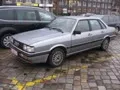
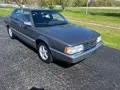
Opel Ascona C 2.0i GT (129 Hp)
Overall Rating
Opel Ascona:
The Opel Ascona is a large family car that was produced by the German automaker Opel from 1970 to 1988. It was produced in three separate generations, beginning with rear-wheel-drive and ending up as a front-wheel drive J-car derivative. The Ascona was developed to fill the gap in the Opel range as the Opel Rekord was gradually growing in size.
The Ascona took its name from the lakeside resort of that name in Ticino, Switzerland, and already in the 1950s a special edition of the Opel Rekord P1 was sold as an Opel Ascona in Switzerland, where the name was again used in 1968 for a locally adapted version of the Opel Kadett B into which the manufacturers had persuaded a 1. 7-litre engine borrowed from the larger Rekord model of the time. The Opel Ascona A launched in 1970 and sold across Europe was, however, the first mainstream Opel model to carry the name — departing from Opel's long standing convention of using German naval rank designations for its models....(Read more on Wikipedia)
C Overview:
Opel Ascona (C). With 180 Nm of torque, it offers ample pulling power. It has moderate fuel consumption (~11 l/100km). Weighing only 1030 kg, it’s quite light. Front‑wheel drive delivers efficiency and easy handling. Acceleration is relatively slow (0–100 km/h in 9.3 s). The top speed reaches 193 km/h. A four-door car with a separate trunk, ideal for families and daily commuting. Seating for 5 makes it ideal for daily use.
The Opel Ascona C predates modern Euro NCAP testing standards, which began in 1997. Safety features were basic for its era, focusing on passive safety through body structure rather than advanced active systems.
2.0i GT (129 Hp) Verdict:

Performance Verdict
The most powerful option, delivering genuinely sporty performance and strong acceleration for its time, ideal for enthusiasts.
Fuel Economy
Acceptable fuel consumption for a performance-oriented 2.0L, though efficiency is not its primary focus.
Pros and Cons:
Pros:
- • Wide range of engine choices to suit various needs
- • Practical and spacious interior for its class
- • Generally reliable and durable engineering for the era
- • Comfortable ride quality, suitable for long journeys
- • Good fuel economy on smaller and diesel engines
Cons:
- • Dated styling by modern standards
- • Basic safety features compared to modern cars
- • Some entry-level engines lack spirited performance
- • Rust can be an issue on older, poorly maintained models
- • Limited availability of parts for specific trims today
Specifications:
Specifications are compared to those of the previous generation(C CC: 1986 - 1988).
| General: | |
|---|---|
| Brand: | Opel |
| Model: | Ascona |
| Generation: | C |
| Modification (Engine): | 2.0i GT (129 Hp) |
| Start of production: | 1987 |
| End of production: | 1988 |
| Powertrain Architecture: | Internal Combustion engine |
| Body type: | Sedan |
| Seats: | 5 |
| Doors: | 4 |
| Engine: | |
|---|---|
| Power: | 129 Hp @ 5600 rpm. Same horsepower |
| Power per litre: | 64.6 Hp/l [102mm more] |
| Torque: | 180 Nm @ 4600 rpm. |
| Engine Model/Code: | 20SEH, 20NE More details about the engine 20SEH, 20NE |
| Engine displacement: | 1998 |
| Number of cylinders: | 4 |
| Engine configuration: | Inline |
| Number of valves per cylinder: | 2 |
| Fuel injection system: | Multi-port manifold injection |
| Engine aspiration: | Naturally aspirated engine |
| Valvetrain: | SOHC |
| Engine oil capacity: | 4 l |
| Coolant: | 6.9 l |
| Cylinder Bore: | 86 mm mm |
| Piston Stroke: | 86 mm mm |
| Compression ratio: | 10:1 |
| Performance: | |
|---|---|
| Fuel Type: | Petrol (Gasoline) |
| Fuel consumption (economy) - urban: | 11 l/100 km |
| Fuel consumption (economy) - extra urban: | 6 l/100 km |
| Fuel consumption (economy) - combined: | 8 l/100 km |
| Acceleration 0 - 100 km/h: | 9.3 sec |
| Acceleration 0 - 62 mph: | 9.3 sec |
| Maximum speed: | 193 km/h |
| Weight-to-power ratio: | 8 kg/Hp, 125.2 Hp/tonne |
| Weight-to-torque ratio: | 5.7 kg/Nm, 174.8 Nm/tonne |
| Acceleration 0 - 60 mph: | 8.8 sec |
| Space: | |
|---|---|
| Kerb Weight: | 1030 |
| Max. weight: | 1525 |
| Max load: | 495 |
| Trunk (boot) space - maximum: | 510 l |
| Permitted trailer load with brakes (12%): | 1300 kg |
| Fuel tank capacity: | 61 l |
| Permitted trailer load without brakes: | 500 kg |
| Size: | |
|---|---|
| Length: | 4366 mm mm [102mm more] |
| Width: | 1668 mm mm [Same width.] |
| Height: | 1395 mm mm [10mm more] |
| Wheelbase: | 2574 mm mm [Same wheelbase.] |
| Front track: | 1406 mm |
| Rear (Back) track: | 1406 mm |
| Ride height (ground clearance): | 148 mm |
| Minimum turning circle (turning diameter): | 10.95 m [above average] |
| Powertrain: | |
|---|---|
| Drivetrain Architecture | The Internal combustion engine (ICE) drives the front wheels of the vehicle. |
| Drive wheel | Front wheel drive |
| Number of gears | 5 |
| Transmission type | Manual |
| Front brakes | Disc [bad for performance and cooling.] |
| Rear brakes | Drum [bad for performance and cooling.] |
| Tires size | 195/60 R14 |
| Wheel rims size | 14 |






Behind the wheel of the Opel Ascona. How does it handle on the road?