
Click on image to view the full photo gallery
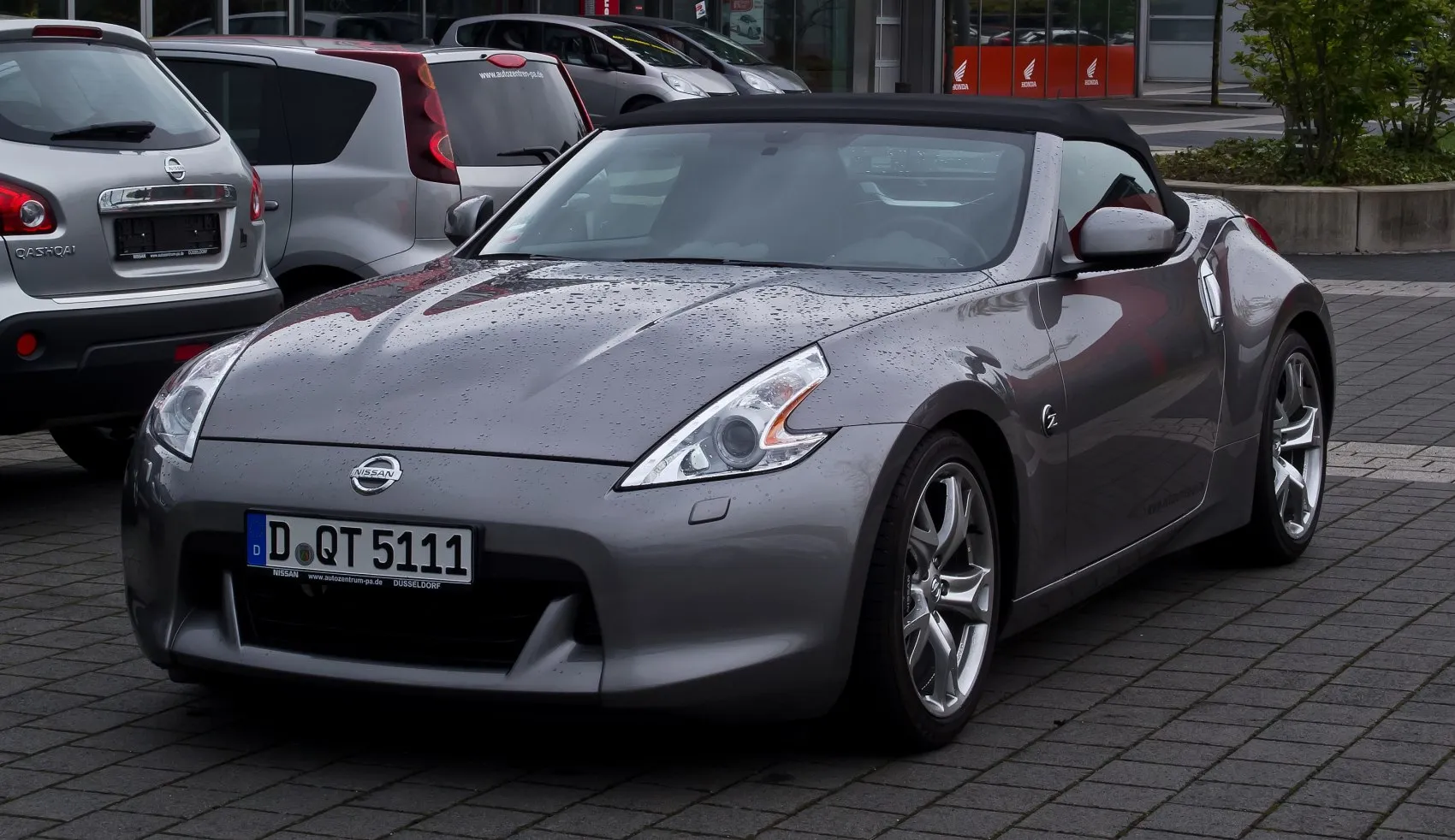
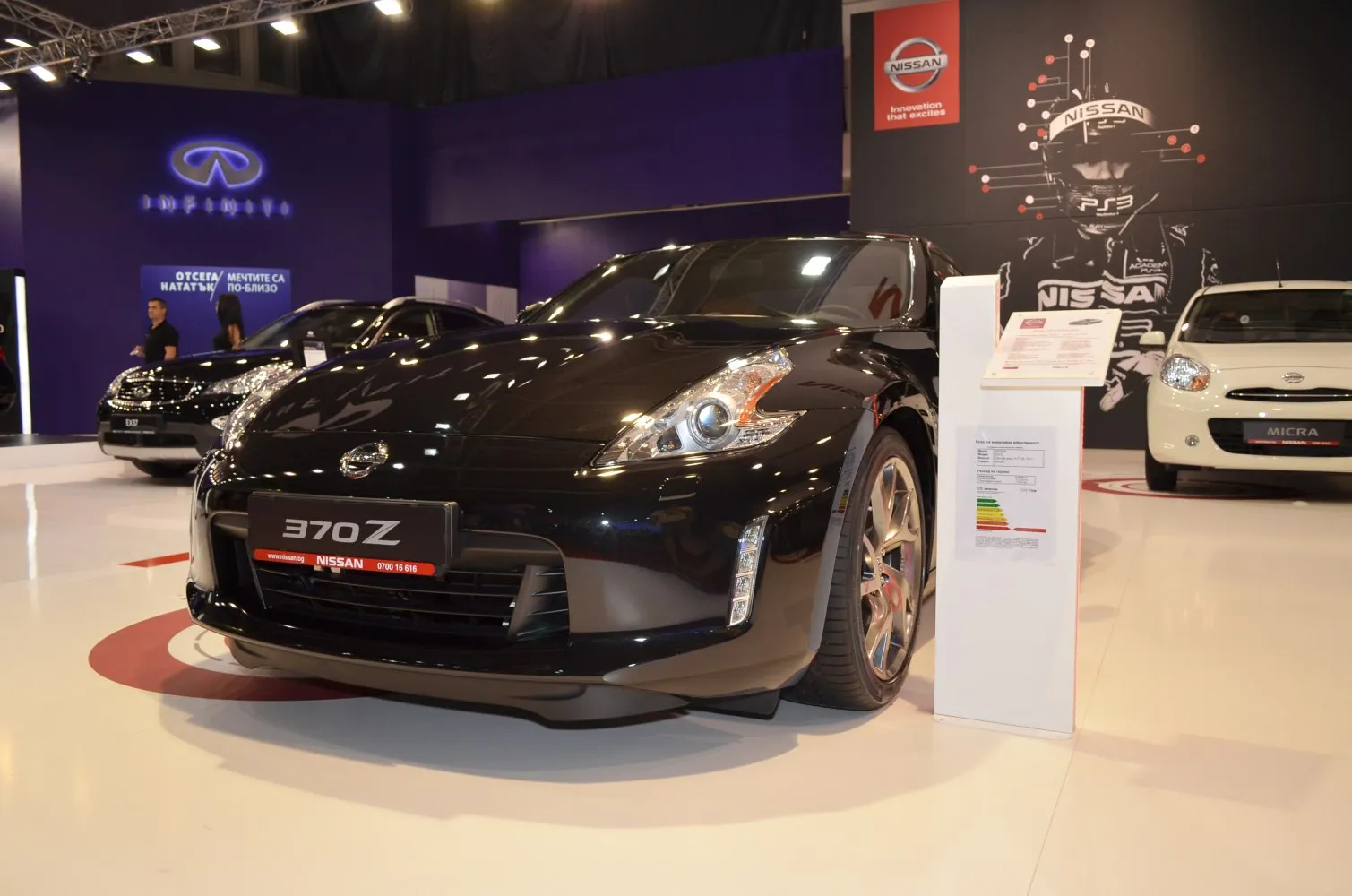
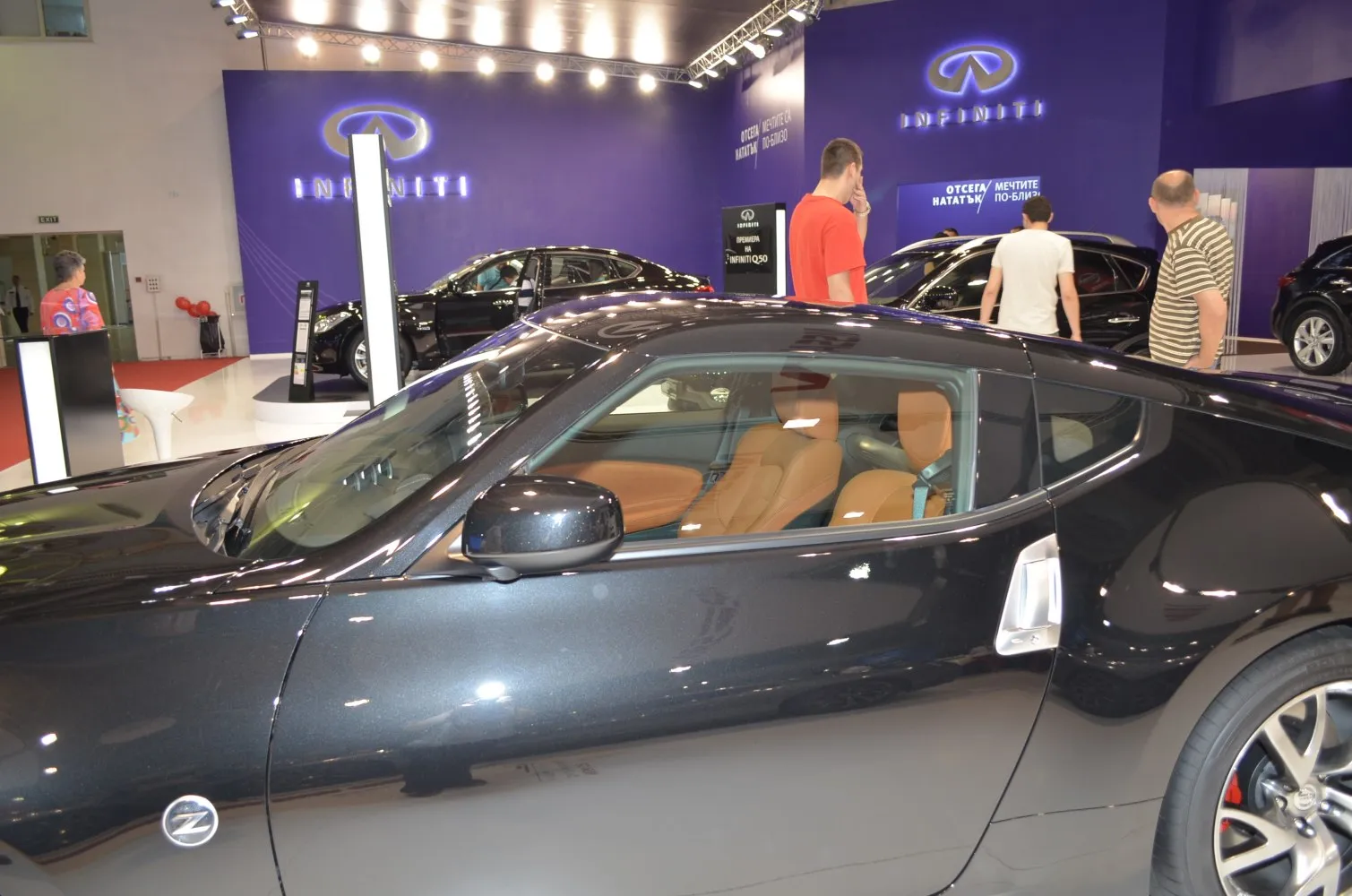
Nissan 370Z Coupe (facelift 2012) 3.7 V6 (328 Hp)
Overall Rating
Nissan 370Z:
The Nissan 370Z is a two-seater sports car which was made by Nissan from 2008 until 2021. Based on the Nissan FM platform, it has a front mid-engine, rear-wheel-drive layout and either a two-door coupé or two-door roadster bodystyle. The 370Z is the sixth generation of the Nissan Z-car line, succeeding the 350Z and preceding the RZ34, which uses a modified version of the same platform. It was sold in North America for the 2009–2020 model years....(Read more on Wikipedia)
Coupe (facelift 2012) Overview:
Nissan 370Z (Coupe (facelift 2012)). With 363 Nm of torque, it offers ample pulling power. With a weight of 1496 kg, it falls in the mid‑range. Rear‑wheel drive offers dynamic handling and sporty feedback. Acceleration is excellent (0–100 km/h in 5.3 s). The top speed reaches 250 km/h. A two-door car with a fixed roof, known for its sporty design and dynamic performance. Seating for 2 makes it ideal for daily use.
3.7 V6 (328 Hp) Verdict:

Performance Verdict
The 328 Hp VQ37VHR engine paired with a manual gearbox delivers an exhilarating, direct driving experience with quick acceleration and precise control.
Fuel Economy
Combined fuel consumption of 10.5-10.6 l/100 km is acceptable for a performance-oriented V6, reflecting its power output and engaging nature.
Pros and Cons:
Pros:
- • Potent and reliable VQ37VHR V6 engine.
- • Engaging rear-wheel-drive dynamics.
- • Timeless sports car styling.
- • Excellent value for performance.
Cons:
- • Firm ride quality can be uncomfortable on rough roads.
- • Limited interior space and practicality.
- • Fuel economy is average for its class.
- • Interior design feels dated compared to newer rivals.
Specifications:
Specifications are compared to those of the previous generation(Roadster: 2009 - 2012).
| General: | |
|---|---|
| Brand: | Nissan |
| Model: | 370Z |
| Generation: | Coupe (facelift 2012) |
| Modification (Engine): | 3.7 V6 (328 Hp) |
| Start of production: | 2012 |
| End of production: | 2017 |
| Powertrain Architecture: | Internal Combustion engine |
| Body type: | Coupe |
| Seats: | 2 |
| Doors: | 3 |
| Engine: | |
|---|---|
| Power: | 328 Hp @ 7000 rpm. |
| Power per litre: | 88.7 Hp/l |
| Torque: | 363 Nm @ 5200 rpm. |
| Engine Model/Code: | VQ37VHR [Same engine] More details about the engine VQ37VHR |
| Engine displacement: | 3696 |
| Number of cylinders: | 6 |
| Engine configuration: | V-engine |
| Number of valves per cylinder: | 4 |
| Fuel injection system: | Multi-port manifold injection |
| Engine aspiration: | Naturally aspirated engine |
| Valvetrain: | DOHC, VVEL |
| Engine oil capacity: | 4.9 l |
| Coolant: | 9.2 l |
| Engine layout: | Front, Longitudinal |
| Cylinder Bore: | 95.5 mm mm |
| Piston Stroke: | 86 mm mm |
| Compression ratio: | 11:1 |
| Performance: | |
|---|---|
| Fuel Type: | Petrol (Gasoline) |
| Fuel consumption (economy) - urban: | 15.3-15.4 l/100 km |
| Fuel consumption (economy) - extra urban: | 7.8 l/100 km |
| Fuel consumption (economy) - combined (NEDC): | 10.5-10.6 l/100 km |
| Fuel consumption (economy) - urban (NEDC): | 15.3-15.4 l/100 km |
| Fuel consumption (economy) - extra urban (NEDC): | 7.8 l/100 km |
| Fuel consumption (economy) - combined: | 10.5-10.6 l/100 km |
| Emission standard: | Euro 5 |
| Acceleration 0 - 100 km/h: | 5.3 sec |
| Acceleration 0 - 62 mph: | 5.3 sec |
| Maximum speed: | 250 km/h, Electronically limited |
| Weight-to-power ratio: | 4.6 kg/Hp, 219.3 Hp/tonne |
| Weight-to-torque ratio: | 4.1 kg/Nm, 242.6 Nm/tonne |
| Acceleration 0 - 60 mph: | 5 sec |
| Space: | |
|---|---|
| Kerb Weight: | 1496 |
| Max. weight: | 1800 |
| Max load: | 304 |
| Trunk (boot) space - minimum: | 235 l |
| Fuel tank capacity: | 72 l |
| Size: | |
|---|---|
| Length: | 4250 mm mm [Same length.] |
| Width: | 1845 mm mm [Same width.] |
| Height: | 1310 mm mm [15mm less] |
| Wheelbase: | 2550 mm mm [Same wheelbase.] |
| Front track: | 1540-1550 mm |
| Rear (Back) track: | 1565-1595 mm |
| Front overhang: | 840 mm |
| Rear overhang: | 860 mm |
| Minimum turning circle (turning diameter): | 10.6 m [above average] |
| Powertrain: | |
|---|---|
| Drivetrain Architecture | The Internal combustion engine (ICE) drives the rear wheels of the vehicle. |
| Drive wheel | Rear wheel drive |
| Number of gears | 6 |
| Transmission type | Manual |
| Front brakes | Ventilated discs, 355 mm [Best for performance and cooling.] |
| Rear brakes | Ventilated discs, 350 mm [Best for performance and cooling.] |
| Assisting systems | ABS (Anti-lock braking system) |
| Steering type | Steering rack and pinion |
| Power steering | Hydraulic Steering |
| Tires size | Front wheel tires: 225/50 R18; 245/40 R19 |
| Wheel rims size | Front wheel rims: 8J x 18; 9J x 19 |
| Front suspension | Double wishbone, Transverse stabilizer |
| Rear suspension | Independent multi-link suspension, Transverse stabilizer |










Have you ever driven an Nissan 370Z?
How was your experience with it? Share with us: