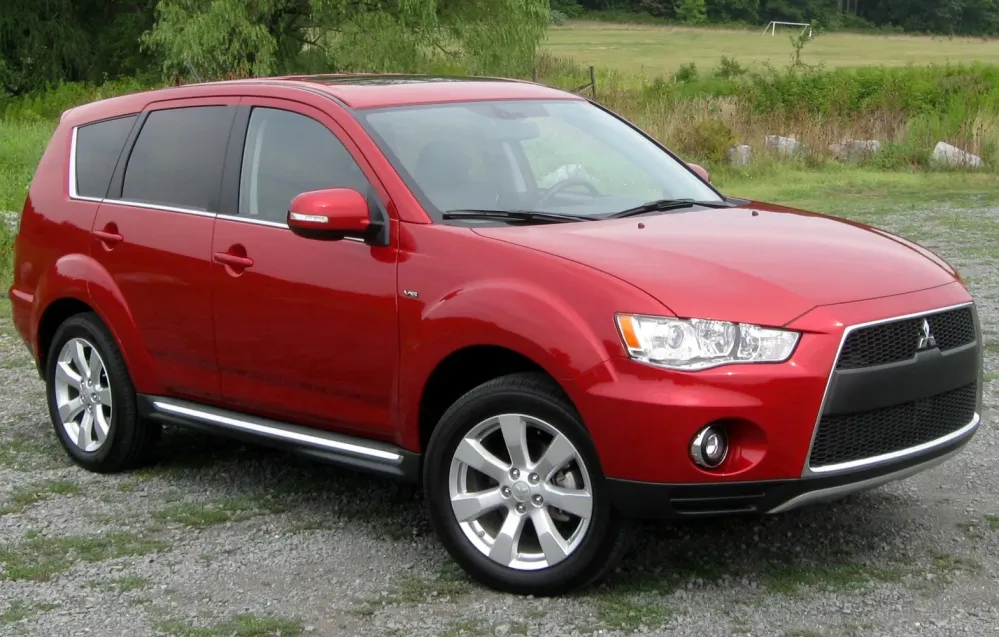
Click on image to view the full photo gallery
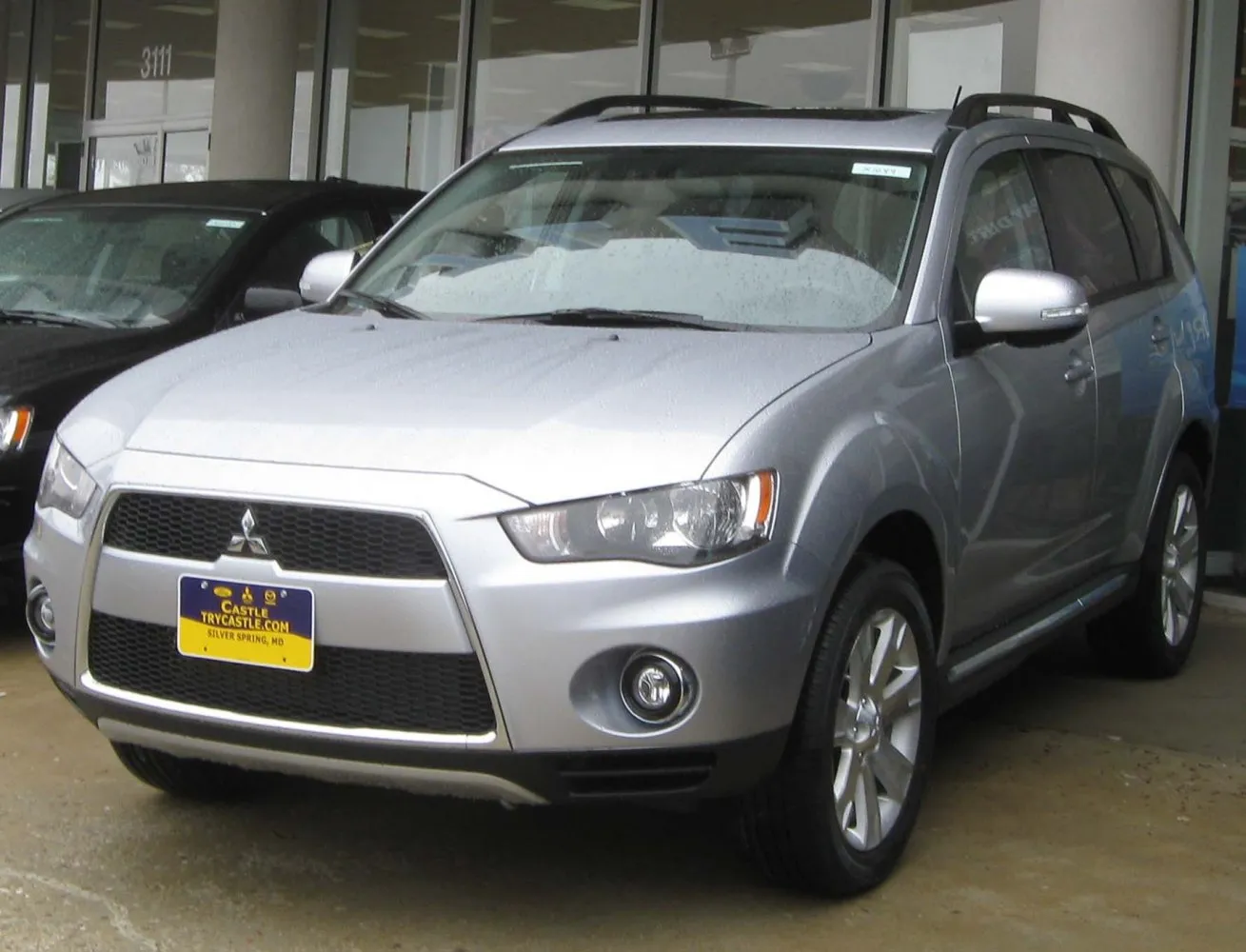
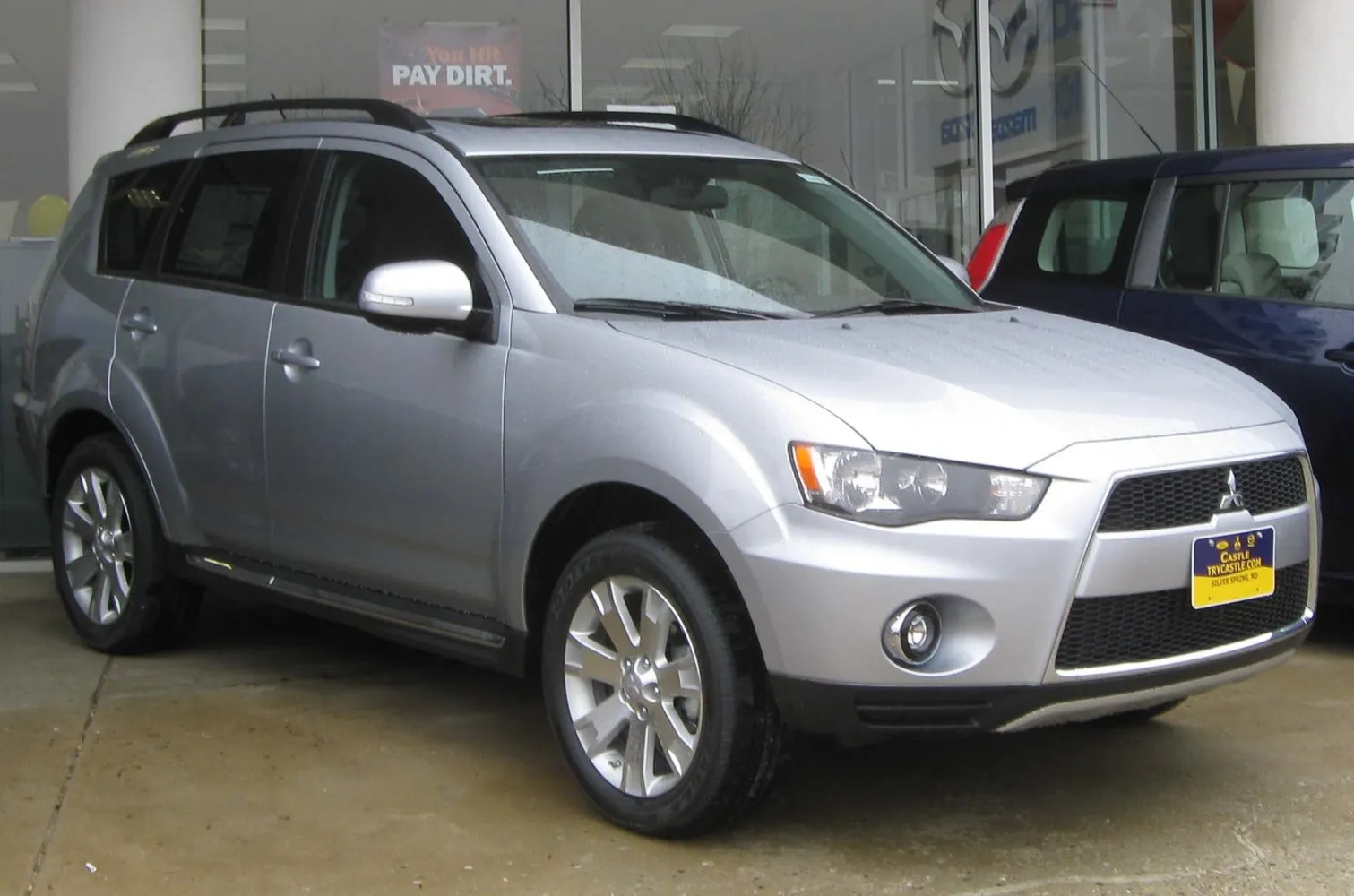
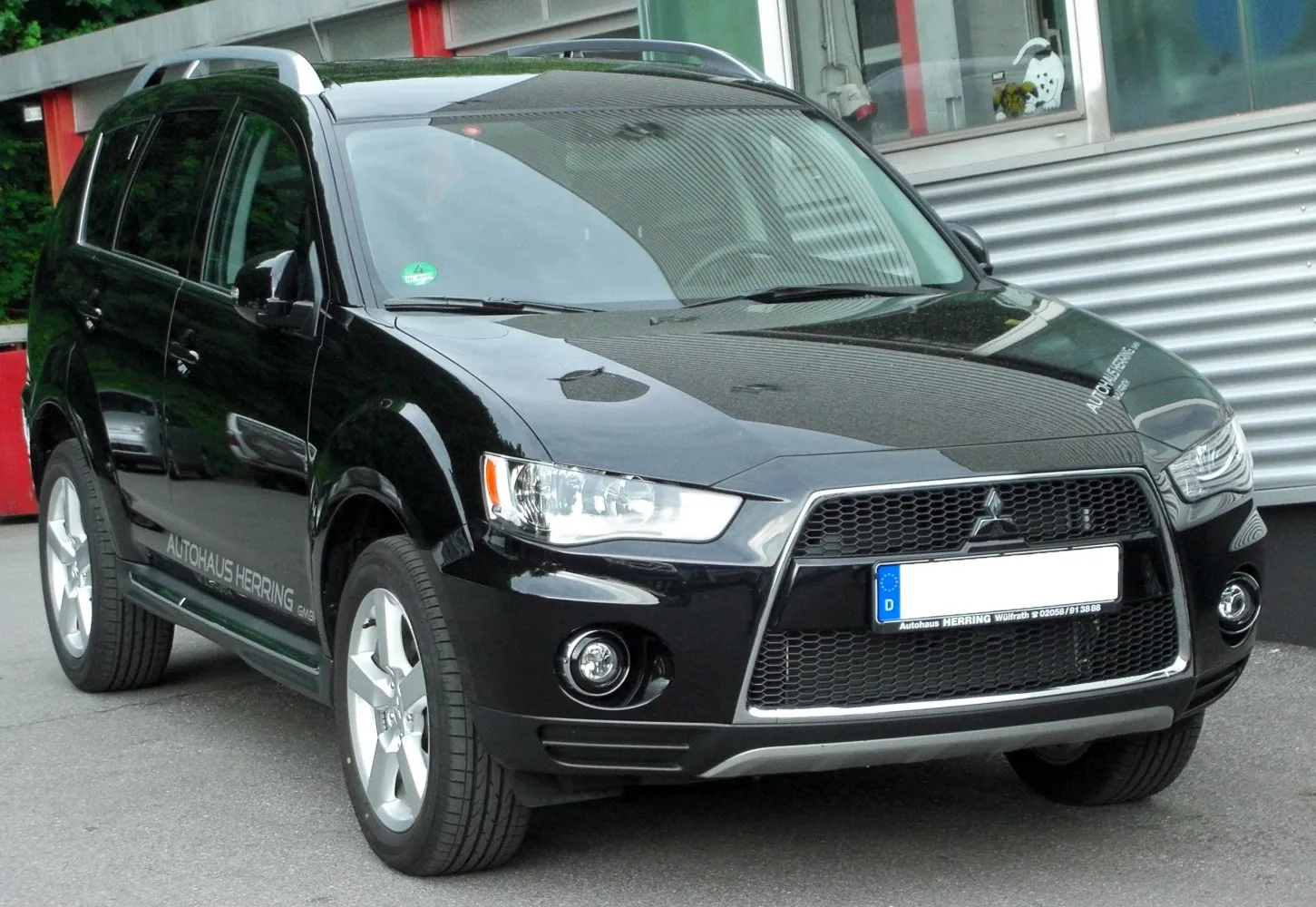
Mitsubishi Outlander II (facelift 2009) 2.2 DI-D (156 Hp) TC-SST 4WD
Overall Rating
Mitsubishi Outlander:
The Mitsubishi Outlander is a compact crossover SUV manufactured by Japanese automaker Mitsubishi Motors since 2001. It was originally known as the Mitsubishi Airtrek when it was introduced in Japan.
The original Airtrek name was chosen to "describe the vehicle's ability to transport its passengers on adventure-packed journeys in a 'free-as-a-bird' manner", and was "coined from Air and Trek to express the idea of footloose, adventure-filled motoring pleasure. " The Outlander nameplate which replaced it evoked a "feeling of journeying to distant, unexplored lands in search of adventure. "....(Read more on Wikipedia)
II (facelift 2009) Overview:
Mitsubishi Outlander (II (facelift 2009)). With 380 Nm of torque, it offers ample pulling power. It has moderate fuel consumption (~9.3 l/100km). With a weight of 1720 kg, it falls in the mid‑range. All‑wheel drive provides excellent grip, ideal for off‑road use. Acceleration is relatively slow (0–100 km/h in 11.1 s). The top speed reaches 198 km/h. A sport utility vehicle offering higher ground clearance and versatile cargo space. A vehicle that combines characteristics of SUVs and hatchbacks for versatility. Seating for 5 makes it ideal for daily use.
2.2 DI-D (156 Hp) TC-SST 4WD Verdict:

Performance Verdict
Combines solid diesel torque with the quick-shifting TC-SST gearbox, offering a sporty and engaging driving experience with good traction.
Fuel Economy
Decent fuel economy for a 4WD diesel with an automatic transmission, though slightly less efficient than manual FWD diesels.
Pros and Cons:
Pros:
- • Versatile engine lineup including efficient diesels and a powerful V6.
- • Available capable 4WD system for varied conditions.
- • Spacious interior with flexible cargo capacity.
- • Good reliability reputation.
- • Comfortable ride for long journeys.
Cons:
- • Some petrol engines can feel underpowered or noisy with the CVT.
- • Interior plastics can feel dated compared to rivals.
- • Higher fuel consumption for the V6 and some petrol models.
- • Rear visibility can be limited.
Specifications:
Specifications are compared to those of the previous generation(II (facelift 2009): 2009 - 2012).
| General: | |
|---|---|
| Brand: | Mitsubishi |
| Model: | Outlander |
| Generation: | II (facelift 2009) |
| Modification (Engine): | 2.2 DI-D (156 Hp) TC-SST 4WD |
| Start of production: | 2010 |
| End of production: | 2012 |
| Powertrain Architecture: | Internal Combustion engine |
| Body type: | SUV, Crossover |
| Seats: | 5 |
| Doors: | 5 |
| Engine: | |
|---|---|
| Engine systems: | Particulate filter |
| Power: | 156 Hp @ 4000 rpm. Same horsepower |
| Power per litre: | 71.6 Hp/l [Same length.] |
| Torque: | 380 Nm @ 2000 rpm. |
| Engine Model/Code: | 4HK More details about the engine 4HK |
| Engine displacement: | 2179 |
| Number of cylinders: | 4 |
| Engine configuration: | Inline |
| Number of valves per cylinder: | 4 |
| Fuel injection system: | Diesel Commonrail |
| Engine aspiration: | Turbocharger, Intercooler |
| Valvetrain: | DOHC |
| Engine oil capacity: | 5 l |
| Coolant: | 7.6 l |
| Engine layout: | Front, Transverse |
| Cylinder Bore: | 85 mm mm |
| Piston Stroke: | 96 mm mm |
| Compression ratio: | 16.6:1 |
| Performance: | |
|---|---|
| Fuel Type: | Diesel |
| Fuel consumption (economy) - urban: | 9.3 l/100 km |
| Fuel consumption (economy) - extra urban: | 6 l/100 km |
| Fuel consumption (economy) - combined (NEDC): | 7.2 l/100 km |
| Fuel consumption (economy) - urban (NEDC): | 9.3 l/100 km |
| Fuel consumption (economy) - extra urban (NEDC): | 6 l/100 km |
| Fuel consumption (economy) - combined: | 7.2 l/100 km |
| Emission standard: | Euro 5 |
| Acceleration 0 - 100 km/h: | 11.1 sec |
| Acceleration 0 - 62 mph: | 11.1 sec |
| Maximum speed: | 198 km/h |
| Weight-to-power ratio: | 11 kg/Hp, 90.7 Hp/tonne |
| Weight-to-torque ratio: | 4.5 kg/Nm, 220.9 Nm/tonne |
| Acceleration 0 - 60 mph: | 10.5 sec |
| Space: | |
|---|---|
| Kerb Weight: | 1720 |
| Max. weight: | 2410 |
| Max. roof load: | 80 kg |
| Max load: | 690 |
| Trunk (boot) space - maximum: | 1691 l |
| Trunk (boot) space - minimum: | 774 l |
| Permitted trailer load with brakes (12%): | 2000 kg |
| Fuel tank capacity: | 60 l |
| Permitted trailer load without brakes: | 750 kg |
| Permitted towbar download: | 80 kg |
| Size: | |
|---|---|
| Ramp-over (brakeover) angle: | 19° |
| Wading depth: | 300 mm |
| Length: | 4665 mm mm [Same length.] |
| Width: | 1800 mm mm [Same width.] |
| Height: | 1680 mm mm [Same height.] |
| Wheelbase: | 2670 mm mm [Same wheelbase.] |
| Front track: | 1540 mm |
| Rear (Back) track: | 1540 mm |
| Front overhang: | 990 mm |
| Rear overhang: | 1005 mm |
| Ride height (ground clearance): | 176 mm |
| Minimum turning circle (turning diameter): | 10.6 m [above average] |
| Approach angle: | 22° |
| Departure angle: | 21° |
| Powertrain: | |
|---|---|
| Drivetrain Architecture | The Internal combustion engine (ICE) drives the front wheels permanently, and the rear wheels are driven through an electrically or mechanically operated clutch if necessary. |
| Drive wheel | All wheel drive (4x4) |
| Number of gears | 6 |
| Transmission type | Automatic |
| Gearbox type | TC-SST |
| Front brakes | Ventilated discs, 294 mm [Best for performance and cooling.] |
| Rear brakes | Disc, 302 mm [above average] |
| Assisting systems | ABS (Anti-lock braking system) |
| Steering type | Steering rack and pinion |
| Power steering | Hydraulic Steering |
| Tires size | 225/55 R18 |
| Wheel rims size | 7J x 18 |
| Front suspension | Independent type McPherson, Transverse stabilizer |
| Rear suspension | Independent multi-link suspension, Transverse stabilizer |






Is the Mitsubishi Outlander the king of its class? Share your thoughts.