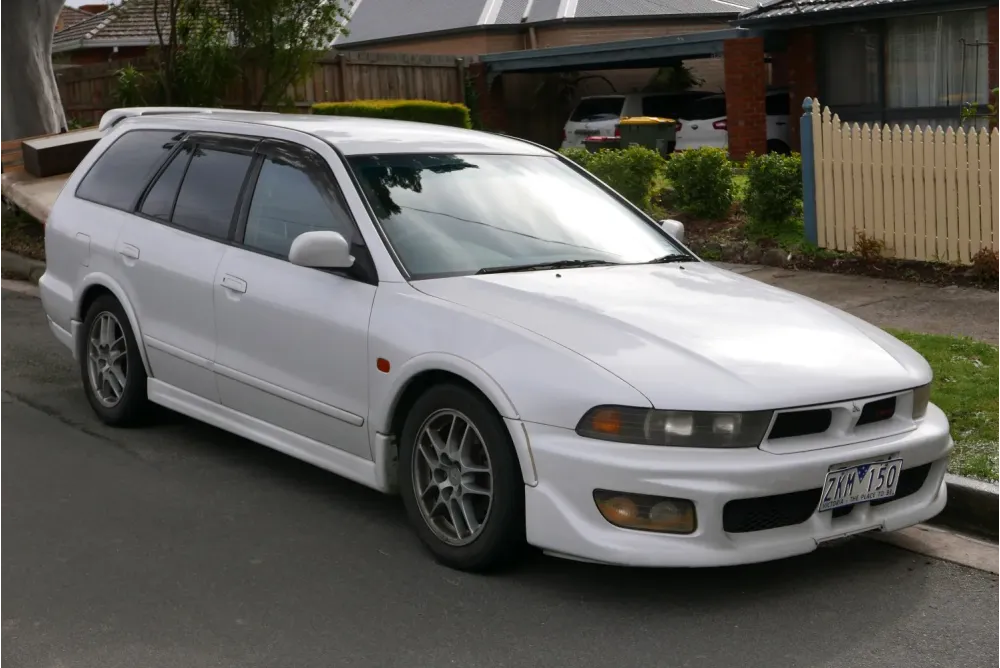
Click on image to view the full photo gallery
Mitsubishi Legnum EAO 2.4i ST (165 Hp) Automatic
Overall Rating
Mitsubishi Legnum:
The Mitsubishi Galant is an automobile which was produced by Japanese manufacturer Mitsubishi from 1969 until 2012. The model name was derived from the French word galant, meaning "chivalrous". There have been nine distinct generations with total cumulative sales exceeding five million units. It began as a compact sedan, but over the course of its life evolved into a mid-size car. Initial production was based in Japan, with manufacturing later moved to other countries....(Read more on Wikipedia)
EAO Overview:
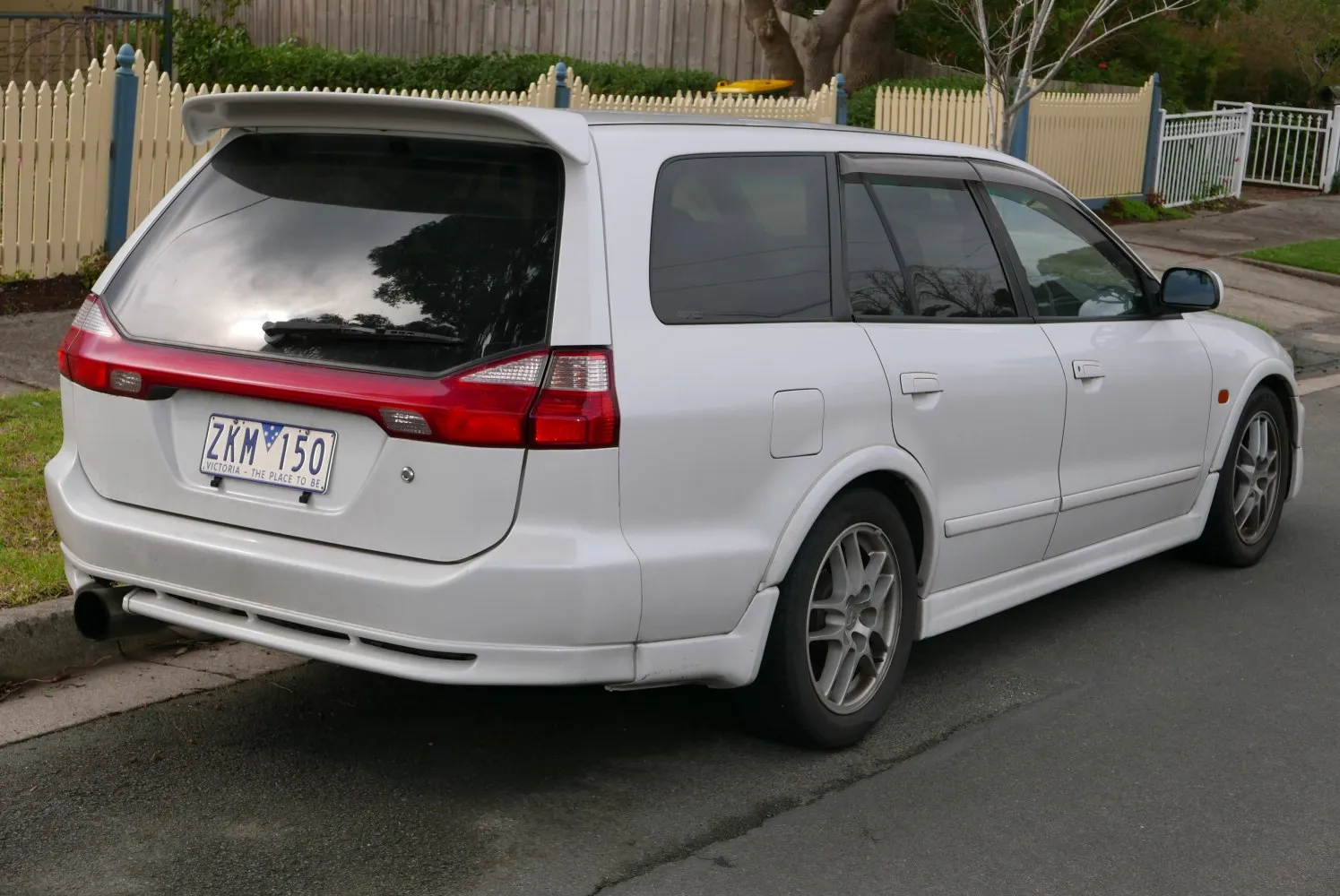
Mitsubishi Legnum (EAO). With 217 Nm of torque, it offers ample pulling power. With a weight of 1550 kg, it falls in the mid‑range. Front‑wheel drive delivers efficiency and easy handling. A car with an extended rear cargo area, combining passenger comfort with increased storage. Seating for 5 makes it ideal for daily use.
Based on the closely related Mitsubishi Galant (1997-2003) Euro NCAP test, the Legnum EAO achieved a 3-star rating for adult occupant protection, which was a respectable but not class-leading performance for its era.
2.4i ST (165 Hp) Automatic Verdict:

Performance Verdict
The 2.4L GDI engine paired with an automatic offers a competent and easy-to-drive package. Performance is adequate for most situations, though not exciting.
Fuel Economy
Moderate fuel economy, similar to the manual 2.4i ST, making it a practical choice for those seeking a balance of power and efficiency in an automatic.
Pros and Cons:
Pros:
- • Iconic VR-4 twin-turbo performance and AWD capability
- • Practical and spacious station wagon body style
- • Comfortable ride quality, especially on longer journeys
- • Distinctive and sporty styling for its era
- • Good value on the used market, particularly non-VR-4 models
Cons:
- • Early GDI engines can suffer from carbon buildup and fuel system issues
- • Poor fuel economy for VR-4 models
- • Parts availability can be challenging outside of Japan
- • Interior design and technology are dated by modern standards
- • Limited advanced safety features compared to contemporary vehicles
Specifications:
| General: | |
|---|---|
| Brand: | Mitsubishi |
| Model: | Legnum |
| Generation: | EAO |
| Modification (Engine): | 2.4i ST (165 Hp) Automatic |
| Start of production: | 1997 |
| End of production: | 2002 |
| Powertrain Architecture: | Internal Combustion engine |
| Body type: | Station wagon (estate) |
| Seats: | 5 |
| Doors: | 5 |
| Engine: | |
|---|---|
| Power: | 165 Hp @ 6000 rpm. |
| Power per litre: | 69.4 Hp/l |
| Torque: | 217 Nm @ 4000 rpm. |
| Engine displacement: | 2378 |
| Number of cylinders: | 4 |
| Engine configuration: | Inline |
| Number of valves per cylinder: | 4 |
| Fuel injection system: | Multi-port manifold injection |
| Engine aspiration: | Naturally aspirated engine |
| Valvetrain: | DOHC |
| Engine layout: | Front, Transverse |
| Cylinder Bore: | 87 mm mm |
| Piston Stroke: | 100 mm mm |
| Compression ratio: | 9.5:1 |
| Performance: | |
|---|---|
| Fuel Type: | Petrol (Gasoline) |
| Weight-to-power ratio: | 9.4 kg/Hp, 106.5 Hp/tonne |
| Weight-to-torque ratio: | 7.1 kg/Nm, 140 Nm/tonne |
| Space: | |
|---|---|
| Kerb Weight: | 1550 |
| Max. weight: | 1825 |
| Max load: | 275 |
| Fuel tank capacity: | 60 l |
| Size: | |
|---|---|
| Length: | 4740 mm mm |
| Width: | 1760 mm mm |
| Height: | 1470 mm mm |
| Wheelbase: | 2635 mm mm |
| Front track: | 1525 mm |
| Rear (Back) track: | 1520 mm |
| Powertrain: | |
|---|---|
| Drivetrain Architecture | The Internal combustion engine (ICE) drives the front wheels of the vehicle. |
| Drive wheel | Front wheel drive |
| Number of gears | 4 |
| Transmission type | Automatic |
| Front brakes | Ventilated discs |
| Rear brakes | Ventilated discs |
| Assisting systems | ABS (Anti-lock braking system) |
| Steering type | Steering rack and pinion |
| Power steering | Hydraulic Steering |
| Tires size | 225/50 R16V |
| Wheel rims size | 16 |
| Front suspension | Coil spring |
| Rear suspension | Coil spring |








Better than its competitors? Tell us why the Mitsubishi Legnum stands out.