
Click on image to view the full photo gallery
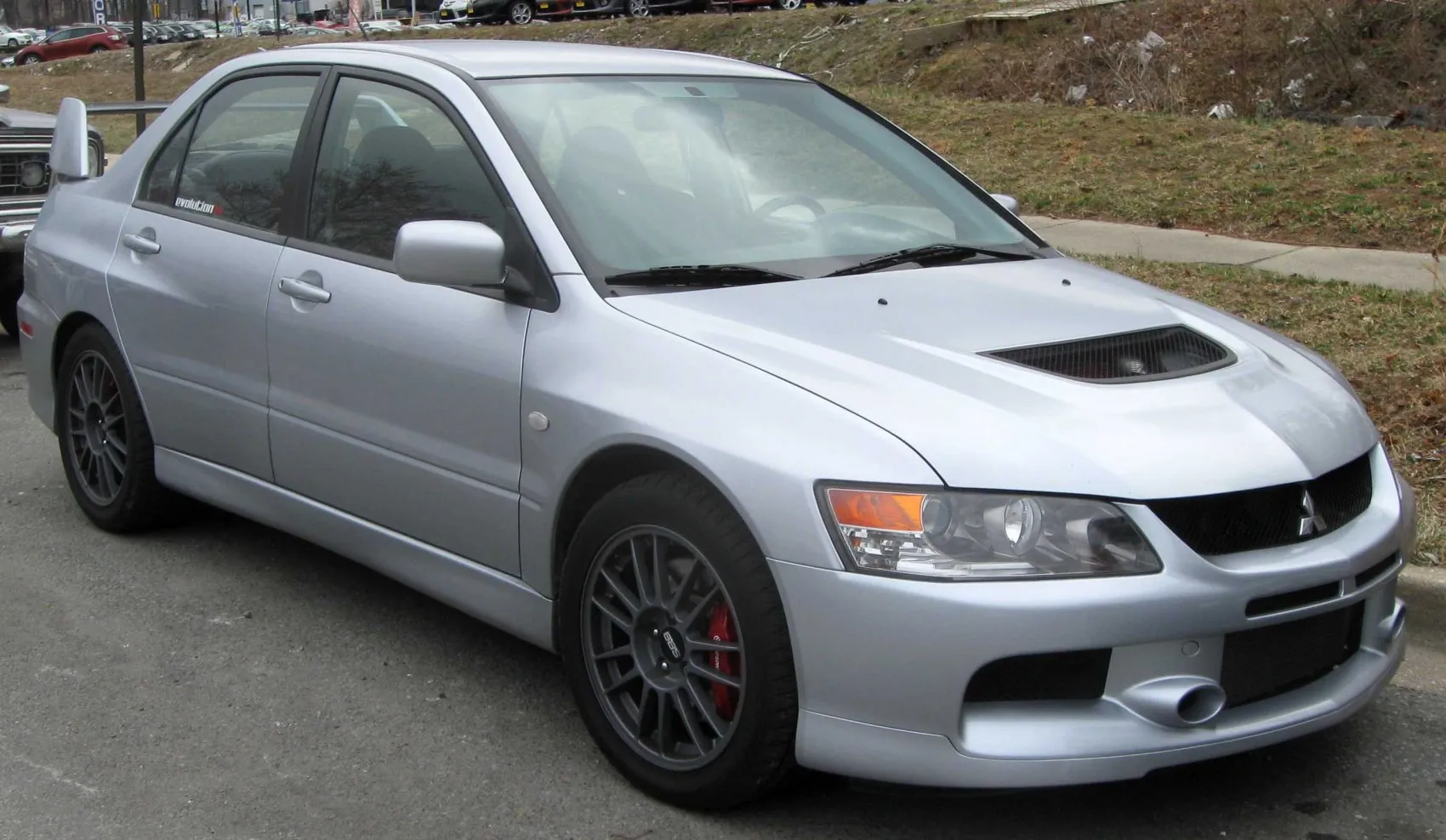
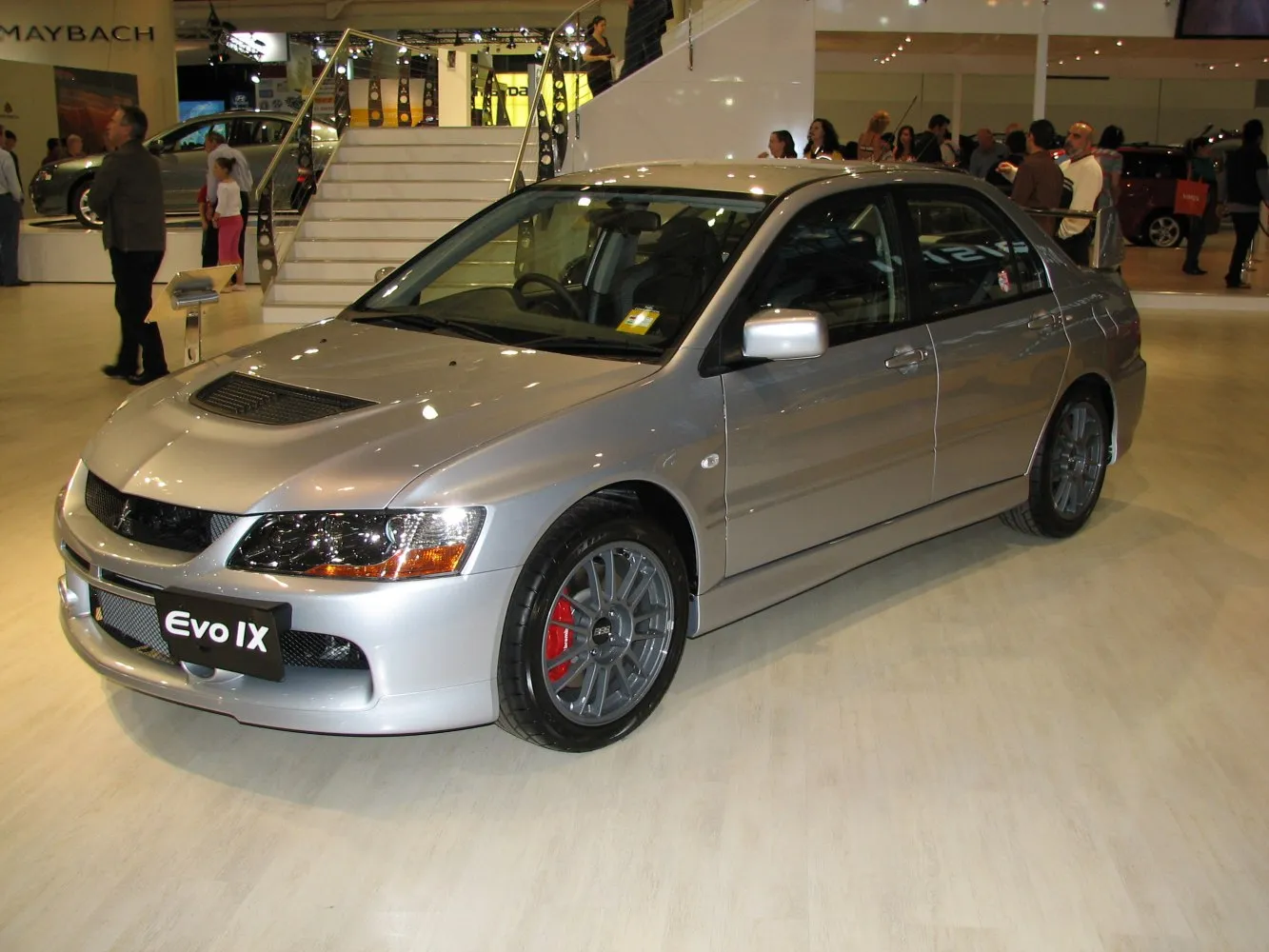
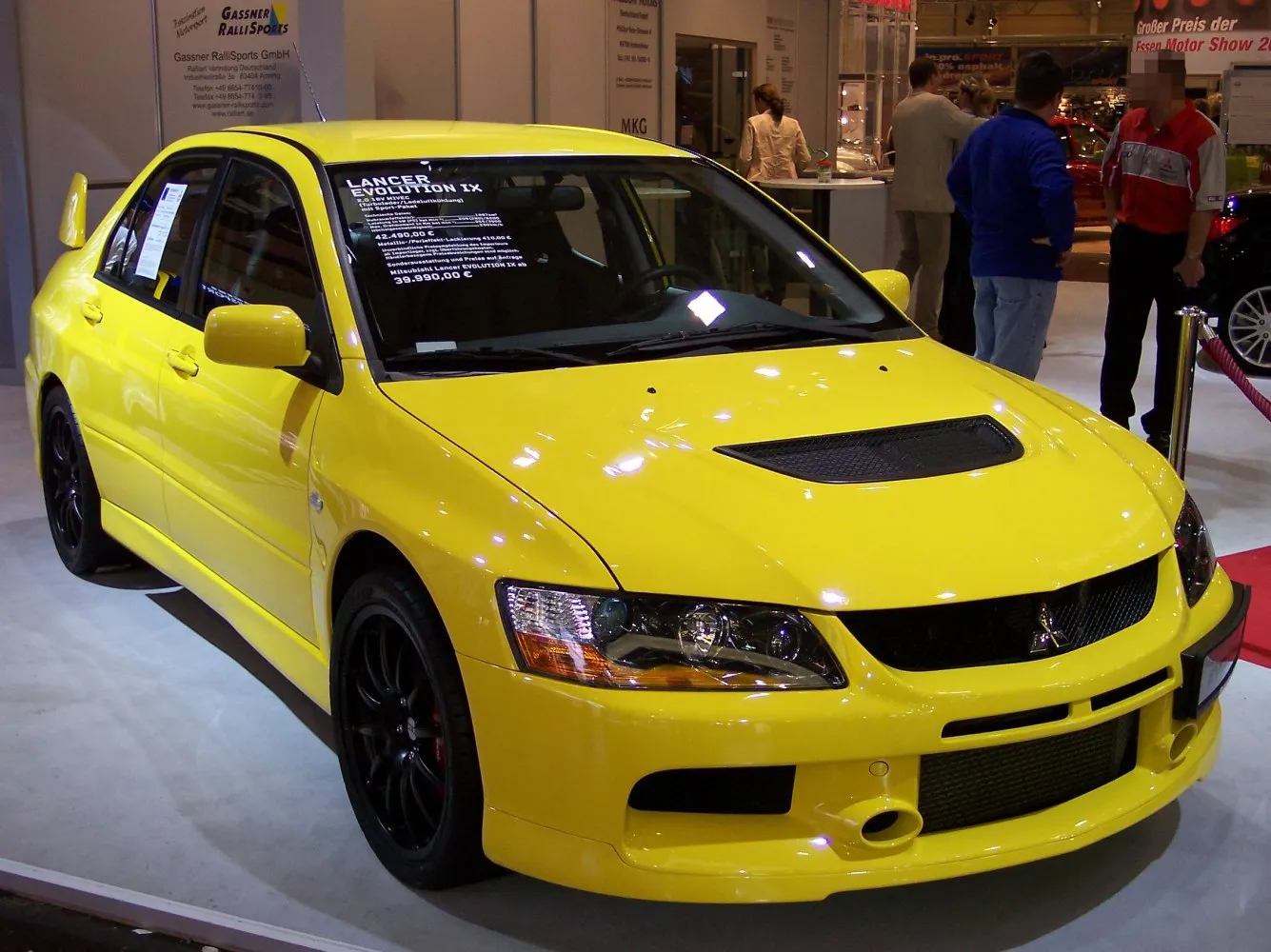
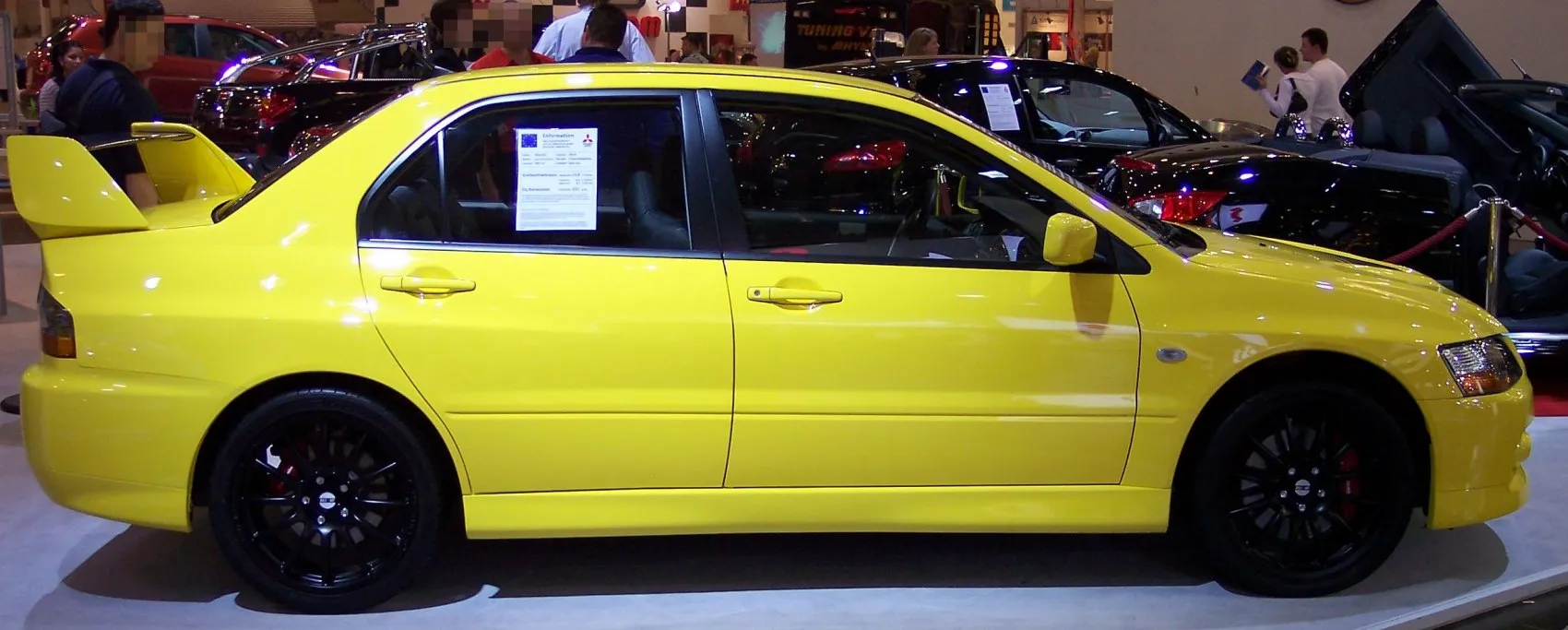
Mitsubishi Lancer Evolution IX 2.0 MIVEC (280 Hp) 4WD
Overall Rating
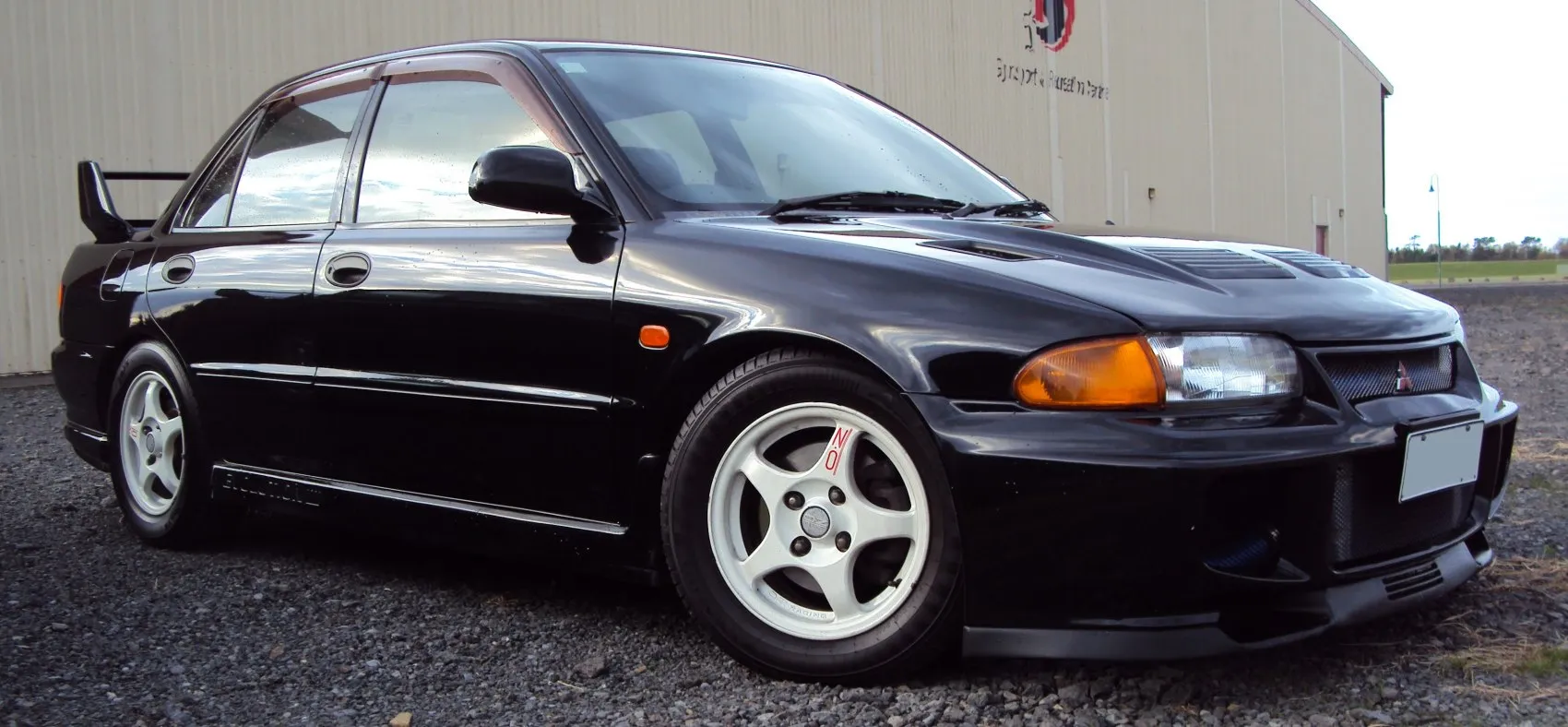
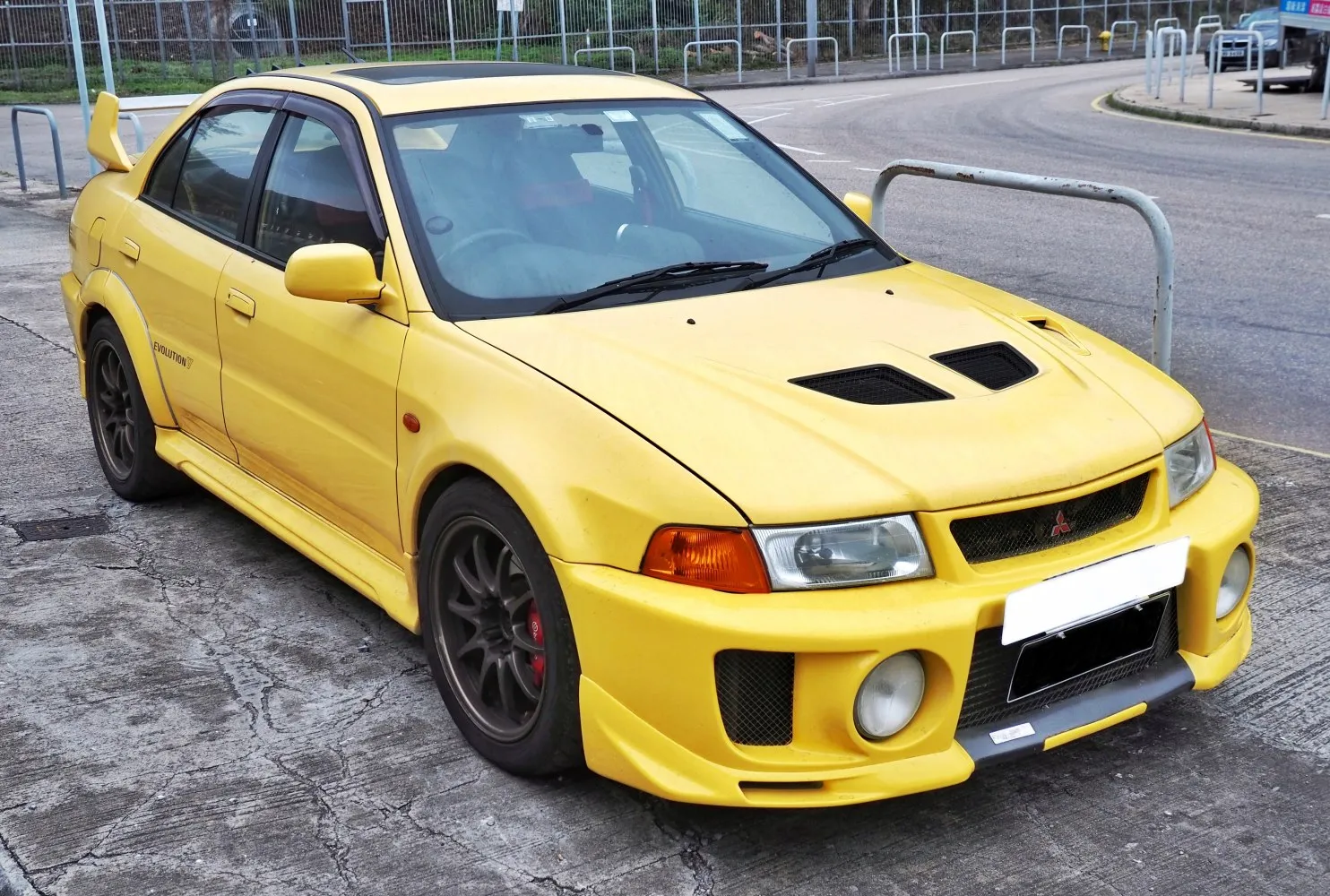
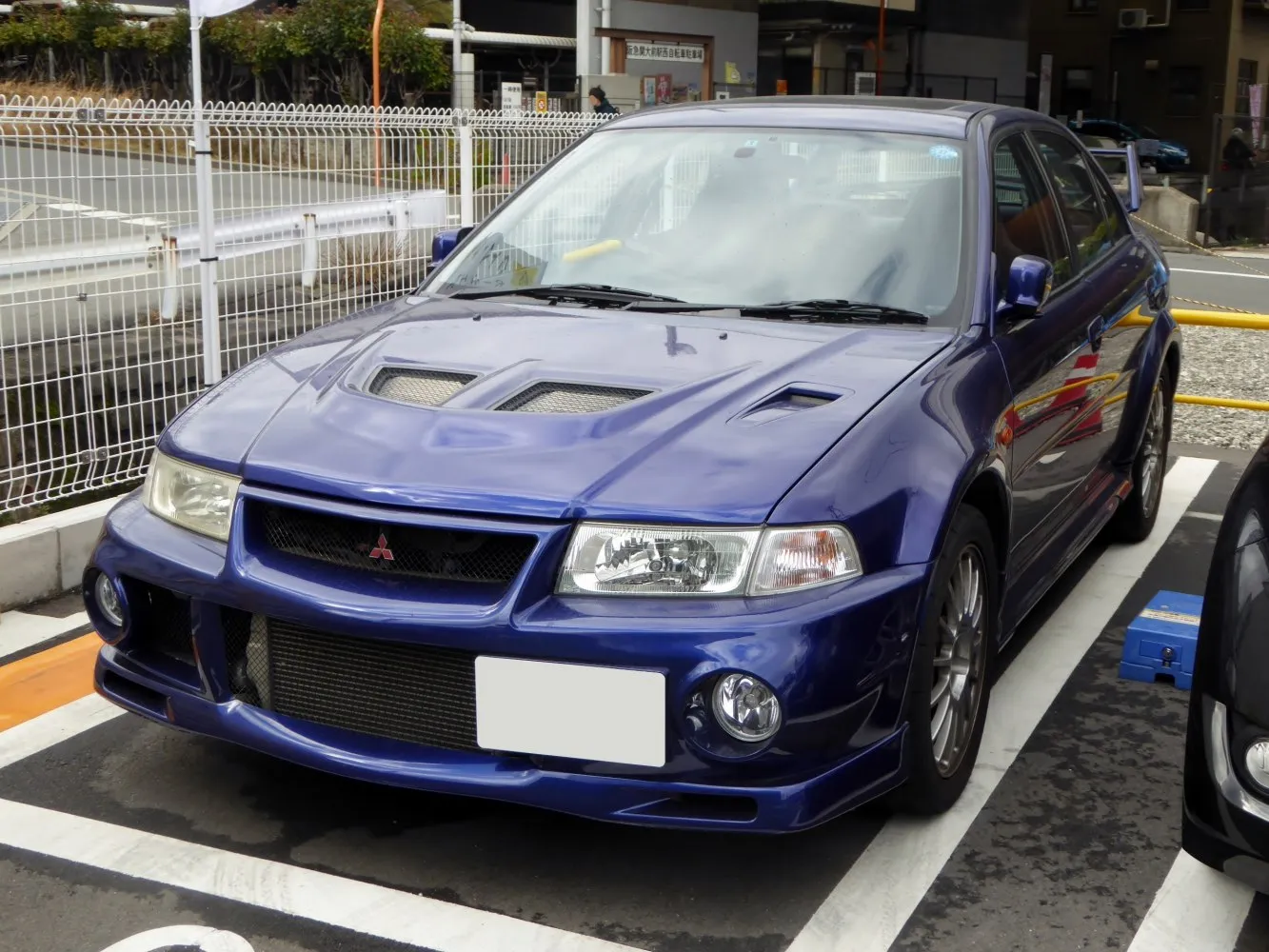
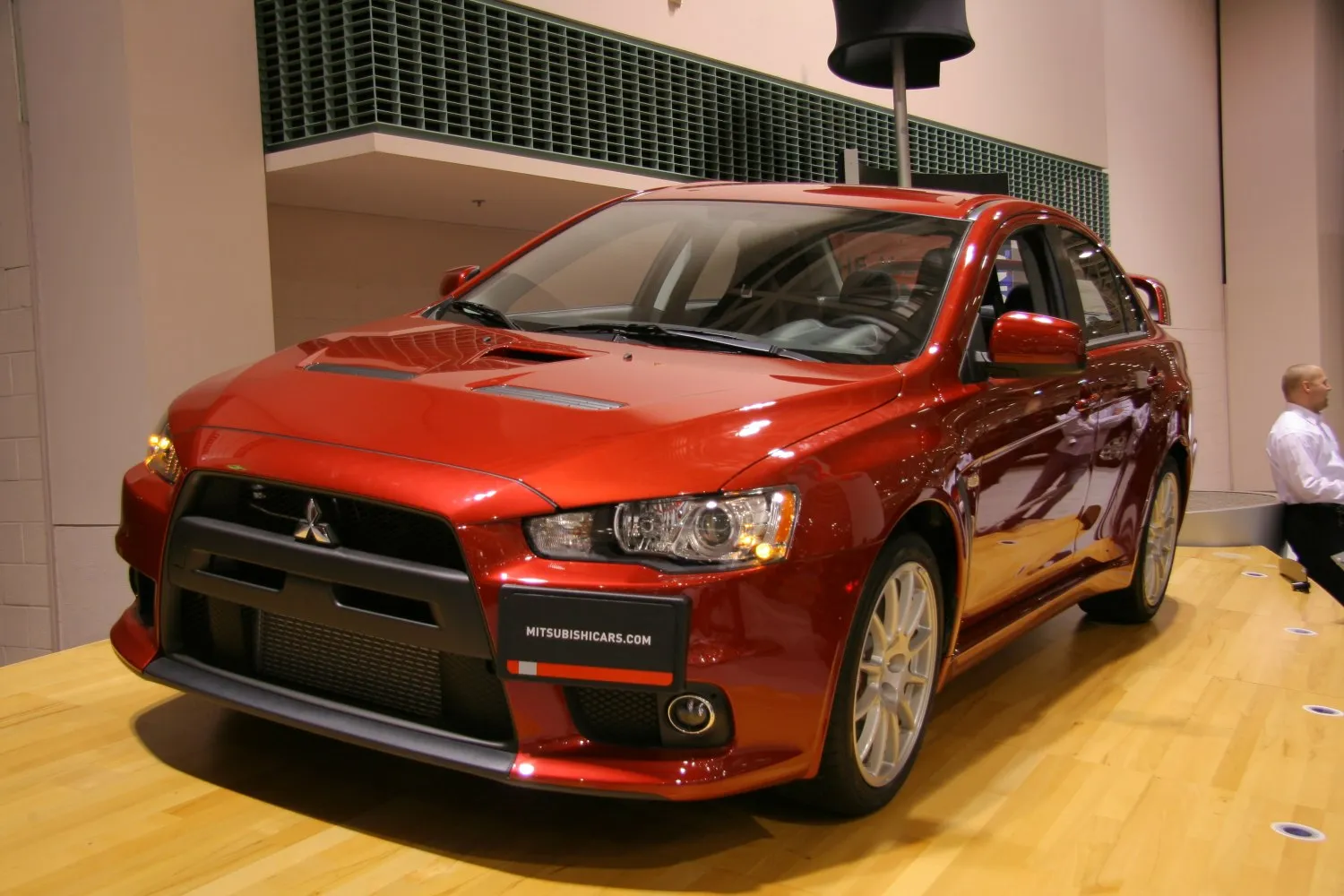
Mitsubishi Lancer Evolution:
The Mitsubishi Lancer Evolution, popularly referred to as the "Evo", is a sports sedan and rally car based on the Lancer that was manufactured by Japanese manufacturer Mitsubishi Motors from 1992 until 2016. There have been ten official versions to date, and the designation of each model is most commonly a Roman numeral. All generations use two-litre intercooled turbo inline four-cylinder engines and all-wheel drive systems.
The Lancer was originally intended only for Japanese markets, but demand on the "grey import" market led the Evolution series to be offered through Ralliart dealer networks in the United Kingdom and in various European markets from around 1998. Mitsubishi decided to export the eighth generation Evolution to the United States in 2003 after witnessing the success Subaru had in that market the previous year with the Subaru Impreza WRX....(Read more on Wikipedia)
IX Overview:
Mitsubishi Lancer Evolution (IX). With 355 Nm of torque, it offers ample pulling power. With a weight of 1540 kg, it falls in the mid‑range. All‑wheel drive provides excellent grip, ideal for off‑road use. Acceleration is excellent (0–100 km/h in 5.7 s). The top speed reaches 250 km/h. A four-door car with a separate trunk, ideal for families and daily commuting. Seating for 5 makes it ideal for daily use.
2.0 MIVEC (280 Hp) 4WD Verdict:

Performance Verdict
Delivering 280 Hp, this variant offers robust acceleration (5.7 sec 0-100km/h) and the signature responsive handling expected from an Evo, making it highly engaging.
Fuel Economy
With a combined fuel consumption of 10.6 l/100 km, it's relatively efficient for its performance class, though still a thirsty engine for daily use.
Pros and Cons:
Pros:
- • Legendary 4G63T MIVEC engine with immense tuning potential.
- • Exceptional all-wheel-drive system (AYC/ACD) for superior handling.
- • Rally-bred performance and engaging driving dynamics.
- • Iconic JDM styling and strong enthusiast following.
- • Strong acceleration, especially in FQ variants.
Cons:
- • Poor fuel economy across all trims.
- • Stiff ride and limited comfort for daily driving.
- • High maintenance costs, particularly for tuned engines.
- • Interior quality is basic and dated compared to rivals.
- • Road noise can be intrusive.
Specifications:
Specifications are compared to those of the previous generation(VIII: 2003 - 2005).
| General: | |
|---|---|
| Brand: | Mitsubishi |
| Model: | Lancer Evolution |
| Generation: | IX |
| Modification (Engine): | 2.0 MIVEC (280 Hp) 4WD |
| Start of production: | 2005 |
| End of production: | 2007 |
| Powertrain Architecture: | Internal Combustion engine |
| Body type: | Sedan |
| Seats: | 5 |
| Doors: | 4 |
| Engine: | |
|---|---|
| Power: | 280 Hp @ 6500 rpm. |
| Power per litre: | 140.2 Hp/l |
| Torque: | 355 Nm @ 3500 rpm. |
| Engine Model/Code: | 4G63T [Same engine] More details about the engine 4G63T |
| Engine displacement: | 1997 |
| Number of cylinders: | 4 |
| Engine configuration: | Inline |
| Number of valves per cylinder: | 4 |
| Fuel injection system: | Multi-port manifold injection |
| Engine aspiration: | Turbocharger, Intercooler |
| Valvetrain: | DOHC |
| Engine oil capacity: | 5.3 l |
| Coolant: | 6 l |
| Engine layout: | Front, Transverse |
| Cylinder Bore: | 85 mm mm |
| Piston Stroke: | 88 mm mm |
| Compression ratio: | 8.8:1 |
| Performance: | |
|---|---|
| Fuel Type: | Petrol (Gasoline) |
| Fuel consumption (economy) - urban: | 14.6 l/100 km |
| Fuel consumption (economy) - extra urban: | 8.2 l/100 km |
| Fuel consumption (economy) - combined (NEDC): | 10.6 l/100 km |
| Fuel consumption (economy) - urban (NEDC): | 14.6 l/100 km |
| Fuel consumption (economy) - extra urban (NEDC): | 8.2 l/100 km |
| Fuel consumption (economy) - combined: | 10.6 l/100 km |
| Emission standard: | Euro 4 |
| Acceleration 0 - 100 km/h: | 5.7 sec |
| Acceleration 0 - 62 mph: | 5.7 sec |
| Maximum speed: | 250 km/h |
| Weight-to-power ratio: | 5.5 kg/Hp, 181.8 Hp/tonne |
| Weight-to-torque ratio: | 4.3 kg/Nm, 230.5 Nm/tonne |
| Acceleration 0 - 60 mph: | 5.4 sec |
| Space: | |
|---|---|
| Kerb Weight: | 1540 |
| Max. weight: | 1885 |
| Max. roof load: | 60 kg |
| Max load: | 345 |
| Trunk (boot) space - minimum: | 430 l |
| Fuel tank capacity: | 55 l |
| Size: | |
|---|---|
| Length: | 4490 mm mm [Same length.] |
| Width: | 1770 mm mm [Same width.] |
| Height: | 1450 mm mm [Same height.] |
| Wheelbase: | 2625 mm mm [Same wheelbase.] |
| Front track: | 1515 mm |
| Rear (Back) track: | 1515 mm |
| Front overhang: | 930 mm |
| Rear overhang: | 935 mm |
| Ride height (ground clearance): | 140 mm |
| Minimum turning circle (turning diameter): | 12 m [above average] |
| Powertrain: | |
|---|---|
| Drivetrain Architecture | The Internal combustion engine (ICE) drives permanently the four wheels of the vehicle. |
| Drive wheel | All wheel drive (4x4) |
| Number of gears | 6 |
| Transmission type | Manual |
| Front brakes | Ventilated discs, 320 mm [Best for performance and cooling.] |
| Rear brakes | Ventilated discs, 300 mm [Best for performance and cooling.] |
| Assisting systems | ABS (Anti-lock braking system) |
| Steering type | Steering rack and pinion |
| Power steering | Hydraulic Steering |
| Tires size | 235/45 R17 |
| Wheel rims size | 8J x 17 |
| Front suspension | Independent type McPherson, Transverse stabilizer |
| Rear suspension | Independent multi-link suspension, Transverse stabilizer |










Help others decide – share your experience!