
Click on image to view the full photo gallery
Mercury Tracer Station Wagon 2.0 (111 Hp)
Overall Rating
Mercury Tracer:
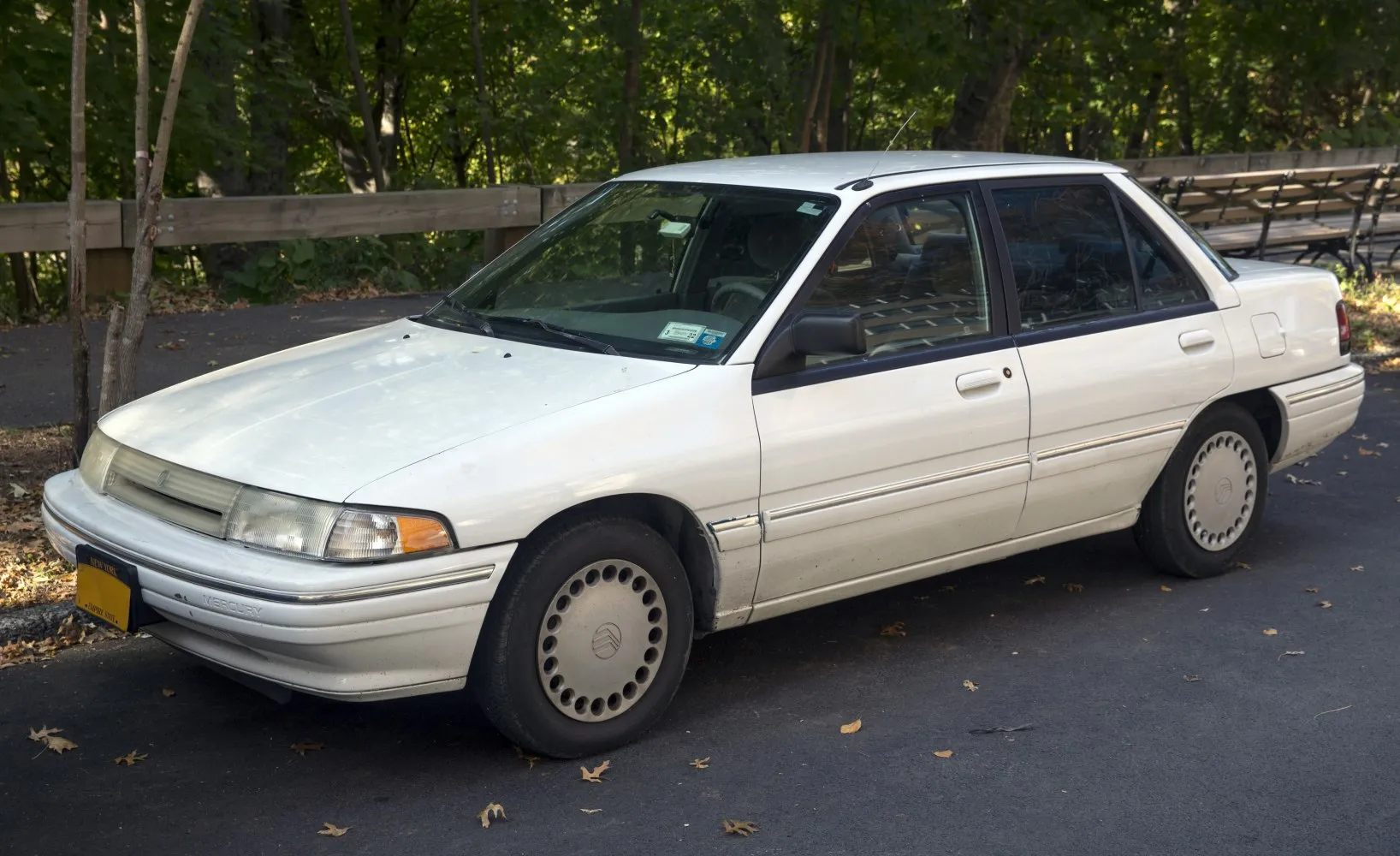
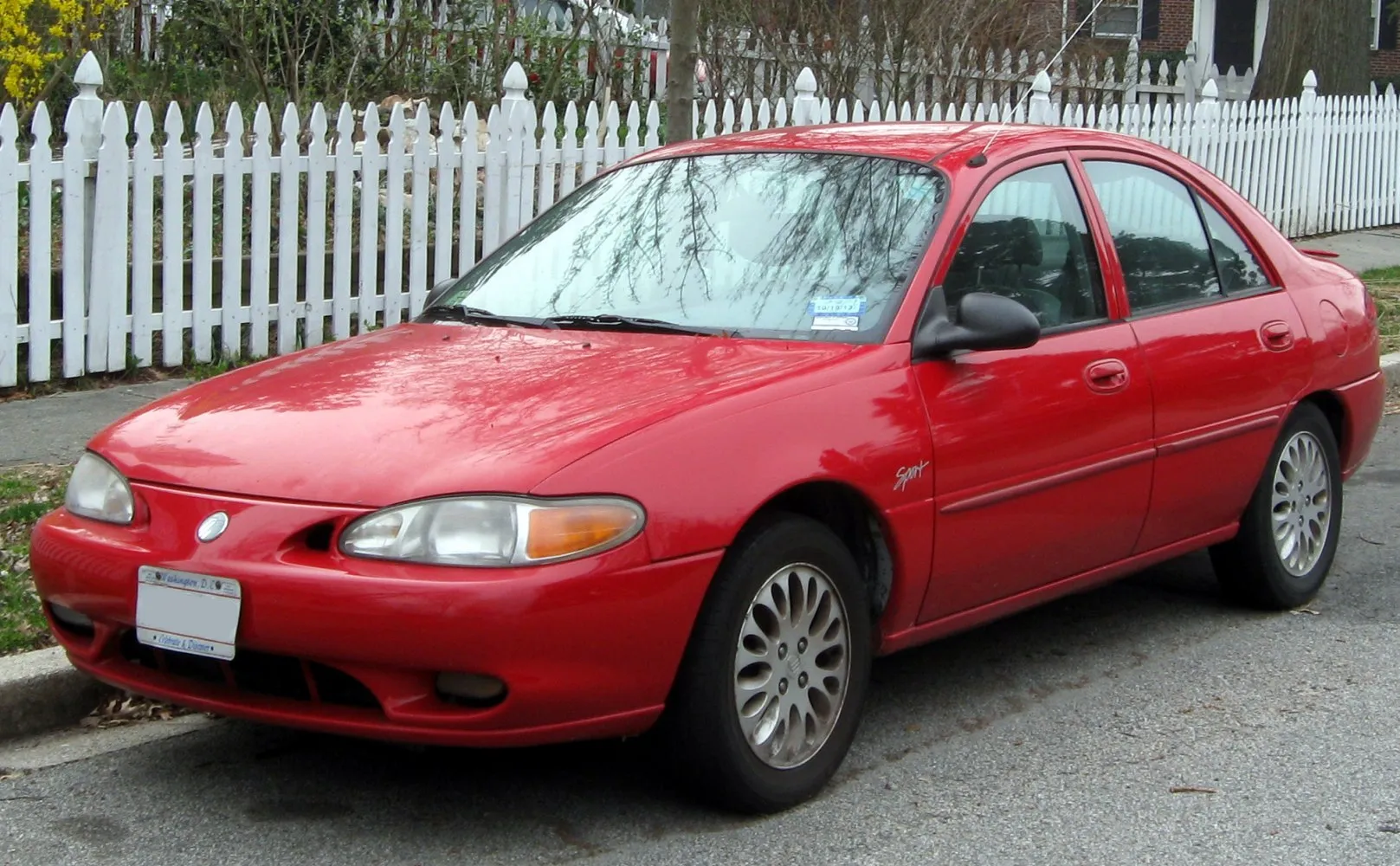
The Mercury Tracer is a compact car that was marketed by Mercury from the 1987 to 1999 model years. The replacement for the Mercury Lynx, the Tracer was also sold as a three-door and five-door hatchback and a five-door station wagon; a four-door sedan was introduced for the second generation. Three generations of the model line were produced, with the second two serving as the counterpart of the Ford Escort.
The first Mercury-brand vehicle since 1960 without a direct Ford counterpart in North America, the first-generation Tracer was developed by Mazda. For its entire production, the model line was derived from the Mazda 323/Protegé....(Read more on Wikipedia)
Station Wagon Overview:
Mercury Tracer (Station Wagon). With 170 Nm of torque, it offers ample pulling power. It has moderate fuel consumption (~9.1 l/100km). Weighing only 1145 kg, it’s quite light. Front‑wheel drive delivers efficiency and easy handling. The top speed reaches 175 km/h. A car with an extended rear cargo area, combining passenger comfort with increased storage. Seating for 5 makes it ideal for daily use.
2.0 (111 Hp) Verdict:

Performance Verdict
Offers adequate performance for daily driving and highway cruising, though not particularly spirited. It's the most capable engine option in the lineup.
Fuel Economy
Provides decent fuel economy for a 2.0L naturally aspirated engine of its time, balancing power with reasonable running costs.
Pros and Cons:
Pros:
- • Excellent cargo space for its class
- • Affordable purchase and running costs
- • Practical and utilitarian design
- • Reliable for basic transportation (especially 2.0L)
Cons:
- • Underpowered base engines (1.9L)
- • Basic interior and features
- • Unexciting driving dynamics
- • Dated safety technology compared to modern vehicles
Specifications:
Specifications are compared to those of the previous generation(II: 1990 - 1997).
| General: | |
|---|---|
| Brand: | Mercury |
| Model: | Tracer |
| Generation: | Station Wagon |
| Modification (Engine): | 2.0 (111 Hp) |
| Start of production: | 1997 |
| End of production: | 2001 |
| Powertrain Architecture: | Internal Combustion engine |
| Body type: | Station wagon (estate) |
| Seats: | 5 |
| Doors: | 5 |
| Engine: | |
|---|---|
| Power: | 111 Hp @ 5000 rpm. |
| Power per litre: | 55.8 Hp/l |
| Torque: | 170 Nm @ 3750 rpm. |
| Engine displacement: | 1988 |
| Number of cylinders: | 4 |
| Engine configuration: | Inline |
| Number of valves per cylinder: | 2 |
| Fuel injection system: | Multi-port manifold injection |
| Engine aspiration: | Naturally aspirated engine |
| Valvetrain: | OHC |
| Engine oil capacity: | 3.8 l |
| Coolant: | 5 l |
| Engine layout: | Front, Transverse |
| Cylinder Bore: | 84.8 mm mm |
| Piston Stroke: | 88 mm mm |
| Compression ratio: | 9.2:1 |
| Performance: | |
|---|---|
| Fuel Type: | Petrol (Gasoline) |
| Fuel consumption (economy) - urban: | 9.1 l/100 km |
| Fuel consumption (economy) - extra urban: | 6.9 l/100 km |
| Maximum speed: | 175 km/h |
| Weight-to-power ratio: | 10.3 kg/Hp, 96.9 Hp/tonne |
| Weight-to-torque ratio: | 6.7 kg/Nm, 148.5 Nm/tonne |
| Space: | |
|---|---|
| Kerb Weight: | 1145 |
| Trunk (boot) space - minimum: | 865 l |
| Fuel tank capacity: | 48 l |
| Size: | |
|---|---|
| Length: | 4390 mm mm [49mm more] |
| Width: | 1700 mm mm [5mm more] |
| Height: | 1370 mm mm [32mm more] |
| Wheelbase: | 2500 mm mm [Same wheelbase.] |
| Front track: | 1440 mm |
| Rear (Back) track: | 1440 mm |
| Powertrain: | |
|---|---|
| Drivetrain Architecture | The Internal combustion engine (ICE) drives the front wheels of the vehicle. |
| Drive wheel | Front wheel drive |
| Number of gears | 4 |
| Transmission type | Automatic |
| Front brakes | Ventilated discs [Best for performance and cooling.] |
| Rear brakes | Drum [bad for performance and cooling.] |
| Assisting systems | ABS (Anti-lock braking system) |
| Steering type | Steering rack and pinion |
| Power steering | Hydraulic Steering |
| Tires size | 185/65 R14 |
| Front suspension | Wishbone |
| Rear suspension | Coil spring |








The hidden gems or the annoying flaws? Expose the truth about the Mercury Tracer!