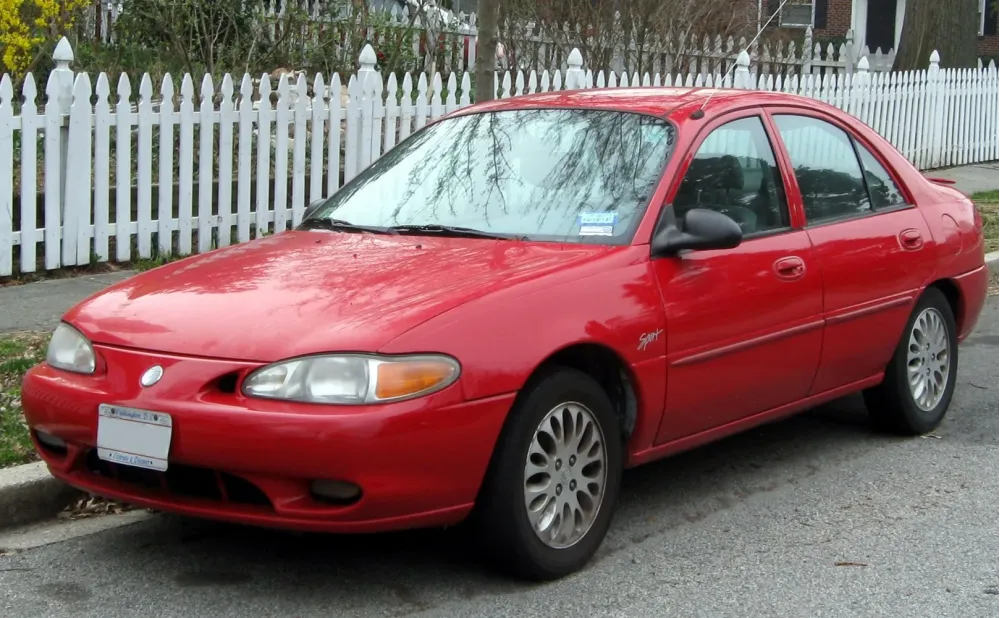
Click on image to view the full photo gallery
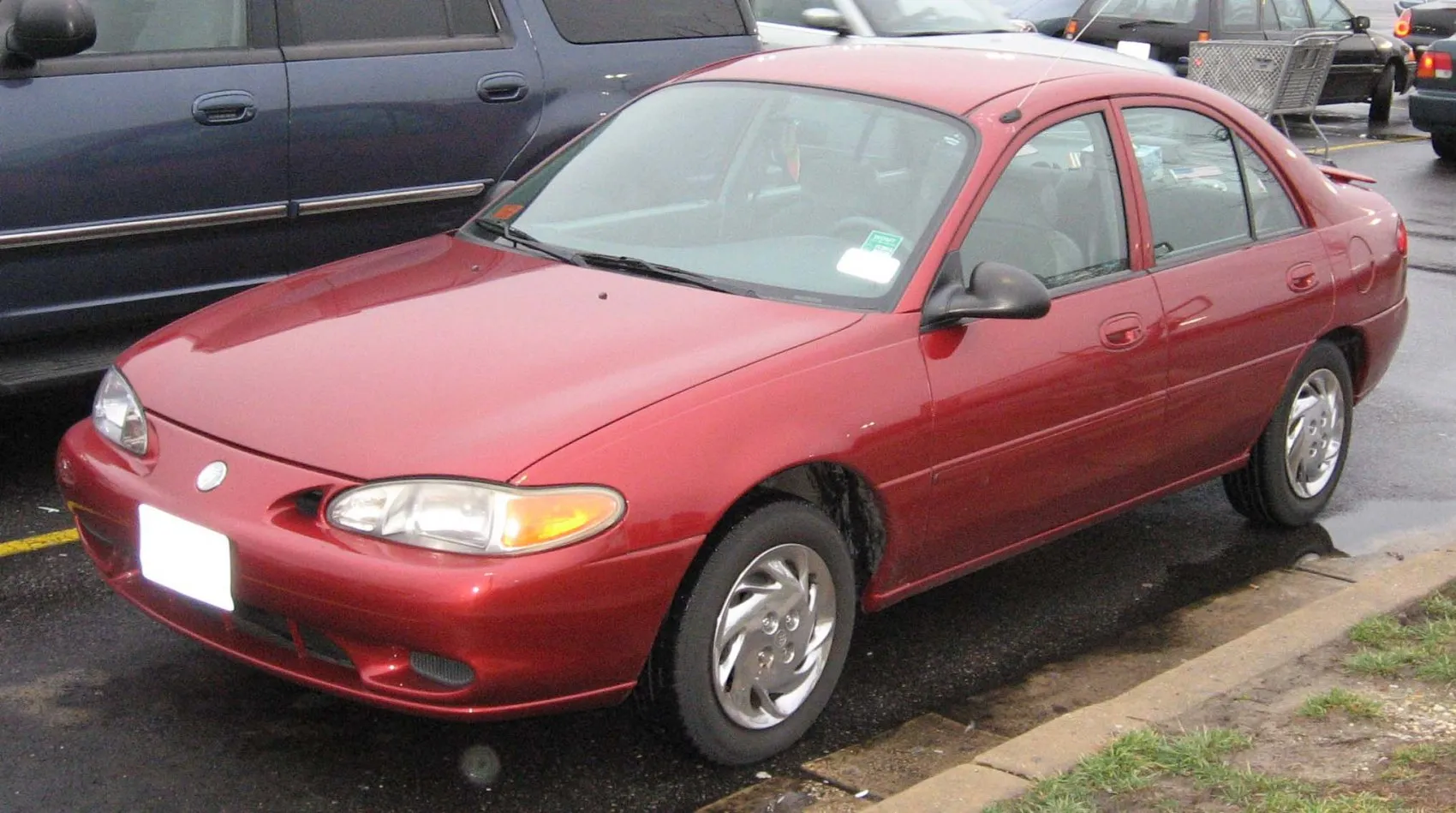
Mercury Tracer III 2.0 (110 Hp)
Overall Rating
Mercury Tracer:
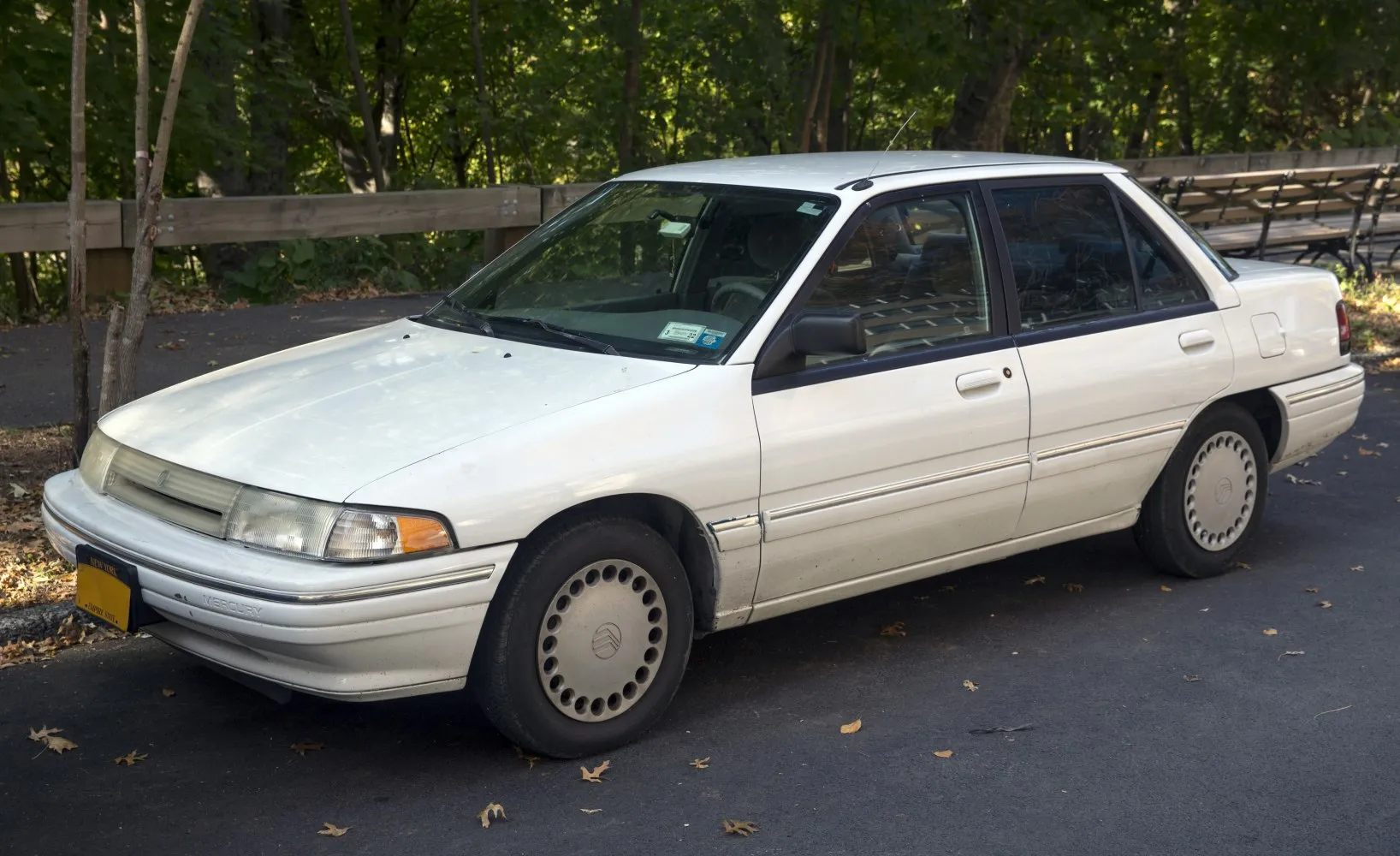
The Mercury Tracer is a compact car that was marketed by Mercury from the 1987 to 1999 model years. The replacement for the Mercury Lynx, the Tracer was also sold as a three-door and five-door hatchback and a five-door station wagon; a four-door sedan was introduced for the second generation. Three generations of the model line were produced, with the second two serving as the counterpart of the Ford Escort.
The first Mercury-brand vehicle since 1960 without a direct Ford counterpart in North America, the first-generation Tracer was developed by Mazda. For its entire production, the model line was derived from the Mazda 323/Protegé....(Read more on Wikipedia)
III Overview:
Mercury Tracer (III). With 169 Nm of torque, it offers ample pulling power. It has moderate fuel consumption (~8.4 l/100km). Weighing only 1093 kg, it’s quite light. Front‑wheel drive delivers efficiency and easy handling. The top speed reaches 185 km/h. A four-door car with a separate trunk, ideal for families and daily commuting. Seating for 5 makes it ideal for daily use.
The Mercury Tracer III was not tested by Euro NCAP. As a compact car from the late 1990s, its safety features would be basic compared to modern standards, likely including dual airbags and optional ABS.
2.0 (110 Hp) Verdict:

Performance Verdict
The 2.0L SOHC engine provides adequate power for daily commuting and highway cruising, though it's not designed for spirited driving. Acceleration is modest but sufficient for its class.
Fuel Economy
With urban consumption at 8.4 L/100km and extra-urban at 6.4 L/100km, the 2.0L engine offers respectable fuel economy for its era, making it an economical choice for a compact sedan.
Pros and Cons:
Pros:
- • Reliable and durable 2.0L engine
- • Good fuel economy for its class and era
- • Affordable to purchase and maintain
- • Practical and spacious interior for a compact sedan
Cons:
- • Uninspired performance and handling
- • Basic interior materials and design
- • Limited advanced safety features
- • Dated styling compared to newer competitors
Specifications:
Specifications are compared to those of the previous generation(II: 1990 - 1997).
| General: | |
|---|---|
| Brand: | Mercury |
| Model: | Tracer |
| Generation: | III |
| Modification (Engine): | 2.0 (110 Hp) |
| Start of production: | 1997 |
| End of production: | 1999 |
| Powertrain Architecture: | Internal Combustion engine |
| Body type: | Sedan |
| Seats: | 5 |
| Doors: | 4 |
| Engine: | |
|---|---|
| Power: | 110 Hp @ 5000 rpm. |
| Power per litre: | 55.3 Hp/l |
| Torque: | 169 Nm @ 3750 rpm. |
| Engine displacement: | 1988 |
| Number of cylinders: | 4 |
| Engine configuration: | Inline |
| Number of valves per cylinder: | 2 |
| Fuel injection system: | Multi-port manifold injection |
| Engine aspiration: | Naturally aspirated engine |
| Valvetrain: | SOHC |
| Engine oil capacity: | 3.8 l |
| Coolant: | 5 l |
| Engine layout: | Front, Transverse |
| Cylinder Bore: | 84.8 mm mm |
| Piston Stroke: | 88 mm mm |
| Compression ratio: | 9:1 |
| Performance: | |
|---|---|
| Fuel Type: | Petrol (Gasoline) |
| Fuel consumption (economy) - urban: | 8.4 l/100 km |
| Fuel consumption (economy) - extra urban: | 6.4 l/100 km |
| Maximum speed: | 185 km/h |
| Weight-to-power ratio: | 9.9 kg/Hp, 100.6 Hp/tonne |
| Weight-to-torque ratio: | 6.5 kg/Nm, 154.6 Nm/tonne |
| Space: | |
|---|---|
| Kerb Weight: | 1093 |
| Trunk (boot) space - minimum: | 362 l |
| Fuel tank capacity: | 48 l |
| Size: | |
|---|---|
| Length: | 4437 mm mm [96mm more] |
| Width: | 1700 mm mm [5mm more] |
| Height: | 1354 mm mm [16mm more] |
| Wheelbase: | 2499 mm mm [1mm less] |
| Front track: | 1440 mm |
| Rear (Back) track: | 1440 mm |
| Minimum turning circle (turning diameter): | 9.6 m [above average] |
| Powertrain: | |
|---|---|
| Drivetrain Architecture | The Internal combustion engine (ICE) drives the front wheels of the vehicle. |
| Drive wheel | Front wheel drive |
| Number of gears | 5 |
| Transmission type | Manual |
| Front brakes | Disc [bad for performance and cooling.] |
| Rear brakes | Drum [bad for performance and cooling.] |
| Assisting systems | ABS (Anti-lock braking system) |
| Steering type | Steering rack and pinion |
| Power steering | Hydraulic Steering |
| Tires size | 185/65 R14 |
| Wheel rims size | 5.5J x 14 |
| Front suspension | Independent, type McPherson with coil spring and anti-roll bar |
| Rear suspension | Independent multi-link suspension, Transverse stabilizer, Trailing arm |









Does the Mercury Tracer live up to the hype? Give us your verdict!