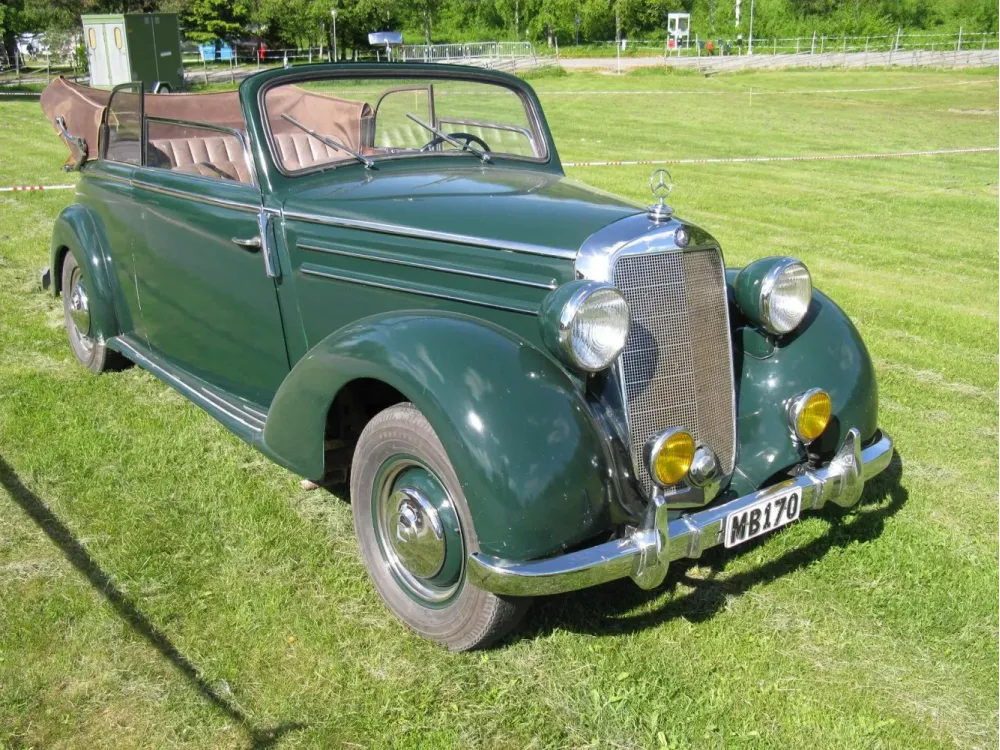
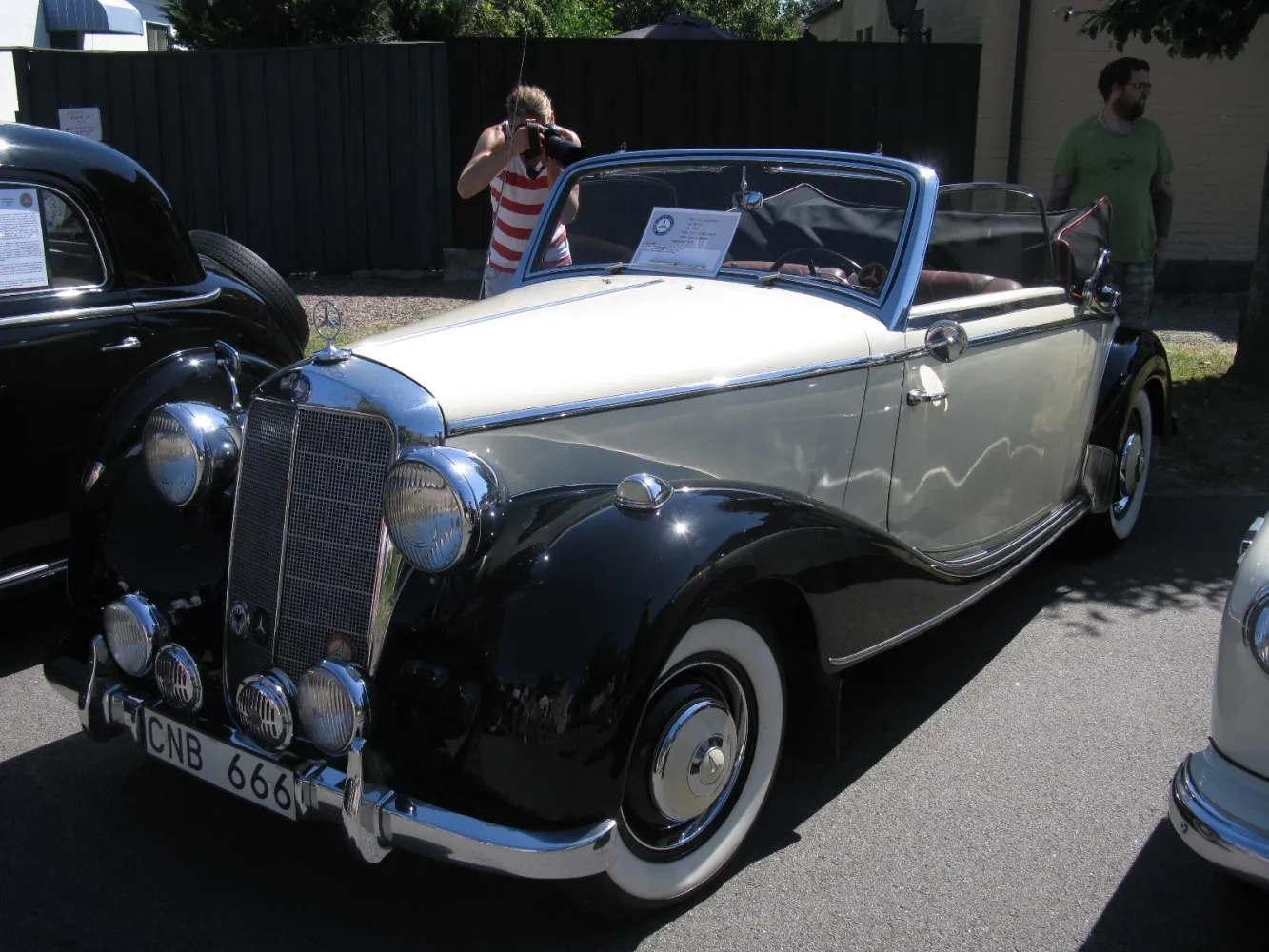
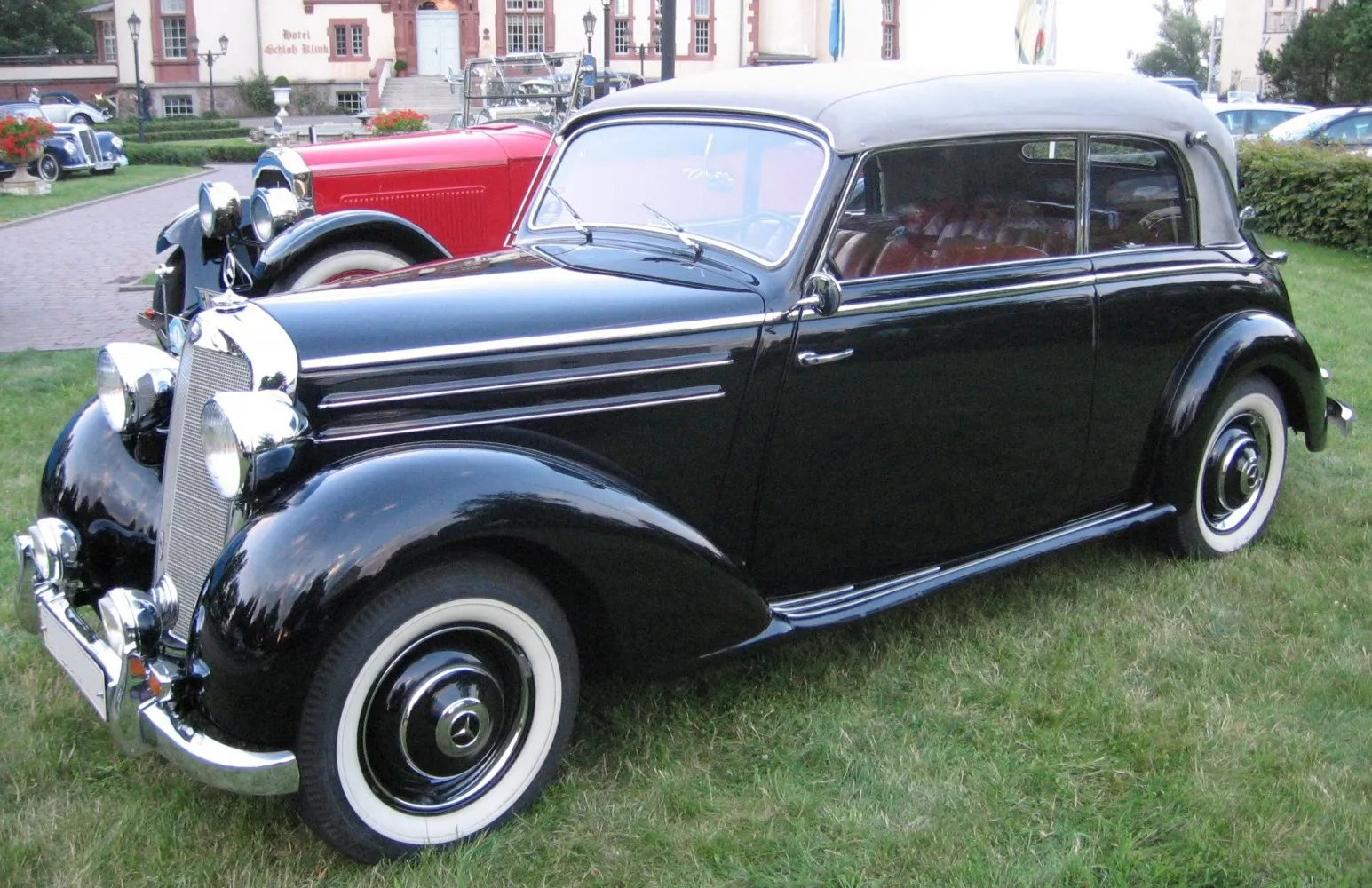
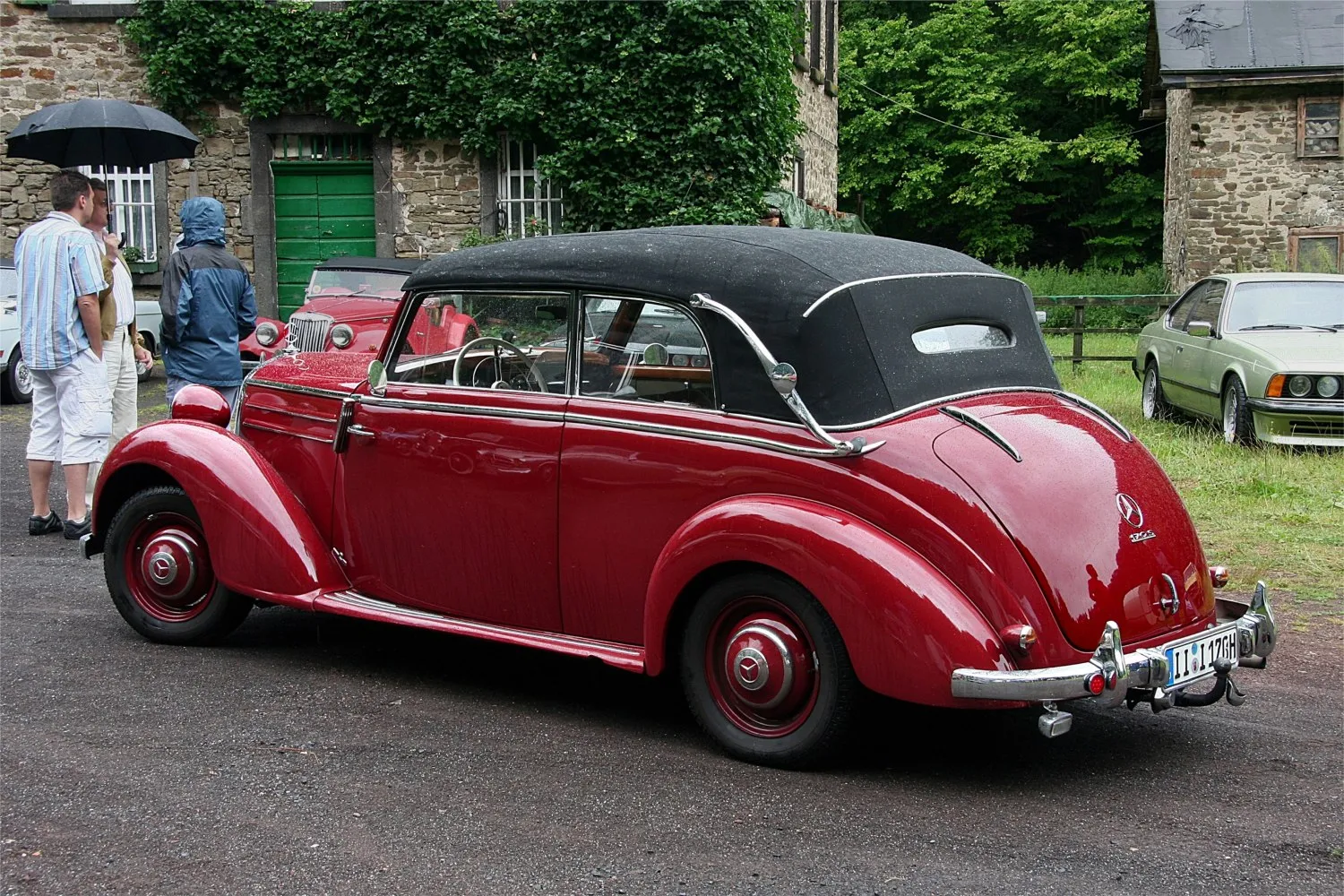
Mercedes-Benz W136 Cabriolet B 170 S (52 Hp)
People\'s Opinion
N/A / 5
Mercedes-Benz W136:
The Mercedes-Benz W136 was Mercedes-Benz's main line of inline-four cylinder motorcars from the mid-1930s into the 1950s. The model 170 V made its public debut as successor to the W15 Typ 170 in February 1936. Between 1936 and 1939 it was Mercedes' top selling model.
Between 1936 and 1942 over 75,000 were built making it by far the most popular Mercedes-Benz model up till that point.
Enough of the W136's tooling survived Allied bombing during World War II for it to serve as the foundation upon which the company could rebuild. By 1947 the model 170 V had resumed its place as Mercedes' top-seller, a position it held until 1953....(Read more on Wikipedia)
Cabriolet B Overview:
Mercedes-Benz W136 (Cabriolet B). With 112 Nm of torque, it offers ample pulling power. With a weight of 1310 kg, it falls in the mid‑range. Rear‑wheel drive offers dynamic handling and sporty feedback. Acceleration is relatively slow (0–100 km/h in 32 s). The top speed reaches 120 km/h. A convertible car with a retractable roof, offering open-air driving experiences. Seating for 2 makes it ideal for daily use.
Performance Verdict
The 52 Hp M 136 III engine provides adequate, albeit leisurely, performance for cruising, with a 0-100 km/h time of 32 seconds. It's designed for comfortable touring rather than spirited driving.
Fuel Economy
Fuel consumption of 9.7 l/100 km (approx. 24.2 MPG US) is relatively high for its power output by modern standards, but was typical for a luxury vehicle of its post-war period.
Best Use Case:
Leisure / Cruising / Classic Car Events
Pros and Cons:
Pros:
- • Exceptional classic styling and historical significance
- • Open-top driving experience
- • Collectible and appreciating asset
- • Mercedes-Benz build quality of its era
- • Comfortable for leisurely cruising
Cons:
- • Very slow acceleration by modern standards (32 sec 0-100km/h)
- • High fuel consumption for its power output
- • Lack of any modern safety features
- • Expensive and specialized maintenance for vintage parts
- • Limited practicality as a daily driver
Specifications:
| General: |
| Brand: | Mercedes-Benz |
|---|
| Model: | W136 |
|---|
| Generation: | Cabriolet B |
|---|
| Modification (Engine): | 170 S (52 Hp) |
|---|
| Start of production: | May, 1949 |
|---|
| End of production: | November, 1951 |
|---|
| Powertrain Architecture: | Internal Combustion engine |
|---|
| Body type: | Cabriolet |
|---|
| Seats: | 2 |
|---|
| Doors: | 2 |
|---|
| Engine: |
| Power: | 52 Hp @ 4000 rpm. |
|---|
| Power per litre: | 29.4 Hp/l |
|---|
| Torque: | 112 Nm @ 1800 rpm. |
|---|
| Engine Model/Code: | M 136 III / 136.922 |
|---|
| Engine displacement: | 1767 |
|---|
| Number of cylinders: | 4 |
|---|
| Engine configuration: | Inline |
|---|
| Number of valves per cylinder: | 2 |
|---|
| Fuel injection system: | Carburettor |
|---|
| Engine aspiration: | Naturally aspirated engine |
|---|
| Valvetrain: | OHV |
|---|
| Engine layout: | Front, Longitudinal |
|---|
| Cylinder Bore: | 75 mm mm |
|---|
| Piston Stroke: | 100 mm mm |
|---|
| Compression ratio: | 6.5:1 |
|---|
| Performance: |
| Fuel Type: | Petrol (Gasoline) |
|---|
| Fuel consumption (economy) - combined: | 9.7 l/100 km |
|---|
| Acceleration 0 - 100 km/h: | 32 sec |
|---|
| Acceleration 0 - 62 mph: | 32 sec |
|---|
| Maximum speed: | 120 km/h |
|---|
| Weight-to-power ratio: | 25.2 kg/Hp, 39.7 Hp/tonne |
|---|
| Weight-to-torque ratio: | 11.7 kg/Nm, 85.5 Nm/tonne |
|---|
| Acceleration 0 - 60 mph: | 30.4 sec |
|---|
| Space: |
| Kerb Weight: | 1310 |
|---|
| Max. weight: | 1605 |
|---|
| Max load: | 295 |
|---|
| Fuel tank capacity: | 47 l |
|---|
| Size: |
| Length: | 4455 mm mm |
|---|
| Width: | 1684 mm mm |
|---|
| Height: | 1610 mm mm |
|---|
| Wheelbase: | 2845 mm mm |
|---|
| Front track: | 1315 mm |
|---|
| Rear (Back) track: | 1420 mm |
|---|
| Powertrain: |
| Drivetrain Architecture | The Internal combustion engine (ICE) drives the rear wheels of the vehicle. |
|---|
| Drive wheel | Rear wheel drive |
|---|
| Number of gears | 4 |
|---|
| Transmission type | Manual |
|---|
| Front brakes | Drum |
|---|
| Rear brakes | Drum |
|---|
| Steering type | Worm-reduction unit |
|---|
| Front suspension | Double wishbone, Transverse stabilizer |
|---|
| Rear suspension | Trailing arm |
|---|




Does the Mercedes-Benz W136 live up to the hype? Give us your verdict!