
Click on image to view the full photo gallery
Mercedes-Benz W124 S124 300 TD Turbo (143 Hp) Automatic
Overall Rating
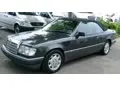
Mercedes-Benz W124:
The Mercedes-Benz W124 is a range of executive cars made by Daimler-Benz from 1984 to 1997. The range included numerous body configurations, and though collectively referred to as the W-124, official internal chassis designations varied by body style: saloon ; estate ; coupé ; cabriolet ; limousine ; rolling chassis ; and long-wheelbase rolling chassis.
From 1993, the 124 series was officially marketed as the E-Class. The W 124 followed the 123 series from 1984 and was succeeded by the W 210 E-Class after 1995, and the C 208 CLK-Class in 1997....(Read more on Wikipedia)
S124 Overview:
Mercedes-Benz W124 (S124). With 267 Nm of torque, it offers ample pulling power. It has moderate fuel consumption (~9.4 l/100km). With a weight of 1560 kg, it falls in the mid‑range. Rear‑wheel drive offers dynamic handling and sporty feedback. Acceleration is relatively slow (0–100 km/h in 10.9 s). The top speed reaches 195 km/h. A car with an extended rear cargo area, combining passenger comfort with increased storage. Seating for 5 makes it ideal for daily use.
The Mercedes-Benz W124/S124 generation predates the establishment of Euro NCAP testing (which began in 1997). While not officially rated, it was considered very safe for its era, featuring robust construction, crumple zones, and available ABS (Anti-lock Braking System).
300 TD Turbo (143 Hp) Automatic Verdict:

Performance Verdict
Offers strong performance for a diesel estate of its time, with ample torque for highway cruising and towing, making it a capable long-distance cruiser.
Fuel Economy
Respectable fuel economy for its power and size, especially on longer journeys, balancing performance with reasonable running costs.
Pros and Cons:
Pros:
- • Legendary build quality and durability, often lasting hundreds of thousands of miles.
- • Exceptional ride comfort and refinement, making long journeys effortless.
- • Spacious and practical estate body with versatile cargo capacity.
- • Wide range of robust engines (petrol and diesel) known for longevity.
- • Timeless, elegant design that has aged gracefully.
- • Strong classic car appeal and increasing value for well-maintained examples.
- • Excellent visibility and ergonomic interior design.
Cons:
- • Rust can be a significant issue on neglected examples, especially around wheel arches and sills.
- • Maintenance costs can be high for complex repairs or specialized parts.
- • Older engines may lack modern performance and fuel economy compared to contemporary vehicles.
- • Lack of modern safety features (e.g., multiple airbags, stability control) by today's standards.
- • Automatic transmissions can be slow and less efficient compared to modern units.
- • Interior plastics and wood trim can show wear and tear over time.
Specifications:
Specifications are compared to those of the previous generation(W124: May, 1984 - August, 1989).
| General: | |
|---|---|
| Brand: | Mercedes-Benz |
| Model: | W124 |
| Generation: | S124 |
| Modification (Engine): | 300 TD Turbo (143 Hp) Automatic |
| Start of production: | May, 1985 |
| End of production: | September, 1988 |
| Powertrain Architecture: | Internal Combustion engine |
| Body type: | Station wagon (estate) |
| Seats: | 5 |
| Doors: | 5 |
| Engine: | |
|---|---|
| Power: | 143 Hp @ 4600 rpm. Same horsepower |
| Power per litre: | 47.7 Hp/l [25mm more] |
| Torque: | 267 Nm @ 2400 rpm. |
| Engine Model/Code: | OM 603 D 30 A / 603.960 More details about the engine OM 603 D 30 A / 603.960 |
| Engine displacement: | 2996 |
| Number of cylinders: | 6 |
| Engine configuration: | Inline |
| Number of valves per cylinder: | 2 |
| Fuel injection system: | Precombustion chamber injection |
| Engine aspiration: | Turbocharger |
| Valvetrain: | SOHC |
| Engine oil capacity: | 7.5 l |
| Coolant: | 9.5 l |
| Engine layout: | Front, Longitudinal |
| Cylinder Bore: | 87 mm |
| Piston Stroke: | 84 mm |
| Compression ratio: | 22:1 |
| Performance: | |
|---|---|
| Fuel Type: | Diesel |
| Fuel consumption (economy) - urban: | 9.4 l/100 km |
| Fuel consumption (economy) - extra urban: | 6.9 l/100 km |
| Acceleration 0 - 100 km/h: | 10.9 sec |
| Acceleration 0 - 62 mph: | 10.9 sec |
| Maximum speed: | 195 km/h |
| Weight-to-power ratio: | 10.9 kg/Hp, 91.7 Hp/tonne |
| Weight-to-torque ratio: | 5.8 kg/Nm, 171.2 Nm/tonne |
| Acceleration 0 - 60 mph: | 10.4 sec |
| Space: | |
|---|---|
| Kerb Weight: | 1560 |
| Max. weight: | 2180 |
| Max load: | 620 |
| Fuel tank capacity: | 72 l |
| Size: | |
|---|---|
| Length: | 4765 mm [25mm more] |
| Width: | 1740 mm [Same width.] |
| Height: | 1490 mm [65mm more] |
| Wheelbase: | 2800 mm [Same wheelbase.] |
| Front track: | 1497 mm |
| Rear (Back) track: | 1488 mm |
| Powertrain: | |
|---|---|
| Drivetrain Architecture | The Internal combustion engine (ICE) drives the rear wheels of the vehicle. |
| Drive wheel | Rear wheel drive |
| Number of gears | 4 |
| Transmission type | Automatic |
| Front brakes | Ventilated discs [Best for performance and cooling.] |
| Rear brakes | Disc |
| Assisting systems | ABS (Anti-lock braking system) |
| Steering type | Cone worm with recirculation balls |
| Power steering | Hydraulic Steering |
| Tires size | Front wheel tires: 195/65 R15 |
| Wheel rims size | Front wheel rims: 6.5J x 15 |
| Front suspension | Wishbone |
| Rear suspension | Independent multi-link suspension |





Behind the wheel of the Mercedes-Benz W124. How does it handle on the road?