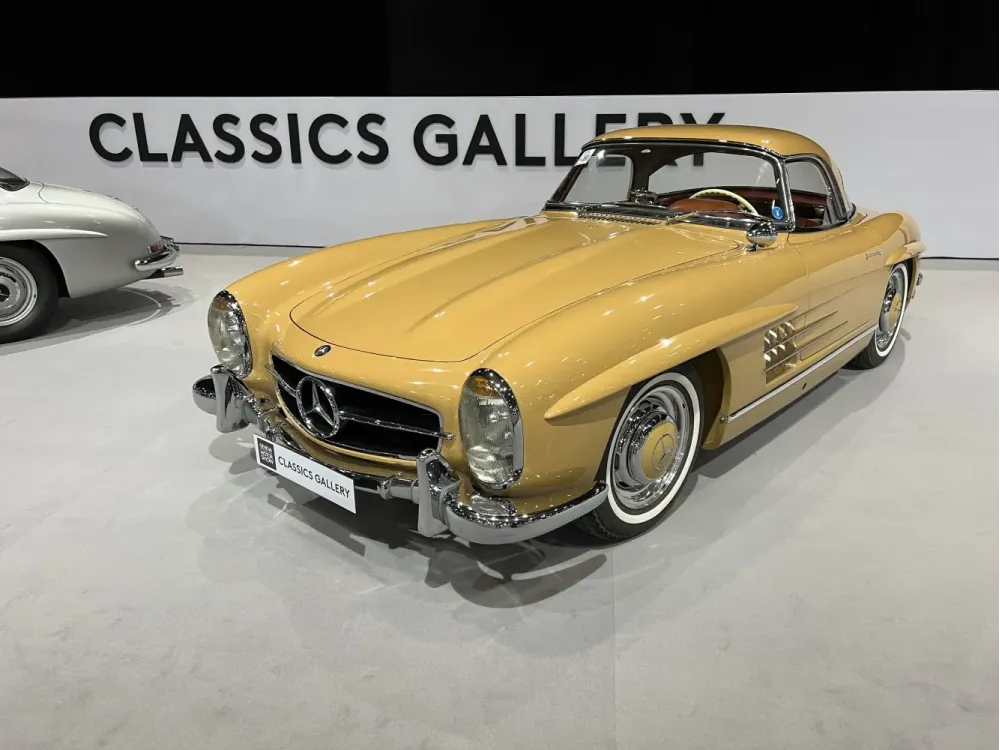
Click on image to view the full photo gallery
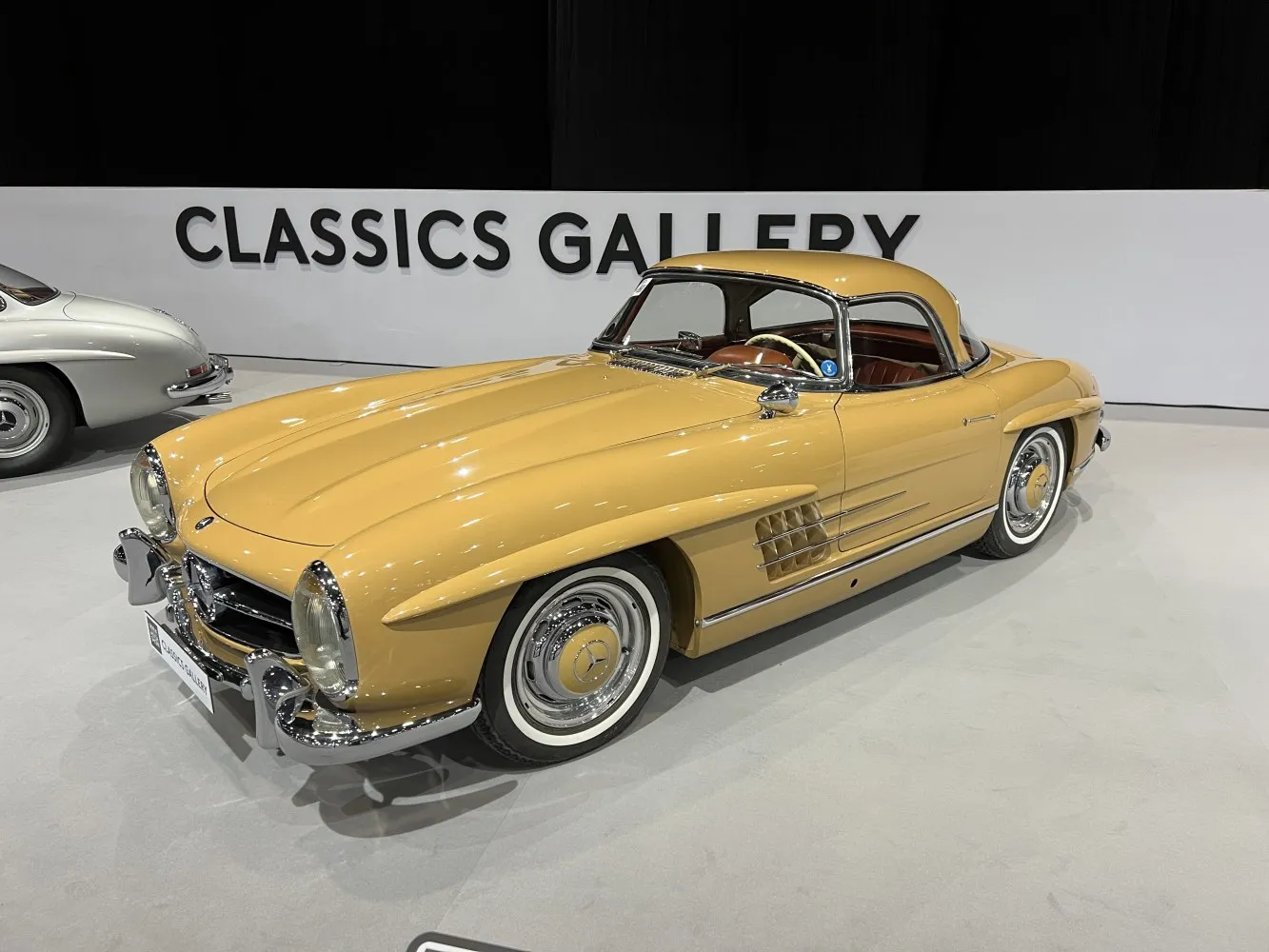
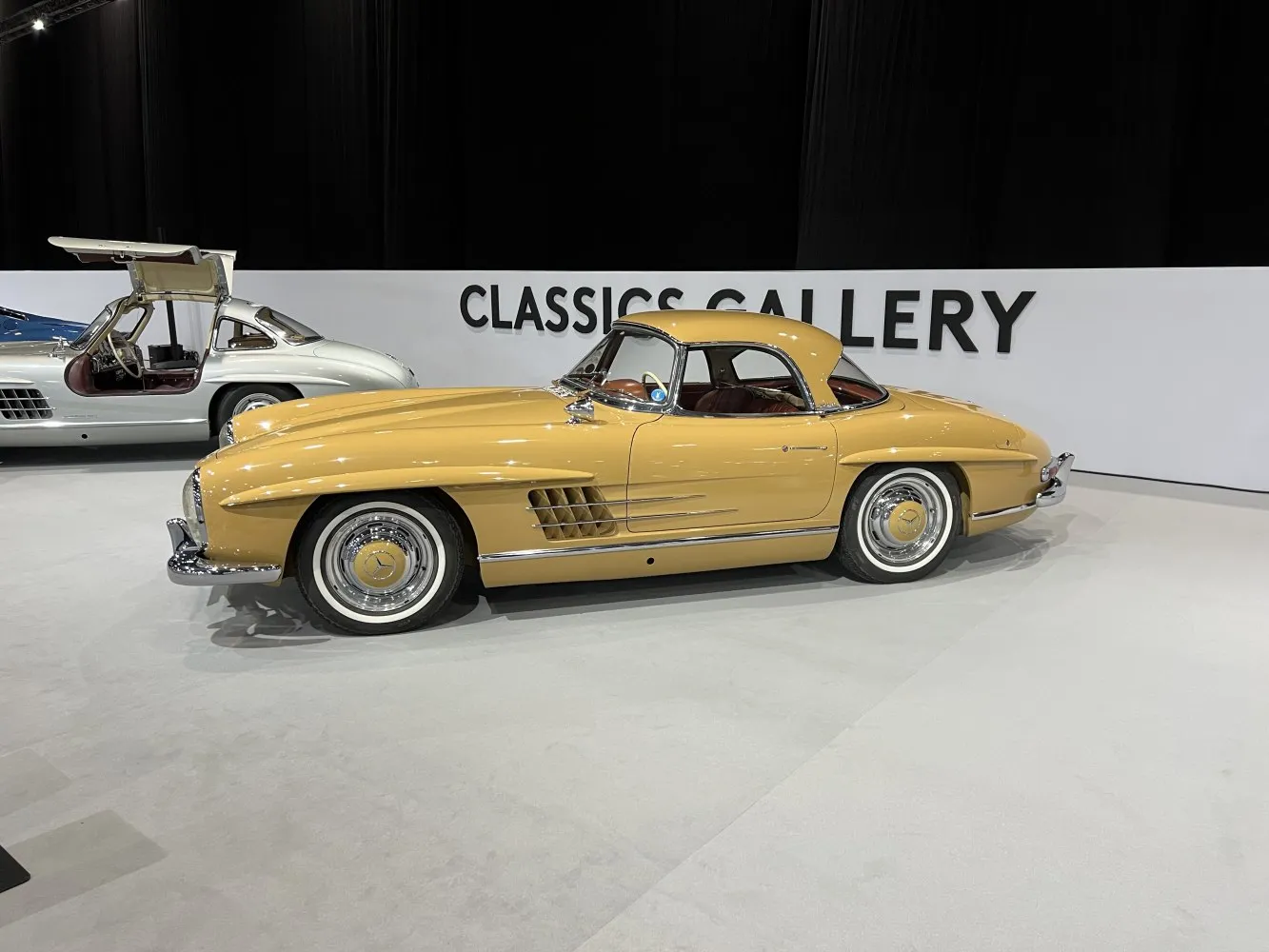
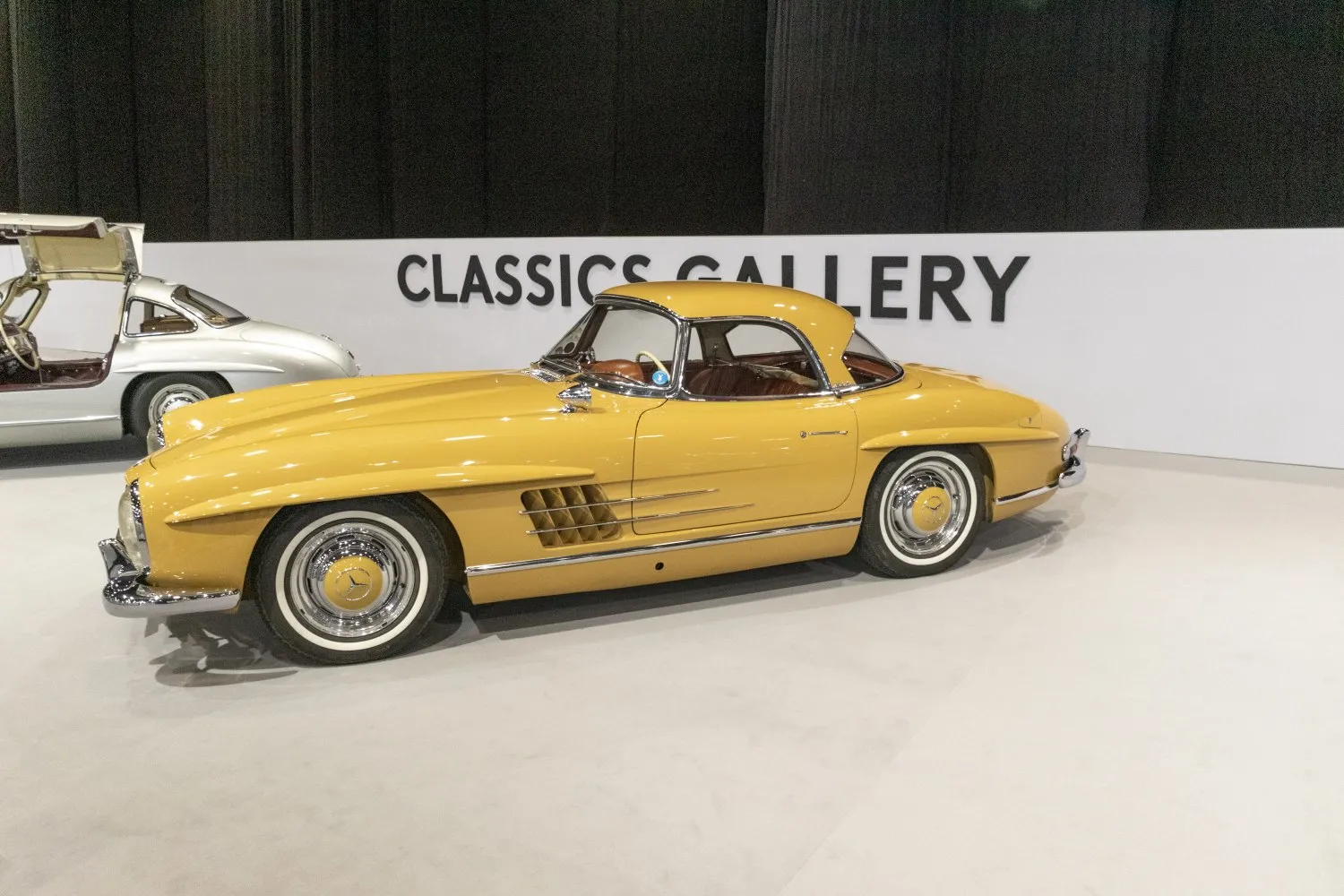
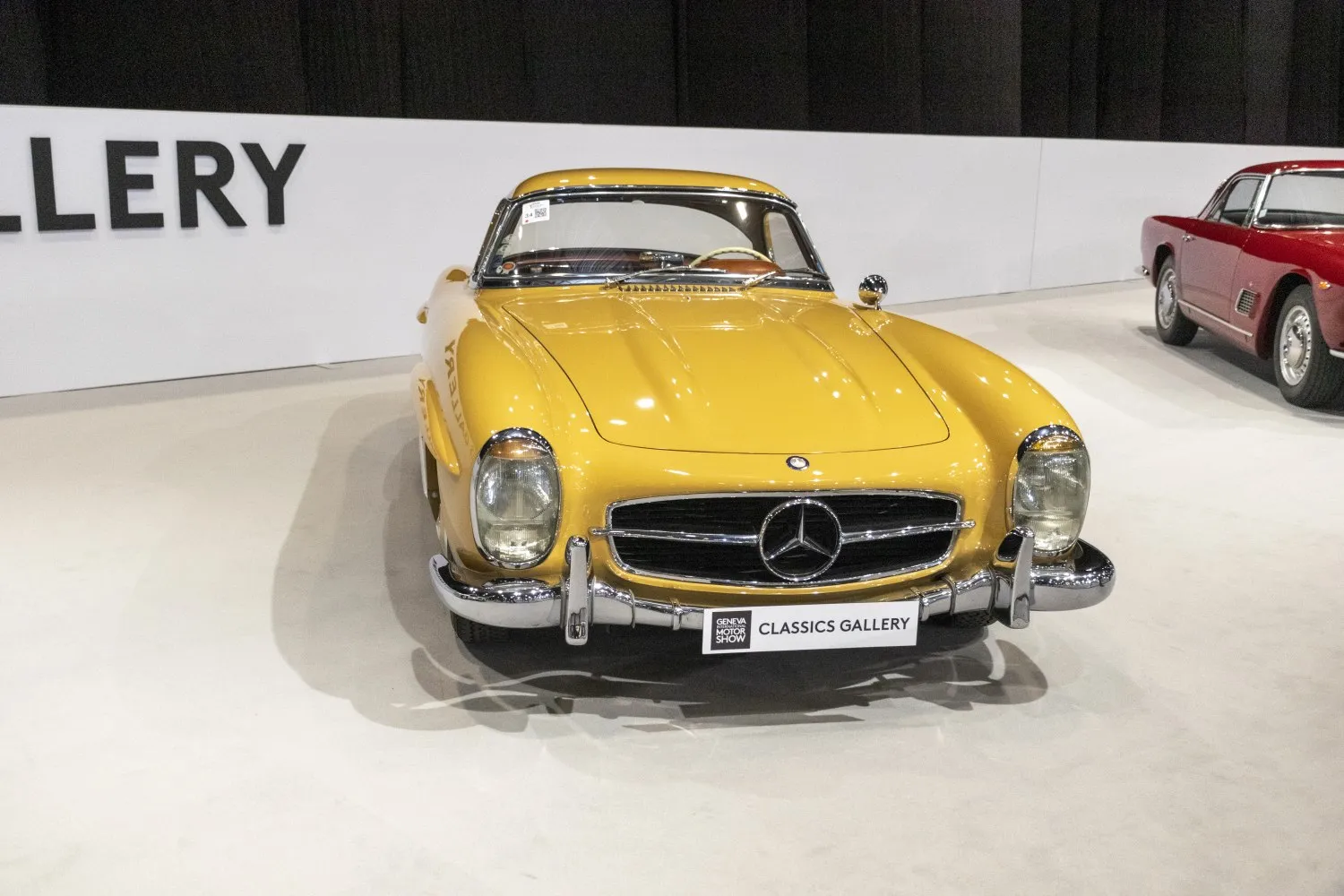
Mercedes-Benz SL Roadster (W198 II) Hardtop 300 SL (215 Hp)
Overall Rating
Mercedes-Benz SL:
The Mercedes-Benz SL-Class is a grand touring sports car manufactured by Mercedes-Benz since 1954. The designation "SL" derives from the German term "Sport-Leicht", which translates to "Sport Light" in English.
Initially, the first 300 SL was a racing sports car built in 1952 with no intention of developing a street version. In 1954, an American importer Max Hoffman suggested the street version of 300 SL for the wealthy performance car enthusiasts in the United States where the market for the personal luxury car was booming after the Second World War....(Read more on Wikipedia)
Roadster (W198 II) Hardtop Overview:
Mercedes-Benz SL (Roadster (W198 II) Hardtop). With 275 Nm of torque, it offers ample pulling power. With a weight of 1370 kg, it falls in the mid‑range. Rear‑wheel drive offers dynamic handling and sporty feedback. Acceleration is relatively slow (0–100 km/h in 10 s). The top speed reaches 250 km/h. A two-seater convertible designed for open-top driving pleasure. Seating for 2 makes it ideal for daily use.
300 SL (215 Hp) Verdict:

Performance Verdict
The M 198 engine, with its pioneering direct fuel injection, delivered exceptional performance for its era, propelling the 300 SL to a top speed of 250 km/h and a 0-100 km/h sprint in just 10 seconds. It was a true engineering marvel.
Fuel Economy
Fuel consumption ranging from 12-19 l/100 km is high by modern standards but was typical for a high-performance sports car of the late 1950s. Owners prioritize performance and heritage over fuel efficiency.
Pros and Cons:
Pros:
- • Iconic design and heritage
- • Groundbreaking engineering (direct injection)
- • Exceptional performance for its era
- • High collector's value and appreciation potential
- • Engaging and unique driving experience
Cons:
- • Very high acquisition and maintenance costs
- • Demanding to drive by modern standards
- • Lacks modern safety and comfort features
- • High fuel consumption
- • Limited practicality for daily use
Specifications:
Specifications are compared to those of the previous generation(Coupe (R230, facelift 2008): November, 2008 - November, 2009).
| General: | |
|---|---|
| Brand: | Mercedes-Benz |
| Model: | SL |
| Generation: | Roadster (W198 II) Hardtop |
| Modification (Engine): | 300 SL (215 Hp) |
| Start of production: | October, 1958 |
| End of production: | February, 1963 |
| Powertrain Architecture: | Internal Combustion engine |
| Body type: | Roadster |
| Seats: | 2 |
| Doors: | 2 |
| Engine: | |
|---|---|
| Power: | 215 Hp @ 5800 rpm. Same horsepower |
| Power per litre: | 71.8 Hp/l [19mm less] |
| Torque: | 275 Nm @ 4600 rpm. |
| Engine Model/Code: | M 198.980, M 198.982 More details about the engine M 198.980, M 198.982 |
| Engine displacement: | 2996 |
| Number of cylinders: | 6 |
| Engine configuration: | Inline |
| Number of valves per cylinder: | 2 |
| Fuel injection system: | Direct injection |
| Engine aspiration: | Naturally aspirated engine |
| Valvetrain: | SOHC |
| Engine oil capacity: | 15 l |
| Coolant: | 15.5 l |
| Engine layout: | Front, Longitudinal |
| Cylinder Bore: | 85 mm mm |
| Piston Stroke: | 88 mm mm |
| Compression ratio: | 8.55:1 |
| Performance: | |
|---|---|
| Fuel Type: | Petrol (Gasoline) |
| Fuel consumption (economy) - combined: | 12-19 l/100 km |
| Acceleration 0 - 100 km/h: | 10 sec |
| Acceleration 0 - 62 mph: | 10 sec |
| Maximum speed: | 250 km/h |
| Weight-to-power ratio: | 6.4 kg/Hp, 156.9 Hp/tonne |
| Weight-to-torque ratio: | 5 kg/Nm, 200.7 Nm/tonne |
| Acceleration 0 - 60 mph: | 9.5 sec |
| Space: | |
|---|---|
| Kerb Weight: | 1370 |
| Max. weight: | 1560-1660 |
| Max load: | 190-290 |
| Fuel tank capacity: | 100 l |
| Size: | |
|---|---|
| Length: | 4570 mm mm [19mm less] |
| Width: | 1790 mm mm [170mm less] |
| Height: | 1300 mm mm [10mm less] |
| Wheelbase: | 2400 mm mm [160mm less] |
| Front track: | 1398 mm |
| Rear (Back) track: | 1448 mm |
| Minimum turning circle (turning diameter): | 11.5 m [above average] |
| Powertrain: | |
|---|---|
| Drivetrain Architecture | The Internal combustion engine (ICE) drives the rear wheels of the vehicle. |
| Drive wheel | Rear wheel drive |
| Number of gears | 4 |
| Transmission type | Manual |
| Front brakes | Drum [bad for performance and cooling.] |
| Rear brakes | Drum [bad for performance and cooling.] |
| Steering type | Cone worm with recirculation balls |
| Tires size | 165/90 R15 |
| Wheel rims size | 5.5J x 15 |
| Front suspension | Coil spring, Double wishbone, Transverse stabilizer |
| Rear suspension | Independent coil spring |










Help others decide – share your experience!