
Click on image to view the full photo gallery
Mercedes-Benz E-class W210 E 200 CDI (102 Hp)
Overall Rating
Mercedes-Benz E-class:
The Mercedes-Benz E-Class is a range of executive cars manufactured by German automaker Mercedes-Benz in various engine and body configurations. Produced since September 1953, the E-Class falls as a midrange in the Mercedes line-up, and has been marketed worldwide across five generations.
Before 1993, the E suffix in Mercedes-Benz model names referred to Einspritzmotor when in the early 1970s fuel injection began to proliferate beyond its upper-tier luxury and sporting models. By the launch of the facelifted W124 in 1993 fuel injection was ubiquitous in Mercedes engines, and the E was adopted as a prefix. The model line is referred to officially as the E-Class. All generations of the E-Class have offered either rear-wheel drive or Mercedes' 4Matic four-wheel drive system....(Read more on Wikipedia)
W210 Overview:
Mercedes-Benz E-class (W210). With 235 Nm of torque, it offers ample pulling power. It has moderate fuel consumption (~8.5 l/100km). With a weight of 1540 kg, it falls in the mid‑range. Rear‑wheel drive offers dynamic handling and sporty feedback. Acceleration is relatively slow (0–100 km/h in 13.7 s). The top speed reaches 187 km/h. A four-door car with a separate trunk, ideal for families and daily commuting. Seating for 5 makes it ideal for daily use.
The Mercedes-Benz E-class W210 generation was not tested by Euro NCAP during its production run. However, it featured standard safety equipment for its era, including ABS and multiple airbags.
E 200 CDI (102 Hp) Verdict:

Performance Verdict
Modest power output, but benefits from good low-end torque, making it suitable for relaxed cruising and economical driving.
Fuel Economy
One of the more economical options in the W210 lineup, offering good fuel efficiency, especially on longer journeys.
Pros and Cons:
Pros:
- • Exceptional ride comfort and refinement, a hallmark of Mercedes-Benz.
- • Wide range of engines, from economical diesels to potent AMG V8s.
- • Elegant and distinctive 'four-eyed' design that still holds appeal.
- • Spacious and well-appointed interior, ideal for long journeys.
- • Generally robust mechanicals, especially the later V6 and CDI engines.
- • Excellent value on the used market today.
Cons:
- • Early models are highly susceptible to rust, particularly on wheel arches and subframes.
- • Some electrical gremlins and sensor failures can be costly to fix.
- • Maintenance and parts can be expensive, even for older models.
- • Older naturally aspirated diesels are very slow by modern standards.
- • Fuel economy on larger petrol engines is not competitive with modern cars.
- • Automatic transmissions can feel dated and less responsive than contemporary units.
Specifications:
Specifications are compared to those of the previous generation(W210: June, 1995 - February, 1998).
| General: | |
|---|---|
| Brand: | Mercedes-Benz |
| Model: | E-class |
| Generation: | W210 |
| Modification (Engine): | E 200 CDI (102 Hp) |
| Start of production: | June, 1998 |
| End of production: | July, 1999 |
| Powertrain Architecture: | Internal Combustion engine |
| Body type: | Sedan |
| Seats: | 5 |
| Doors: | 4 |
| Engine: | |
|---|---|
| Power: | 102 Hp @ 4200 rpm. Same horsepower |
| Power per litre: | 47.4 Hp/l [Same length.] |
| Torque: | 235 Nm @ 1500 rpm. |
| Engine Model/Code: | OM 611 DE 22 LA LR / 611.960 More details about the engine OM 611 DE 22 LA LR / 611.960 |
| Engine displacement: | 2151 |
| Number of cylinders: | 4 |
| Engine configuration: | Inline |
| Number of valves per cylinder: | 4 |
| Fuel injection system: | Diesel Commonrail |
| Engine aspiration: | Turbocharger, Intercooler |
| Valvetrain: | DOHC |
| Engine oil capacity: | 6 l |
| Coolant: | 8 l |
| Engine layout: | Front, Longitudinal |
| Cylinder Bore: | 88 mm mm |
| Piston Stroke: | 88.4 mm mm |
| Compression ratio: | 19:1 |
| Performance: | |
|---|---|
| Fuel Type: | Diesel |
| Fuel consumption (economy) - urban: | 8.5 l/100 km |
| Fuel consumption (economy) - extra urban: | 6.3 l/100 km |
| Acceleration 0 - 100 km/h: | 13.7 sec |
| Acceleration 0 - 62 mph: | 13.7 sec |
| Maximum speed: | 187 km/h |
| Weight-to-power ratio: | 15.1 kg/Hp, 66.2 Hp/tonne |
| Weight-to-torque ratio: | 6.6 kg/Nm, 152.6 Nm/tonne |
| Acceleration 0 - 60 mph: | 13 sec |
| Space: | |
|---|---|
| Kerb Weight: | 1540 |
| Max. weight: | 2040 |
| Max load: | 500 |
| Trunk (boot) space - minimum: | 520 l |
| Fuel tank capacity: | 65 l |
| Size: | |
|---|---|
| Length: | 4795 mm mm [Same length.] |
| Width: | 1799 mm mm [Same width.] |
| Height: | 1436 mm mm [3mm less] |
| Wheelbase: | 2833 mm mm [Same wheelbase.] |
| Front track: | 1542 mm |
| Rear (Back) track: | 1536 mm |
| Powertrain: | |
|---|---|
| Drivetrain Architecture | The Internal combustion engine (ICE) drives the rear wheels of the vehicle. |
| Drive wheel | Rear wheel drive |
| Number of gears | 5 |
| Transmission type | Manual |
| Front brakes | Ventilated discs [Best for performance and cooling.] |
| Rear brakes | Disc |
| Assisting systems | ABS (Anti-lock braking system) |
| Steering type | Steering rack and pinion |
| Power steering | Hydraulic Steering |
| Tires size | 195/65 HR15 |
| Wheel rims size | 6.5J x 15 |
| Front suspension | Double wishbone |
| Rear suspension | Independent multi-link spring suspension with stabilizer |


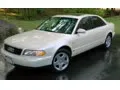


The hidden gems or the annoying flaws? Expose the truth about the Mercedes-Benz E-class!