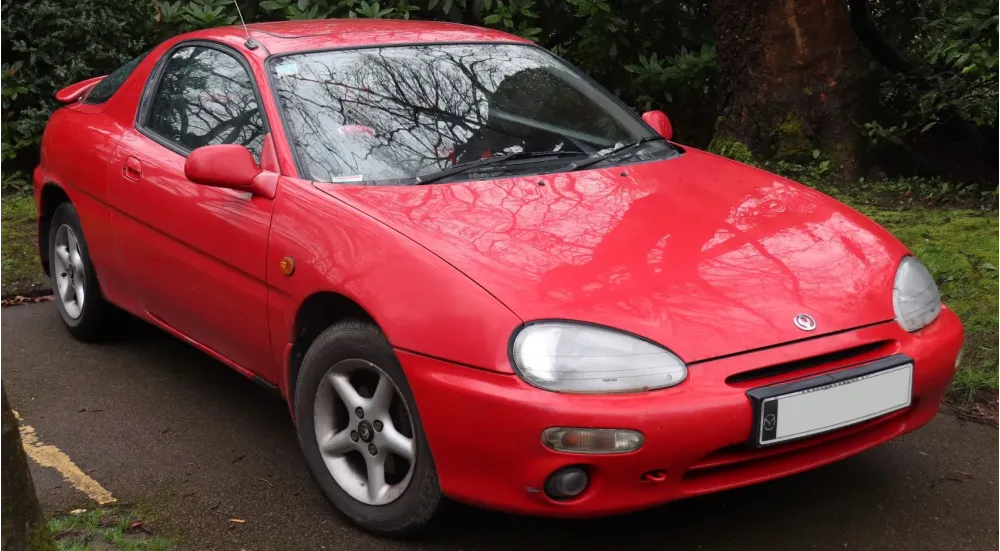
Mazda MX-3 EC 1.8 i V6 (129 Hp)
Mazda MX-3:
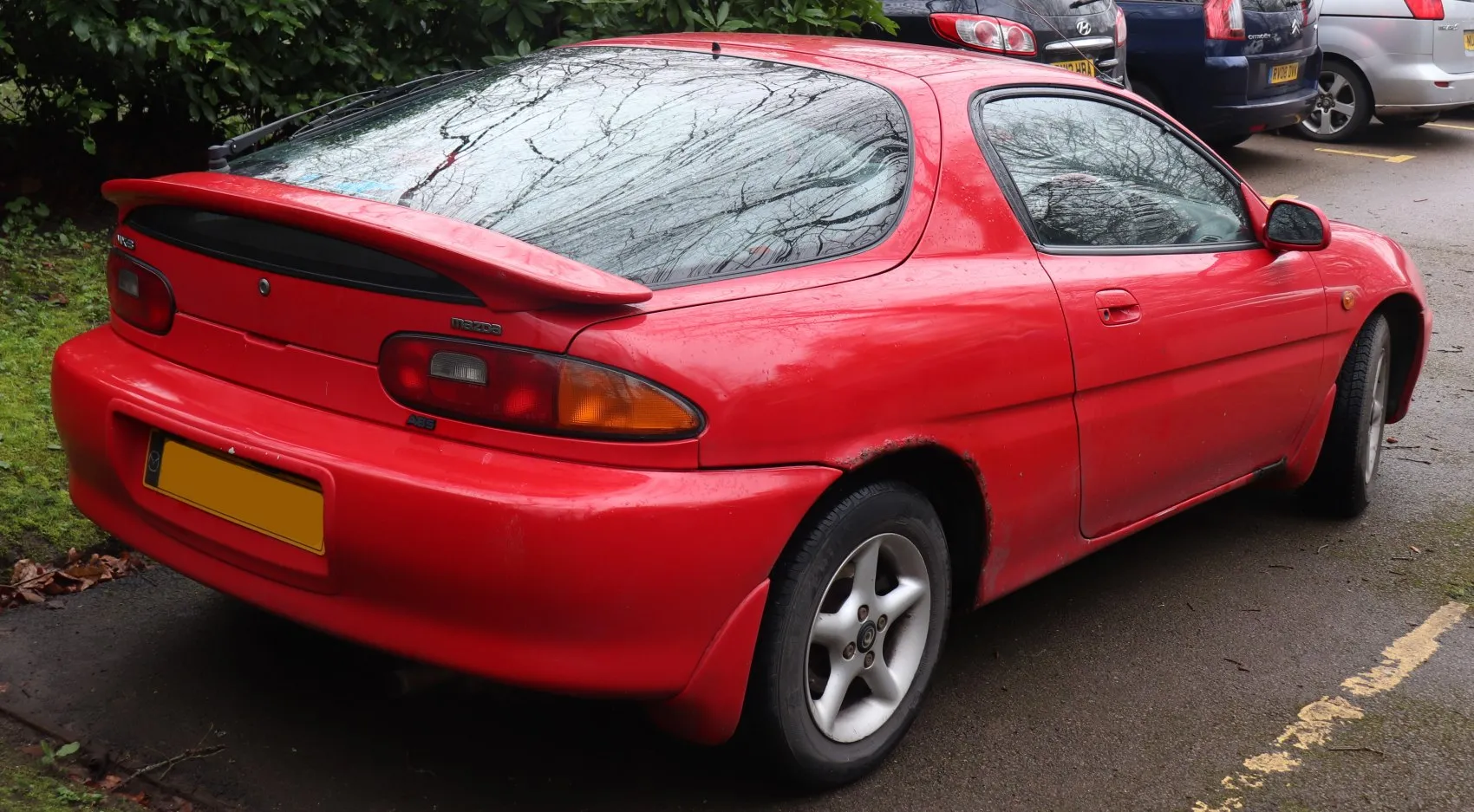
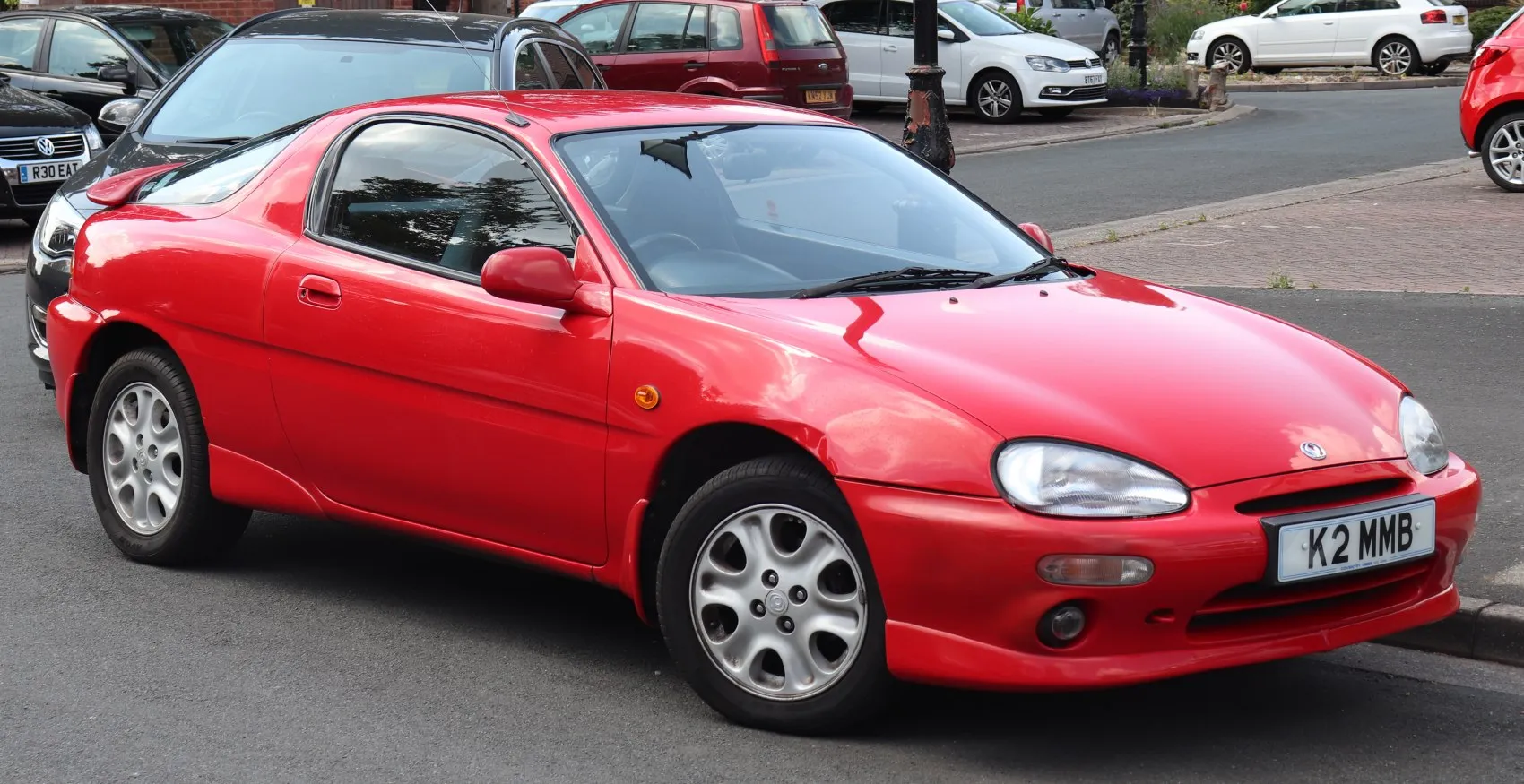
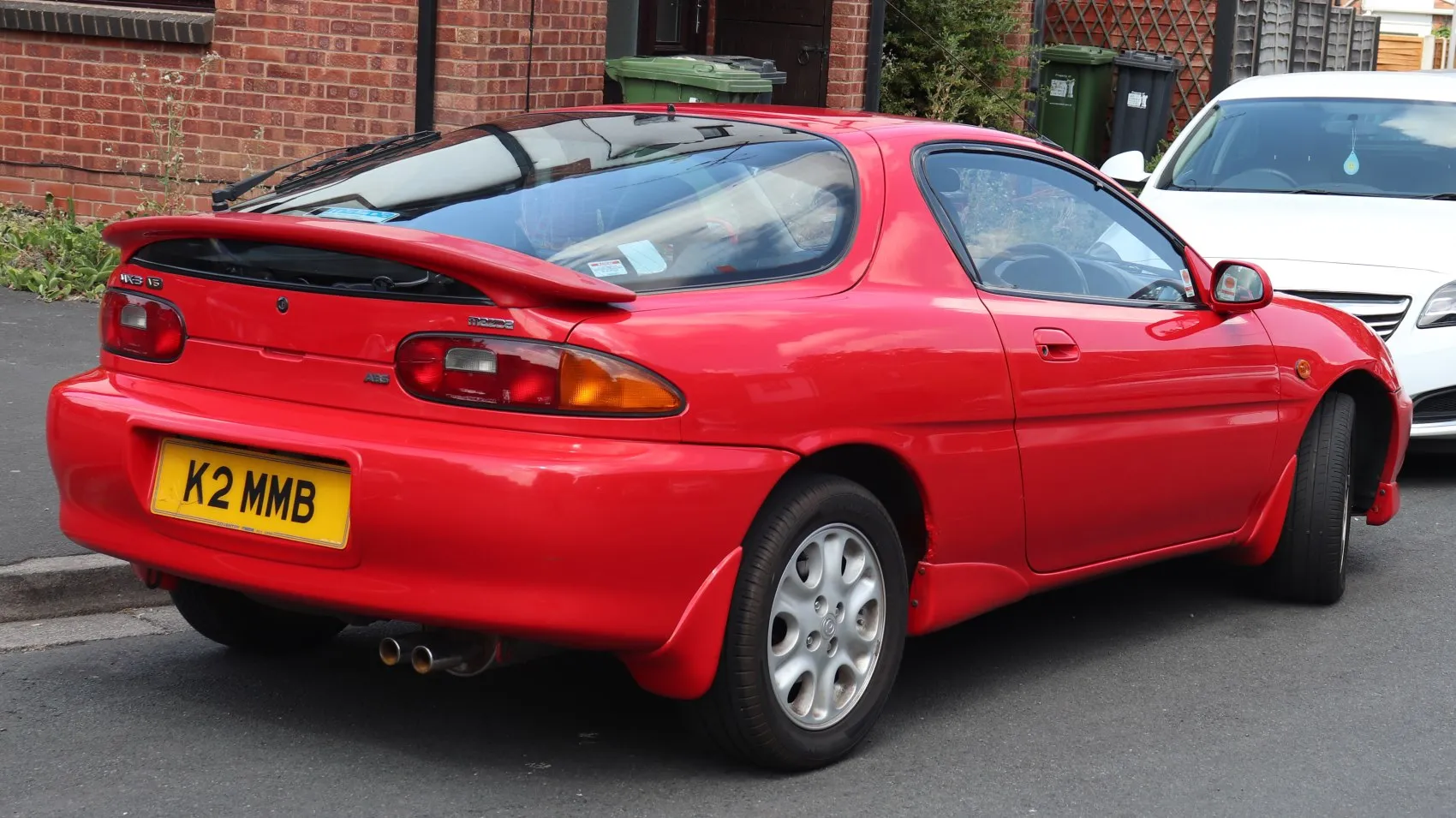
The Mazda MX-3 is a 2+2-seat, front-wheel drive coupé of a kammback design, manufactured and marketed by Mazda. It was introduced at the Geneva Auto Show in March 1991 and marketed until 1998.
The MX-3 was also marketed as the Mazda MX-3 Precidia in Canada and as the Eunos Presso, Autozam AZ-3 and Mazda AZ-3 in Japan. In Australia it was marketed as the Eunos 30X until late 1996 when it became the Mazda-Eunos 30X.
The MX-3's platform is called the EC platform, and shares much with the BG platform of the contemporary Familia/323/Protegé. The first model year was available in Japan, Europe, Australia, and North America where it went on sale in September 1991, as a 1992. Originally available with a single-cam 1. 6-liter inline-four or the 1. 8-liter twin-cam V6, a few more engines were available as development continued. In the summer of 1991, the Autozam AZ-3 was added to the Japanese market lineup. It was known by two names;"Autozam" was meant to be Mazda's more youthful brand, so it combined a somewhat lower price with a sportier twin-cam 1. 5-liter four-cylinder engine, and also sold as the Eunos Presso, a companion, affordable sports hatchback to the Eunos Roadster....(Read more on Wikipedia)
EC Overview:
Mazda MX-3 (EC). With 157 Nm of torque, it offers ample pulling power. Weighing only 1145 kg, it’s quite light. Front‑wheel drive delivers efficiency and easy handling. Acceleration is good (0–100 km/h in 8.5 s). The top speed reaches 230 km/h. A two-door car with a fixed roof, known for its sporty design and dynamic performance. Seating for 4 makes it ideal for daily use.
Pros and Cons:
Pros:
- • Efficiency-focused engine (129 hp), ideal for city commuting.
- • Respectable acceleration of 8.5 sec, suitable for most driving situations.
- • Ventilated disc brakes for reliable cooling and stopping power.
Cons:
- • Compact cargo space (289 L); may require careful packing.
- • Previous generation model; may lack the latest driver-assist technologies.
Specifications:
Specifications are compared to those of the previous generation(EC: 1992 - 2000).
| General: |
| Brand: | Mazda |
|---|
| Model: | MX-3 |
|---|
| Generation: | EC |
|---|
| Modification (Engine): | 1.8 i V6 (129 Hp) |
|---|
| Start of production: | 1994 |
|---|
| End of production: | 2000 |
|---|
| Powertrain Architecture: | Internal Combustion engine |
|---|
| Body type: | Coupe |
|---|
| Seats: | 4 |
|---|
| Doors: | 2 |
|---|
| Engine: |
| Power: | 129 Hp @ 6000 rpm. |
|---|
| Power per litre: | 69.9 Hp/l |
|---|
| Torque: | 157 Nm @ 5000 rpm. |
|---|
| Engine displacement: | 1845 |
|---|
| Number of cylinders: | 6 |
|---|
| Engine configuration: | V-engine |
|---|
| Number of valves per cylinder: | 4 |
|---|
| Fuel injection system: | Multi-port manifold injection |
|---|
| Engine aspiration: | Naturally aspirated engine |
|---|
| Valvetrain: | DOHC |
|---|
| Engine layout: | Front, Transverse |
|---|
| Cylinder Bore: | 75 mm mm |
|---|
| Piston Stroke: | 69.6 mm mm |
|---|
| Compression ratio: | 9.2:1 |
|---|
| Performance: |
| Fuel Type: | Petrol (Gasoline) |
|---|
| Fuel consumption (economy) - urban: | 13.5 l/100 km |
|---|
| Fuel consumption (economy) - extra urban: | 7.1 l/100 km |
|---|
| Acceleration 0 - 100 km/h: | 8.5 sec |
|---|
| Acceleration 0 - 62 mph: | 8.5 sec |
|---|
| Maximum speed: | 230 km/h |
|---|
| Weight-to-power ratio: | 8.9 kg/Hp, 112.7 Hp/tonne |
|---|
| Weight-to-torque ratio: | 7.3 kg/Nm, 137.1 Nm/tonne |
|---|
| Acceleration 0 - 60 mph: | 8.1 sec |
|---|
| Space: |
| Kerb Weight: | 1145 |
|---|
| Max. weight: | 1540 |
|---|
| Max load: | 395 |
|---|
| Trunk (boot) space - minimum: | 289 l |
|---|
| Fuel tank capacity: | 50 l |
|---|
| Size: |
| Length: | 4220 mm mm [Same length.] |
|---|
| Width: | 1695 mm mm [Same width.] |
|---|
| Height: | 1310 mm mm [Same height.] |
|---|
| Wheelbase: | 2455 mm mm [Same wheelbase.] |
|---|
| Front track: | 1460 mm |
|---|
| Rear (Back) track: | 1465 mm |
|---|
| Powertrain: |
| Drivetrain Architecture | The Internal combustion engine (ICE) drives the front wheels of the vehicle. |
|---|
| Drive wheel | Front wheel drive |
|---|
| Number of gears | 5 |
|---|
| Transmission type | Manual |
|---|
| Front brakes | Ventilated discs [Best for performance and cooling.] |
|---|
| Rear brakes | Disc |
|---|
| Assisting systems | ABS (Anti-lock braking system) |
|---|
| Steering type | Steering rack and pinion |
|---|
| Power steering | Hydraulic Steering |
|---|
| Tires size | 205/55 R15 |
|---|
| Wheel rims size | 15 |
|---|
| Front suspension | Wishbone |
|---|
| Rear suspension | Spring Strut |
|---|





Better than its competitors? Tell us why the Mazda MX-3 stands out.