
Click on image to view the full photo gallery
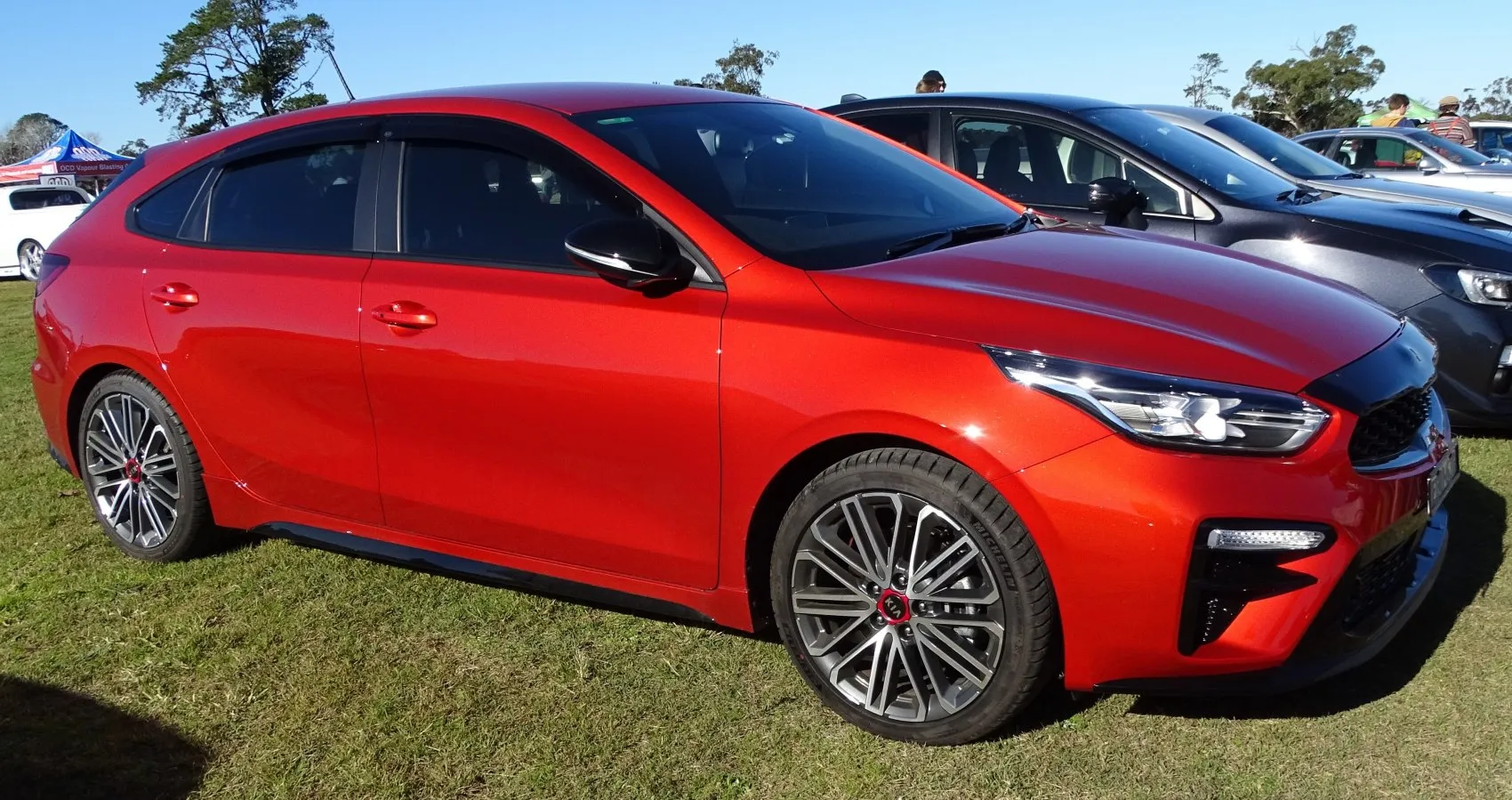
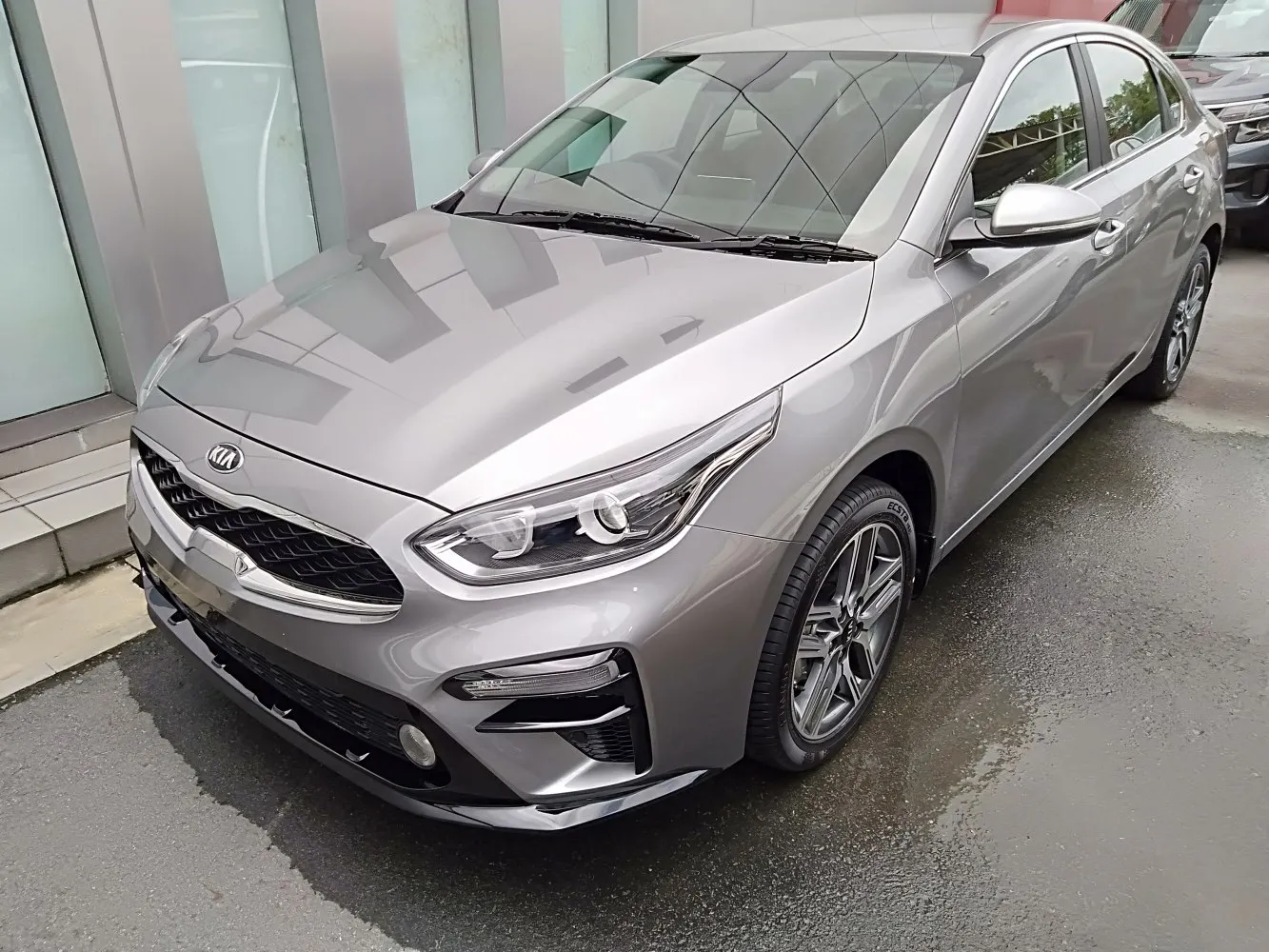
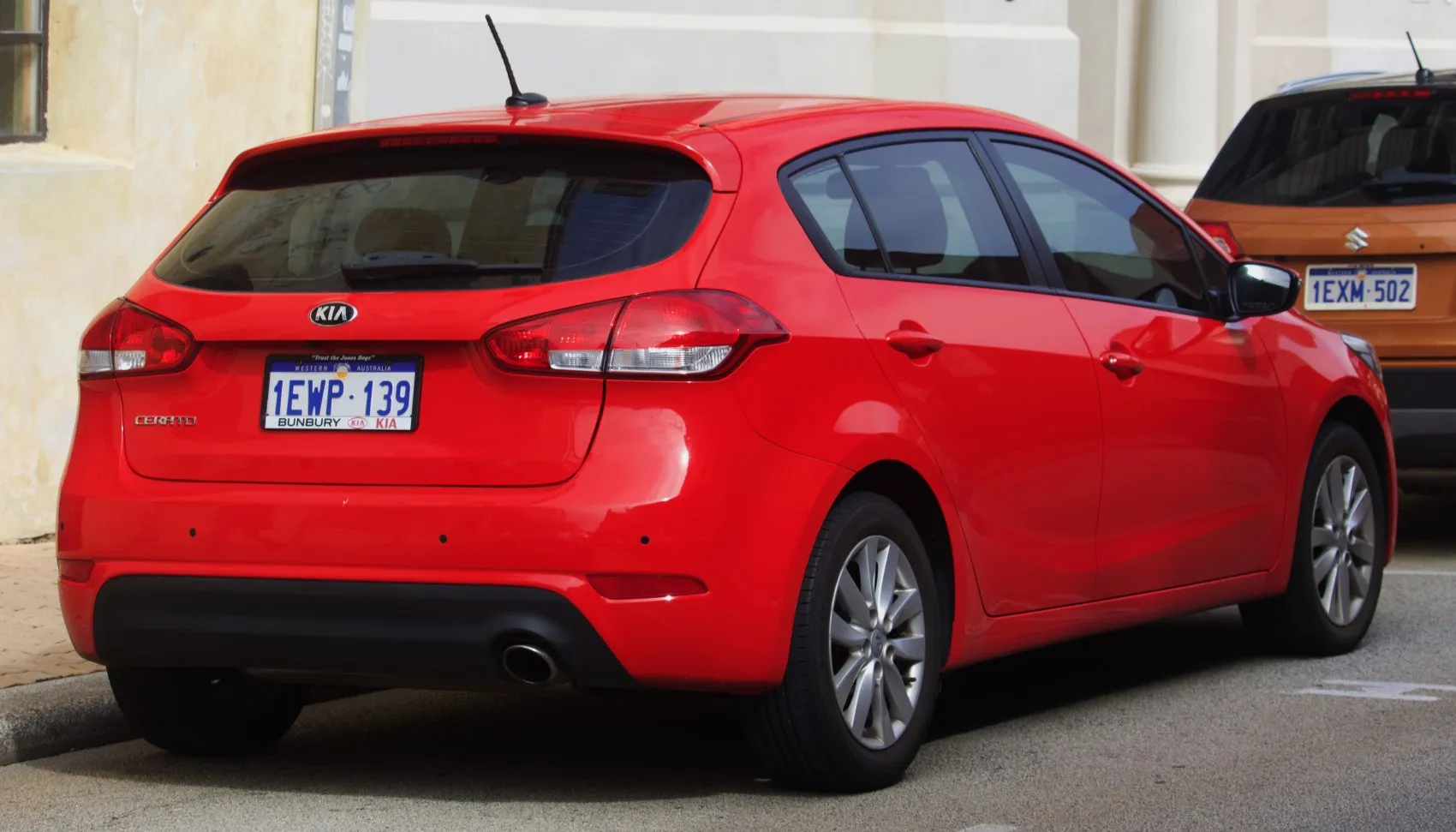
Kia Cerato III Hatchback 2.0 GDI (175 Hp) Automatic
Overall Rating
Kia Cerato:
The Kia Cerato is a compact car produced by the South Korean manufacturer Kia since 2003. In 2008, the Cerato nameplate was replaced by the Forte nameplate in the North American market and the K3 nameplate in South Korea. However, the "Cerato" name remains in use in markets such as Australasia, Middle East and Latin America. It is available in five-door hatchback, two-door coupe and four-door sedan variants. It is not available in Europe, where the similar sized Kia Ceed is offered....(Read more on Wikipedia)
III Hatchback Overview:
Kia Cerato (III Hatchback). With 209 Nm of torque, it offers ample pulling power. It has moderate fuel consumption (~10.4 l/100km). With a weight of 1319 kg, it falls in the mid‑range. Front‑wheel drive delivers efficiency and easy handling. A compact car with a rear door that swings upward to provide access to the cargo area. Seating for 5 makes it ideal for daily use.
2.0 GDI (175 Hp) Automatic Verdict:

Performance Verdict
Smooth and effortless power delivery, ideal for daily commuting and relaxed cruising, maintaining strong acceleration.
Fuel Economy
Similar combined fuel economy to the manual, offering a good balance of power and efficiency for an automatic transmission.
Pros and Cons:
Pros:
- • Strong GDI engine performance
- • Stylish and modern design
- • Spacious interior for its class
- • Good value for money
- • Generous standard features
Cons:
- • Torsion beam rear suspension can affect ride comfort
- • Higher urban fuel consumption for the 2.0 GDI
- • Steering feel can be somewhat numb
- • Limited Euro NCAP specific safety data
Specifications:
Specifications are compared to those of the previous generation(II Koup: 2009 - 2012).
| General: | |
|---|---|
| Brand: | Kia |
| Model: | Cerato |
| Generation: | III Hatchback |
| Modification (Engine): | 2.0 GDI (175 Hp) Automatic |
| Start of production: | 2012 |
| End of production: | 2016 |
| Powertrain Architecture: | Internal Combustion engine |
| Body type: | Hatchback |
| Seats: | 5 |
| Doors: | 5 |
| Engine: | |
|---|---|
| Engine systems: | Start & Stop System |
| Power: | 175 Hp @ 6500 rpm. Same horsepower |
| Power per litre: | 87.5 Hp/l [130mm less] |
| Torque: | 209 Nm @ 4700 rpm. |
| Engine Model/Code: | Nu/G4NC More details about the engine Nu/G4NC |
| Engine displacement: | 1999 |
| Number of cylinders: | 4 |
| Engine configuration: | Inline |
| Number of valves per cylinder: | 4 |
| Fuel injection system: | Direct injection |
| Valvetrain: | DOHC, D-CVVT |
| Engine oil capacity: | 4.5 l |
| Coolant: | 6.5 l |
| Engine layout: | Front, Transverse |
| Cylinder Bore: | 81 mm |
| Piston Stroke: | 97 mm |
| Compression ratio: | 11.5:1 |
| Performance: | |
|---|---|
| Fuel Type: | Petrol (Gasoline) |
| Fuel consumption (economy) - urban: | 10.4 l/100 km |
| Fuel consumption (economy) - extra urban: | 5.7 l/100 km |
| Fuel consumption (economy) - combined: | 7.4 l/100 km |
| Emission standard: | Euro IV |
| Weight-to-power ratio: | 7.4 kg/Hp, 134.7 Hp/tonne |
| Weight-to-torque ratio: | 6.2 kg/Nm, 160.9 Nm/tonne |
| Space: | |
|---|---|
| Kerb Weight: | 1299-1339 |
| Max. weight: | 1800 |
| Max load: | 461-501 |
| Trunk (boot) space - minimum: | 385 l |
| Permitted trailer load with brakes (12%): | 1100 kg |
| Fuel tank capacity: | 50 l |
| Permitted trailer load without brakes: | 610 kg |
| Permitted towbar download: | 75 kg |
| Size: | |
|---|---|
| Length: | 4350 mm [130mm less] |
| Width: | 1780 mm [15mm more] |
| Height: | 1450 mm [50mm more] |
| Wheelbase: | 2700 mm [50mm more] |
| Ride height (ground clearance): | 140 mm |
| Minimum turning circle (turning diameter): | 10.6 m [above average] |
| Powertrain: | |
|---|---|
| Drivetrain Architecture | The Internal combustion engine (ICE) drives the front wheels of the vehicle. |
| Drive wheel | Front wheel drive |
| Number of gears | 6 |
| Transmission type | Automatic |
| Gearbox type | Manu-matic |
| Front brakes | Ventilated discs, 280 mm [Best for performance and cooling.] |
| Rear brakes | Disc, 262 mm [above average] |
| Assisting systems | ABS (Anti-lock braking system) |
| Steering type | Steering rack and pinion |
| Power steering | Electric Steering |
| Tires size | 205/55 R16; 215/45 R17 |
| Wheel rims size | 16; 17 |
| Front suspension | Independent type McPherson |
| Rear suspension | Torsion |








Help others decide – share your experience!