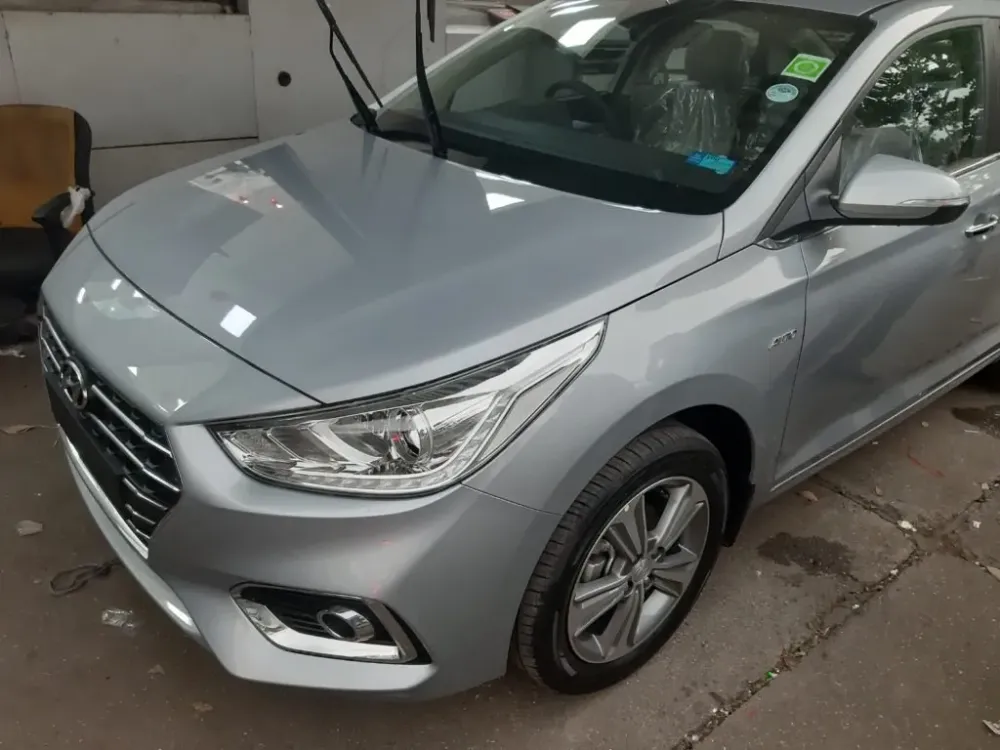
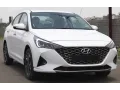
Click on image to view the full photo gallery
Hyundai Verna V 1.6 CRDi (128 Hp) Automatic
Overall Rating
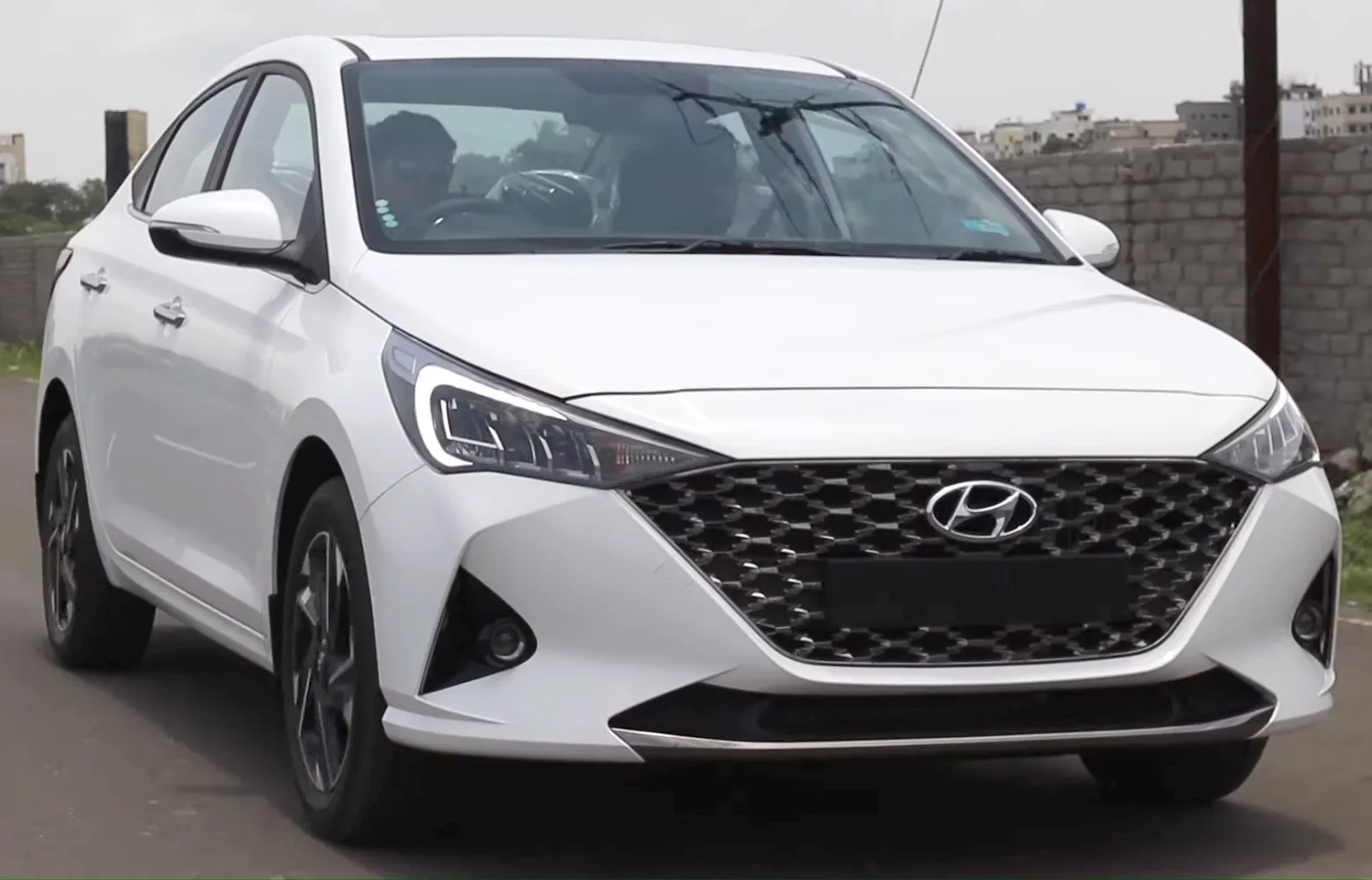
Hyundai Verna:
The Hyundai Accent , or Hyundai Verna is a subcompact car produced by Hyundai. In Australia, the first generation models carried over the Hyundai Excel name used by the Accent's predecessor. The Accent was replaced in 2000 by the Hyundai Verna in South Korea, although most international markets, including the US, retained the "Accent" name. The "Accent" name is an acronym of Advanced Compact Car of Epoch-making New Technology.
The Accent is produced for the Chinese market by Beijing Hyundai Co. , a joint venture with Beijing Automotive Industry Corp. For the Russian market it was assembled by the TagAZ plant in Taganrog until 2011, and since 2011 it was assembled by the HMMR plant in Saint Petersburg and sold under the new name Hyundai Solaris. In Mexico, the Accent was marketed until 2014 by Chrysler as the Dodge Attitude, previously known as the Verna by Dodge. In Venezuela, Chrysler marketed these models as the Dodge Brisa until 2006. The Brisa was assembled by Mitsubishi Motors at its plant in Barcelona, Venezuela. Since 2002, the Accent had been the longest-running small family car sold in North America. In Puerto Rico, the second and third generations were sold as the Hyundai Brio....(Read more on Wikipedia)
V Overview:
Hyundai Verna (V). With 260 Nm of torque, it offers ample pulling power. Front‑wheel drive delivers efficiency and easy handling. A four-door car with a separate trunk, ideal for families and daily commuting. Seating for 5 makes it ideal for daily use.
The Hyundai Verna V generation was not tested by Euro NCAP. However, it achieved a 4-star rating in ASEAN NCAP tests, indicating a reasonable level of safety for its class.
1.6 CRDi (128 Hp) Automatic Verdict:

Performance Verdict
Combines the strong torque of the diesel engine with the convenience of an automatic gearbox, offering effortless driving, especially in traffic.
Fuel Economy
Maintains good fuel efficiency for a diesel automatic, making it a practical choice for those seeking both power and convenience.
Pros and Cons:
Pros:
- • Refined and comfortable interior
- • Choice of efficient petrol and diesel engines
- • Smooth ride quality
- • Feature-rich for its segment
- • Good value for money
Cons:
- • Rear seat headroom can be tight for taller passengers
- • Steering feedback could be more engaging
- • Not tested by Euro NCAP (though good in ASEAN NCAP)
- • Some interior plastics feel a bit hard
Specifications:
Specifications are compared to those of the previous generation(IV (facelift 2015): 2015 - 2017).
| General: | |
|---|---|
| Brand: | Hyundai |
| Model: | Verna |
| Generation: | V |
| Modification (Engine): | 1.6 CRDi (128 Hp) Automatic |
| Start of production: | August, 2017 |
| End of production: | March, 2020 |
| Powertrain Architecture: | Internal Combustion engine |
| Body type: | Sedan |
| Seats: | 5 |
| Doors: | 4 |
| Engine: | |
|---|---|
| Power: | 128 Hp @ 4000 rpm. Same horsepower |
| Power per litre: | 80.9 Hp/l [Same length.] |
| Torque: | 260 Nm @ 1500-3000 rpm. |
| Engine Model/Code: | U II / D4FB More details about the engine U II / D4FB |
| Engine displacement: | 1582 |
| Number of cylinders: | 4 |
| Engine configuration: | Inline |
| Number of valves per cylinder: | 4 |
| Fuel injection system: | Diesel Commonrail |
| Engine aspiration: | Turbocharger, Intercooler |
| Valvetrain: | DOHC, VGT |
| Engine oil capacity: | 5.3 l |
| Coolant: | 6.3 l |
| Engine layout: | Front, Transverse |
| Performance: | |
|---|---|
| Fuel Type: | Diesel |
| Space: | |
|---|---|
| Fuel tank capacity: | 45 l |
| Size: | |
|---|---|
| Length: | 4440 mm mm [Same length.] |
| Width: | 1729 mm mm [Same width.] |
| Height: | 1475 mm mm [Same height.] |
| Wheelbase: | 2600 mm mm [Same wheelbase.] |
| Powertrain: | |
|---|---|
| Drivetrain Architecture | The Internal combustion engine (ICE) drives the front wheels of the vehicle. |
| Drive wheel | Front wheel drive |
| Number of gears | 6 |
| Transmission type | Automatic |
| Front brakes | Disc [bad for performance and cooling.] |
| Rear brakes | Drum [bad for performance and cooling.] |
| Assisting systems | ABS (Anti-lock braking system) |
| Steering type | Steering rack and pinion |
| Power steering | Electric Steering |
| Tires size | 185/65 R15; 195/55 R16 |
| Wheel rims size | 15; 16 |
| Front suspension | Coil spring, Independent type McPherson |
| Rear suspension | Torsion |









The hidden gems or the annoying flaws? Expose the truth about the Hyundai Verna!