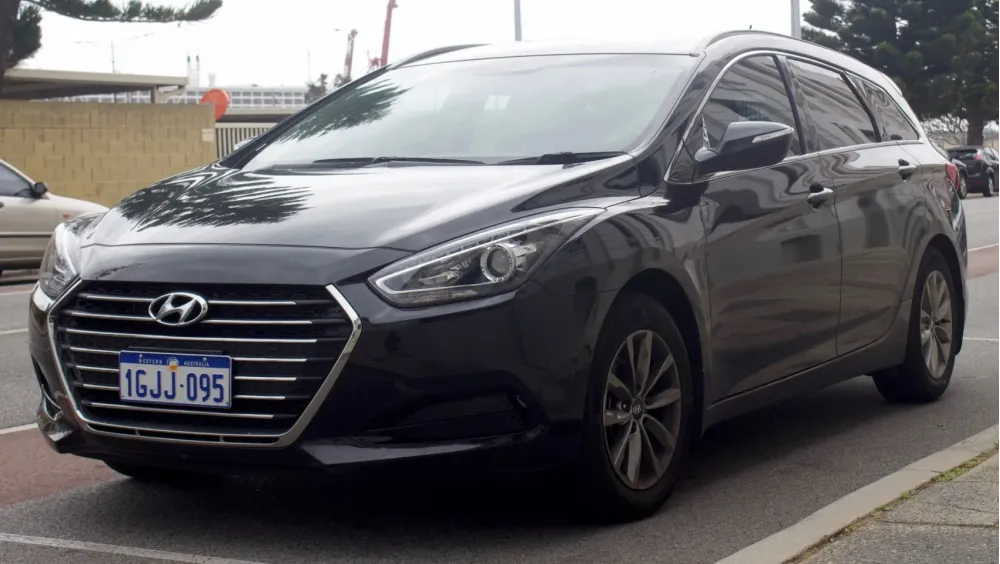
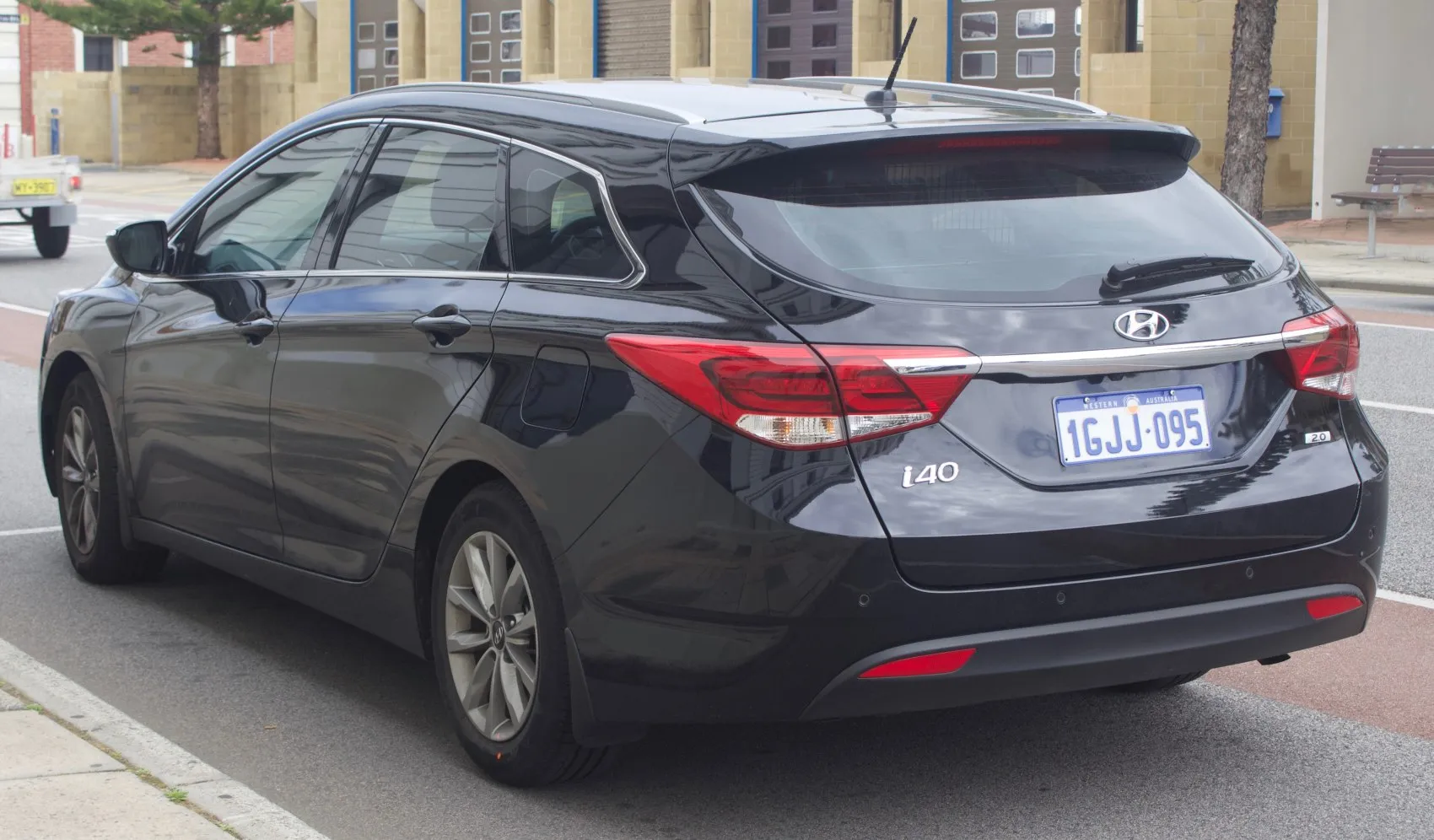
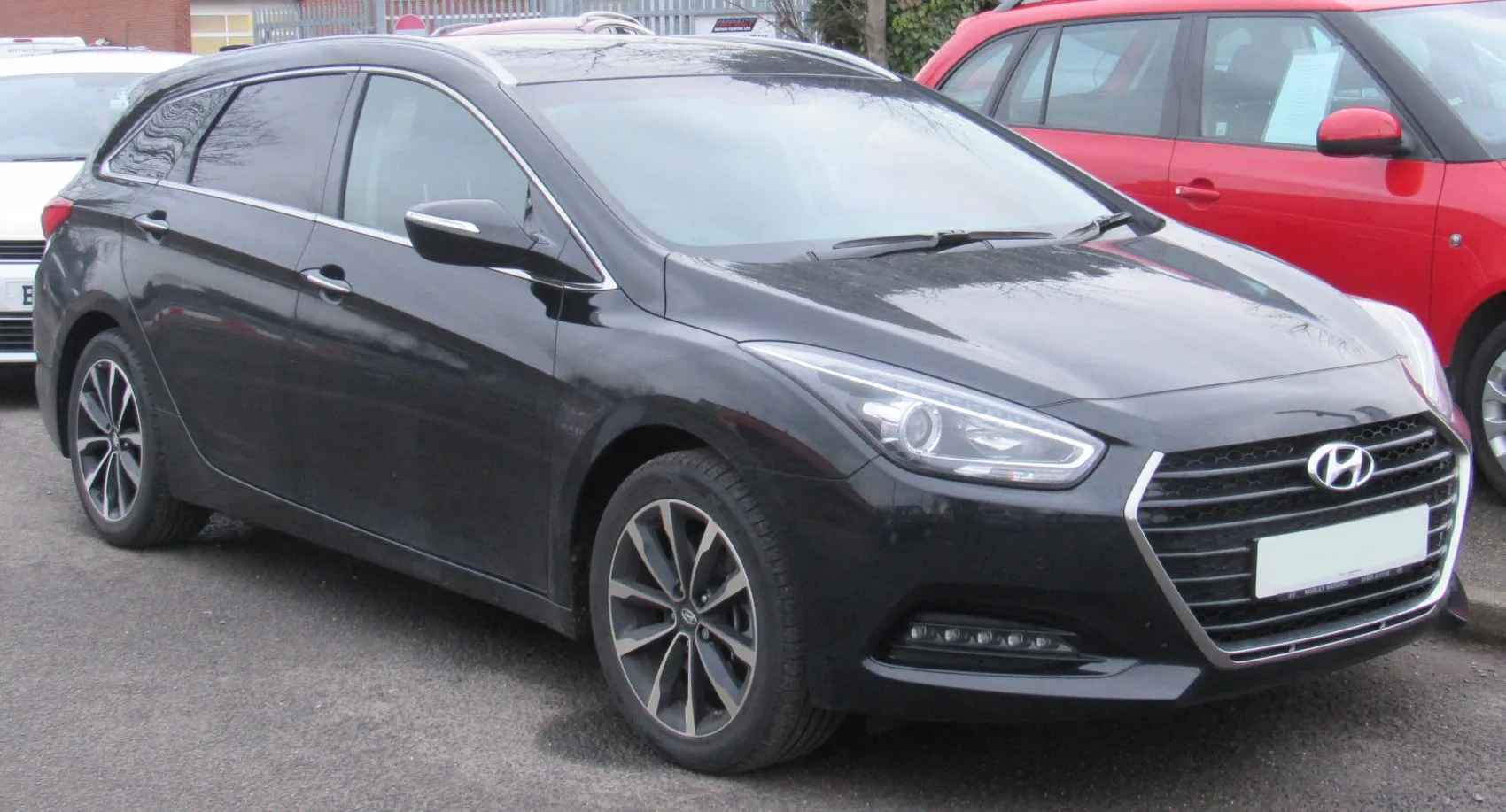
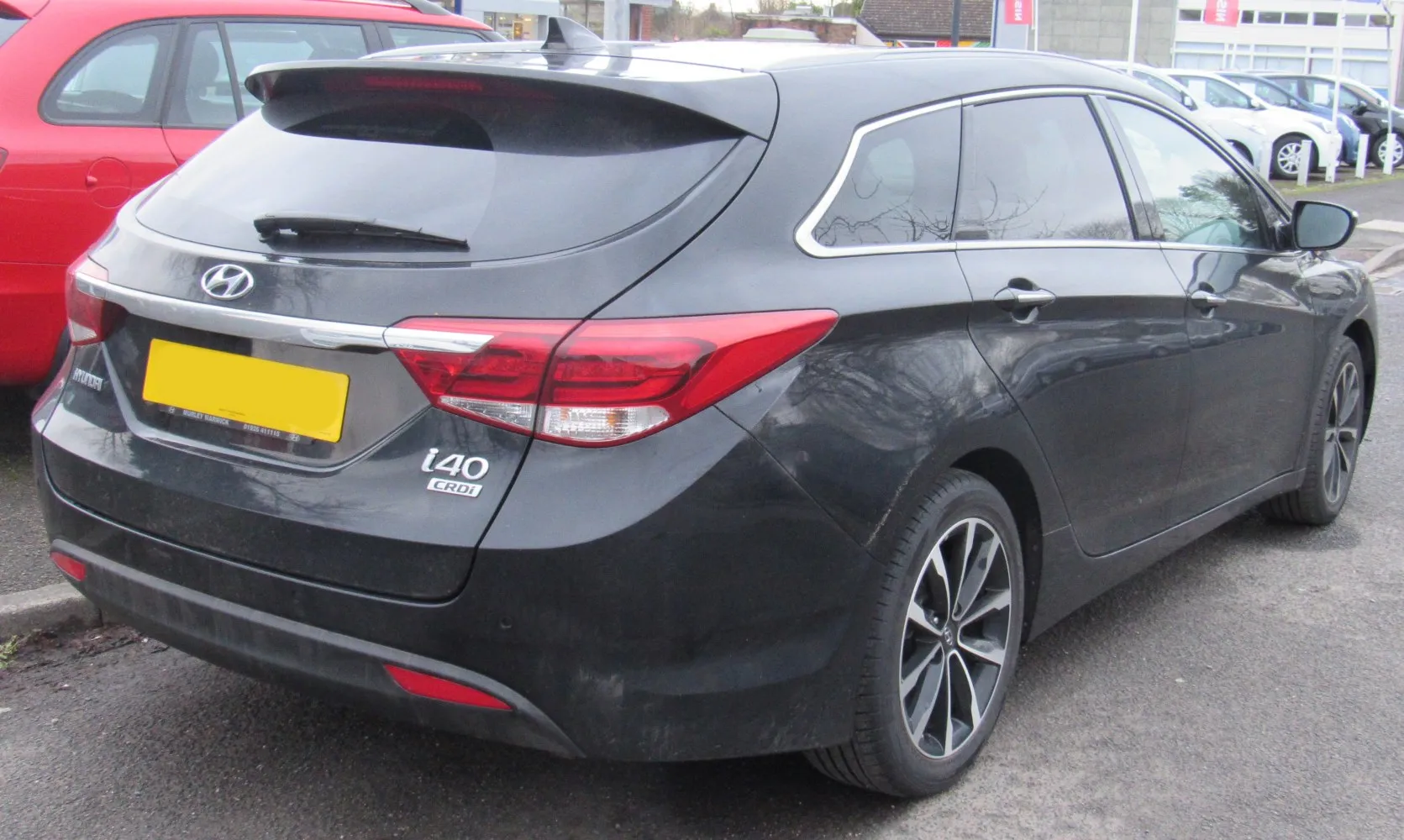
Click on image to view the full photo gallery
Hyundai i40 Combi (facelift 2015) 1.7 CRDI (141 Hp)
Overall Rating
Hyundai i40:
The Hyundai i40 is a large family car designed primarily for the European market by the South Korean manufacturer Hyundai between 2011 and 2019. Sharing its platform with the Hyundai Sonata, the i40 sedan was unveiled at the 2011 Barcelona Motor Show.
The car was designed at Hyundai's European R&D facilities in Rüsselsheim, Germany. It is manufactured at the Ulsan plant in South Korea.
The i40 is described as featuring Hyundai's 'fluidic sculpture' design language, and was launched in Europe initially as an estate/wagon with a saloon was due in 2011. The boot space is 553 litres, increasing to 1,719 litres with the rear seats folded down....(Read more on Wikipedia)
Combi (facelift 2015) Overview:
Hyundai i40 (Combi (facelift 2015)). With 340 Nm of torque, it offers ample pulling power. It boasts low fuel consumption (~5.6 l/100km). With a weight of 1524 kg, it falls in the mid‑range. Front‑wheel drive delivers efficiency and easy handling. Acceleration is relatively slow (0–100 km/h in 10.5 s). The top speed reaches 200 km/h. A car with an extended rear cargo area, combining passenger comfort with increased storage. Seating for 5 makes it ideal for daily use.
1.7 CRDI (141 Hp) Verdict:

Performance Verdict
This is arguably the best all-rounder, offering strong performance and ample torque for confident overtaking and highway driving with the manual gearbox.
Fuel Economy
Excellent fuel efficiency, providing a superb balance between power and running costs for a family estate.
Pros and Cons:
Pros:
- • Spacious and practical interior, especially the Combi estate
- • Comfortable and refined ride quality, ideal for long journeys
- • Excellent fuel economy from the CRDI diesel engines
- • Generous standard equipment and strong warranty package
- • Good safety rating (5-star Euro NCAP)
Cons:
- • Driving dynamics are competent but lack engagement compared to rivals
- • Petrol engines can feel less punchy than turbocharged alternatives
- • Interior materials, while durable, can feel less premium in some areas
- • Resale values may not match some German competitors
- • Entry-level engines can feel underpowered when fully loaded
Specifications:
Specifications are compared to those of the previous generation(Combi: 2011 - 2015).
| General: | |
|---|---|
| Brand: | Hyundai |
| Model: | i40 |
| Generation: | Combi (facelift 2015) |
| Modification (Engine): | 1.7 CRDI (141 Hp) |
| Start of production: | 2015 |
| End of production: | 2018 |
| Powertrain Architecture: | Internal Combustion engine |
| Body type: | Station wagon (estate) |
| Seats: | 5 |
| Doors: | 5 |
| Engine: | |
|---|---|
| Engine systems: | Particulate filter |
| Power: | 141 Hp @ 4000 rpm. |
| Power per litre: | 83.7 Hp/l |
| Torque: | 340 Nm @ 1750-2500 rpm. |
| Engine Model/Code: | D4FD [Same engine] More details about the engine D4FD |
| Engine displacement: | 1685 |
| Number of cylinders: | 4 |
| Engine configuration: | Inline |
| Number of valves per cylinder: | 4 |
| Fuel injection system: | Diesel Commonrail |
| Engine aspiration: | Turbocharger, Intercooler |
| Valvetrain: | D-CVVT |
| Engine oil capacity: | 5.3 l |
| Coolant: | 6.9 l |
| Engine layout: | Front, Transverse |
| Cylinder Bore: | 77.2 mm mm |
| Piston Stroke: | 90 mm mm |
| Compression ratio: | 15.7:1 |
| Performance: | |
|---|---|
| Fuel Type: | Diesel |
| Fuel consumption (economy) - urban: | 5.3-5.9 l/100 km |
| Fuel consumption (economy) - extra urban: | 4.2-4.4 l/100 km |
| Fuel consumption (economy) - combined: | 4.6-4.9 l/100 km |
| Emission standard: | Euro 6 |
| Acceleration 0 - 100 km/h: | 10.5 sec |
| Acceleration 0 - 62 mph: | 10.5 sec |
| Maximum speed: | 200 km/h |
| Weight-to-power ratio: | 10.8 kg/Hp, 92.5 Hp/tonne |
| Weight-to-torque ratio: | 4.5 kg/Nm, 223.1 Nm/tonne |
| Acceleration 0 - 60 mph: | 10 sec |
| Space: | |
|---|---|
| Kerb Weight: | 1524 |
| Max. weight: | 2130 |
| Max. roof load: | 100 kg |
| Max load: | 606 |
| Trunk (boot) space - maximum: | 1672 l |
| Trunk (boot) space - minimum: | 506 l |
| Fuel tank capacity: | 70 l |
| Size: | |
|---|---|
| Length: | 4775 mm mm [5mm more] |
| Width: | 1815 mm mm [Same width.] |
| Height: | 1470 mm mm [Same height.] |
| Wheelbase: | 2770 mm mm [Same wheelbase.] |
| Front track: | 1591 mm |
| Rear (Back) track: | 1597 mm |
| Ride height (ground clearance): | 140 mm |
| Minimum turning circle (turning diameter): | 10.94 m [above average] |
| Powertrain: | |
|---|---|
| Drivetrain Architecture | The Internal combustion engine (ICE) drives the front wheels of the vehicle. |
| Drive wheel | Front wheel drive |
| Number of gears | 6 |
| Transmission type | Manual |
| Front brakes | Ventilated discs [Best for performance and cooling.] |
| Rear brakes | Disc [above average] |
| Assisting systems | ABS (Anti-lock braking system) |
| Steering type | Steering rack and pinion |
| Tires size | 205/60 R16; 215/50 R17; 225/45 R18 |
| Wheel rims size | 7.0J x 16; 7.5J x 17; 8.0J x 18 |
| Front suspension | Independent type McPherson |
| Rear suspension | Independent coil spring |
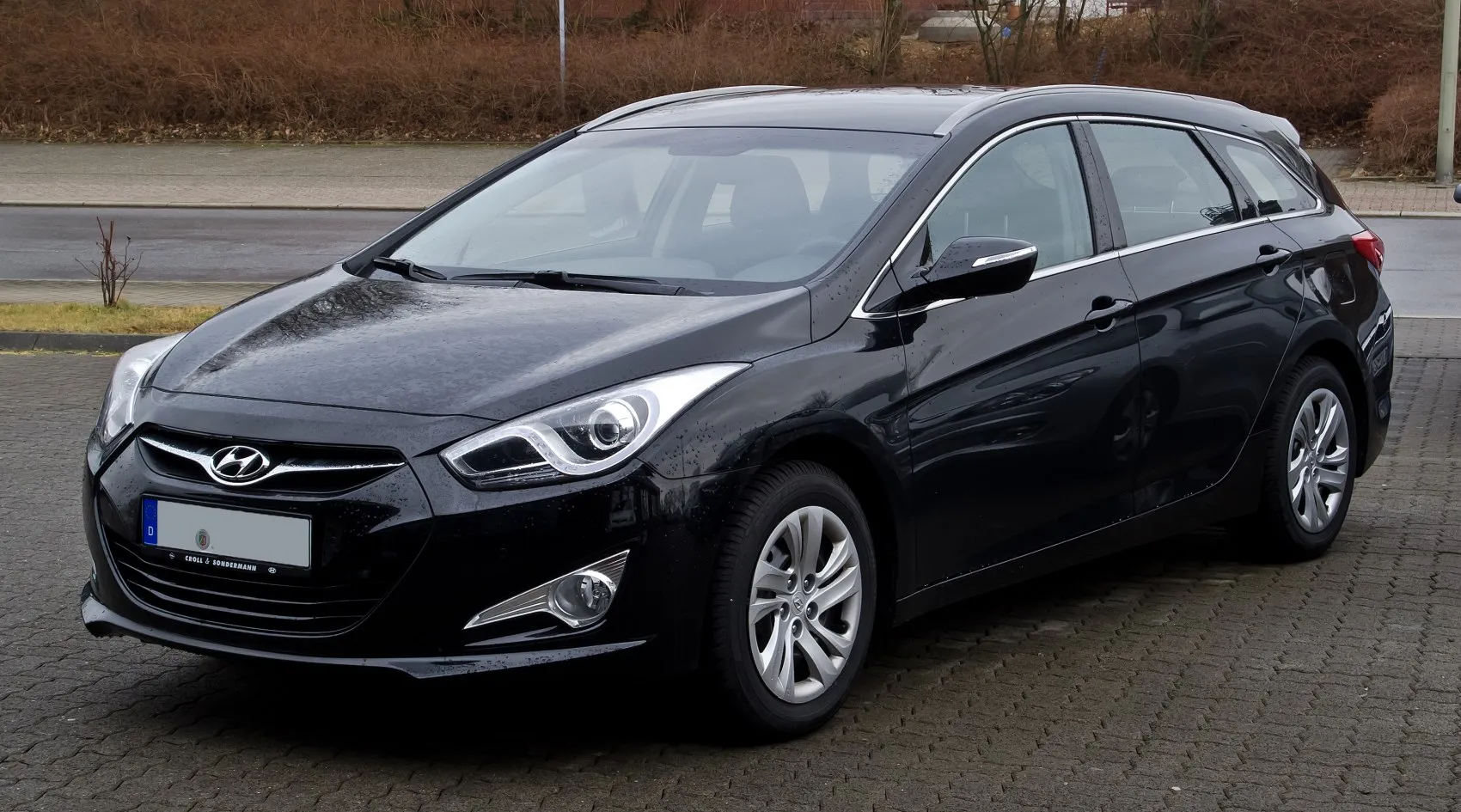

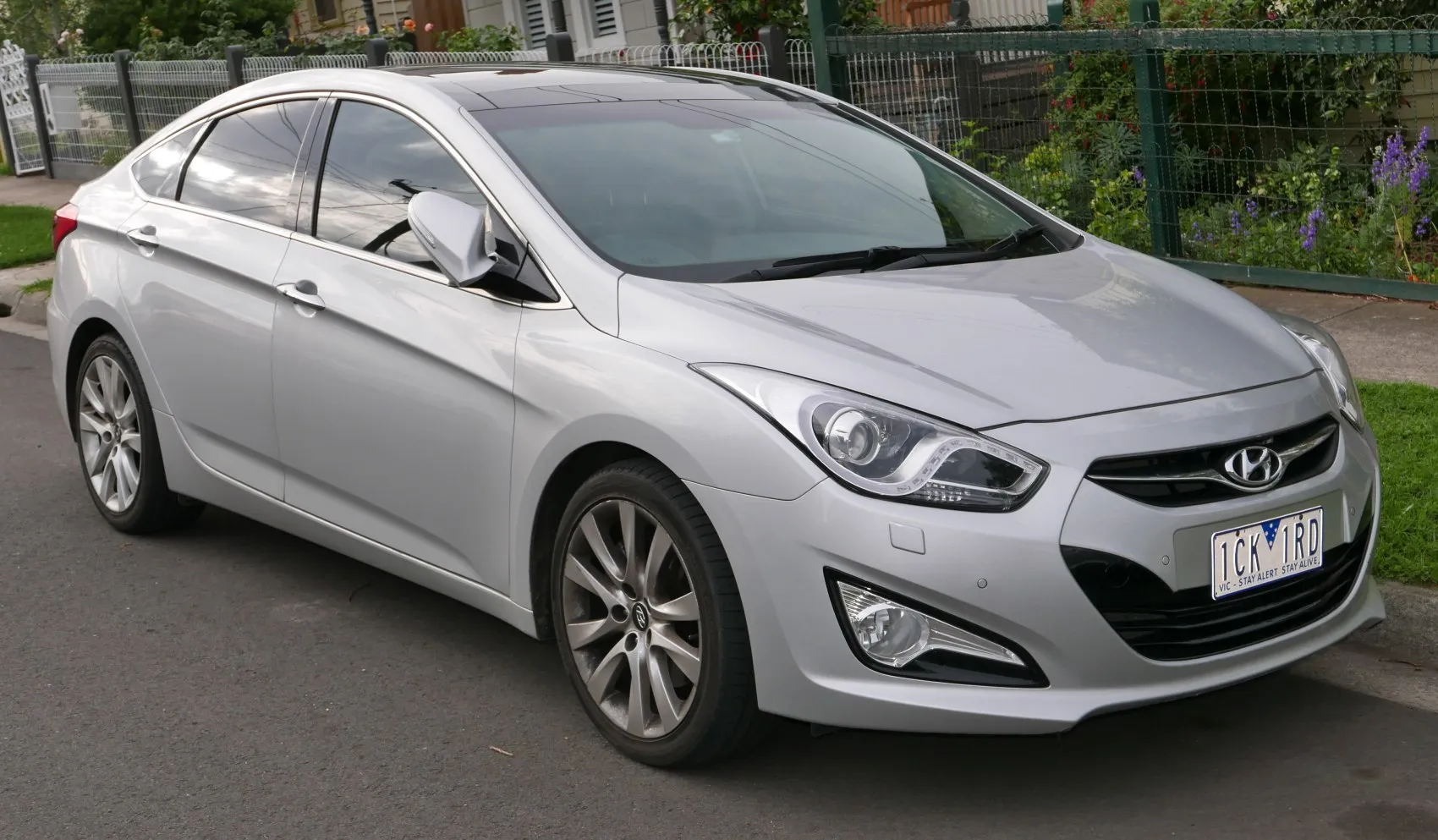
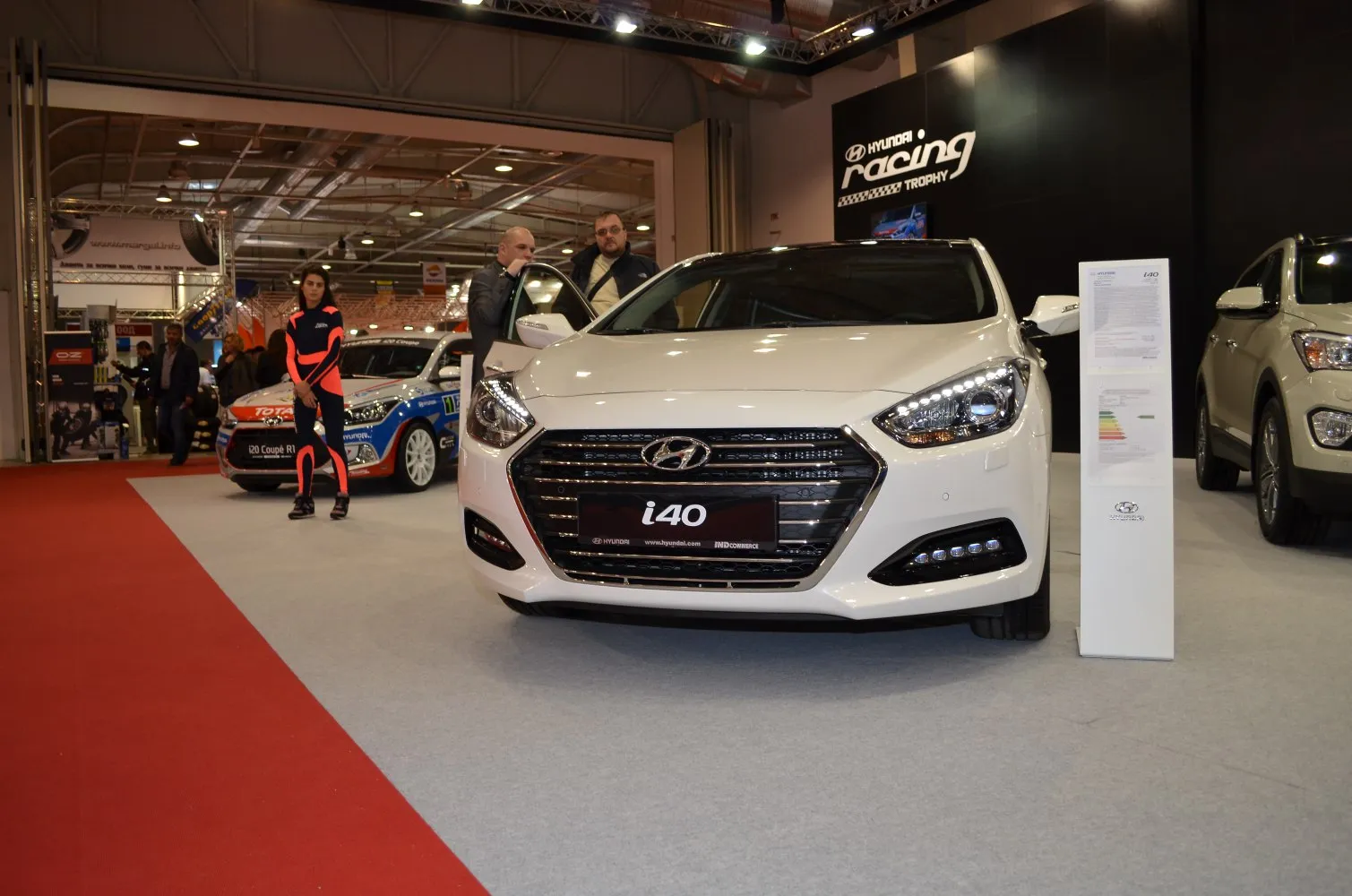






Your first impression of the Hyundai i40 in one word? Go!