
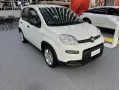
Click on image to view the full photo gallery
Hyundai EON 0.8 (56 Hp)
Overall Rating
6 / 10
EON Overview:
Hyundai EON (EON). With 75 Nm of torque, it offers ample pulling power. It has moderate fuel consumption (~6.5 l/100km). Weighing only 790 kg, it’s quite light. Front‑wheel drive delivers efficiency and easy handling. Acceleration is relatively slow (0–100 km/h in 16 s). The top speed reaches 140 km/h. A compact car with a rear door that swings upward to provide access to the cargo area. Seating for 5 makes it ideal for daily use.
Safety Rating
Not rated
Euro NCAP Year
N/A
Adult Occupant
N/A
Stars
N/A
Expert Note:
The Hyundai EON was not tested by Euro NCAP. Global NCAP tests for the EON (2014) indicated a 0-star rating for adult occupant protection, highlighting significant safety concerns due to its budget-oriented design.
The Hyundai EON was not tested by Euro NCAP. Global NCAP tests for the EON (2014) indicated a 0-star rating for adult occupant protection, highlighting significant safety concerns due to its budget-oriented design.
0.8 (56 Hp) Verdict:

Performance Verdict
Performance is extremely modest, suitable only for relaxed city driving. It struggles significantly on highways or when carrying multiple passengers.
Fuel Economy
Excellent fuel economy, especially in extra-urban conditions, making it a very cheap car to run for daily commutes.
Best Use Case:
City
Pros and Cons:
Pros:
- • Extremely affordable purchase price
- • Excellent fuel efficiency and low running costs
- • Compact size for easy city maneuverability and parking
- • Simple and reliable mechanicals
Cons:
- • Very poor safety rating (Global NCAP)
- • Underpowered engine for highway use or heavy loads
- • Basic interior and limited features
- • Cramped rear passenger space and small boot
Specifications:
| General: | |
|---|---|
| Brand: | Hyundai |
| Model: | EON |
| Generation: | EON |
| Modification (Engine): | 0.8 (56 Hp) |
| Start of production: | 2011 |
| End of production: | 2019 |
| Powertrain Architecture: | Internal Combustion engine |
| Body type: | Hatchback |
| Seats: | 5 |
| Doors: | 5 |
| Engine: | |
|---|---|
| Power: | 56 Hp @ 5500 rpm. |
| Power per litre: | 68.8 Hp/l |
| Torque: | 75 Nm @ 4000 rpm. |
| Engine displacement: | 814 |
| Number of cylinders: | 3 |
| Engine configuration: | Inline |
| Number of valves per cylinder: | 4 |
| Engine aspiration: | Naturally aspirated engine |
| Engine oil capacity: | 2.5 l |
| Coolant: | 3.5 l |
| Engine layout: | Front, Transverse |
| Cylinder Bore: | 67 mm mm |
| Piston Stroke: | 77 mm mm |
| Compression ratio: | 10.1:1 |
| Performance: | |
|---|---|
| Fuel Type: | Petrol (Gasoline) |
| Fuel consumption (economy) - urban: | 6.5 l/100 km |
| Fuel consumption (economy) - extra urban: | 3.8 l/100 km |
| Fuel consumption (economy) - combined: | 4.8 l/100 km |
| Acceleration 0 - 100 km/h: | 16 sec |
| Acceleration 0 - 62 mph: | 16 sec |
| Maximum speed: | 140 km/h |
| Weight-to-power ratio: | 14.1 kg/Hp, 70.9 Hp/tonne |
| Weight-to-torque ratio: | 10.5 kg/Nm, 94.9 Nm/tonne |
| Acceleration 0 - 60 mph: | 15.2 sec |
| 100 km/h - 0: | 45.2 m |
| Space: | |
|---|---|
| Kerb Weight: | 790 |
| Max. weight: | 1190 |
| Max load: | 400 |
| Trunk (boot) space - minimum: | 215 l |
| Fuel tank capacity: | 32 l |
| Size: | |
|---|---|
| Length: | 3495 mm mm |
| Width: | 1550 mm mm |
| Height: | 1500 mm mm |
| Wheelbase: | 2380 mm mm |
| Front track: | 1386 mm |
| Rear (Back) track: | 1368 mm |
| Front overhang: | 625 mm |
| Rear overhang: | 490 mm |
| Minimum turning circle (turning diameter): | 9.1 m |
| Powertrain: | |
|---|---|
| Drivetrain Architecture | The Internal combustion engine (ICE) drives the front wheels of the vehicle. |
| Drive wheel | Front wheel drive |
| Number of gears | 5 |
| Transmission type | Manual |
| Front brakes | Ventilated discs |
| Rear brakes | Drum |
| Tires size | 155/70 R13 |
| Wheel rims size | 4.5J x 13 |
| Front suspension | Independent, type McPherson with coil spring and anti-roll bar |
| Rear suspension | Independent coil spring |







Is the Hyundai EON worth every penny? Give us your honest ROI.