Honda Saber U1/U2 2.0 i 20V G (160 Hp)
People\'s Opinion
N/A / 5
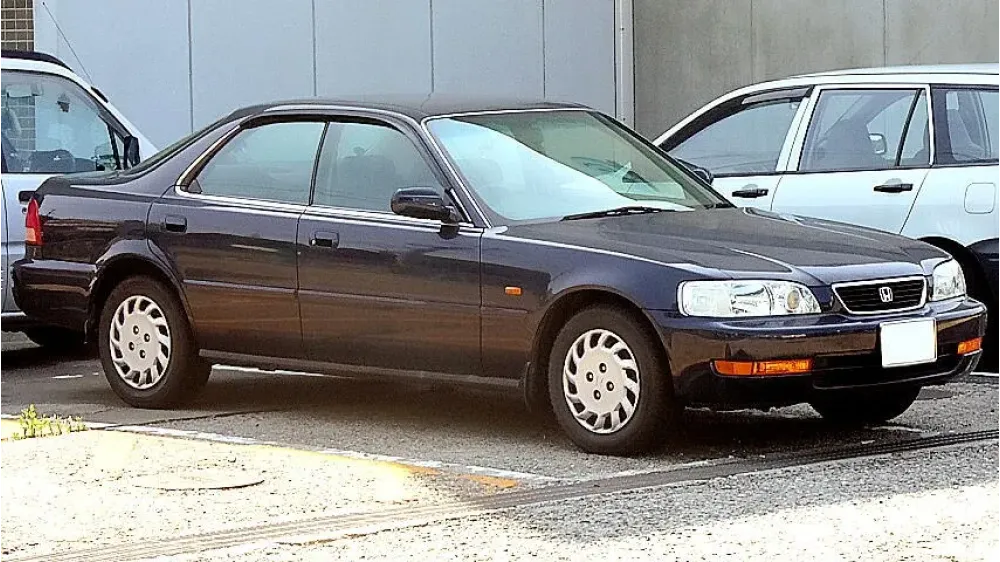
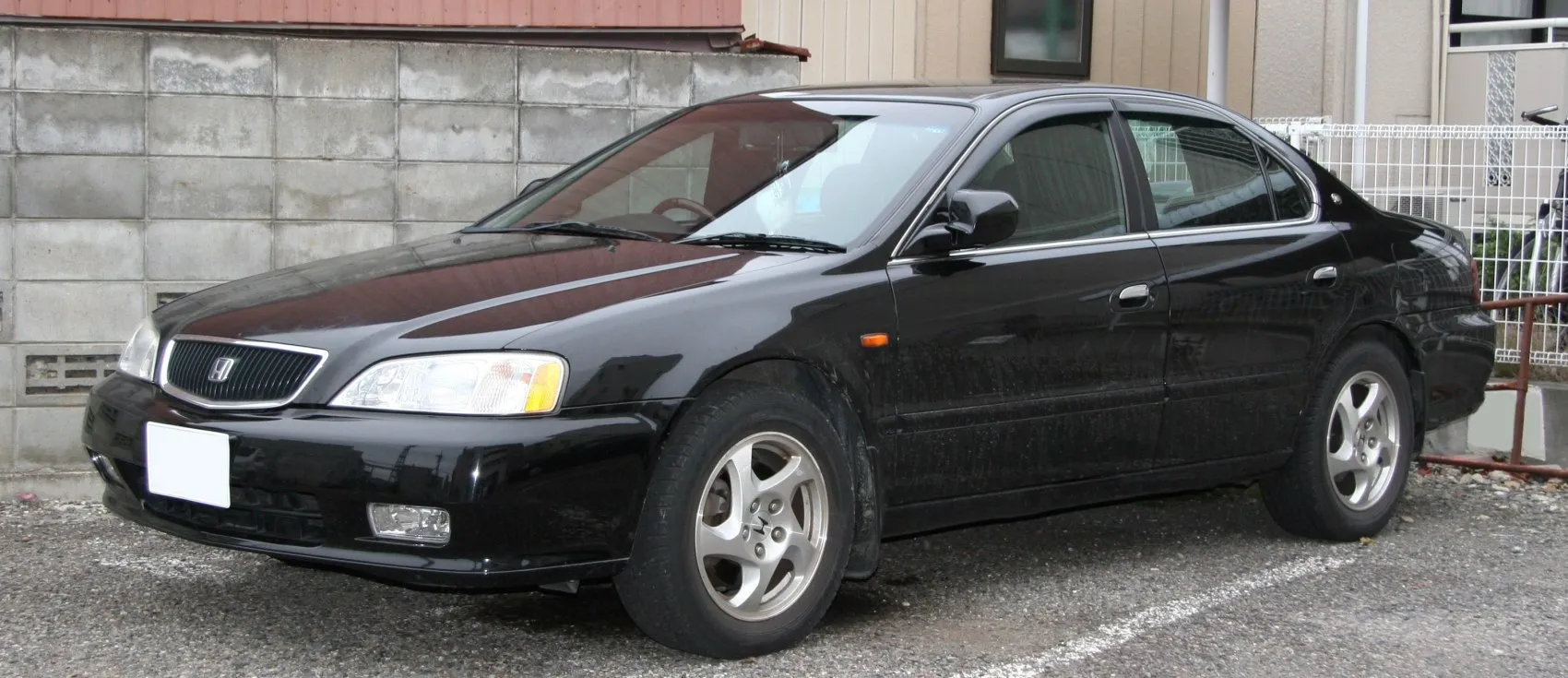
Honda Saber:
The Honda Inspire is a mid-size sedan derived from the Honda Accord chassis. The first Inspire debuted in late 1989 as the Accord Inspire, a sister nameplate to the Honda Vigor. It was sold at different retail channels in Japan, known as Honda Verno for the Vigor/Saber, and as the Inspire at Honda Clio stores.
In 1995, the Inspire was updated and exported to the US as the Acura 3. 2 TL, while the Vigor nameplate was replaced with the Honda Saber. The longitudinal 2. 5L straight-five engine layout and platform remained and was sold as the Acura 2. 5 TL....(Read more on Wikipedia)
U1/U2 Overview:
Honda Saber (U1/U2). With 186 Nm of torque, it offers ample pulling power. With a weight of 1360 kg, it falls in the mid‑range. Front‑wheel drive delivers efficiency and easy handling. A four-door car with a separate trunk, ideal for families and daily commuting. Seating for 5 makes it ideal for daily use.
Performance Verdict
The 2.0L inline-five, with 160 Hp, provides sufficient power for daily commuting and city driving. While less potent than the 2.5L, it maintains the smooth character of the inline-five, suitable for a relaxed driving style.
Fuel Economy
At 7.5 l/100 km, this engine offers slightly better fuel efficiency than its larger counterpart, making it a more economical choice for those prioritizing fuel savings over outright power.
Best Use Case:
City / Mixed driving
Pros and Cons:
Pros:
- • Refined and smooth inline-five engines
- • Excellent Honda reliability and build quality
- • Comfortable and spacious interior for its class
- • Distinctive styling for a mid-90s sedan
- • Good fuel economy for the engine sizes of the era
Cons:
- • Limited availability outside of specific markets (e.g., Japan)
- • Automatic transmission can feel dated compared to modern units
- • Lacks modern safety features and driver aids
- • Performance is more geared towards comfort than sportiness
- • Parts availability might be challenging for some components
Specifications:
| General: |
| Brand: | Honda |
|---|
| Model: | Saber |
|---|
| Generation: | U1/U2 |
|---|
| Modification (Engine): | 2.0 i 20V G (160 Hp) |
|---|
| Start of production: | 1995 |
|---|
| End of production: | 1998 |
|---|
| Powertrain Architecture: | Internal Combustion engine |
|---|
| Body type: | Sedan |
|---|
| Seats: | 5 |
|---|
| Doors: | 4 |
|---|
| Engine: |
| Power: | 160 Hp @ 6700 rpm. |
|---|
| Power per litre: | 80.2 Hp/l |
|---|
| Torque: | 186 Nm @ 4000 rpm. |
|---|
| Engine displacement: | 1996 |
|---|
| Number of cylinders: | 5 |
|---|
| Engine configuration: | Inline |
|---|
| Number of valves per cylinder: | 4 |
|---|
| Fuel injection system: | Multi-port manifold injection |
|---|
| Engine aspiration: | Naturally aspirated engine |
|---|
| Valvetrain: | OHC |
|---|
| Engine layout: | Front, Longitudinal |
|---|
| Cylinder Bore: | 82 mm mm |
|---|
| Piston Stroke: | 75.6 mm mm |
|---|
| Compression ratio: | 9.7:1 |
|---|
| Performance: |
| Fuel Type: | Petrol (Gasoline) |
|---|
| Fuel consumption (economy) - combined: | 7.5 l/100 km |
|---|
| Weight-to-power ratio: | 8.5 kg/Hp, 117.6 Hp/tonne |
|---|
| Weight-to-torque ratio: | 7.3 kg/Nm, 136.8 Nm/tonne |
|---|
| Space: |
| Kerb Weight: | 1360 |
|---|
| Fuel tank capacity: | 65 l |
|---|
| Size: |
| Length: | 4840 mm mm |
|---|
| Width: | 1785 mm mm |
|---|
| Height: | 1405 mm mm |
|---|
| Wheelbase: | 2840 mm mm |
|---|
| Front track: | 1520 mm |
|---|
| Rear (Back) track: | 1510 mm |
|---|
| Powertrain: |
| Drivetrain Architecture | The Internal combustion engine (ICE) drives the front wheels of the vehicle. |
|---|
| Drive wheel | Front wheel drive |
|---|
| Number of gears | 4 |
|---|
| Transmission type | Automatic |
|---|
| Front brakes | Ventilated discs |
|---|
| Rear brakes | Disc |
|---|
| Assisting systems | ABS (Anti-lock braking system) |
|---|
| Steering type | Steering rack and pinion |
|---|
| Power steering | Hydraulic Steering |
|---|
| Tires size | 195/65 R15 H |
|---|
| Front suspension | Coil spring |
|---|
| Rear suspension | Coil spring |
|---|






Rate the Honda Saber from 1 to 10!