
Click on image to view the full photo gallery
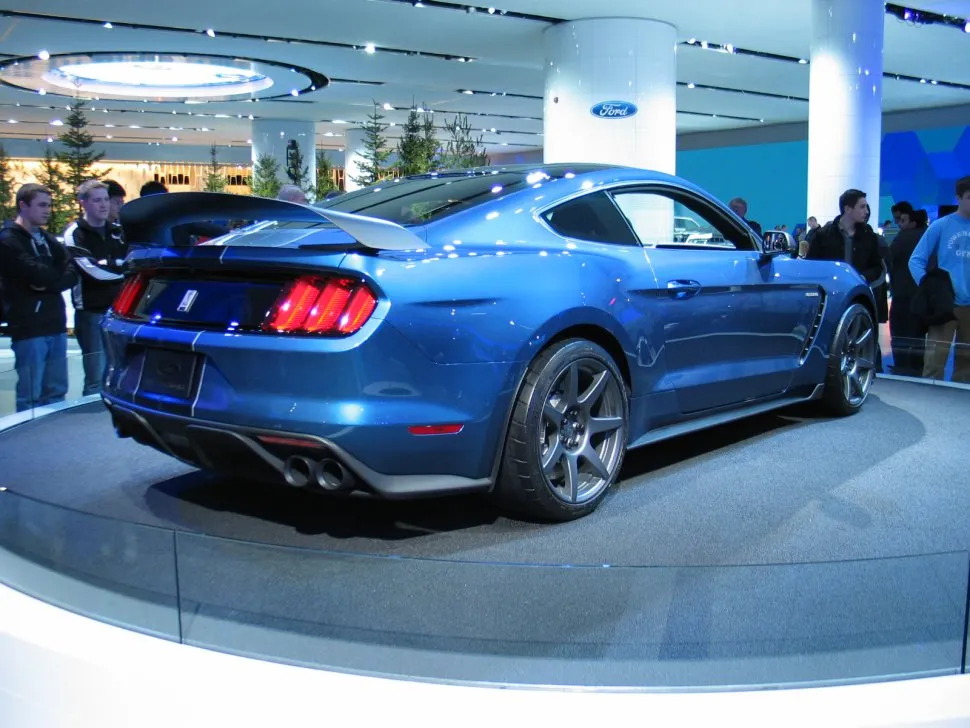
Ford Shelby III GT 350 5.2 (533 Hp)
Overall Rating
Ford Shelby:
The Shelby Mustang is a high-performance variant of the Ford Mustang built by Shelby American from 1965 to 1967 and by the Ford Motor Company from 1968 to 1970.
In 2005, Ford revived the Shelby nameplate for a high-performance model of the fifth-generation Ford Mustang.
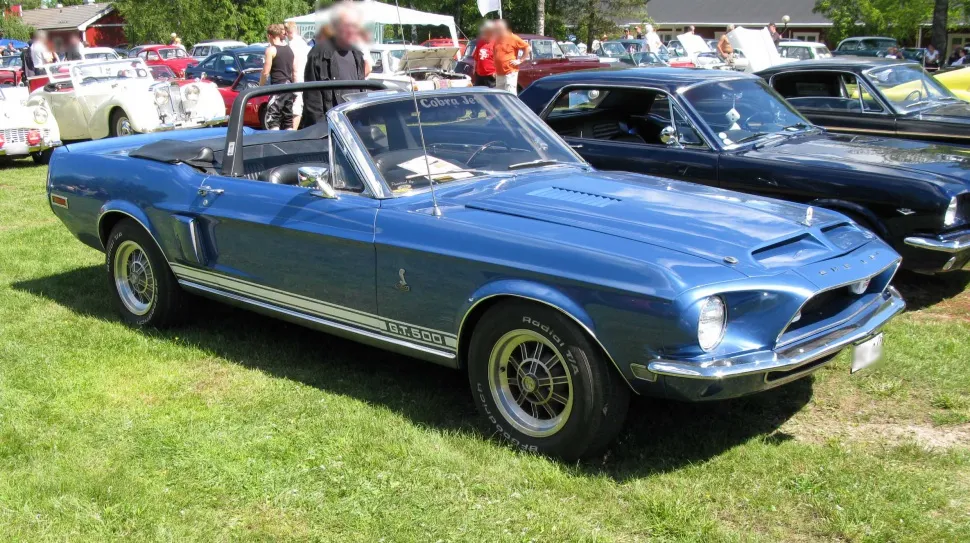
The GT350 made its debut in the "sportsroof" fastback model of the first generation Ford Mustang in 1965. Produced through 1966, these were the smallest and lightest of the GT 350 models. Work started at Shelby American when its Ford-powered AC Ace-based, two-seat, 289 AC Cobra sports car production was wrapping up, and the 427 cu in variant was beginning. Both the AC and the Shelby Mustang use the Cobra emblem, a similar paint scheme, and the optional "Cobra" valve covers installed on many GT350s that were part of a marketing tie-in by Shelby, as well as one of his iconic symbols. All 1965–66 cars had the Windsor 289 cu in HiPo K-Code 271 hp V8 engine, modified with a large 4-barrel Holley 725 CFM carburetor to produce 306 bhp at 6,000 rpm and 329 lb⋅ft of torque at 4,200 rpm. Marketing literature referred to this engine as the "Cobra hi-riser" due to its high-rise intake manifold. Beginning as a stock Mustang with a 4-speed manual transmission and 9-inch live rear axle, the cars were shipped to Shelby American, where they received the high-rise manifolds, Tri-Y headers, and were given larger Ford Galaxie rear drum brakes with metallic-linings and Kelsey-Hayes front disc brakes....(Read more on Wikipedia)
III Overview:
Ford Shelby (III). With 582 Nm of torque, it offers ample pulling power. With a weight of 1706 kg, it falls in the mid‑range. Rear‑wheel drive offers dynamic handling and sporty feedback. A two-door car with a fixed roof, known for its sporty design and dynamic performance. Seating for 4 makes it ideal for daily use.
The Ford Mustang, on which the Shelby III is based, received a 3-star Euro NCAP rating in 2017. While offering decent adult occupant protection, scores for child occupant and safety assist systems were notably lower, reflecting its performance-oriented design.
GT 350 5.2 (533 Hp) Verdict:

Performance Verdict
The naturally aspirated 'Voodoo' 5.2L V8 offers a unique flat-plane crank sound and incredible high-revving performance, providing a more visceral and engaging driving experience than many competitors.
Fuel Economy
While better than the GT500, fuel economy is still modest for a daily driver, reflecting its performance-oriented design and high-revving nature.
Pros and Cons:
Pros:
- • Exceptional V8 engine performance across the lineup
- • Iconic American muscle car styling
- • Engaging driving dynamics, especially on track
- • Distinctive engine sounds (Voodoo's flat-plane, Predator's supercharger whine)
- • Strong aftermarket support and community
Cons:
- • Poor fuel economy for all variants
- • Stiff ride quality, not ideal for daily commuting
- • Limited rear seat space and practicality
- • Higher insurance and maintenance costs
- • Euro NCAP safety rating is only 3 stars for the base Mustang
Specifications:
Specifications are compared to those of the previous generation(II (facelift 2010): 2013 - 2014).
| General: | |
|---|---|
| Brand: | Ford |
| Model: | Shelby |
| Generation: | III |
| Modification (Engine): | GT 350 5.2 (533 Hp) |
| Start of production: | 2016 |
| Powertrain Architecture: | Internal Combustion engine |
| Body type: | Coupe |
| Seats: | 4 |
| Doors: | 2 |
| Engine: | |
|---|---|
| Power: | 533 Hp @ 7500 rpm. |
| Power per litre: | 103.2 Hp/l |
| Torque: | 582 Nm @ 4750 rpm. |
| Engine displacement: | 5163 |
| Number of cylinders: | 8 |
| Engine configuration: | V-engine |
| Number of valves per cylinder: | 4 |
| Fuel injection system: | Multi-port manifold injection |
| Engine aspiration: | Naturally aspirated engine |
| Engine oil capacity: | 9.5 l |
| Coolant: | 14.4 l |
| Engine layout: | Front, Longitudinal |
| Cylinder Bore: | 94 mm mm |
| Piston Stroke: | 93 mm mm |
| Compression ratio: | 12:1 |
| Performance: | |
|---|---|
| Fuel Type: | Petrol (Gasoline) |
| Fuel consumption (economy) - urban: | 16.8 l/100 km |
| Fuel consumption (economy) - extra urban: | 11.2 l/100 km |
| Fuel consumption (economy) - combined: | 14.7 l/100 km |
| Weight-to-power ratio: | 3.2 kg/Hp, 312.4 Hp/tonne |
| Weight-to-torque ratio: | 2.9 kg/Nm, 341.1 Nm/tonne |
| Space: | |
|---|---|
| Kerb Weight: | 1706 |
| Fuel tank capacity: | 60 l |
| Size: | |
|---|---|
| Length: | 4798 mm mm [18mm more] |
| Width: | 1928 mm mm [51mm more] |
| Height: | 1377 mm mm [15mm less] |
| Wheelbase: | 2720 mm mm [Same wheelbase.] |
| Width with mirrors folded: | 2080 mm |
| Front track: | 1608 mm |
| Rear (Back) track: | 1618 mm |
| Minimum turning circle (turning diameter): | 12.31 m [above average] |
| Powertrain: | |
|---|---|
| Drivetrain Architecture | The Internal combustion engine (ICE) drives the rear wheels of the vehicle. |
| Drive wheel | Rear wheel drive |
| Number of gears | 6 |
| Transmission type | Manual |
| Front brakes | Ventilated discs [Best for performance and cooling.] |
| Rear brakes | Ventilated discs [Best for performance and cooling.] |
| Assisting systems | ABS (Anti-lock braking system) |
| Steering type | Steering rack and pinion |
| Power steering | Electric Steering |
| Tires size | 295/35 ZR19; 305/35 ZR19 |
| Wheel rims size | 19 |











Better than its competitors? Tell us why the Ford Shelby stands out.