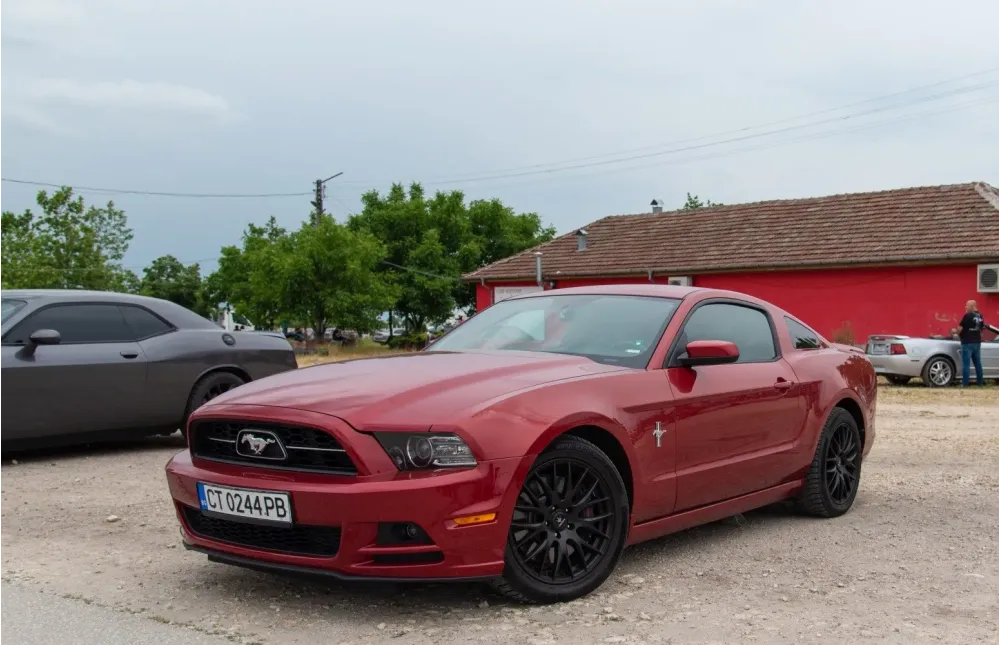
Click on image to view the full photo gallery
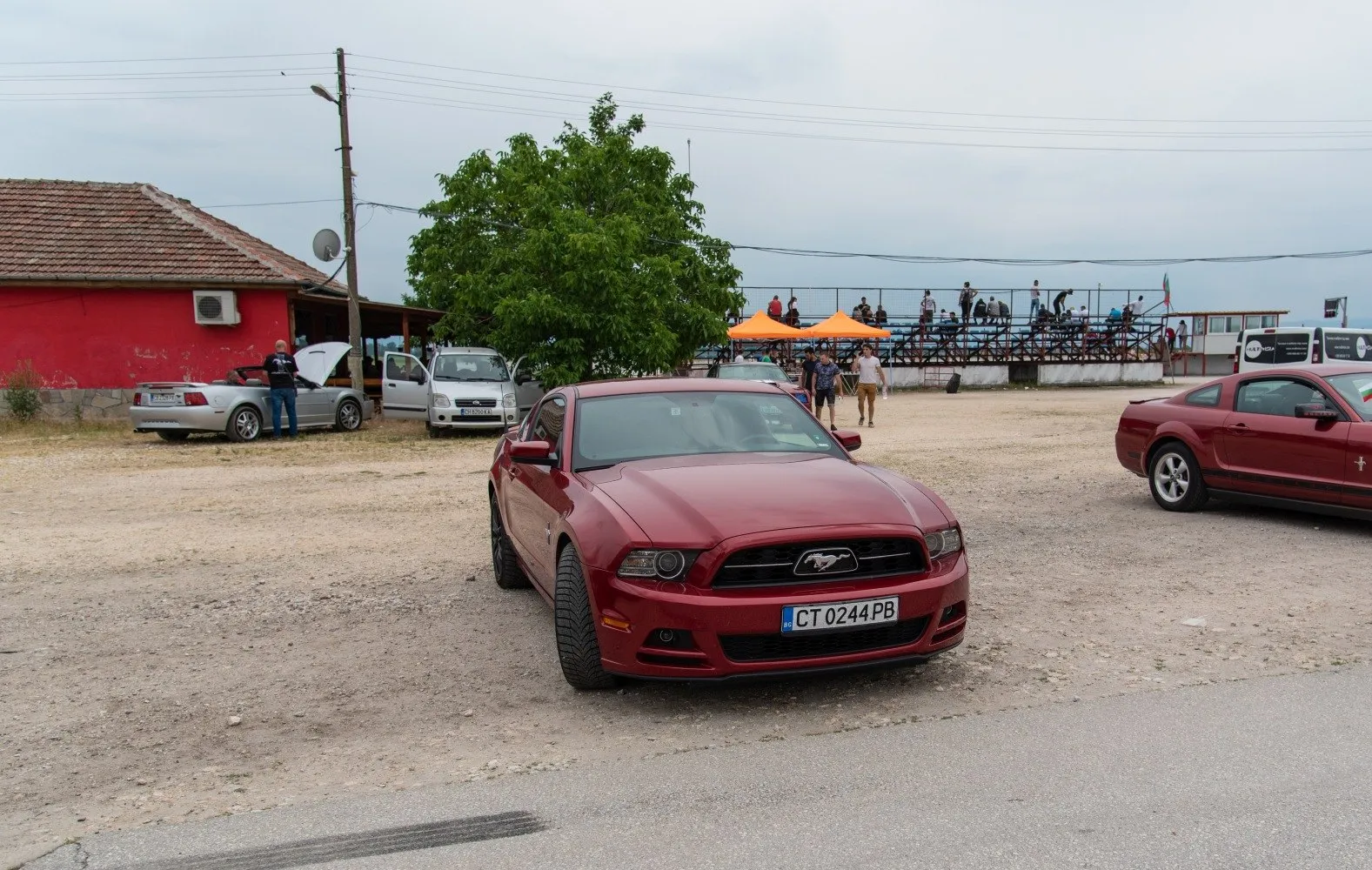
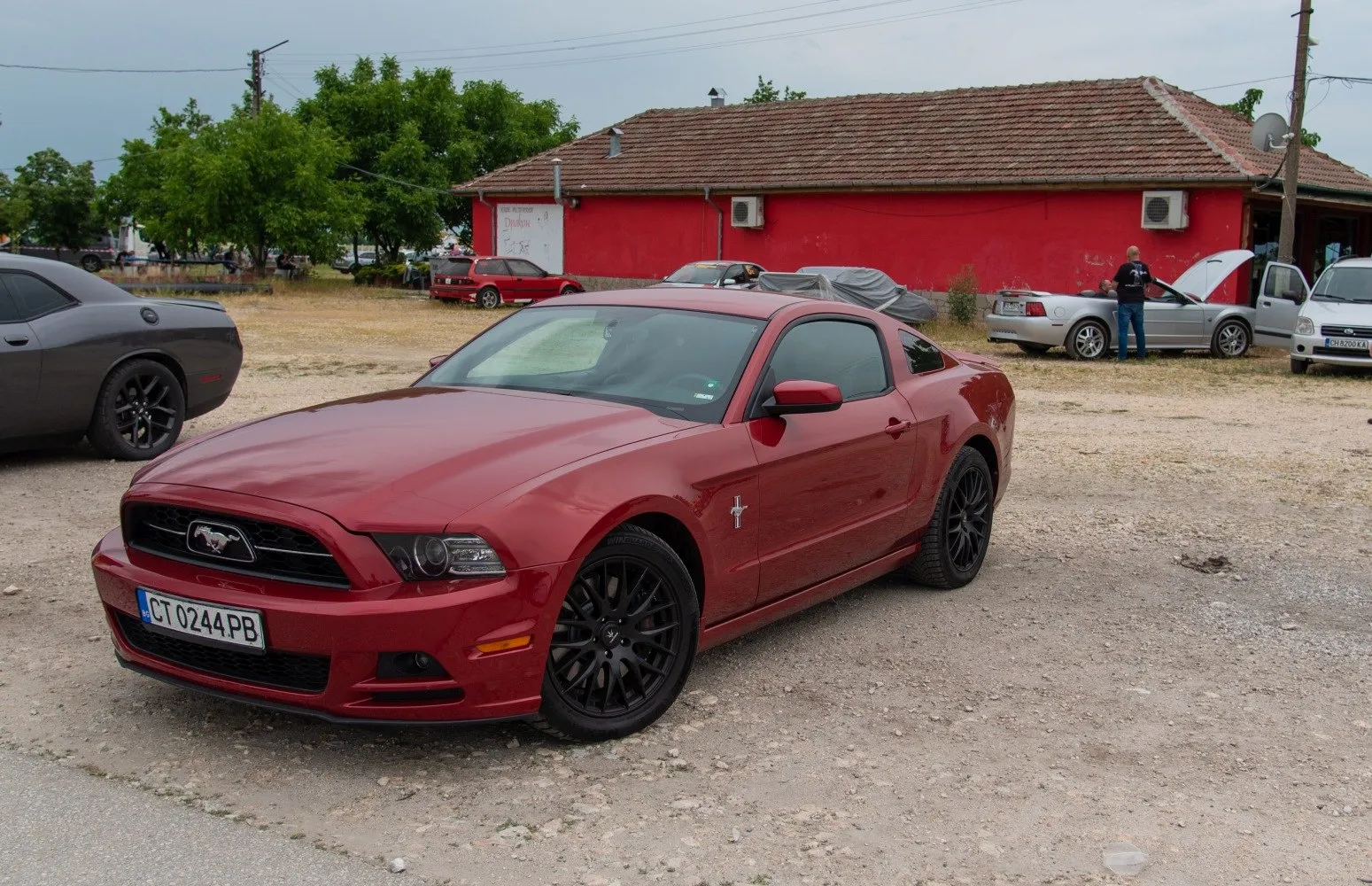
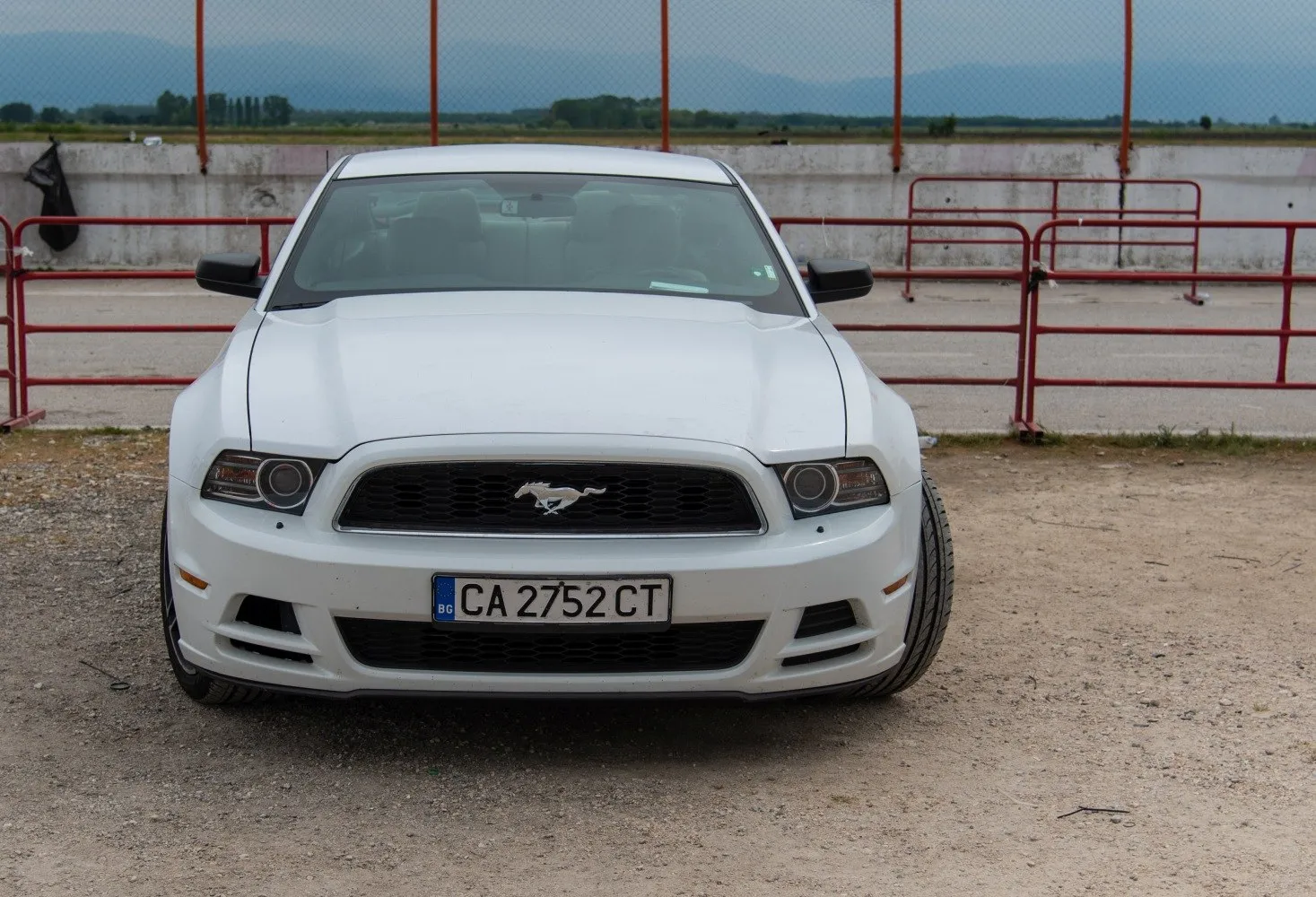
Ford Mustang V (facelift 2012) GT 5.0 V8 (420 Hp) Automatic
Overall Rating
Ford Mustang:
The Ford Mustang is an American automobile manufactured and marketed by Ford since 1964, as Ford's longest nameplate in continuous production. Currently in its seventh generation, it is the fifth-best selling Ford car nameplate. The namesake of the "pony car" automobile segment, the Mustang was developed as a highly styled line of sporty coupes and convertibles derived from existing model lines, initially distinguished by its pronounced "long hood, short deck" proportions.
Originally predicted to sell 100,000 vehicles yearly, the 1965 Mustang became the most successful vehicle launch since the 1927 Model A. Introduced on April 17, 1964 , over 400,000 units were sold in its first year; the one-millionth Mustang was sold within two years of its launch. In August 2018, Ford produced the 10-millionth Mustang; matching the first 1965 Mustang, the vehicle was a 2019 Wimbledon White convertible with a V8 engine....(Read more on Wikipedia)
V (facelift 2012) Overview:
Ford Mustang (V (facelift 2012)). With 529 Nm of torque, it offers ample pulling power. With a weight of 1667 kg, it falls in the mid‑range. Rear‑wheel drive offers dynamic handling and sporty feedback. A two-door car with a fixed roof, known for its sporty design and dynamic performance. Seating for 4 makes it ideal for daily use.
GT 5.0 V8 (420 Hp) Automatic Verdict:

Performance Verdict
Delivers the same potent 420 hp as the manual, but with the convenience of an automatic transmission. Smooth shifts and strong acceleration make it a comfortable yet powerful option.
Fuel Economy
Slightly better fuel economy at 11.8 l/100 km combined compared to the manual, making it a more practical choice for daily commuting without sacrificing much power.
Pros and Cons:
Pros:
- • Powerful and diverse engine lineup, from potent V6 to track-ready Boss 302 V8
- • Iconic American muscle car styling with modern updates
- • Engaging driving experience, especially with manual transmission options
- • Excellent value for performance compared to European sports cars
- • Improved interior quality and technology over previous models
Cons:
- • Solid rear axle limits handling refinement compared to independent rear suspension rivals
- • Interior materials, while improved, still lag behind some competitors
- • High fuel consumption for V8 models
- • Limited rear seat space and trunk access
- • Steering feel could be more communicative in some trims
Specifications:
Specifications are compared to those of the previous generation(V (facelift 2009): 2011 - 2012).
| General: | |
|---|---|
| Brand: | Ford |
| Model: | Mustang |
| Generation: | V (facelift 2012) |
| Modification (Engine): | GT 5.0 V8 (420 Hp) Automatic |
| Start of production: | 2012 |
| End of production: | 2014 |
| Powertrain Architecture: | Internal Combustion engine |
| Body type: | Coupe |
| Seats: | 4 |
| Doors: | 2 |
| Engine: | |
|---|---|
| Power: | 420 Hp @ 6500 rpm. Same horsepower |
| Power per litre: | 84.8 Hp/l [10mm more] |
| Torque: | 529 Nm @ 4250 rpm. |
| Engine Model/Code: | Coyote More details about the engine Coyote |
| Engine displacement: | 4951 |
| Number of cylinders: | 8 |
| Engine configuration: | V-engine |
| Number of valves per cylinder: | 4 |
| Fuel injection system: | Multi-port manifold injection |
| Engine aspiration: | Naturally aspirated engine |
| Valvetrain: | DOHC, Ti-VCT |
| Engine oil capacity: | 7.6 l |
| Coolant: | 12.3 l |
| Engine layout: | Front, Longitudinal |
| Cylinder Bore: | 92.2 mm mm |
| Piston Stroke: | 92.7 mm mm |
| Compression ratio: | 11:1 |
| Maximum engine speed: | 7000 rpm. |
| Performance: | |
|---|---|
| Fuel Type: | Petrol (Gasoline) |
| Fuel consumption (economy) - urban: | 13.1 l/100 km |
| Fuel consumption (economy) - extra urban: | 9.4 l/100 km |
| Fuel consumption (economy) - combined: | 11.8 l/100 km |
| Weight-to-power ratio: | 4 kg/Hp, 251.9 Hp/tonne |
| Weight-to-torque ratio: | 3.2 kg/Nm, 317.3 Nm/tonne |
| Space: | |
|---|---|
| Kerb Weight: | 1667 |
| Trunk (boot) space - minimum: | 379 l |
| Permitted trailer load with brakes (12%): | 454 kg |
| Fuel tank capacity: | 61 l |
| Size: | |
|---|---|
| Length: | 4788 mm mm [10mm more] |
| Width: | 1877 mm mm [Same width.] |
| Height: | 1417 mm mm [17mm more] |
| Wheelbase: | 2720 mm mm [Same wheelbase.] |
| Width including mirrors: | 2035 mm |
| Front track: | 1562 mm |
| Rear (Back) track: | 1577 mm |
| Minimum turning circle (turning diameter): | 10.2 m [above average] |
| Powertrain: | |
|---|---|
| Drivetrain Architecture | The Internal combustion engine (ICE) drives the rear wheels of the vehicle. |
| Drive wheel | Rear wheel drive |
| Number of gears | 6 |
| Transmission type | Automatic |
| Front brakes | Ventilated discs, 336x36 mm [Best for performance and cooling.] |
| Rear brakes | Ventilated discs, 300x19 mm [Best for performance and cooling.] |
| Assisting systems | ABS (Anti-lock braking system) |
| Steering type | Steering rack and pinion |
| Power steering | Electric Steering |
| Tires size | 235/50 R18; 245/45 R19 |
| Wheel rims size | 8J x 18; 8.5J x 19 |
| Front suspension | Independent type McPherson, Transverse stabilizer |
| Rear suspension | Rigid axle suspension, Transverse stabilizer, Coil spring |


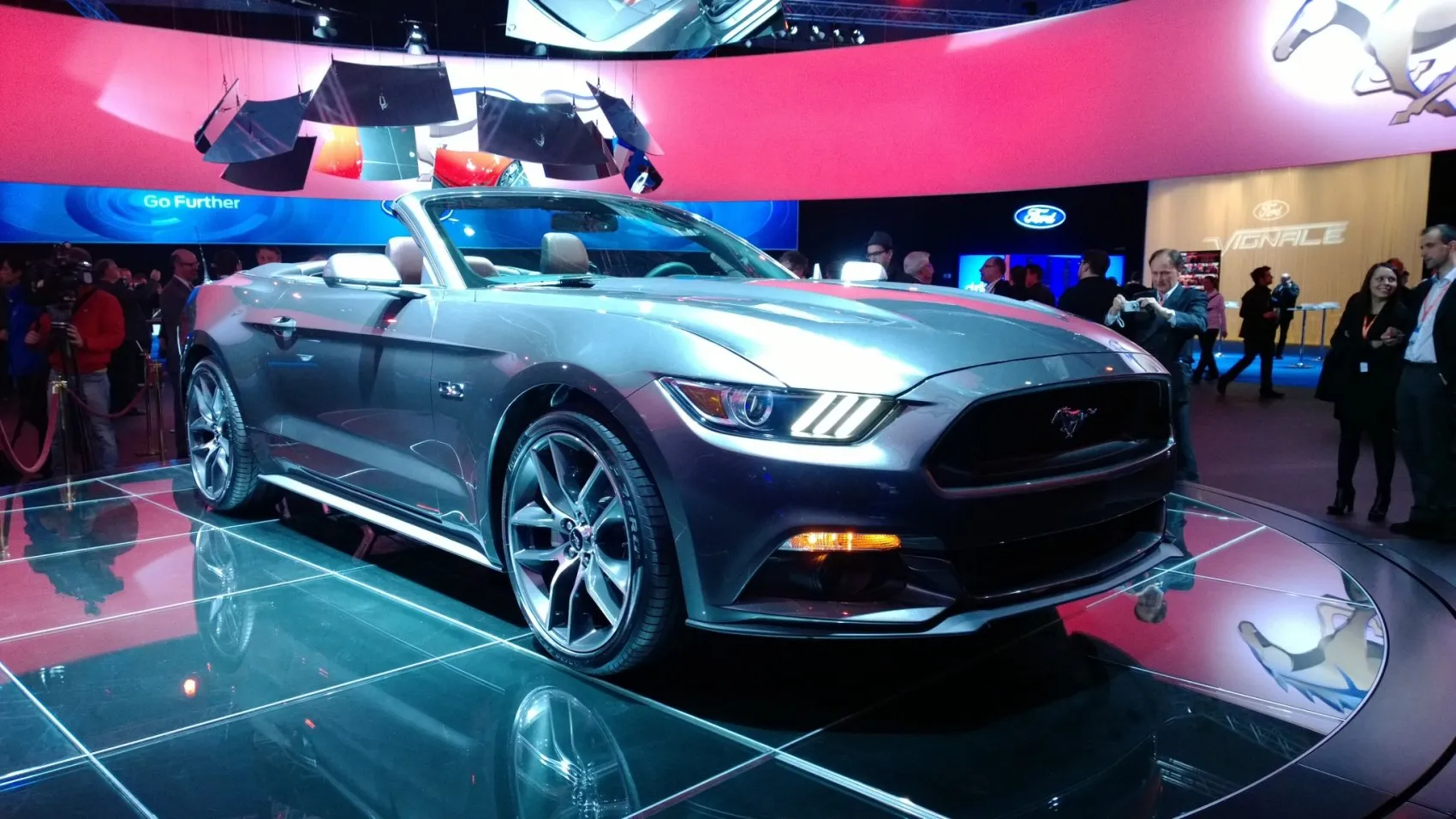











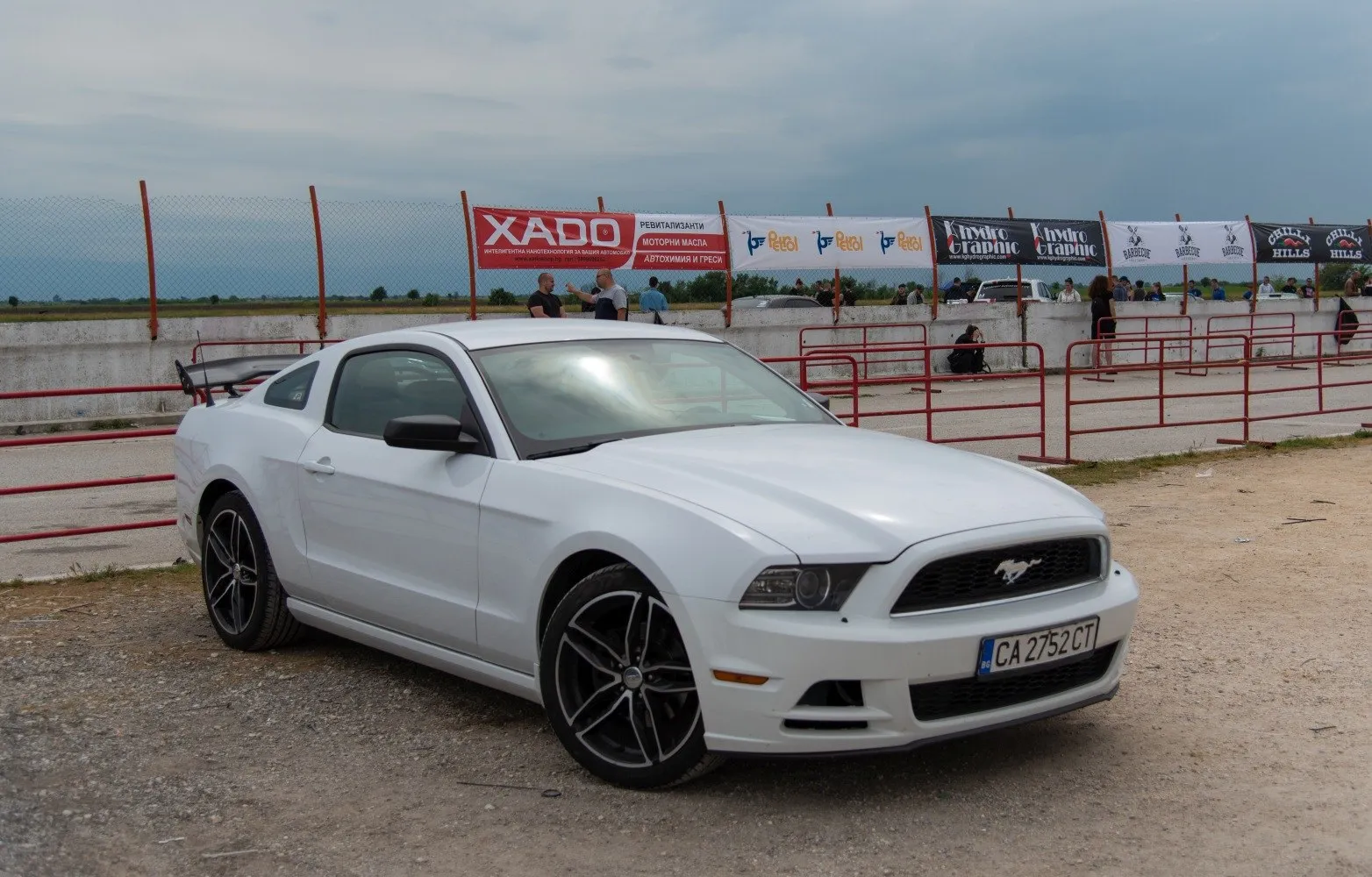
Behind the wheel of the Ford Mustang. How does it handle on the road?