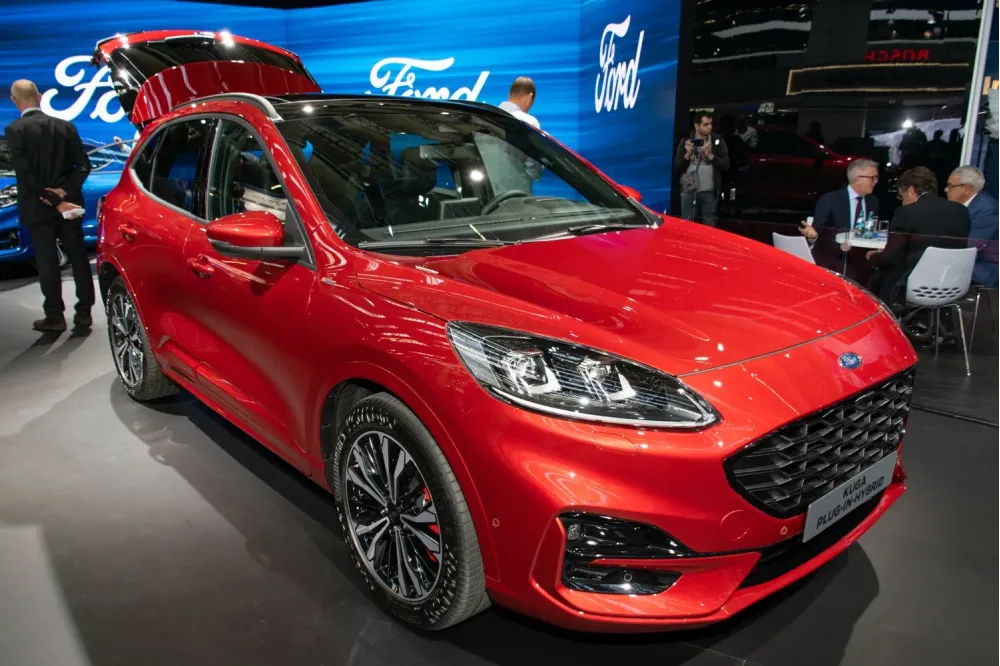
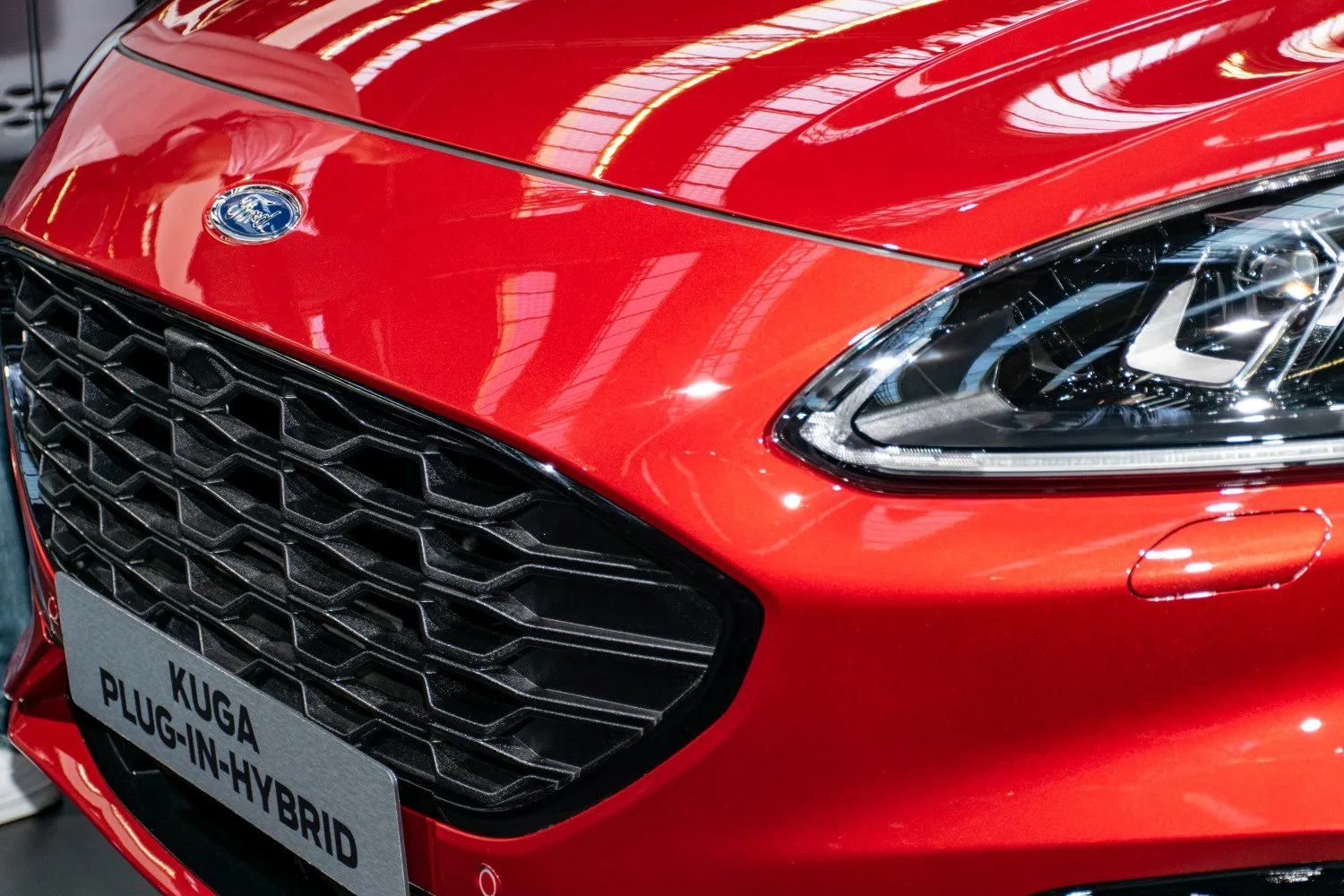
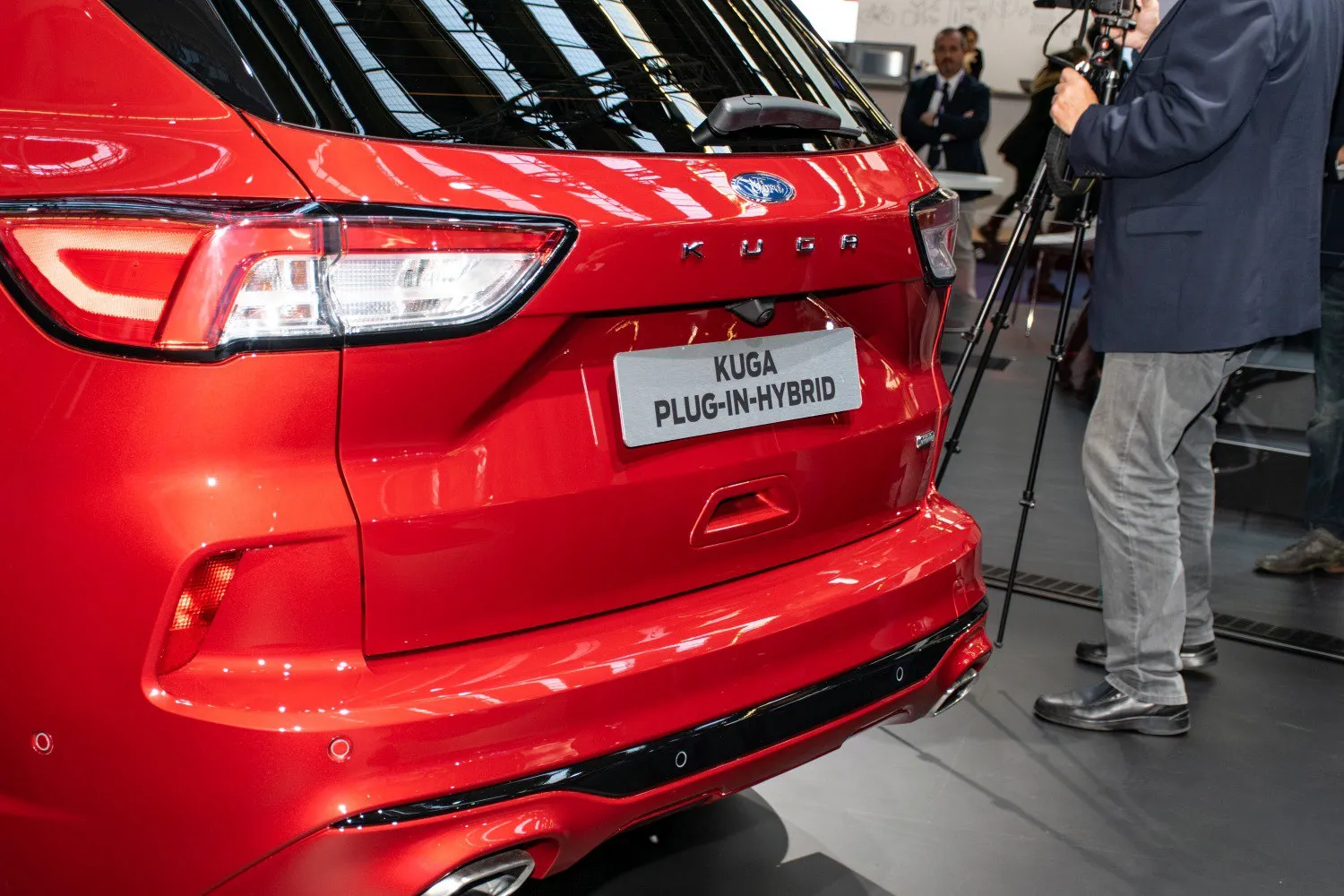
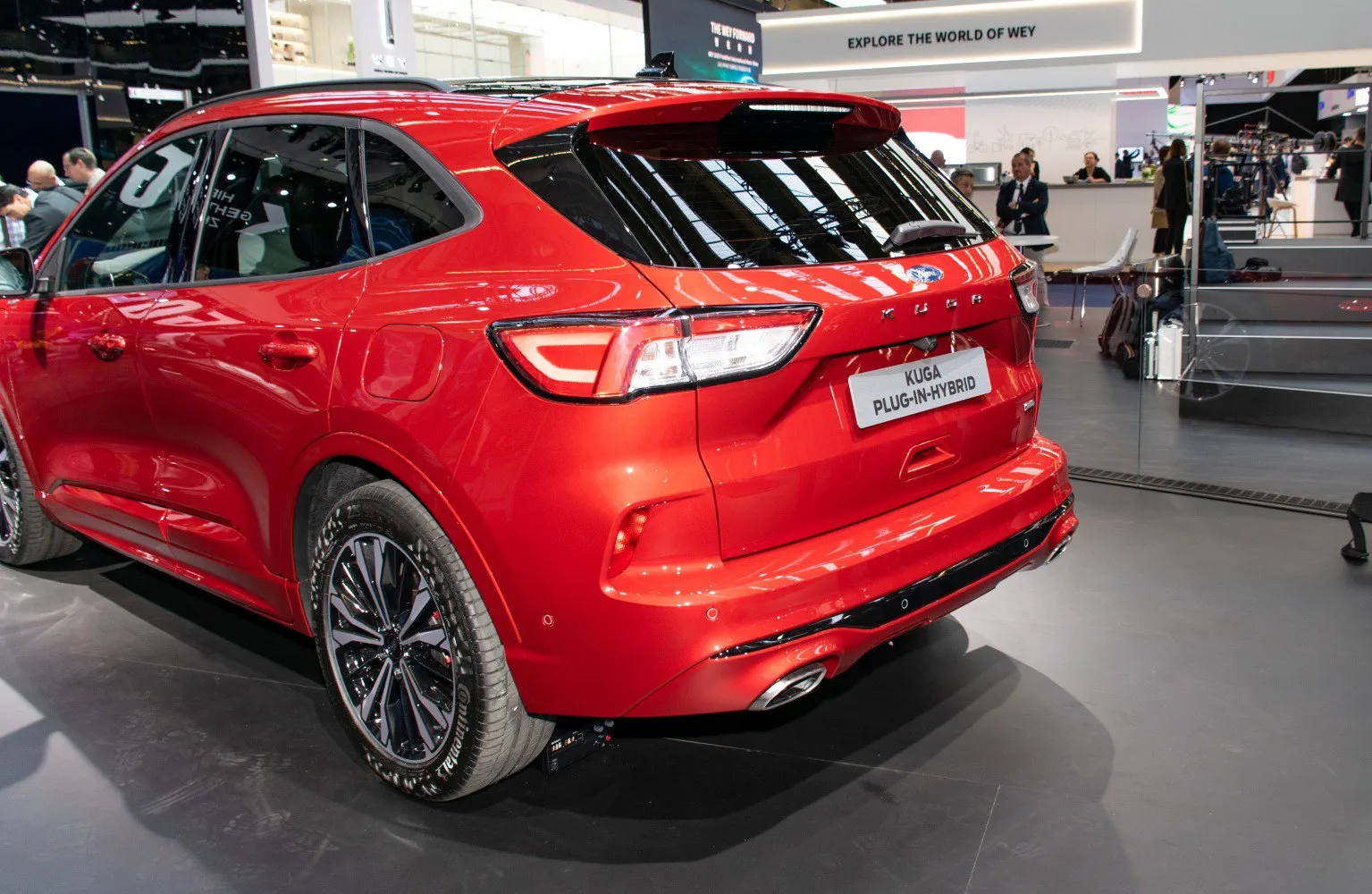
Click on image to view the full photo gallery
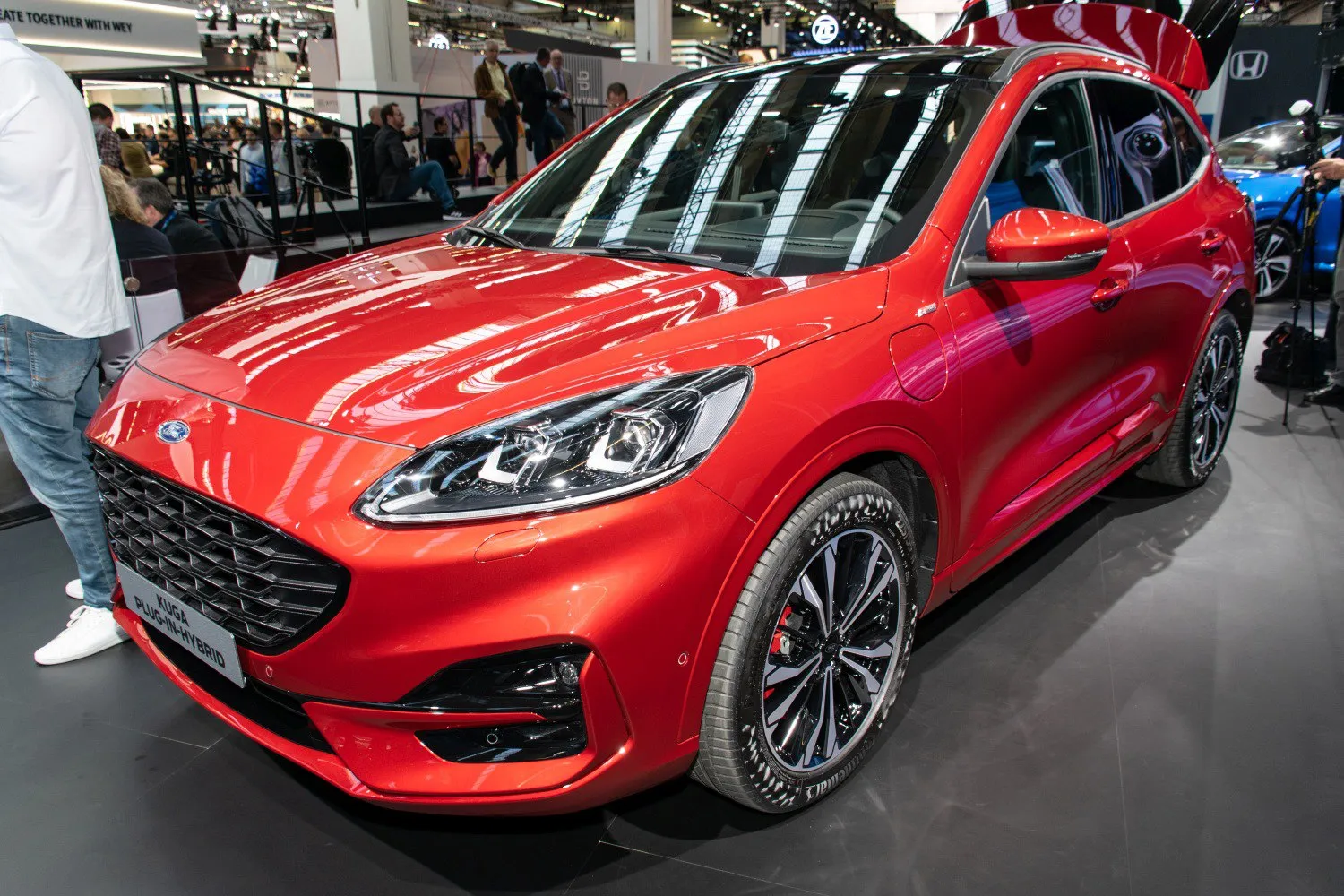
Ford Kuga III 2.0 EcoBlue (150 Hp) Mild Hybrid
Overall Rating
Ford Kuga:
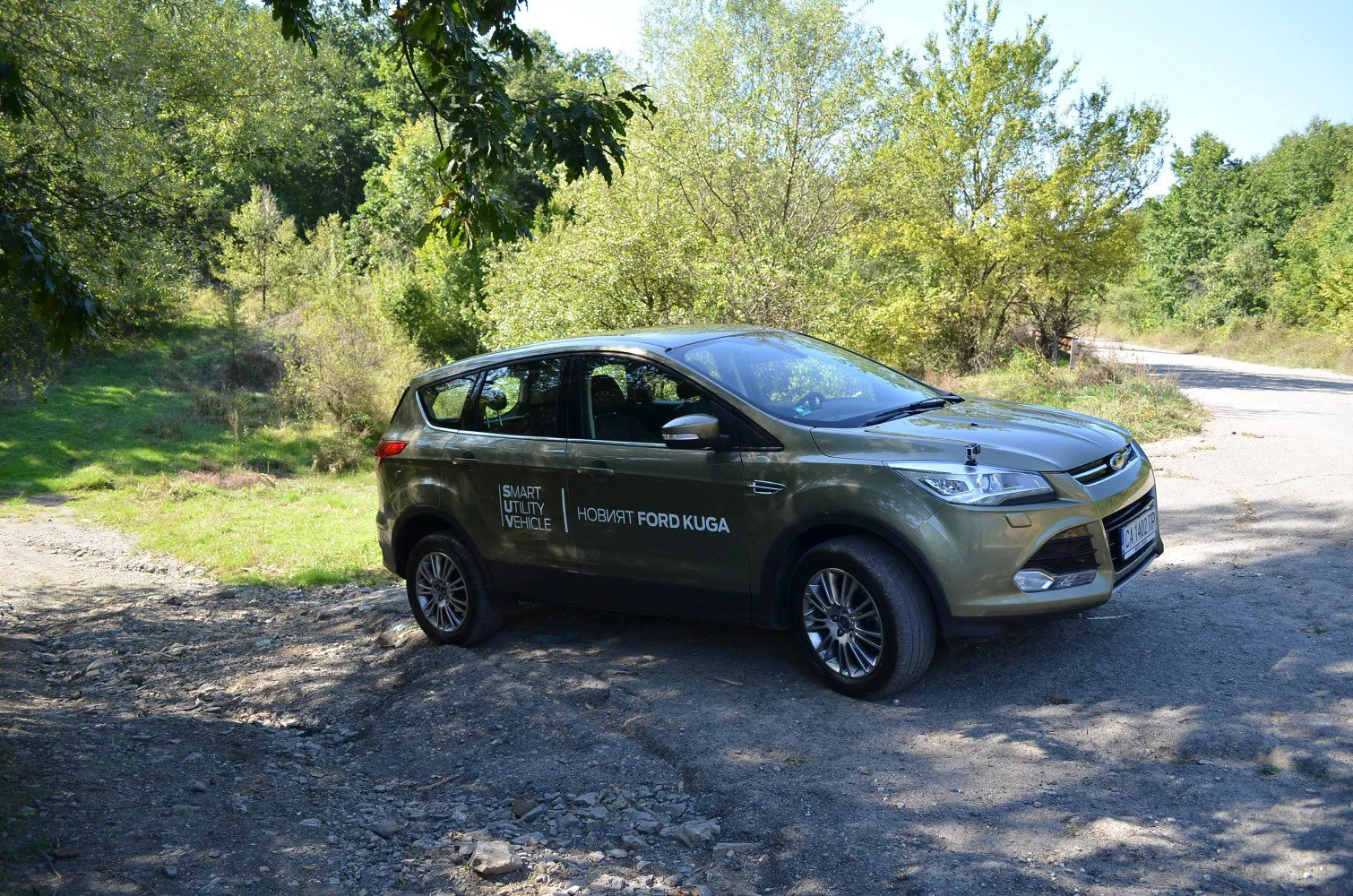
The Ford Kuga is a compact crossover SUV manufactured by Ford since 2008, mainly for the European market, and now in its third generation. Both front-wheel drive and four-wheel drive are offered.
The Kuga was originally European-designed and sold in Europe and a few other markets, but beginning in 2012 for the 2013 model year, it was marketed in North America as the Ford Escape. The Ford Kuga is marketed as the Ford Escape in North America, Australia, the Middle East, and several countries in the Americas....(Read more on Wikipedia)
III Overview:
Ford Kuga (III). With 370 Nm of torque, it offers ample pulling power. It boasts low fuel consumption (~4.7 l/100km). With a weight of 1605 kg, it falls in the mid‑range. Front‑wheel drive delivers efficiency and easy handling. Acceleration is relatively slow (0–100 km/h in 9.6 s). The top speed reaches 194 km/h. A sport utility vehicle offering higher ground clearance and versatile cargo space. Seating for 5 makes it ideal for daily use.
The Ford Kuga III achieved an excellent 5-star Euro NCAP rating in 2019, demonstrating strong performance in adult occupant protection and overall safety, making it a secure choice for families.
2.0 EcoBlue (150 Hp) Mild Hybrid Verdict:

Performance Verdict
Provides a good balance of power and torque for everyday driving, with the mild-hybrid system offering a subtle boost.
Fuel Economy
Very good fuel efficiency for an SUV of its size, especially on longer journeys, benefiting from the mild-hybrid assistance.
Pros and Cons:
Pros:
- • Wide range of efficient powertrains, including PHEV and FHEV options
- • Comfortable and spacious interior for families
- • Strong Euro NCAP safety rating
- • Modern infotainment system (SYNC 3/4)
- • Good ride quality and handling for an SUV
Cons:
- • Some lower-powered engines can feel underpowered for the vehicle's size
- • eCVT can be less engaging for some drivers
- • Rear visibility can be somewhat limited
- • Boot space is compromised in hybrid models compared to rivals
Specifications:
Specifications are compared to those of the previous generation(III: September, 2019 - January, 2024).
| General: | |
|---|---|
| Brand: | Ford |
| Model: | Kuga |
| Generation: | III |
| Modification (Engine): | 2.0 EcoBlue (150 Hp) Mild Hybrid |
| Start of production: | September, 2020 |
| End of production: | November, 2021 |
| Powertrain Architecture: | MHEV (Mild Hybrid Electric Vehicle, power-assist hybrid, battery-assisted hybrid vehicles, BAHV) |
| Body type: | SUV |
| Seats: | 5 |
| Doors: | 5 |
| Engine: | |
|---|---|
| Engine systems: | Start & Stop System |
| Power: | 150 Hp @ 3500 rpm. Same horsepower |
| Power per litre: | 75.2 Hp/l [Same length.] |
| Torque: | 370 Nm @ 2000-2500 rpm. |
| Engine Model/Code: | YLDC More details about the engine YLDC |
| Engine displacement: | 1995 |
| Number of cylinders: | 4 |
| Engine configuration: | Inline |
| Number of valves per cylinder: | 4 |
| Fuel injection system: | Diesel Commonrail |
| Engine aspiration: | Turbocharger, Intercooler |
| Valvetrain: | DOHC |
| Engine oil capacity: | 6.37 l |
| Engine layout: | Front, Transverse |
| Cylinder Bore: | 84 mm |
| Piston Stroke: | 90 mm |
| Compression ratio: | 15.8:1 |
| Performance: | |
|---|---|
| Fuel Type: | Diesel |
| Fuel consumption (economy) - urban: | 4.7 l/100 km |
| Fuel consumption (economy) - extra urban: | 4.0-4.1 l/100 km |
| Combined fuel consumption (WLTP): | 5.0-5.1 l/100 km |
| Fuel consumption (economy) - combined (NEDC): | 4.3-4.4 l/100 km |
| Fuel consumption (economy) - urban (NEDC): | 4.7 l/100 km |
| Fuel consumption (economy) - extra urban (NEDC): | 4.0-4.1 l/100 km |
| Fuel consumption (economy) - combined: | 4.3-4.4 l/100 km |
| Emission standard: | Euro 6d-TEMP |
| Acceleration 0 - 100 km/h: | 9.6 sec |
| Acceleration 0 - 62 mph: | 9.6 sec |
| Maximum speed: | 194 km/h |
| Weight-to-power ratio: | 10.7 kg/Hp, 93.5 Hp/tonne |
| Weight-to-torque ratio: | 4.3 kg/Nm, 230.5 Nm/tonne |
| Acceleration 0 - 60 mph: | 9.1 sec |
| Space: | |
|---|---|
| Kerb Weight: | 1605 |
| Max. weight: | 2155 |
| Max. roof load: | 75 kg |
| Max load: | 550 |
| Trunk (boot) space - maximum: | 1534 l |
| Trunk (boot) space - minimum: | 435 l |
| Permitted trailer load with brakes (12%): | 1900 kg |
| Fuel tank capacity: | 54 l |
| Permitted trailer load without brakes: | 750 kg |
| Permitted towbar download: | 100 kg |
| Size: | |
|---|---|
| Length: | 4614-4629 mm [Same length.] |
| Width: | 1883 mm [Same width.] |
| Height: | 1666-1680 mm [9mm less] |
| Wheelbase: | 2710 mm [Same wheelbase.] |
| Width with mirrors folded: | 2000 mm |
| Width including mirrors: | 2178 mm |
| Front track: | 1597 mm |
| Rear (Back) track: | 1588 mm |
| Ride height (ground clearance): | 146-191 mm |
| Minimum turning circle (turning diameter): | 11.38 m [above average] |
| Approach angle: | 19.1° |
| Departure angle: | 23.6° |
| Powertrain: | |
|---|---|
| Drivetrain Architecture | The Internal combustion engine (ICE) and electric motor drive the front wheels of the car with the ability to work only in mixed mode. |
| Drive wheel | Front wheel drive |
| Number of gears | 6 |
| Transmission type | Manual |
| Front brakes | Ventilated discs, 308-330 mm [Best for performance and cooling.] |
| Rear brakes | Disc, 302 mm [above average] |
| Assisting systems | ABS (Anti-lock braking system) |
| Tires size | 225/65 R17; 225/60 R18; 225/55 R19; 245/45 R20 |
| Wheel rims size | 7J x 17; 7.5J x 18; 7.5J x 19; 7.5J x 20; 8.0J x 20 |












Help others decide – share your experience!