
Click on image to view the full photo gallery
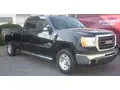
Ford F-250 Super Duty IV (facelift 2020) Regular Cab Long box 6.7d V8 (475 Hp) Automatic
Overall Rating
Ford F-250 Super Duty:
The Ford Super Duty is a series of heavy-duty pickup trucks produced by the Ford Motor Company since the 1999 model year. Slotted above the consumer-oriented Ford F-150, the Super Duty trucks are an expansion of the Ford F-Series range, from F-250 to the F-600. The F-250 through F-450 are offered as pickup trucks, while the F-350 through F-600 are offered as chassis cabs.
Rather than adapting the lighter-duty F-150 truck for heavier use, Super Duty trucks have been designed as a dedicated variant of the Ford F-Series. The heavier-duty chassis components allow for heavier payloads and towing capabilities. With a GVWR over 8,500 lb , Super Duty pickups are Class 2 and 3 trucks, while chassis-cab trucks are offered in Classes 3, 4, 5, and 6. The model line also offers Ford Power Stroke V8 diesel engines as an option....(Read more on Wikipedia)
IV (facelift 2020) Regular Cab Long box Overview:
Ford F-250 Super Duty (IV (facelift 2020) Regular Cab Long box). With 1424 Nm of torque, it offers ample pulling power. At around 2941 kg, it’s on the heavier side. Rear‑wheel drive offers dynamic handling and sporty feedback. A vehicle with an open cargo bed at the back, suitable for transporting goods. Seating for 3 makes it ideal for daily use.
6.7d V8 (475 Hp) Automatic Verdict:

Performance Verdict
The 6.7L Power Stroke diesel is the ultimate workhorse, delivering massive torque for unparalleled towing and hauling capabilities in a RWD configuration.
Fuel Economy
Offers the best fuel efficiency among the F-250 engine options, especially when towing heavy loads, making it cost-effective for high mileage.
Pros and Cons:
Pros:
- • Exceptional towing and hauling capacity
- • Powerful and reliable V8 engine options (petrol and diesel)
- • Robust and durable construction for heavy work
- • Available 4x4 for enhanced off-road and all-weather capability
- • Spacious long box for cargo
Cons:
- • Poor fuel economy, especially with petrol engines
- • Large size can make maneuvering difficult in urban areas
- • Ride quality can be stiff when unladen
- • High purchase price and running costs
- • Limited passenger capacity in Regular Cab configuration
Specifications:
Specifications are compared to those of the previous generation(IV Super Cab Long box: 2017 - 2019).
| General: | |
|---|---|
| Brand: | Ford |
| Model: | F-250 Super Duty |
| Generation: | IV (facelift 2020) Regular Cab Long box |
| Modification (Engine): | 6.7d V8 (475 Hp) Automatic |
| Start of production: | 2020 |
| End of production: | 2022 |
| Powertrain Architecture: | Internal Combustion engine |
| Body type: | Pick-up |
| Seats: | 3 |
| Doors: | 2 |
| Engine: | |
|---|---|
| Power: | 475 Hp @ 2800 rpm. |
| Power per litre: | 71.4 Hp/l |
| Torque: | 1424 Nm @ 1600 rpm. |
| Engine displacement: | 6653 |
| Number of cylinders: | 8 |
| Engine configuration: | V-engine |
| Number of valves per cylinder: | 4 |
| Fuel injection system: | Diesel Commonrail |
| Engine aspiration: | Turbocharger, Intercooler |
| Valvetrain: | OHV |
| Engine oil capacity: | 12.3 l |
| Coolant: | 30 l |
| Engine layout: | Front, Longitudinal |
| Cylinder Bore: | 99.06 mm mm |
| Piston Stroke: | 107.95 mm mm |
| Compression ratio: | 15.8:1 |
| Performance: | |
|---|---|
| Fuel Type: | Diesel |
| Weight-to-power ratio: | 6.2 kg/Hp, 161.5 Hp/tonne |
| Weight-to-torque ratio: | 2.1 kg/Nm, 484.2 Nm/tonne |
| Space: | |
|---|---|
| Kerb Weight: | 2941 |
| Trunk (boot) space - maximum: | 2223 l |
| Permitted trailer load with brakes (12%): | 6804 kg |
| Fuel tank capacity: | 110 l |
| Size: | |
|---|---|
| Ramp-over (brakeover) angle: | 20.3° |
| Length: | 5888 mm mm [574mm less] |
| Width: | 2167 mm mm [271mm less] |
| Height: | 2004 mm mm [64mm less] |
| Wheelbase: | 3597 mm mm [574mm less] |
| Width including mirrors: | 2690 mm |
| Front track: | 1735 mm |
| Rear (Back) track: | 1707 mm |
| Front overhang: | 970 mm |
| Rear overhang: | 1321 mm |
| Ride height (ground clearance): | 221 mm |
| Approach angle: | 17.1° |
| Departure angle: | 20.2° |
| Powertrain: | |
|---|---|
| Drivetrain Architecture | The Internal combustion engine (ICE) drives the rear wheels of the vehicle. |
| Drive wheel | Rear wheel drive |
| Number of gears | 10 |
| Transmission type | Automatic |
| Gearbox type | TorqShift |
| Front brakes | Ventilated discs, 363 mm [Best for performance and cooling.] |
| Rear brakes | Ventilated discs, 363 mm [Best for performance and cooling.] |
| Assisting systems | ABS (Anti-lock braking system) |
| Steering type | Cone worm with recirculation balls |
| Power steering | Hydraulic Steering |
| Tires size | 265/70 R17; 275/65 R18 |
| Front suspension | Independent coil spring |
| Rear suspension | Rigid axle suspension, Leaf spring |







Help others decide – share your experience!