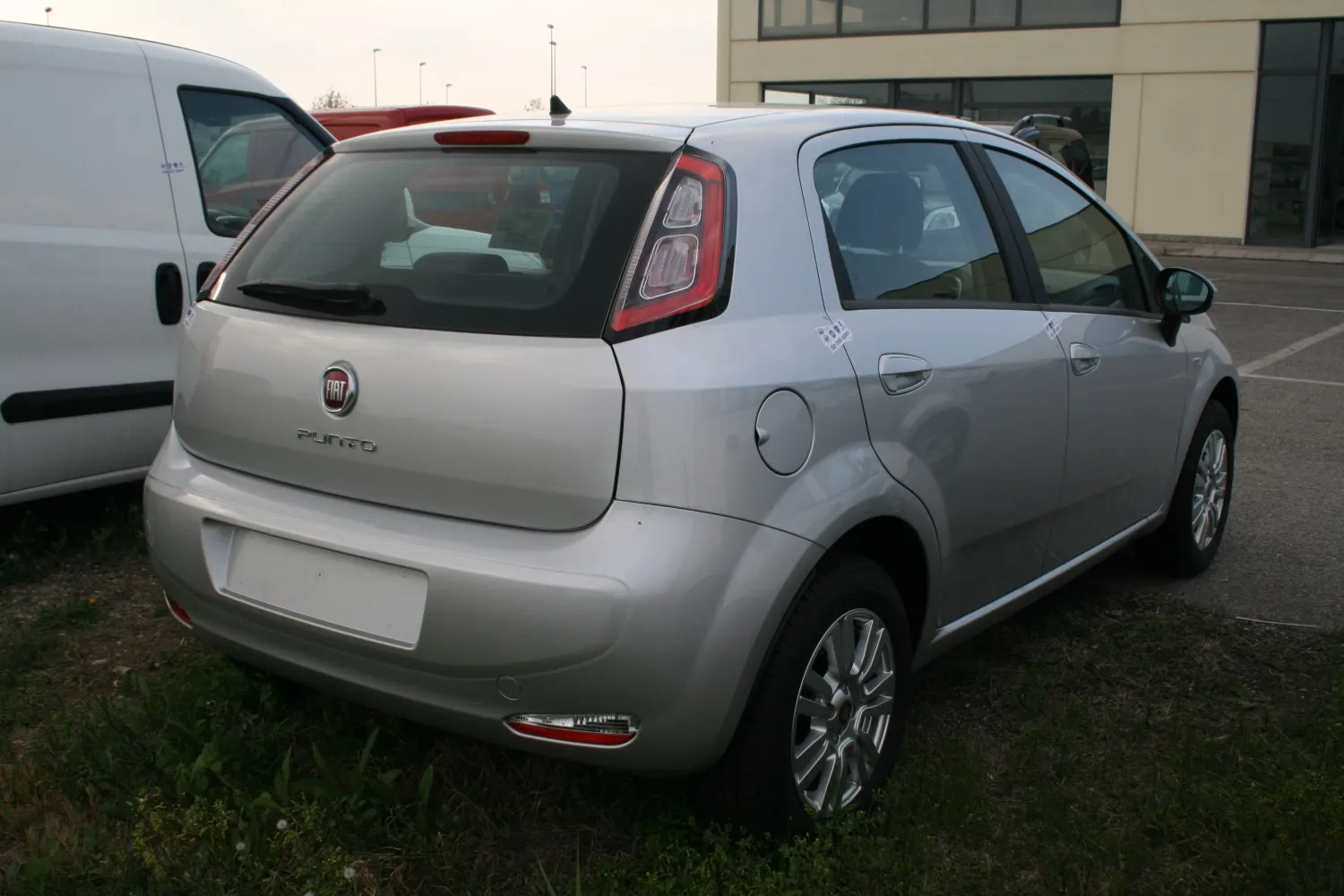
Fiat Punto III (199) 1.4 8V (77 Hp) Natural Power
Fiat Punto:
The Fiat Punto is a supermini car produced by the Italian manufacturer Fiat from 1993 to 2018, spanning over three generations. The third generation of the car was marketed between 2005 and 2009 as the Grande Punto, and between 2009 and 2012 as the Punto Evo, until the single-word Punto name was reintroduced. As of May 2013, nearly nine million units had been sold globally.
Production of the first generation Punto was 3. 43 million units, second generation 2. 96 million units, and third generation 2. 67 million units....(Read more on Wikipedia)
III (199) Overview:
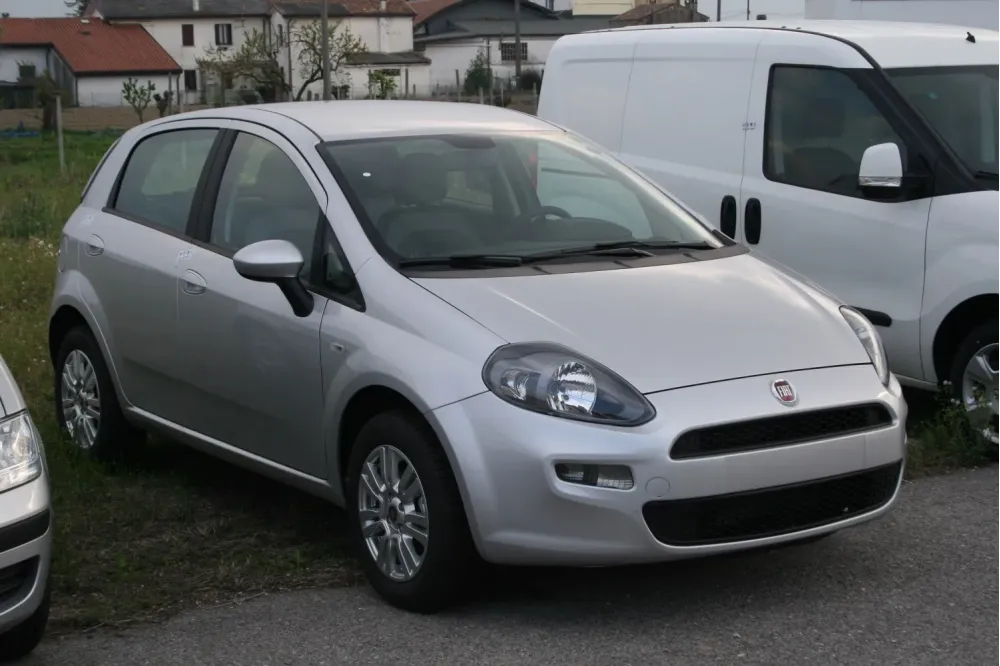
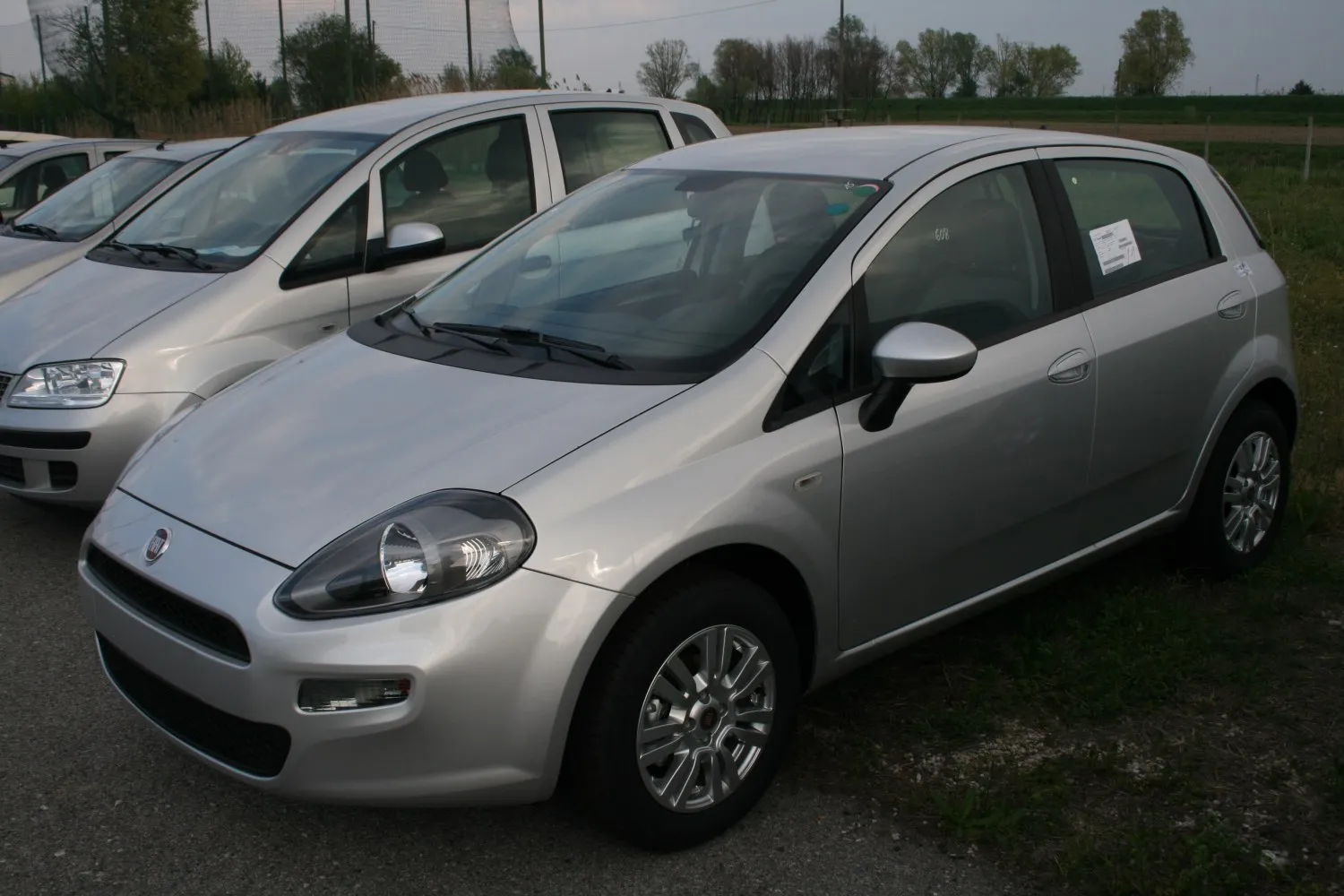
Fiat Punto (III (199)). With 115 Nm of torque, it offers ample pulling power. It has moderate fuel consumption (~7.9 l/100km). Weighing only 1170 kg, it’s quite light. Front‑wheel drive delivers efficiency and easy handling. Acceleration is relatively slow (0–100 km/h in 14.9 s). The top speed reaches 162 km/h. A compact car with a rear door that swings upward to provide access to the cargo area. Seating for 5 makes it ideal for daily use.
Pros and Cons:
Pros:
- • Efficiency-focused engine (78 hp), ideal for city commuting.
- • Steady and predictable acceleration (0-100 km/h in 13.2 sec).
- • Balanced fuel consumption of 5.7 L/100 km for its class.
- • Ventilated disc brakes for reliable cooling and stopping power.
Cons:
- • Compact cargo space (275 L); may require careful packing.
- • Meets EURO 5 emission standard; check for local urban restriction zones.
Specifications:
Specifications are compared to those of the previous generation(Evo (199): 2010 - 2011).
| General: |
| Brand: | Fiat |
|---|
| Model: | Punto |
|---|
| Generation: | III (199) |
|---|
| Modification (Engine): | 1.4 8V (77 Hp) Natural Power |
|---|
| Start of production: | 2012 |
|---|
| End of production: | 2018 |
|---|
| Powertrain Architecture: | Internal Combustion engine |
|---|
| Body type: | Hatchback |
|---|
| Seats: | 5 |
|---|
| Doors: | 3-5 |
|---|
| Engine: |
| Power: | 77 Hp @ 6000 rpm. Same horsepower |
|---|
| Power per litre: | 56.3 Hp/l [Same length.] |
|---|
| Torque: | 115 Nm @ 3000 rpm. |
|---|
| Engine Model/Code: | 350A1000 More details about the engine 350A1000 |
|---|
| Engine displacement: | 1368 |
|---|
| Number of cylinders: | 4 |
|---|
| Engine configuration: | Inline |
|---|
| Number of valves per cylinder: | 2 |
|---|
| Fuel injection system: | Multi-port manifold injection |
|---|
| Engine aspiration: | Naturally aspirated engine |
|---|
| Engine oil capacity: | 2.6 l |
|---|
| Coolant: | 5.3 l |
|---|
| Engine layout: | Front, Transverse |
|---|
| Cylinder Bore: | 72 mm mm |
|---|
| Piston Stroke: | 84 mm mm |
|---|
| Compression ratio: | 11:1 |
|---|
| Power (CNG): | 70 Hp @ 6000 rpm. |
|---|
| Power per litre (CNG): | 51.2 Hp/l |
|---|
| Torque (CNG): | 104 Nm @ 3000 rpm. |
|---|
| Performance: |
| Maximum speed (CNG): | 156 km/h |
|---|
| Acceleration 0 - 100 km/h (CNG): | 16.9 sec |
|---|
| Fuel Type: | Petrol / CNG |
|---|
| Fuel consumption (economy) - urban: | 7.9 l/100 km |
|---|
| Fuel consumption (economy) - extra urban: | 5.4 l/100 km |
|---|
| Fuel consumption (economy) - urban (CNG): | 5.4 kg/100 km |
|---|
| Fuel consumption (economy) - extra urban (CNG): | 3.5 kg/100 km |
|---|
| Fuel consumption (economy) - combined (CNG): | 4.2 kg/100 km |
|---|
| Fuel consumption (economy) - combined: | 6.3 l/100 km |
|---|
| Emission standard: | Euro 5 |
|---|
| Acceleration 0 - 100 km/h: | 14.9 sec |
|---|
| Acceleration 0 - 62 mph: | 14.9 sec |
|---|
| Maximum speed: | 162 km/h |
|---|
| Weight-to-power ratio: | 15.2 kg/Hp, 65.8 Hp/tonne |
|---|
| Weight-to-torque ratio: | 10.2 kg/Nm, 98.3 Nm/tonne |
|---|
| Acceleration 0 - 60 mph: | 14.2 sec |
|---|
| Space: |
| Kerb Weight: | 1170 |
|---|
| Max. weight: | 1645 |
|---|
| Max load: | 475 |
|---|
| Trunk (boot) space - maximum: | 955 l |
|---|
| Trunk (boot) space - minimum: | 200 l |
|---|
| Fuel tank capacity: | 45 l |
|---|
| CNG cylinder capacity: | 13 kg |
|---|
| Size: |
| Length: | 4065 mm mm [Same length.] |
|---|
| Width: | 1687 mm mm [Same width.] |
|---|
| Height: | 1514 mm mm [24mm more] |
|---|
| Wheelbase: | 2510 mm mm [Same wheelbase.] |
|---|
| Front track: | 1473 mm |
|---|
| Rear (Back) track: | 1466 mm |
|---|
| Minimum turning circle (turning diameter): | 10.9 m [above average] |
|---|
| Powertrain: |
| Drivetrain Architecture | The Internal combustion engine (ICE) drives the front wheels of the vehicle. |
|---|
| Drive wheel | Front wheel drive |
|---|
| Number of gears | 5 |
|---|
| Transmission type | Manual |
|---|
| Front brakes | Ventilated discs [Best for performance and cooling.] |
|---|
| Rear brakes | Disc [above average] |
|---|
| Assisting systems | ABS (Anti-lock braking system) |
|---|
| Steering type | Steering rack and pinion |
|---|
| Power steering | Electric Steering |
|---|
| Tires size | 185/65 R15; 195/55 R16 |
|---|
| Wheel rims size | 15; 16 |
|---|
| Front suspension | Independent, type McPherson with coil spring and anti-roll bar |
|---|
| Rear suspension | Semi-independent, coil spring |
|---|










Have you ever driven an Fiat Punto?
How was your experience with it? Share with us: