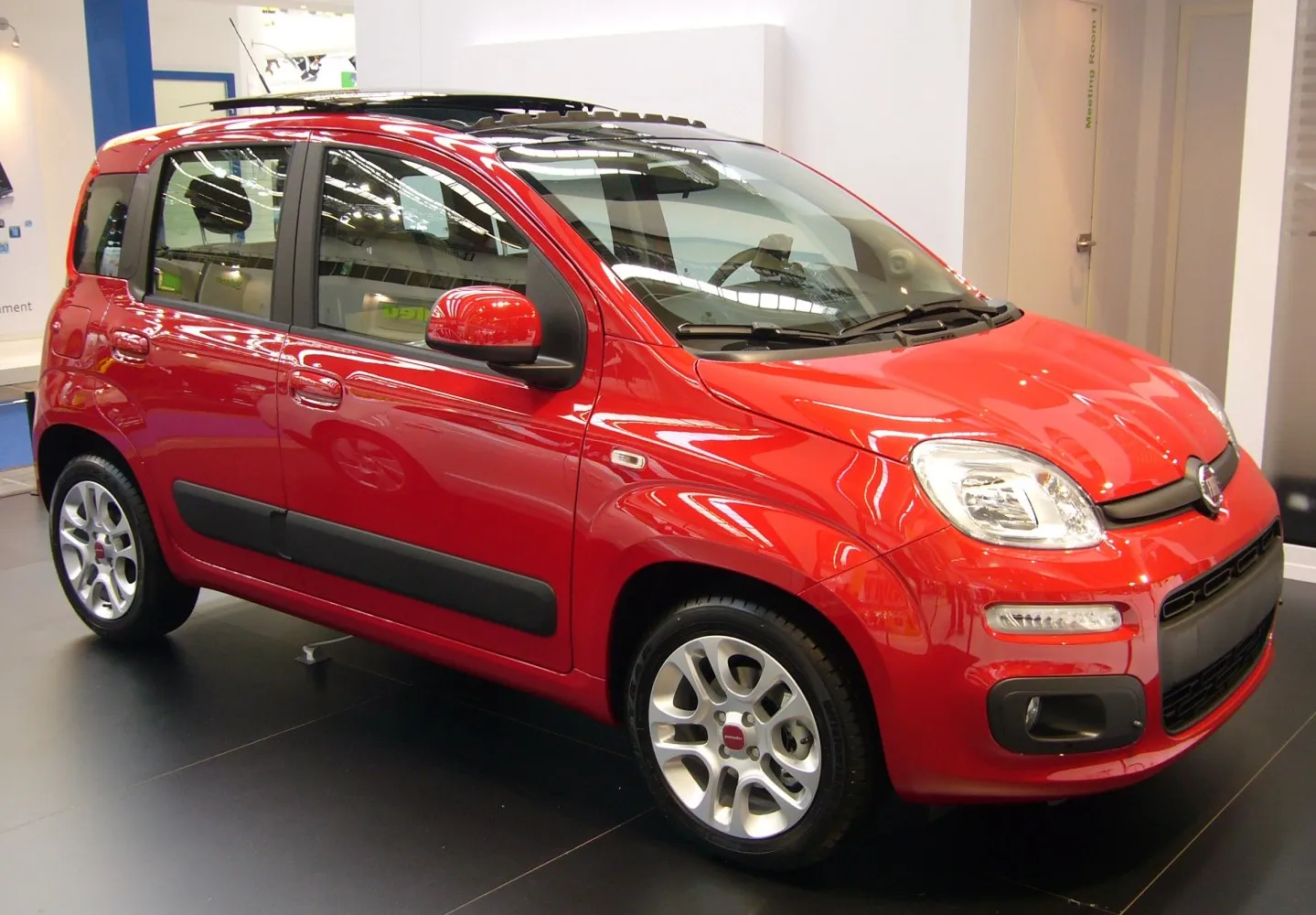
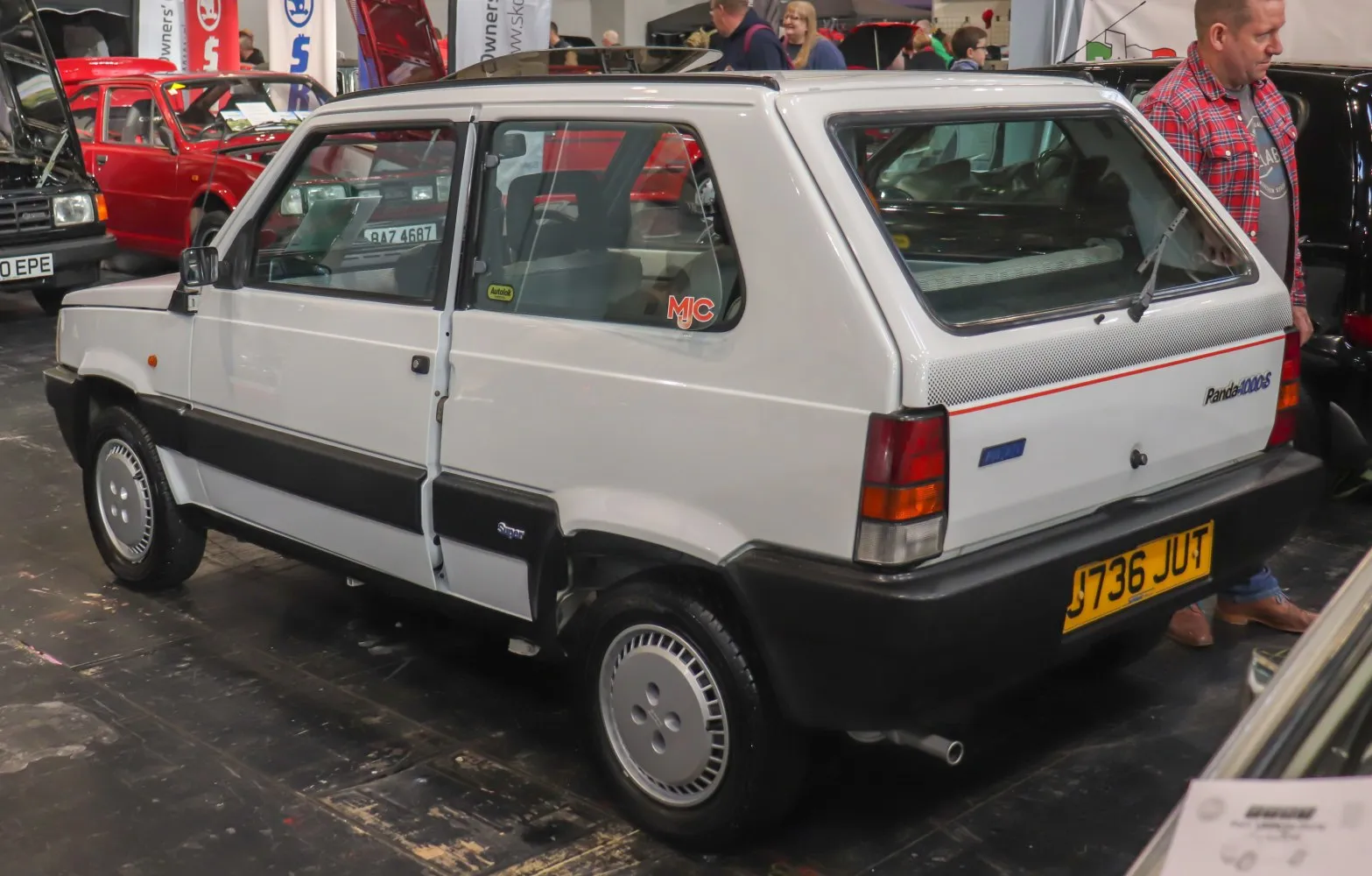
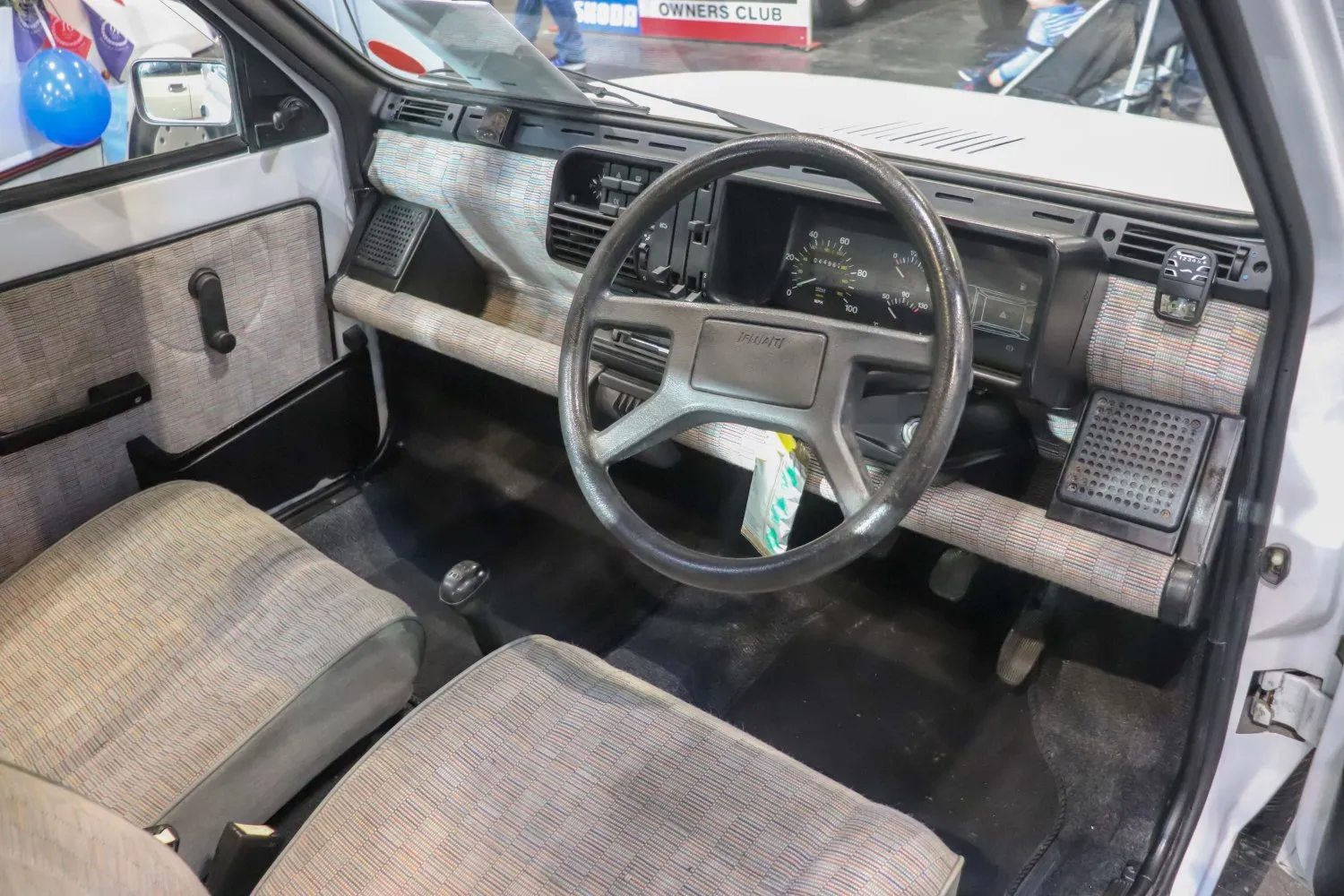
Fiat Panda ZAF 141, facelift 1986 750 L (34 Hp)
Fiat Panda:
The Fiat Panda is a city car manufactured and marketed by Fiat. The first generation Panda, introduced in 1980, was a two-box, three-door hatchback designed by Giorgetto Giugiaro and Aldo Mantovani of Italdesign and was manufactured through 2003 — receiving an all-wheel drive variant in 1983. SEAT of Spain marketed a variation of the first generation Panda under license to Fiat, initially as the Panda and subsequently as the Marbella.
The second-generation Panda, launched in 2003 as a 5-door hatchback, was designed by Giuliano Biasio of Bertone, and won the European Car of the Year in 2004. The third-generation Panda debuted at the Frankfurt Motor Show in September 2011, was designed at Fiat Centro Stilo under the direction of Roberto Giolito and remains in production in Italy at Pomigliano d'Arco. The fourth-generation Panda is marketed as the Grande Panda, to differentiate it from the third generation that is sold alongside it. Developed under Stellantis, the Grande Panda is produced in Serbia....(Read more on Wikipedia)
ZAF 141, facelift 1986 Overview:
Fiat Panda (ZAF 141, facelift 1986). With 57 Nm of torque, it offers ample pulling power. It has moderate fuel consumption (~6.2 l/100km). Weighing only 674 kg, it’s quite light. Front‑wheel drive delivers efficiency and easy handling. Acceleration is relatively slow (0–100 km/h in 23 s). The top speed reaches 125 km/h. A compact car with a rear door that swings upward to provide access to the cargo area. Seating for 5 makes it ideal for daily use.
Pros and Cons:
Pros:
- • Efficiency-focused engine (44 hp), ideal for city commuting.
Cons:
- • Previous generation model; may lack the latest driver-assist technologies.
Specifications:
Specifications are compared to those of the previous generation(ZAF 141, facelift 1991: June, 1992 - March, 1995).
| General: |
| Brand: | Fiat |
|---|
| Model: | Panda |
|---|
| Generation: | ZAF 141, facelift 1986 |
|---|
| Modification (Engine): | 750 L (34 Hp) |
|---|
| Start of production: | May, 1986 |
|---|
| End of production: | May, 1991 |
|---|
| Powertrain Architecture: | Internal Combustion engine |
|---|
| Body type: | Hatchback |
|---|
| Seats: | 5 |
|---|
| Doors: | 3 |
|---|
| Engine: |
| Power: | 34 Hp @ 5250 rpm. Same horsepower |
|---|
| Power per litre: | 44.2 Hp/l [worst than previous generation] |
|---|
| Torque: | 57 Nm @ 3000 rpm. |
|---|
| Engine Model/Code: | 156A4.000 More details about the engine 156A4.000 |
|---|
| Engine displacement: | 769 |
|---|
| Number of cylinders: | 4 |
|---|
| Engine configuration: | Inline |
|---|
| Number of valves per cylinder: | 2 |
|---|
| Fuel injection system: | Carburettor |
|---|
| Engine aspiration: | Naturally aspirated engine |
|---|
| Valvetrain: | OHV |
|---|
| Engine oil capacity: | 3.5 l |
|---|
| Coolant: | 5.6 l |
|---|
| Engine layout: | Front, Transverse |
|---|
| Cylinder Bore: | 65 mm mm |
|---|
| Piston Stroke: | 58 mm mm |
|---|
| Compression ratio: | 9.4:1 |
|---|
| Performance: |
| Fuel Type: | Petrol (Gasoline) |
|---|
| Fuel consumption (economy) - urban: | 6.2 l/100 km |
|---|
| Fuel consumption (economy) - extra urban: | 5 l/100 km |
|---|
| Acceleration 0 - 100 km/h: | 23 sec |
|---|
| Acceleration 0 - 62 mph: | 23 sec |
|---|
| Maximum speed: | 125 km/h |
|---|
| Weight-to-power ratio: | 19.8 kg/Hp, 50.4 Hp/tonne |
|---|
| Weight-to-torque ratio: | 11.8 kg/Nm, 84.6 Nm/tonne |
|---|
| Acceleration 0 - 60 mph: | 21.9 sec |
|---|
| Space: |
| Kerb Weight: | 674 |
|---|
| Max. weight: | 1150 |
|---|
| Max load: | 476 |
|---|
| Trunk (boot) space - maximum: | 1088 l |
|---|
| Trunk (boot) space - minimum: | 272 l |
|---|
| Fuel tank capacity: | 40 l |
|---|
| Size: |
| Length: | 3410 mm mm |
|---|
| Width: | 1490 mm mm |
|---|
| Height: | 1420 mm mm |
|---|
| Wheelbase: | 2159 mm mm |
|---|
| Minimum turning circle (turning diameter): | 9.45 m [above average] |
|---|
| Powertrain: |
| Drivetrain Architecture | The Internal combustion engine (ICE) drives the front wheels of the vehicle. |
|---|
| Drive wheel | Front wheel drive |
|---|
| Number of gears | 4 |
|---|
| Transmission type | Manual |
|---|
| Front brakes | Disc, 227 mm [bad for performance and cooling.] |
|---|
| Rear brakes | Drum, 185 mm [bad for performance and cooling.] |
|---|
| Steering type | Steering rack and pinion |
|---|
| Front suspension | Independent type McPherson |
|---|
| Rear suspension | Semi-independent, coil spring |
|---|








Fuel, speed, and comfort: How does the Fiat Panda rank in your book?