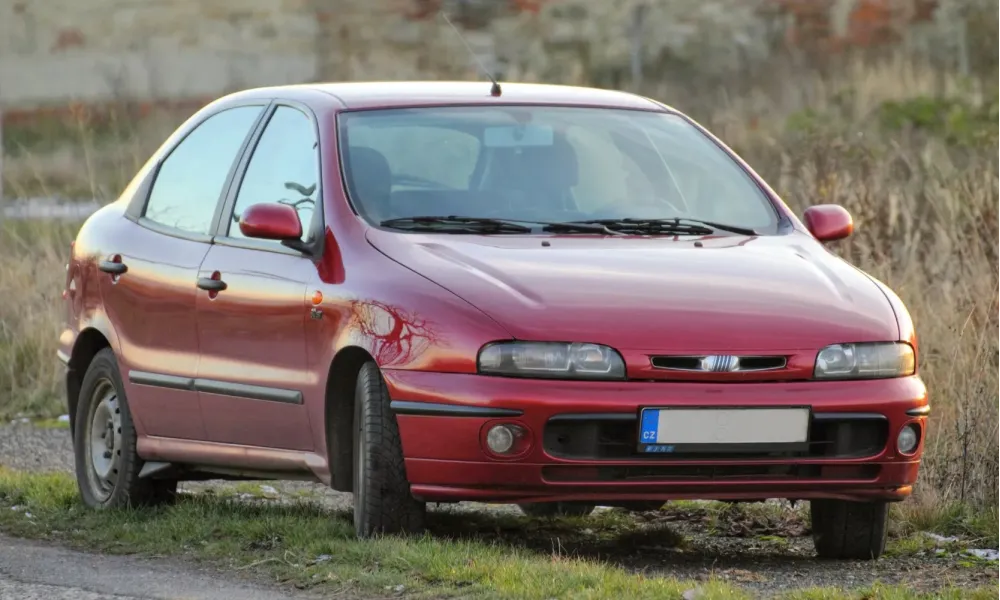
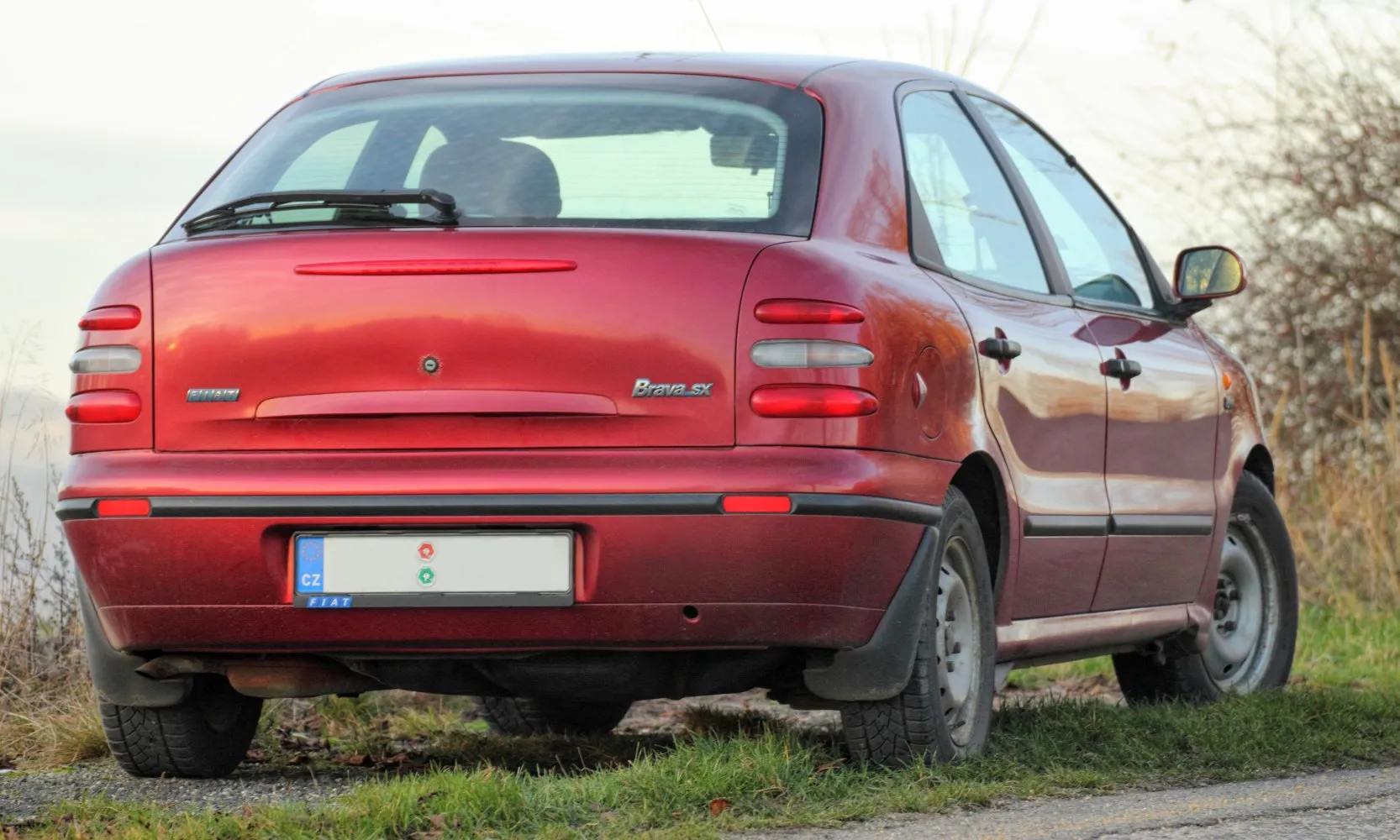
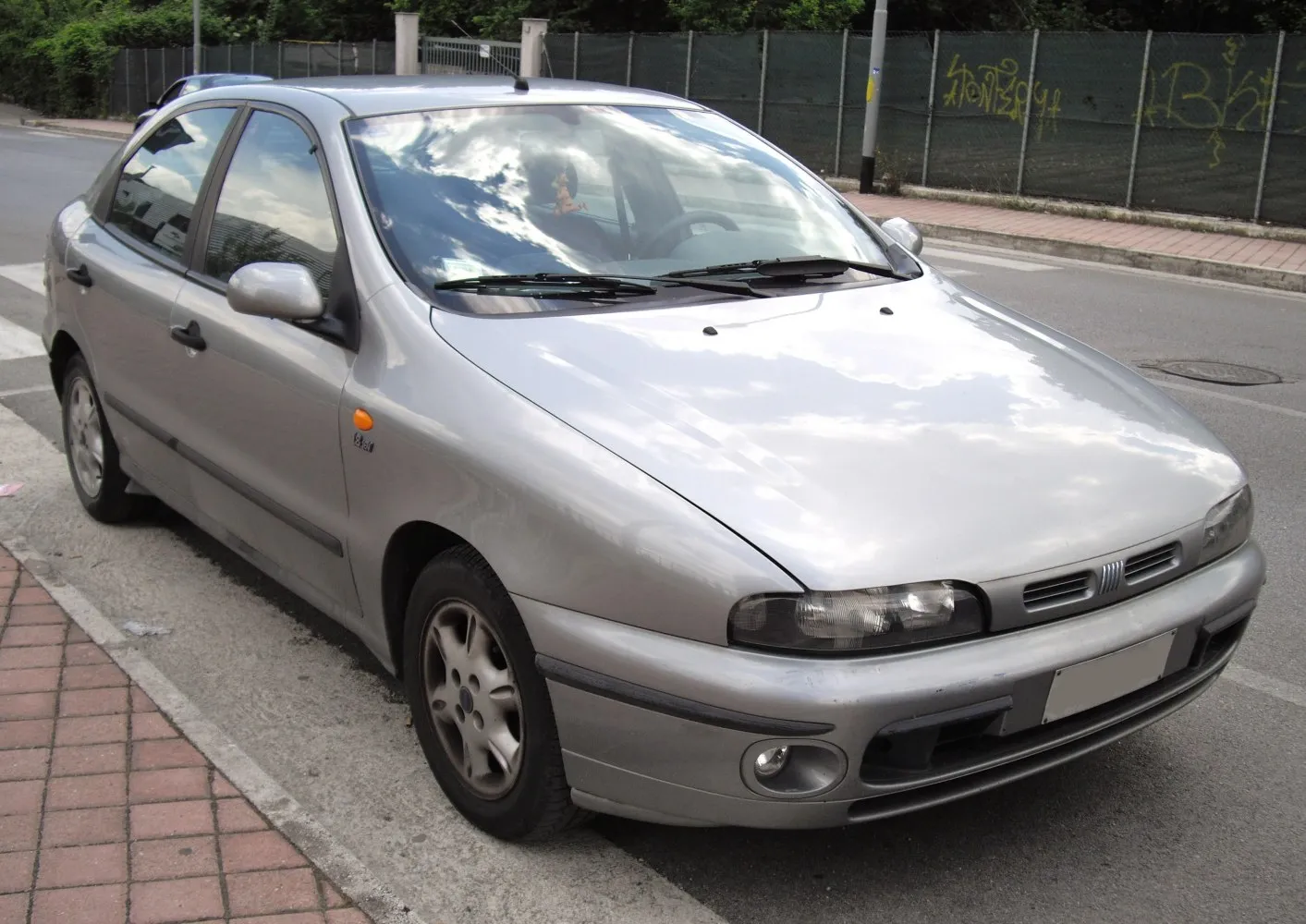
Fiat Brava 182 1.9 D (65 Hp)
Fiat Brava:
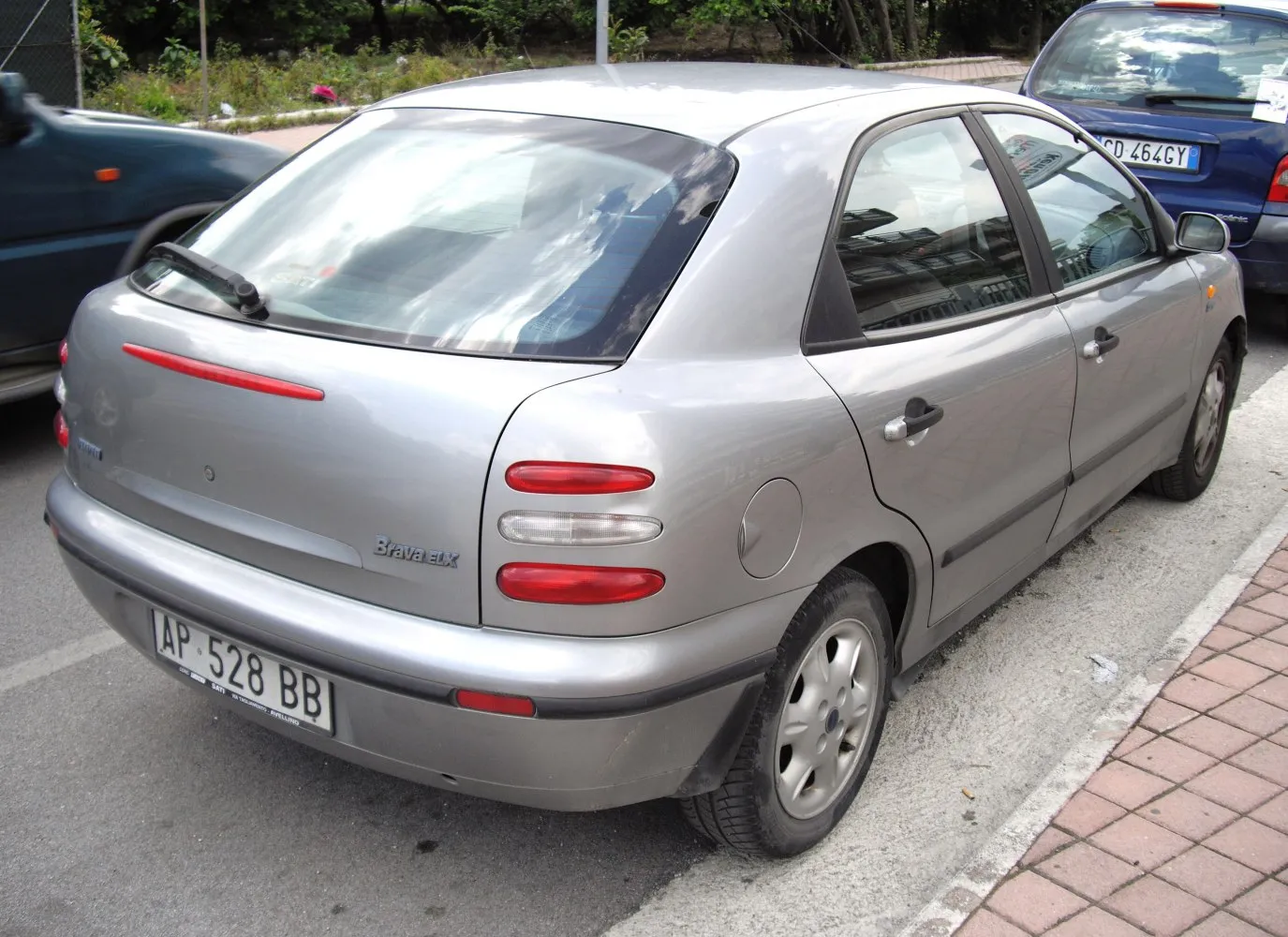
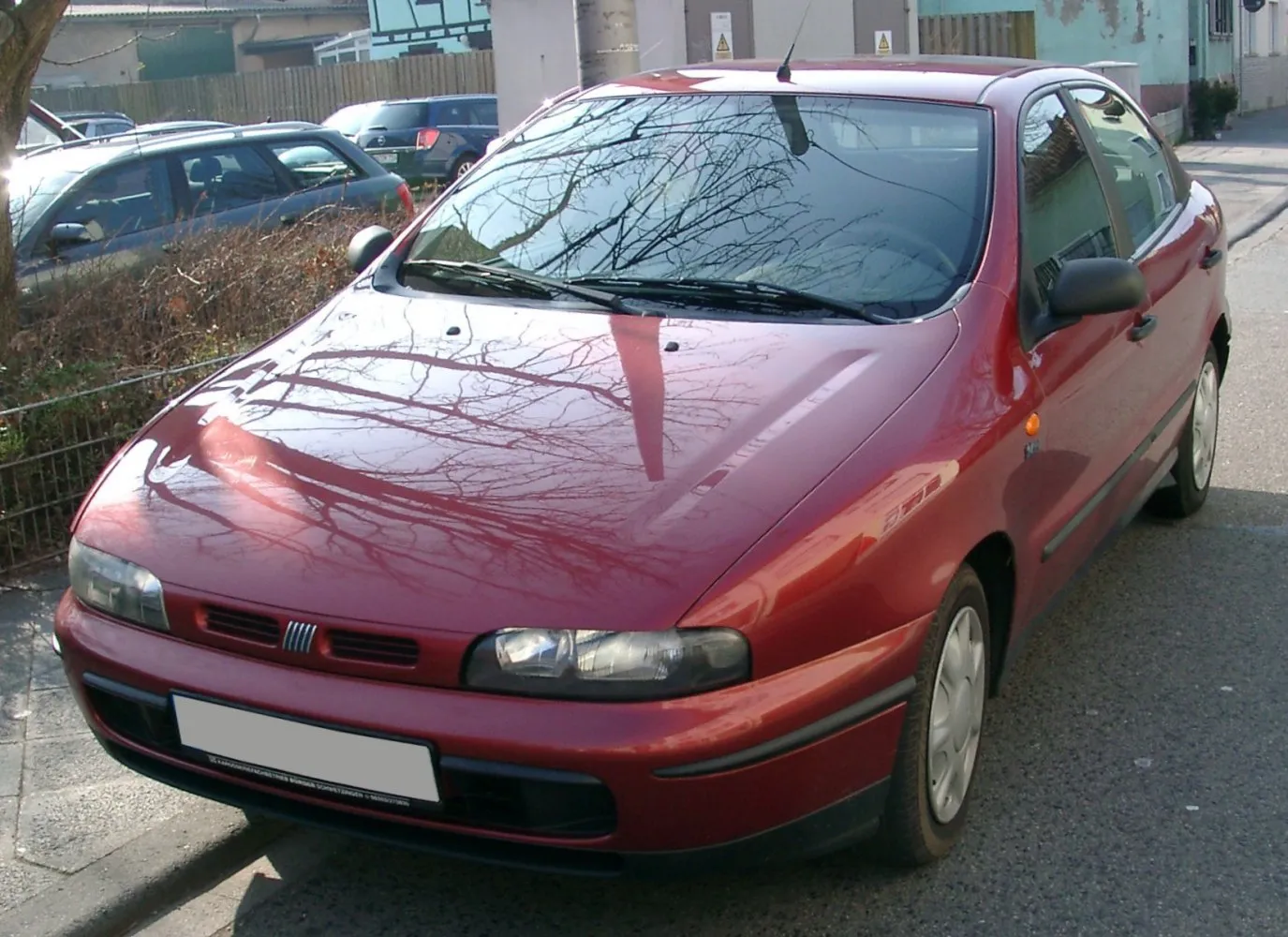
The Fiat Bravo and Fiat Brava are small family cars produced by the Italian automaker Fiat from 1995 to 2003. They were effectively two versions of the same car: the Bravo, a three-door hatchback, and the Brava, a five-door fastback. The Bravo name was revived in January 2007, with the all-new Fiat Bravo, a replacement for the Stilo. The new version was available only with five doors.
The name Brava was also used in the United States in the 1980s, on the earlier Fiat 131....(Read more on Wikipedia)
182 Overview:
Fiat Brava (182). With 119 Nm of torque, it offers ample pulling power. It has moderate fuel consumption (~6.6 l/100km). Weighing only 1130 kg, it’s quite light. Front‑wheel drive delivers efficiency and easy handling. Acceleration is relatively slow (0–100 km/h in 17.8 s). The top speed reaches 155 km/h. A compact car with a rear door that swings upward to provide access to the cargo area. Seating for 5 makes it ideal for daily use.
Pros and Cons:
Pros:
- • Efficiency-focused engine (75 hp), ideal for city commuting.
- • Steady and predictable acceleration (0-100 km/h in 13.9 sec).
- • Balanced fuel consumption of 7.2 L/100 km for its class.
- • Standard trunk space (380 L) suitable for daily needs.
Cons:
- • Previous generation model; may lack the latest driver-assist technologies.
Specifications:
Specifications are compared to those of the previous generation(182: 1998 - 2001).
| General: |
| Brand: | Fiat |
|---|
| Model: | Brava |
|---|
| Generation: | 182 |
|---|
| Modification (Engine): | 1.9 D (65 Hp) |
|---|
| Start of production: | October, 1995 |
|---|
| End of production: | December, 1997 |
|---|
| Powertrain Architecture: | Internal Combustion engine |
|---|
| Body type: | Hatchback |
|---|
| Seats: | 5 |
|---|
| Doors: | 5 |
|---|
| Engine: |
| Power: | 65 Hp @ 4600 rpm. Same horsepower |
|---|
| Power per litre: | 33.7 Hp/l [167mm less] |
|---|
| Torque: | 119 Nm @ 2000 rpm. |
|---|
| Engine Model/Code: | 160A7.000 More details about the engine 160A7.000 |
|---|
| Engine displacement: | 1929 |
|---|
| Number of cylinders: | 4 |
|---|
| Engine configuration: | Inline |
|---|
| Number of valves per cylinder: | 2 |
|---|
| Fuel injection system: | Precombustion chamber injection |
|---|
| Engine aspiration: | Naturally aspirated engine |
|---|
| Valvetrain: | SOHC |
|---|
| Engine oil capacity: | 4.8 l |
|---|
| Coolant: | 7.6 l |
|---|
| Engine layout: | Front, Transverse |
|---|
| Cylinder Bore: | 82.6 mm mm |
|---|
| Piston Stroke: | 90 mm mm |
|---|
| Compression ratio: | 21:1 |
|---|
| Performance: |
| Fuel Type: | Diesel |
|---|
| Fuel consumption (economy) - urban: | 6.6 l/100 km |
|---|
| Fuel consumption (economy) - extra urban: | 4.9 l/100 km |
|---|
| Acceleration 0 - 100 km/h: | 17.8 sec |
|---|
| Acceleration 0 - 62 mph: | 17.8 sec |
|---|
| Maximum speed: | 155 km/h |
|---|
| Weight-to-power ratio: | 17.4 kg/Hp, 57.5 Hp/tonne |
|---|
| Weight-to-torque ratio: | 9.5 kg/Nm, 105.3 Nm/tonne |
|---|
| Acceleration 0 - 60 mph: | 16.9 sec |
|---|
| Space: |
| Kerb Weight: | 1130 |
|---|
| Trunk (boot) space - maximum: | 1165 l |
|---|
| Trunk (boot) space - minimum: | 380 l |
|---|
| Fuel tank capacity: | 60 l |
|---|
| Size: |
| Length: | 4020 mm mm [167mm less] |
|---|
| Width: | 1750 mm mm [9mm more] |
|---|
| Height: | 1420 mm mm [10mm more] |
|---|
| Wheelbase: | 2540 mm mm [Same wheelbase.] |
|---|
| Front track: | 1451 mm |
|---|
| Rear (Back) track: | 1453 mm |
|---|
| Minimum turning circle (turning diameter): | 10.4 m [above average] |
|---|
| Powertrain: |
| Drivetrain Architecture | The Internal combustion engine (ICE) drives the front wheels of the vehicle. |
|---|
| Drive wheel | Front wheel drive |
|---|
| Number of gears | 5 |
|---|
| Transmission type | Manual |
|---|
| Front brakes | Disc, 257 mm [bad for performance and cooling.] |
|---|
| Rear brakes | Drum, 180 mm [bad for performance and cooling.] |
|---|
| Steering type | Steering rack and pinion |
|---|
| Power steering | Hydraulic Steering |
|---|
| Tires size | 175/65 R14 |
|---|
| Front suspension | Independent, type McPherson with coil spring and anti-roll bar |
|---|
| Rear suspension | Transverse stabilizer, Trailing arm |
|---|




If you could change one thing about the Fiat Brava, what would it be?