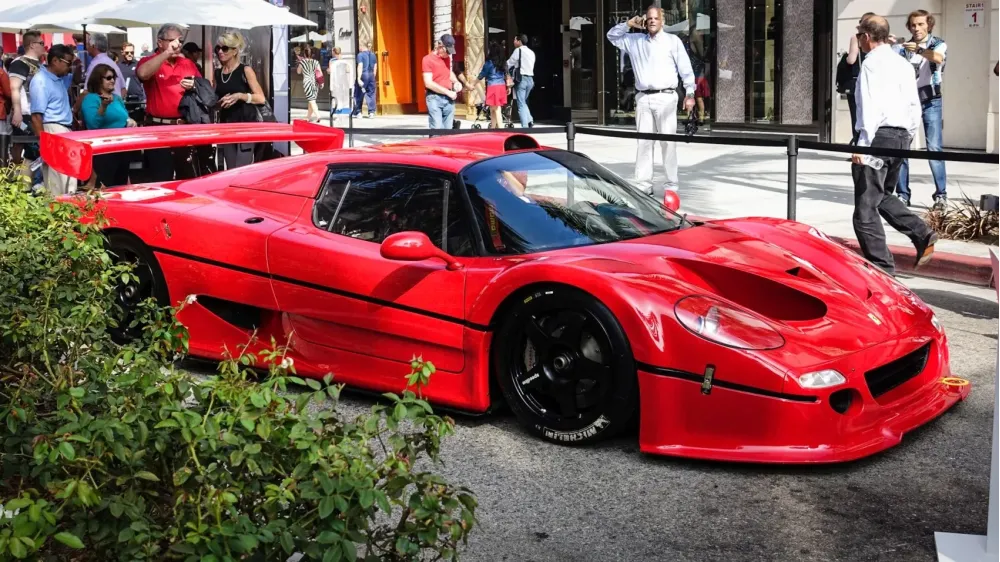
Click on image to view the full photo gallery
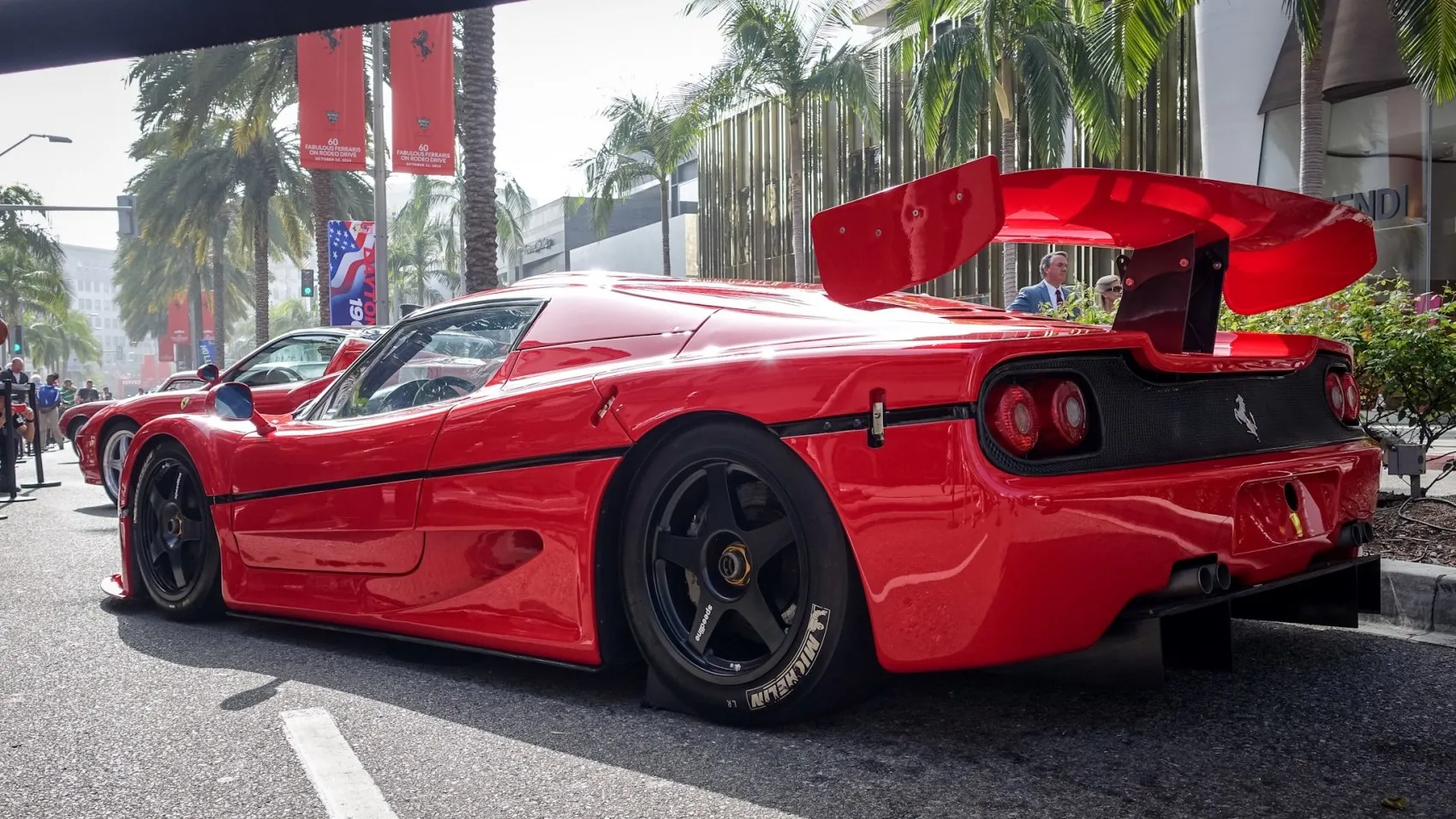
Ferrari F50 GT 4.7 V12 (750 Hp)
Overall Rating
Ferrari F50:
The Ferrari F50 is a limited production mid-engine sports car manufactured by Italian automobile manufacturer Ferrari from 1995 until 1997. Introduced in 1995, the car is a two-door, two seat targa top. The F50 is powered by a 4. 7 L naturally aspirated Tipo F130B 60-valve V12 engine that was developed from the 3. 5 L V12 used in the 1990 Ferrari 641 Formula One car. The car's design is an evolution of the 1989 Ferrari Mythos concept car, while Pininfarina incorporated design cues from contemporary F1 racecar designs, particularly at the front....(Read more on Wikipedia)
GT Overview:
Ferrari F50 (GT). With 529 Nm of torque, it offers ample pulling power. Weighing only 860 kg, it’s quite light. Rear‑wheel drive offers dynamic handling and sporty feedback. Acceleration is excellent (0–100 km/h in 2.9 s). The top speed reaches 376 km/h. A two-door car with a fixed roof, known for its sporty design and dynamic performance. Seating for 2 makes it ideal for daily use.
The Ferrari F50 GT was an extremely limited, track-focused racing car from 1996, and as such, it was never subjected to Euro NCAP safety testing, which primarily assesses mass-produced road vehicles. Its design prioritizes performance and structural rigidity for racing.
4.7 V12 (750 Hp) Verdict:

Performance Verdict
An absolutely phenomenal, naturally aspirated V12 engine, delivering breathtaking power and an exhilarating 10,500 rpm redline. Its F1-derived pedigree ensures blistering acceleration and unparalleled track performance.
Fuel Economy
Fuel economy is entirely irrelevant for this track-focused machine; it consumes petrol voraciously, as expected for a high-revving 750 Hp racing V12.
Pros and Cons:
Pros:
- • Unrivaled track performance and handling
- • Exhilarating, high-revving naturally aspirated V12 engine
- • Extreme rarity and exclusivity (only 3 built)
- • Direct F1 technology transfer and heritage
- • Iconic design and incredible sound profile
- • Exceptional collector's item and investment
Cons:
- • Not road legal or practical for public roads
- • Zero comfort features; purely a racing machine
- • Extremely high running and maintenance costs
- • Requires specialized knowledge for operation and service
- • Virtually unobtainable due to rarity
Specifications:
Specifications are compared to those of the previous generation(F50: 1995 - 1997).
| General: | |
|---|---|
| Brand: | Ferrari |
| Model: | F50 |
| Generation: | GT |
| Modification (Engine): | 4.7 V12 (750 Hp) |
| Start of production: | 1996 |
| End of production: | 1996 |
| Powertrain Architecture: | Internal Combustion engine |
| Body type: | Coupe |
| Seats: | 2 |
| Doors: | 2 |
| Engine: | |
|---|---|
| Power: | 750 Hp @ 10500 rpm. |
| Power per litre: | 159.6 Hp/l |
| Torque: | 529 Nm @ 7500 rpm. |
| Engine Model/Code: | F130B [Same engine] More details about the engine F130B |
| Engine displacement: | 4699 |
| Number of cylinders: | 12 |
| Engine configuration: | V-engine |
| Number of valves per cylinder: | 5 |
| Fuel injection system: | Multi-port manifold injection |
| Engine aspiration: | Naturally aspirated engine |
| Valvetrain: | DOHC |
| Engine oil capacity: | 10 l |
| Coolant: | 17 l |
| Engine layout: | Middle, Longitudinal |
| Cylinder Bore: | 85 mm mm |
| Piston Stroke: | 69 mm mm |
| Compression ratio: | 11.9:1 |
| Performance: | |
|---|---|
| Fuel Type: | Petrol (Gasoline) |
| Acceleration 0 - 100 km/h: | 2.9 sec |
| Acceleration 0 - 62 mph: | 2.9 sec |
| Maximum speed: | 376 km/h |
| Weight-to-power ratio: | 1.1 kg/Hp, 872.1 Hp/tonne |
| Weight-to-torque ratio: | 1.6 kg/Nm, 615.1 Nm/tonne |
| Acceleration 0 - 60 mph: | 2.8 sec |
| Space: | |
|---|---|
| Kerb Weight: | 860 |
| Fuel tank capacity: | 100 l |
| Size: | |
|---|---|
| Length: | 4578 mm mm [98mm more] |
| Width: | 1986 mm mm [Same width.] |
| Height: | 1092 mm mm [28mm less] |
| Wheelbase: | 2580 mm mm [Same wheelbase.] |
| Front track: | 1620 mm |
| Rear (Back) track: | 1594 mm |
| Powertrain: | |
|---|---|
| Drivetrain Architecture | The Internal combustion engine (ICE) drives the rear wheels of the vehicle. |
| Drive wheel | Rear wheel drive |
| Number of gears | 6 |
| Transmission type | Manual |
| Front brakes | Ventilated discs [Best for performance and cooling.] |
| Rear brakes | Ventilated discs [Best for performance and cooling.] |
| Steering type | Steering rack and pinion |
| Front suspension | Double wishbone |
| Rear suspension | Double wishbone |




Behind the wheel of the Ferrari F50. How does it handle on the road?