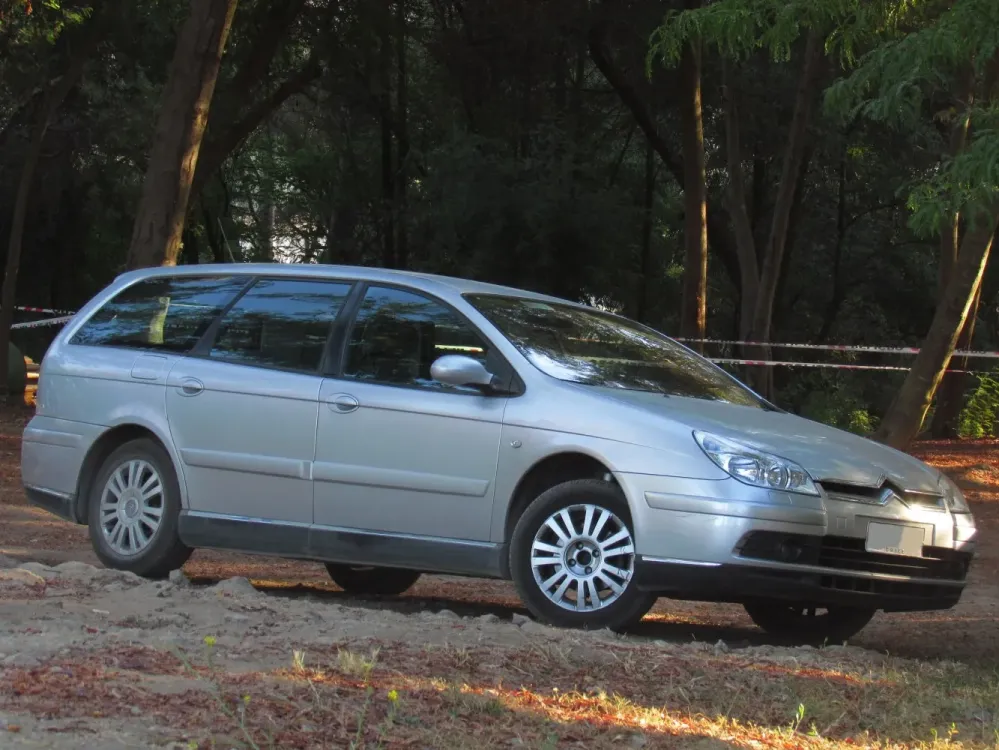
Click on image to view the full photo gallery
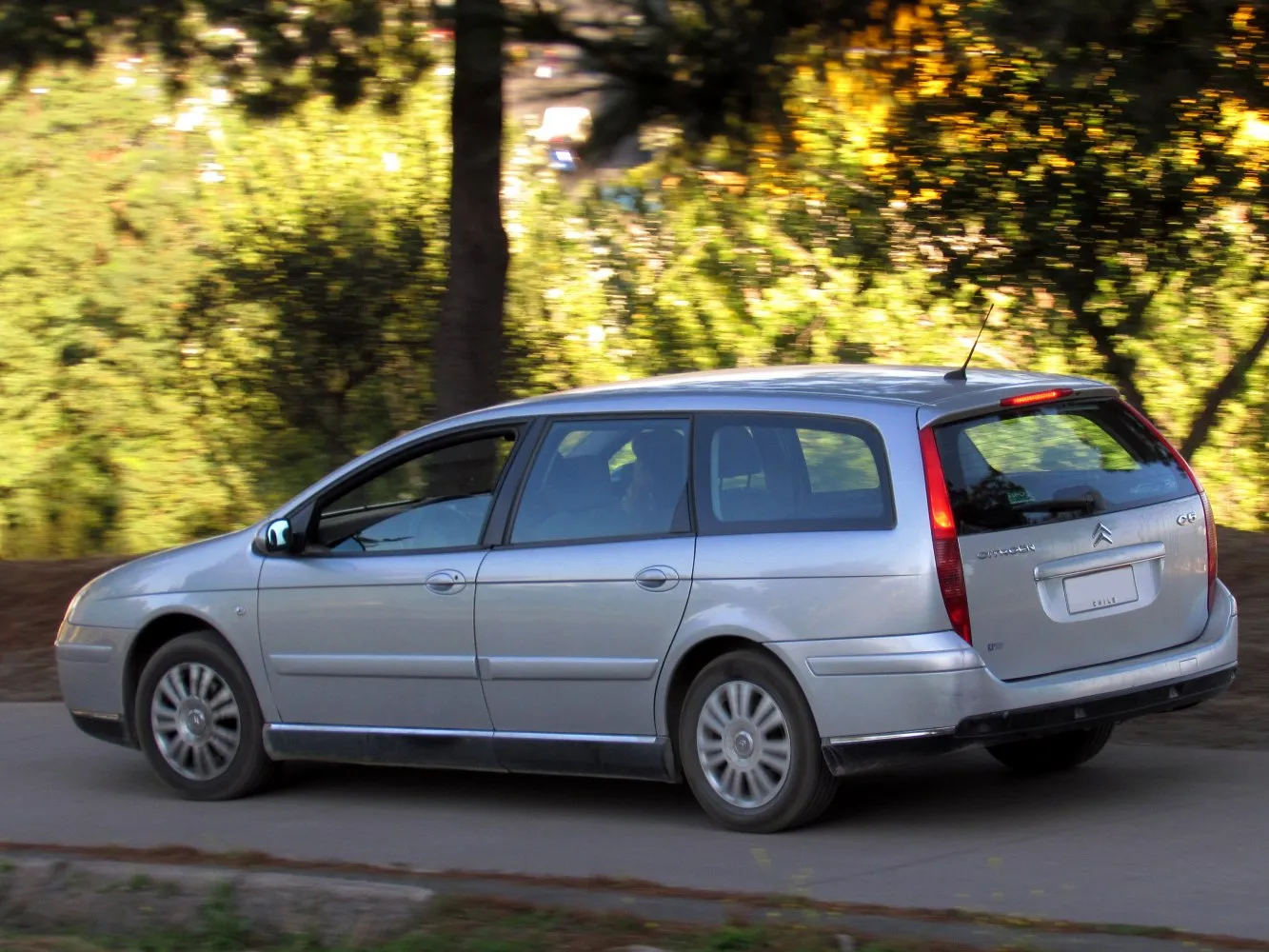
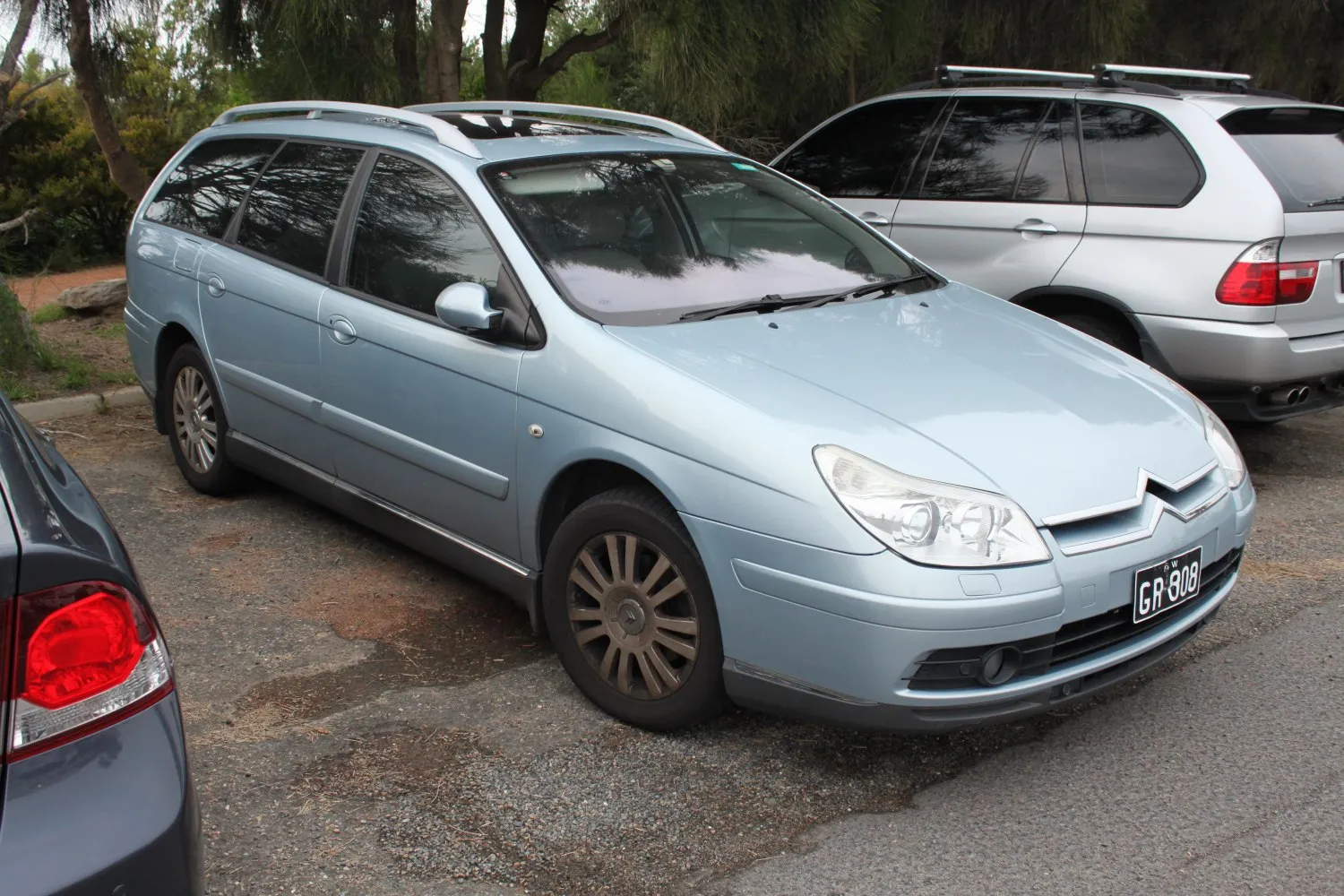
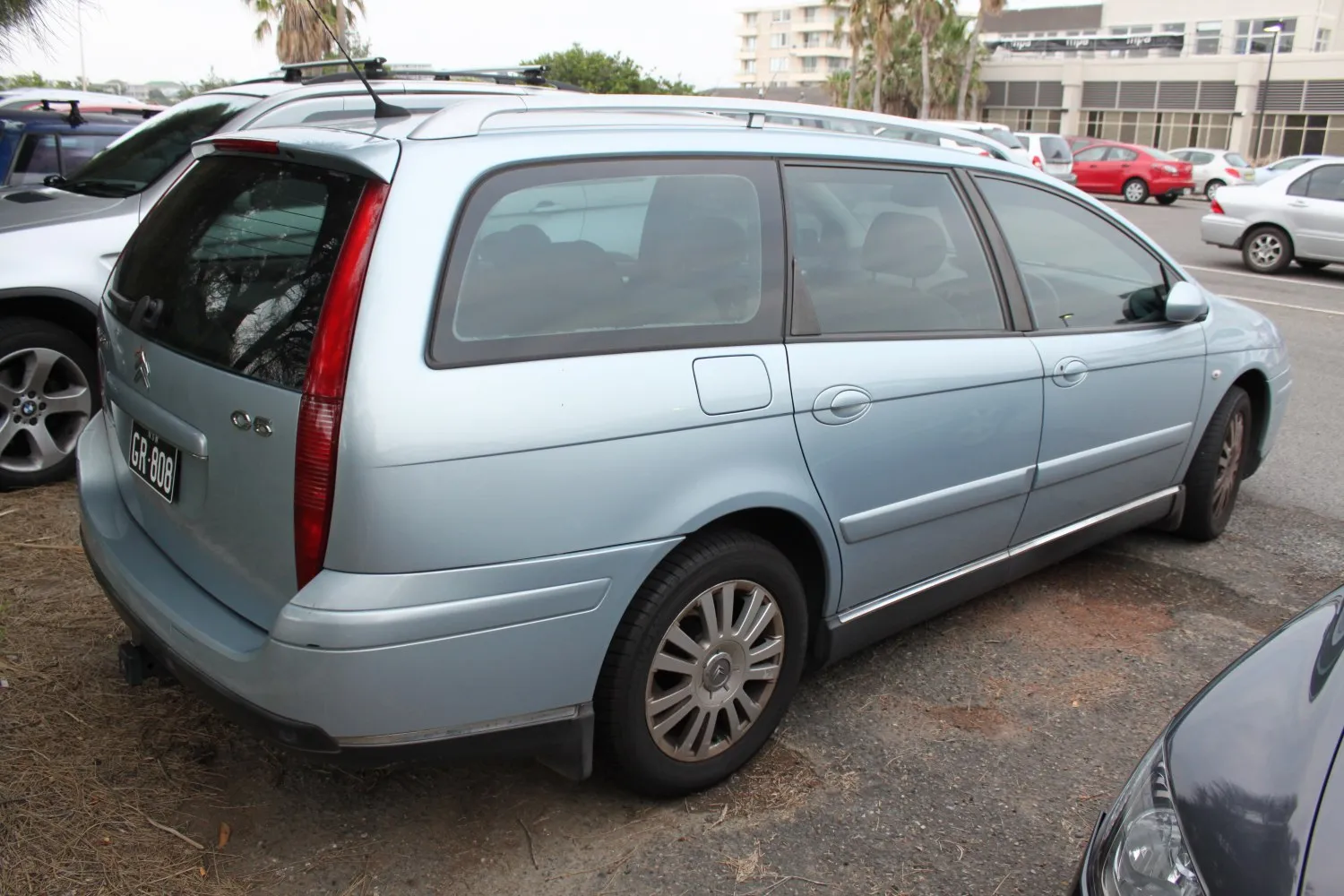
Citroen C5 I Break (Phase II, 2004) 2.0 HDi (136 Hp) FAP Automatic
Overall Rating
Citroen C5:
The Citroën C5 is a large family car produced by the French manufacturer Citroën between 2000 and 2018 in France, and between 2008 and 2022 in China, over two generations. It replaced the Citroën Xantia, in the large family car class, and is the first modern Citroën with "Cx" naming nomenclature, previously used by its ancestors, the C4 and C6 from 1930. A crossover, unrelated to the previous generations, was released in 2021, with crossover styling and marketed as the Citroën C5 X. @media all and }@media all and body. skin-vector-2022. mw-parser-output. tocleft. mw-parser-output. tocleft-clear-both. mw-parser-output. tocleft-clear-none}....(Read more on Wikipedia)
I Break (Phase II, 2004) Overview:
Citroen C5 (I Break (Phase II, 2004)). With 340 Nm of torque, it offers ample pulling power. It has moderate fuel consumption (~10 l/100km). With a weight of 1574 kg, it falls in the mid‑range. Front‑wheel drive delivers efficiency and easy handling. Acceleration is relatively slow (0–100 km/h in 10.6 s). The top speed reaches 201 km/h. A car with an extended rear cargo area, combining passenger comfort with increased storage. Seating for 5 makes it ideal for daily use.
2.0 HDi (136 Hp) FAP Automatic Verdict:

Performance Verdict
A well-balanced diesel option, offering good power and torque for everyday driving, with the automatic transmission adding convenience for urban and motorway use.
Fuel Economy
Respectable fuel efficiency for a diesel automatic, providing a good compromise between performance and running costs.
Pros and Cons:
Pros:
- • Exceptional ride comfort, especially with Hydractive suspension
- • Spacious and practical interior, particularly the estate (Break) variant
- • Wide range of efficient and powerful HDi diesel engines
- • Good value on the used car market
- • Distinctive French design and character
Cons:
- • Some interior plastics can feel less premium than rivals
- • Potentially complex Hydractive suspension can be costly to maintain if neglected
- • Mixed reliability reputation, particularly for electronics
- • Petrol V6 engines have high fuel consumption
- • Handling is comfort-oriented, lacking the dynamism of some competitors
Specifications:
Specifications are compared to those of the previous generation(I (Phase II, 2004): 2004 - 2008).
| General: | |
|---|---|
| Brand: | Citroen |
| Model: | C5 |
| Generation: | I Break (Phase II, 2004) |
| Modification (Engine): | 2.0 HDi (136 Hp) FAP Automatic |
| Start of production: | 2005 |
| End of production: | 2008 |
| Powertrain Architecture: | Internal Combustion engine |
| Body type: | Station wagon (estate) |
| Seats: | 5 |
| Doors: | 5 |
| Engine: | |
|---|---|
| Engine systems: | Particulate filter |
| Power: | 136 Hp @ 4000 rpm. Same horsepower |
| Power per litre: | 68.1 Hp/l [94mm more] |
| Torque: | 340 Nm @ 2000 rpm. |
| Engine Model/Code: | RHR DW10BTED4 More details about the engine RHR DW10BTED4 |
| Engine displacement: | 1997 |
| Number of cylinders: | 4 |
| Engine configuration: | Inline |
| Number of valves per cylinder: | 4 |
| Fuel injection system: | Diesel Commonrail |
| Engine aspiration: | Turbocharger, Intercooler |
| Valvetrain: | DOHC |
| Engine oil capacity: | 5.25 l |
| Coolant: | 10.7 l |
| Engine layout: | Front, Transverse |
| Cylinder Bore: | 85 mm |
| Piston Stroke: | 88 mm |
| Compression ratio: | 17.6:1 |
| Performance: | |
|---|---|
| Fuel Type: | Diesel |
| Fuel consumption (economy) - urban: | 10 l/100 km |
| Fuel consumption (economy) - extra urban: | 5.5 l/100 km |
| Fuel consumption (economy) - combined: | 7.1 l/100 km |
| Emission standard: | Euro 4 |
| Acceleration 0 - 100 km/h: | 10.6 sec |
| Acceleration 0 - 62 mph: | 10.6 sec |
| Maximum speed: | 201 km/h |
| Weight-to-power ratio: | 11.6 kg/Hp, 86.4 Hp/tonne |
| Weight-to-torque ratio: | 4.6 kg/Nm, 216 Nm/tonne |
| Acceleration 0 - 60 mph: | 10.1 sec |
| Space: | |
|---|---|
| Kerb Weight: | 1574 |
| Max. weight: | 2160 |
| Max. roof load: | 75 kg |
| Max load: | 586 |
| Trunk (boot) space - maximum: | 1658 l |
| Trunk (boot) space - minimum: | 563 l |
| Fuel tank capacity: | 67 l |
| Permitted towbar download: | 75 kg |
| Size: | |
|---|---|
| Length: | 4839 mm [94mm more] |
| Width: | 1780 mm [Same width.] |
| Height: | 1511 mm [35mm more] |
| Wheelbase: | 2750 mm [Same wheelbase.] |
| Front track: | 1528 mm |
| Rear (Back) track: | 1495 mm |
| Front overhang: | 1033 mm |
| Rear overhang: | 1056 mm |
| Minimum turning circle (turning diameter): | 12.43 m [above average] |
| Powertrain: | |
|---|---|
| Drivetrain Architecture | The Internal combustion engine (ICE) drives the front wheels of the vehicle. |
| Drive wheel | Front wheel drive |
| Number of gears | 6 |
| Transmission type | Automatic |
| Front brakes | Ventilated discs [Best for performance and cooling.] |
| Rear brakes | Disc [above average] |
| Assisting systems | ABS (Anti-lock braking system) |
| Tires size | 215/55 R16 |
| Wheel rims size | 16 |
| Front suspension | Independent, type McPherson with coil spring and anti-roll bar |
| Rear suspension | Semi-independent, coil spring |





Driven it? Loved it? Hated it? Share your honest review!