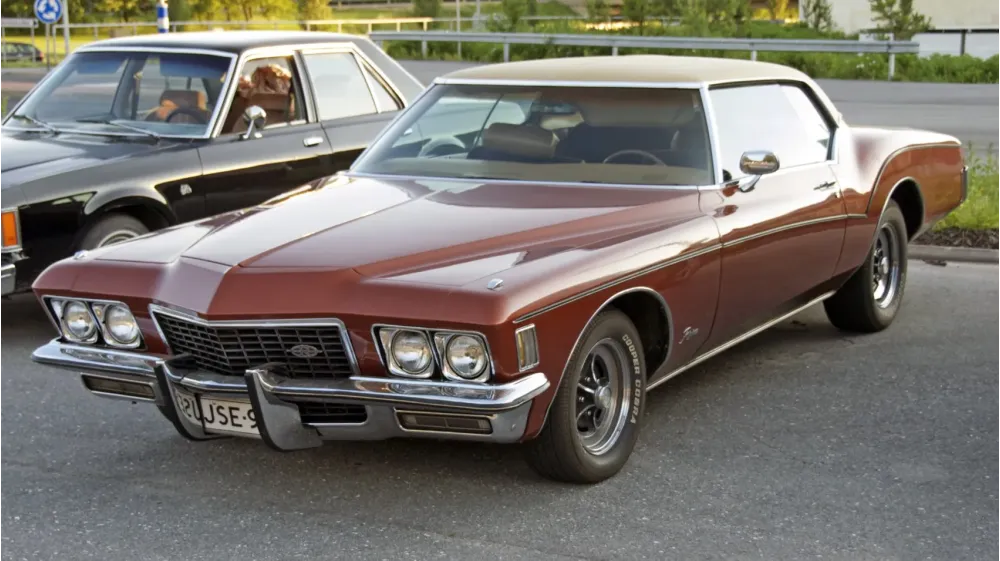
Click on image to view the full photo gallery
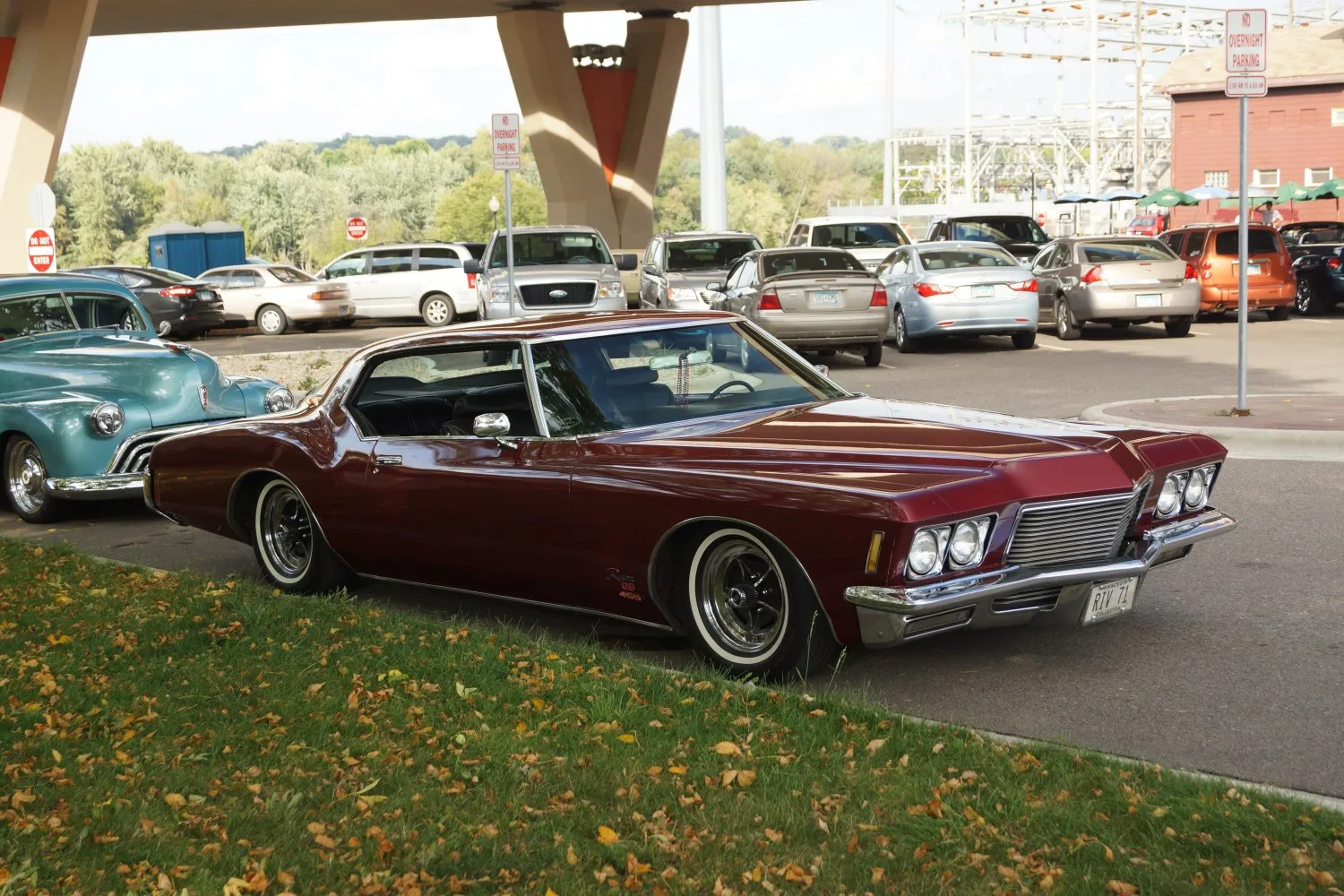
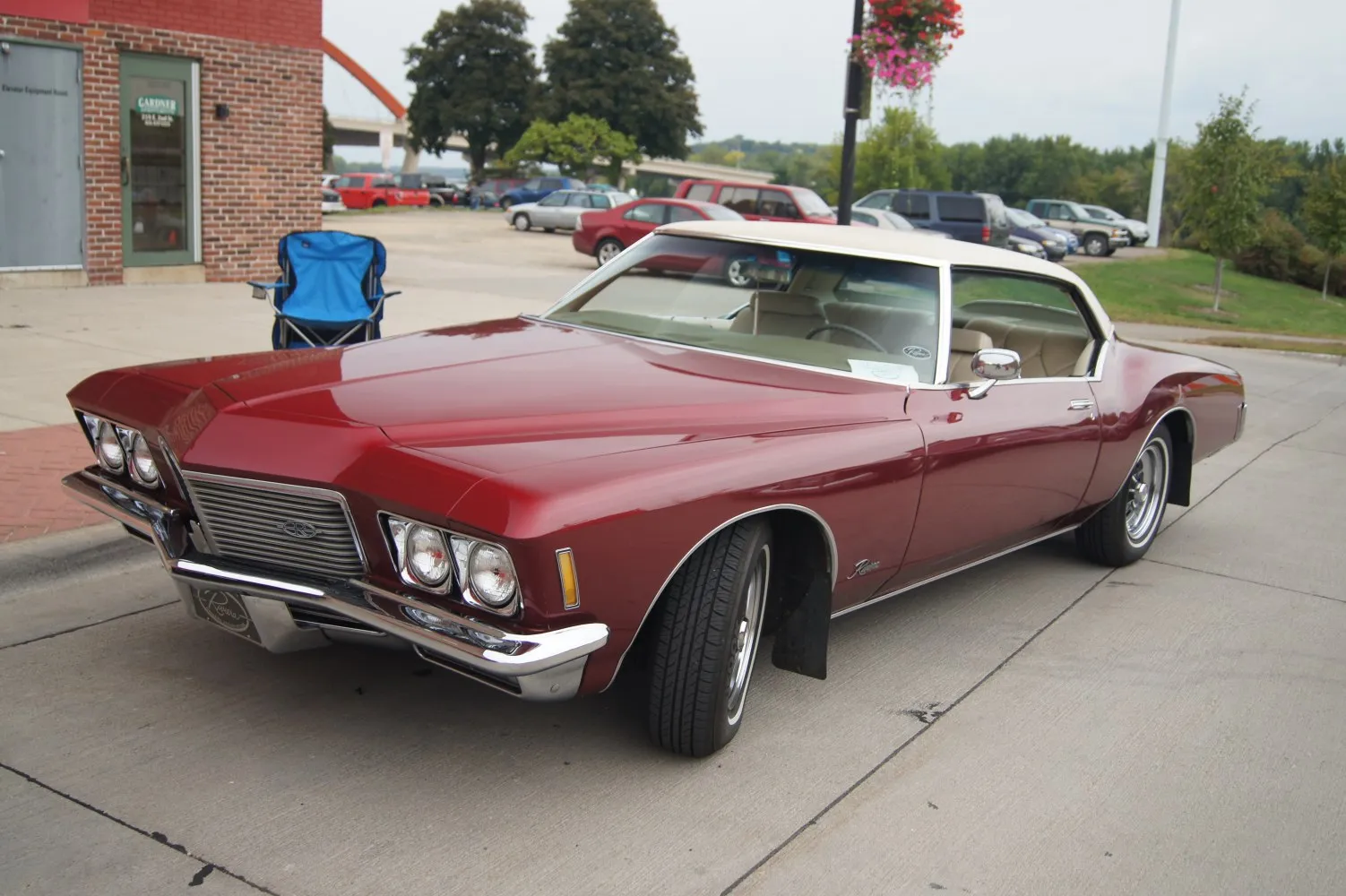
Buick Riviera III 7.5 (250 Hp)
Overall Rating
Buick Riviera:
The Buick Riviera is a personal luxury car that was marketed by Buick from 1963 to 1999, with the exception of the 1994 model year.
As General Motors' first entry into the personal luxury car market segment, the Riviera was highly praised by automotive journalists upon its high-profile debut. It was a ground-up design on a new GM E platform debuting for the 1963 model year and was also Buick's first unique Riviera model.
Unlike its subsequent GM E platform stablemates, the Oldsmobile Toronado and Cadillac Eldorado, the Riviera was initially a front engine/rear-wheel drive platform, switching to front-wheel drive starting with the 1979 model year....(Read more on Wikipedia)
III Overview:
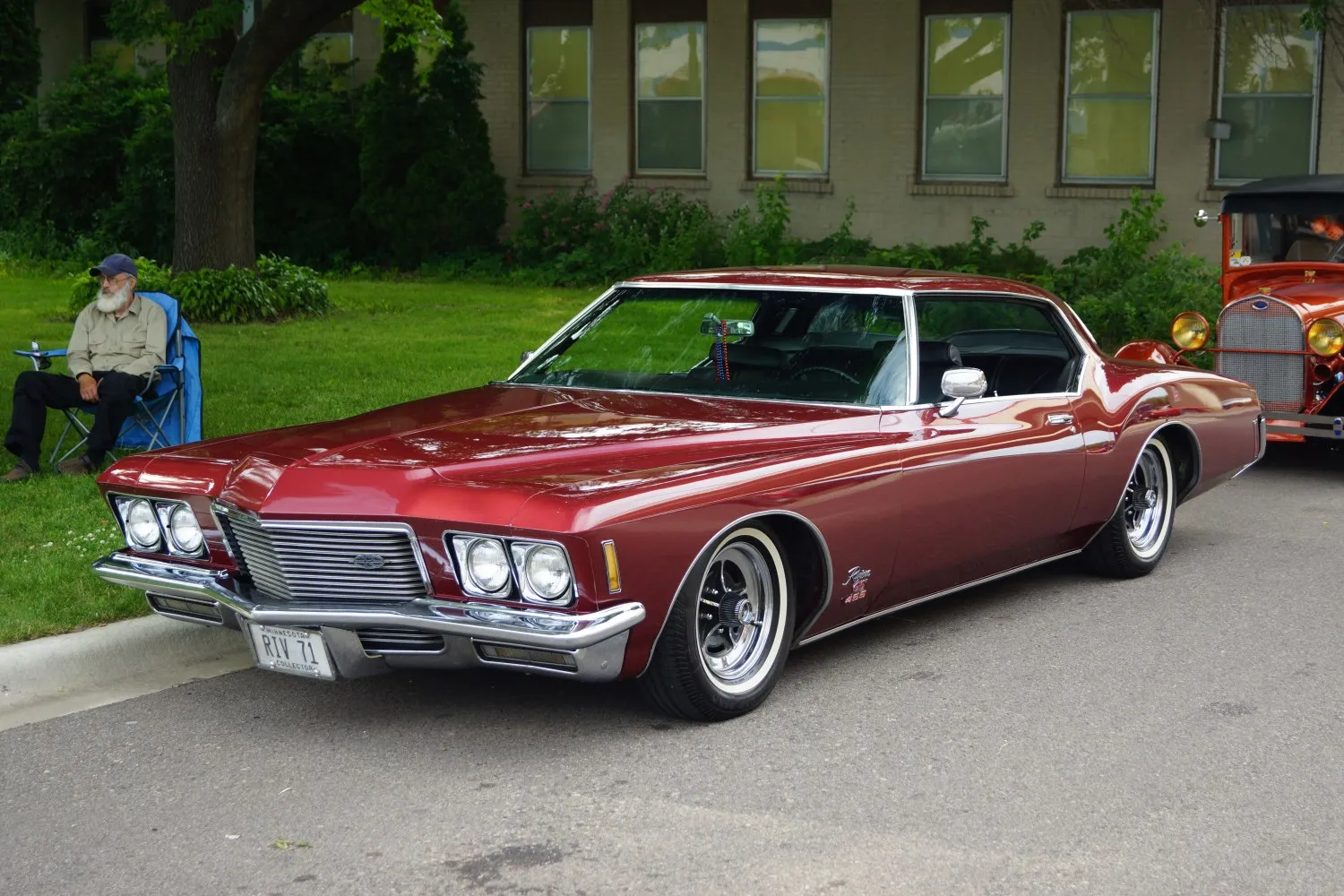
Buick Riviera (III). With 508 Nm of torque, it offers ample pulling power. At around 2042 kg, it’s on the heavier side. Rear‑wheel drive offers dynamic handling and sporty feedback. The top speed reaches 173 km/h. A two-door car with a fixed roof, known for its sporty design and dynamic performance. Seating for 4 makes it ideal for daily use.
The 1971 Buick Riviera III predates modern safety testing standards like Euro NCAP, which began in 1997. While equipped with basic safety features for its era, it would not meet contemporary crash safety requirements.
7.5 (250 Hp) Verdict:

Performance Verdict
The massive 7.5L (455 cubic inch) V8 delivered robust low-end torque and ample power for effortless highway cruising and strong acceleration for its size and era, though not a sports car.
Fuel Economy
Fuel economy was a significant weakness, typical of large American V8s of the early 70s, especially with rising fuel costs. Expect single-digit MPG figures.
Pros and Cons:
Pros:
- • Iconic and distinctive 'boat-tail' styling
- • Powerful and torquey 7.5L V8 engine
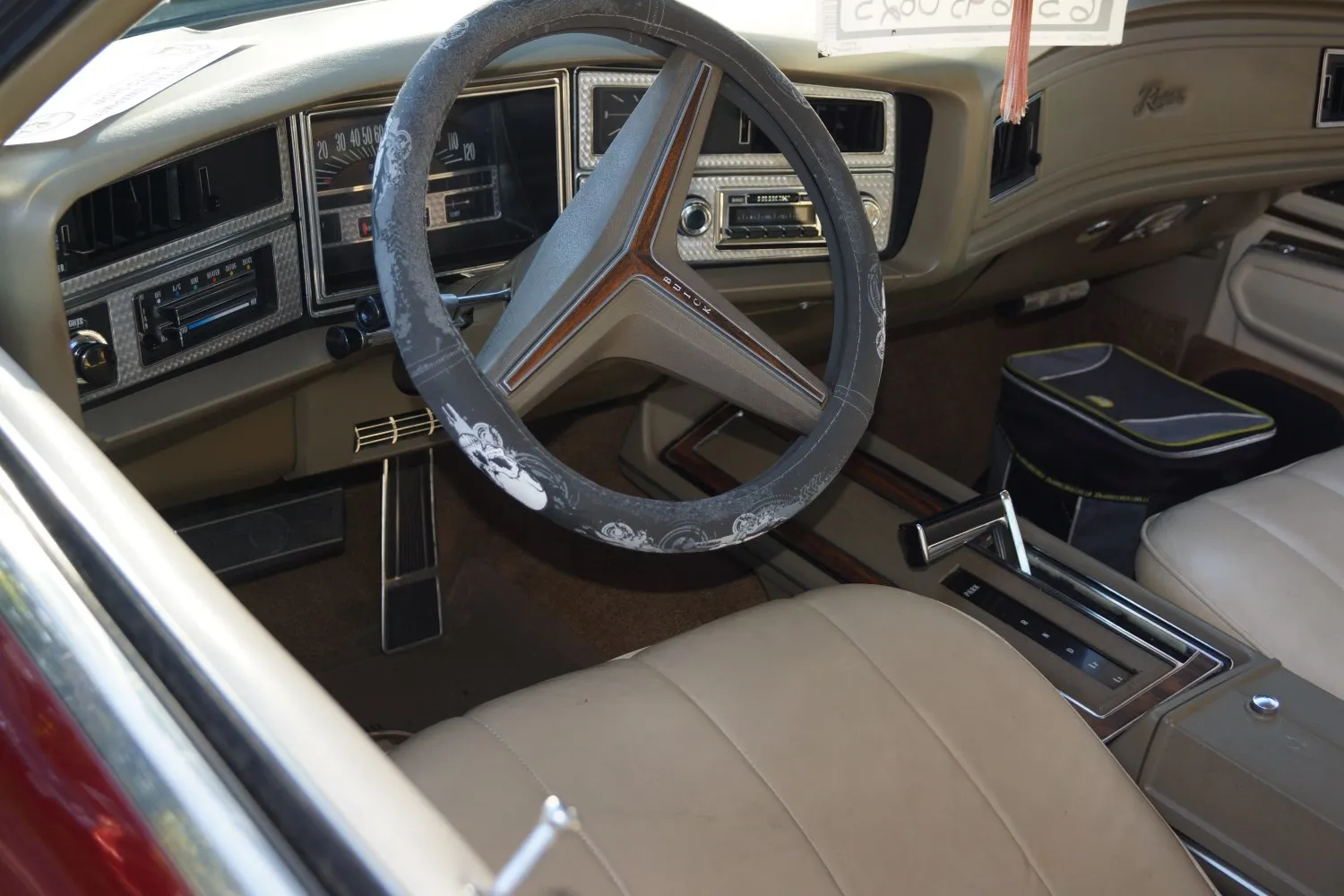
- • Exceptional ride comfort and spacious interior
- • Strong classic car appeal and presence
- • Smooth automatic transmission (though manual was an option, less common)
Cons:
- • Very poor fuel economy
- • Large dimensions make it challenging to maneuver and park
- • Soft suspension leads to significant body roll in corners
- • Braking performance is adequate but not modern
- • Limited modern safety features
Specifications:
Specifications are compared to those of the previous generation(II: 1966 - 1969).
| General: | |
|---|---|
| Brand: | Buick |
| Model: | Riviera |
| Generation: | III |
| Modification (Engine): | 7.5 (250 Hp) |
| Start of production: | 1971 |
| End of production: | 1973 |
| Powertrain Architecture: | Internal Combustion engine |
| Body type: | Coupe |
| Seats: | 4 |
| Doors: | 2 |
| Engine: | |
|---|---|
| Power: | 250 Hp @ 4000 rpm. Same horsepower |
| Power per litre: | 33.5 Hp/l [78mm more] |
| Torque: | 508 Nm @ 2800 rpm. |
| Engine displacement: | 7458 |
| Number of cylinders: | 8 |
| Engine configuration: | V-engine |
| Number of valves per cylinder: | 2 |
| Engine aspiration: | Naturally aspirated engine |
| Engine layout: | Front, Longitudinal |
| Cylinder Bore: | 109.5 mm mm |
| Piston Stroke: | 99 mm mm |
| Compression ratio: | 8.5:1 |
| Performance: | |
|---|---|
| Fuel Type: | Petrol (Gasoline) |
| Maximum speed: | 173 km/h |
| Weight-to-power ratio: | 8.2 kg/Hp, 122.4 Hp/tonne |
| Weight-to-torque ratio: | 4 kg/Nm, 248.8 Nm/tonne |
| Space: | |
|---|---|
| Kerb Weight: | 2042 |
| Size: | |
|---|---|
| Length: | 5545 mm mm [78mm more] |
| Width: | 2032 mm mm [30mm more] |
| Height: | 1372 mm mm [16mm more] |
| Wheelbase: | 3096 mm mm [73mm more] |
| Front track: | 1615 mm |
| Rear (Back) track: | 1626 mm |
| Powertrain: | |
|---|---|
| Drivetrain Architecture | The Internal combustion engine (ICE) drives the rear wheels of the vehicle. |
| Drive wheel | Rear wheel drive |
| Number of gears | 5 |
| Transmission type | Manual |
| Front brakes | Disc [bad for performance and cooling.] |
| Rear brakes | Drum [bad for performance and cooling.] |







What’s the best feature of the Buick Riviera? Tell us in the comments!