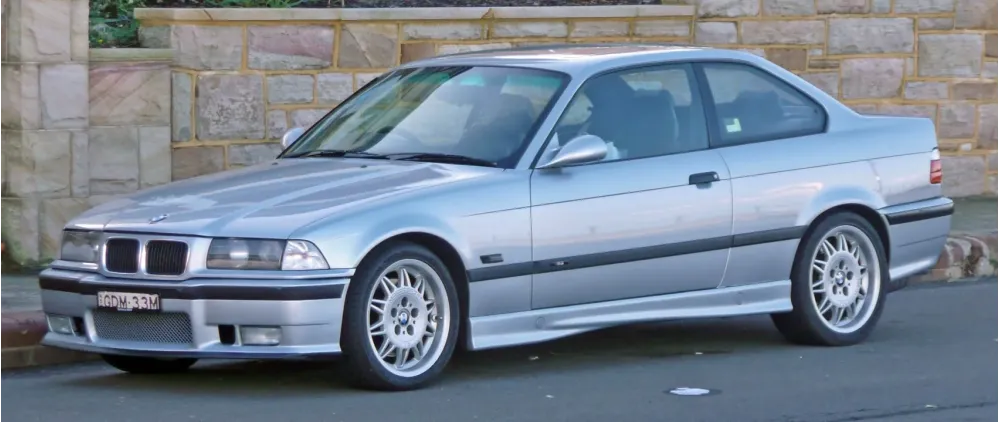
Click on image to view the full photo gallery
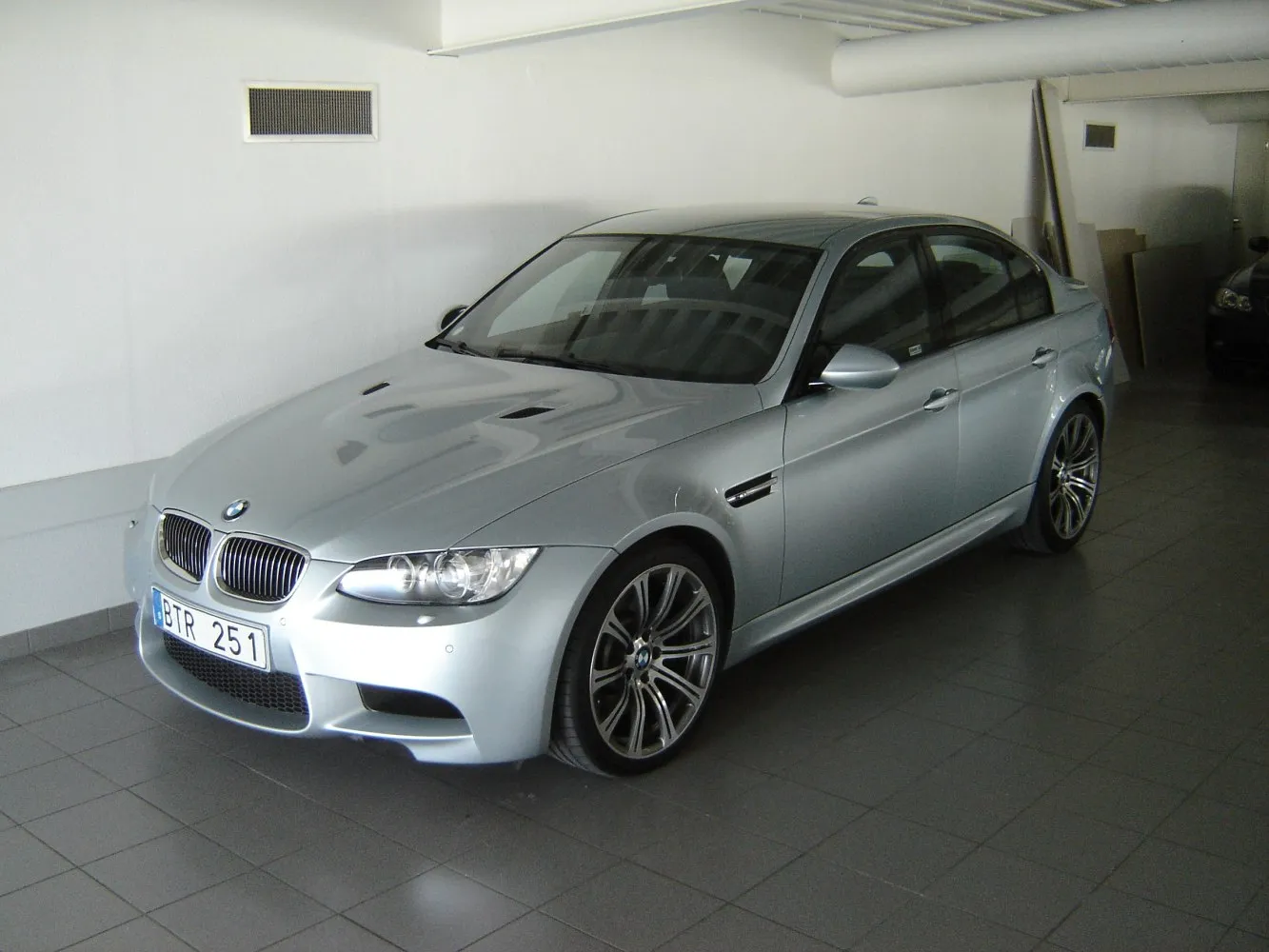
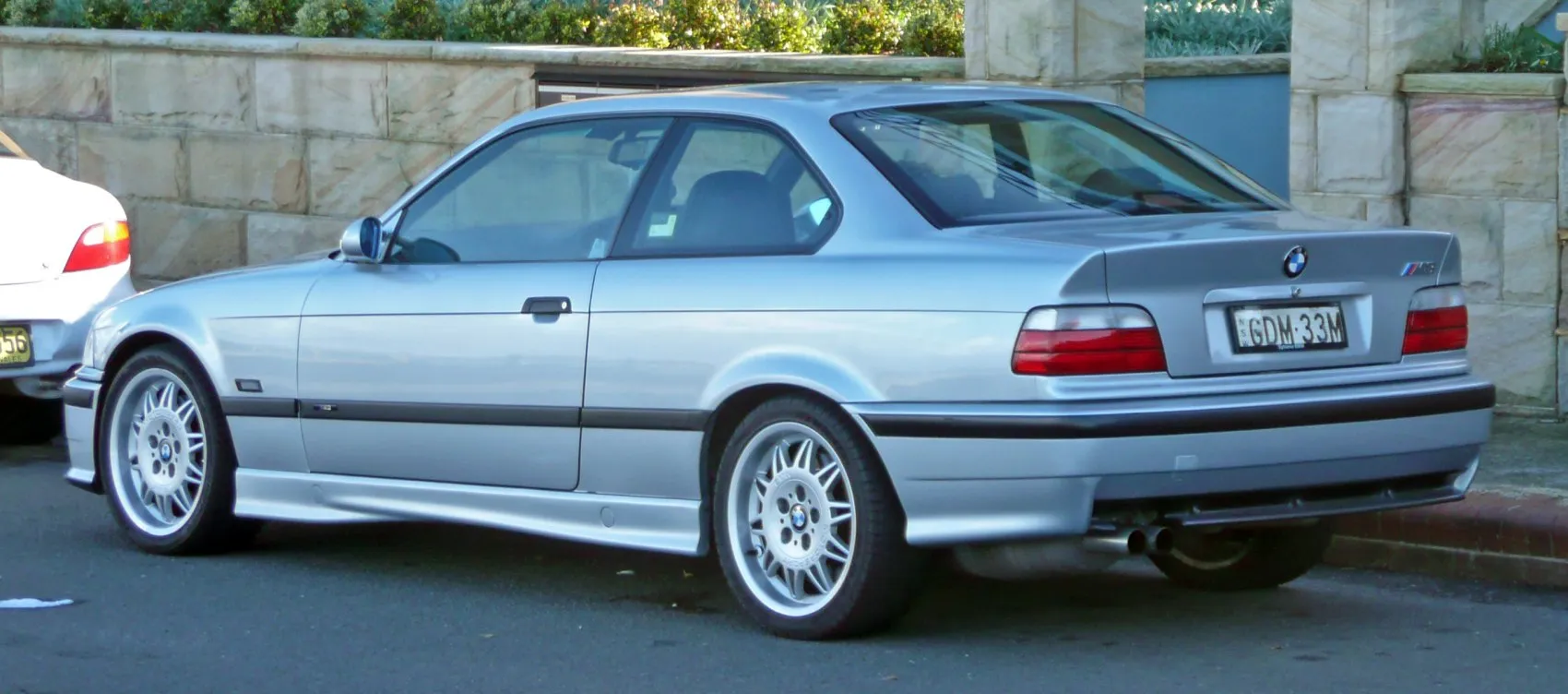
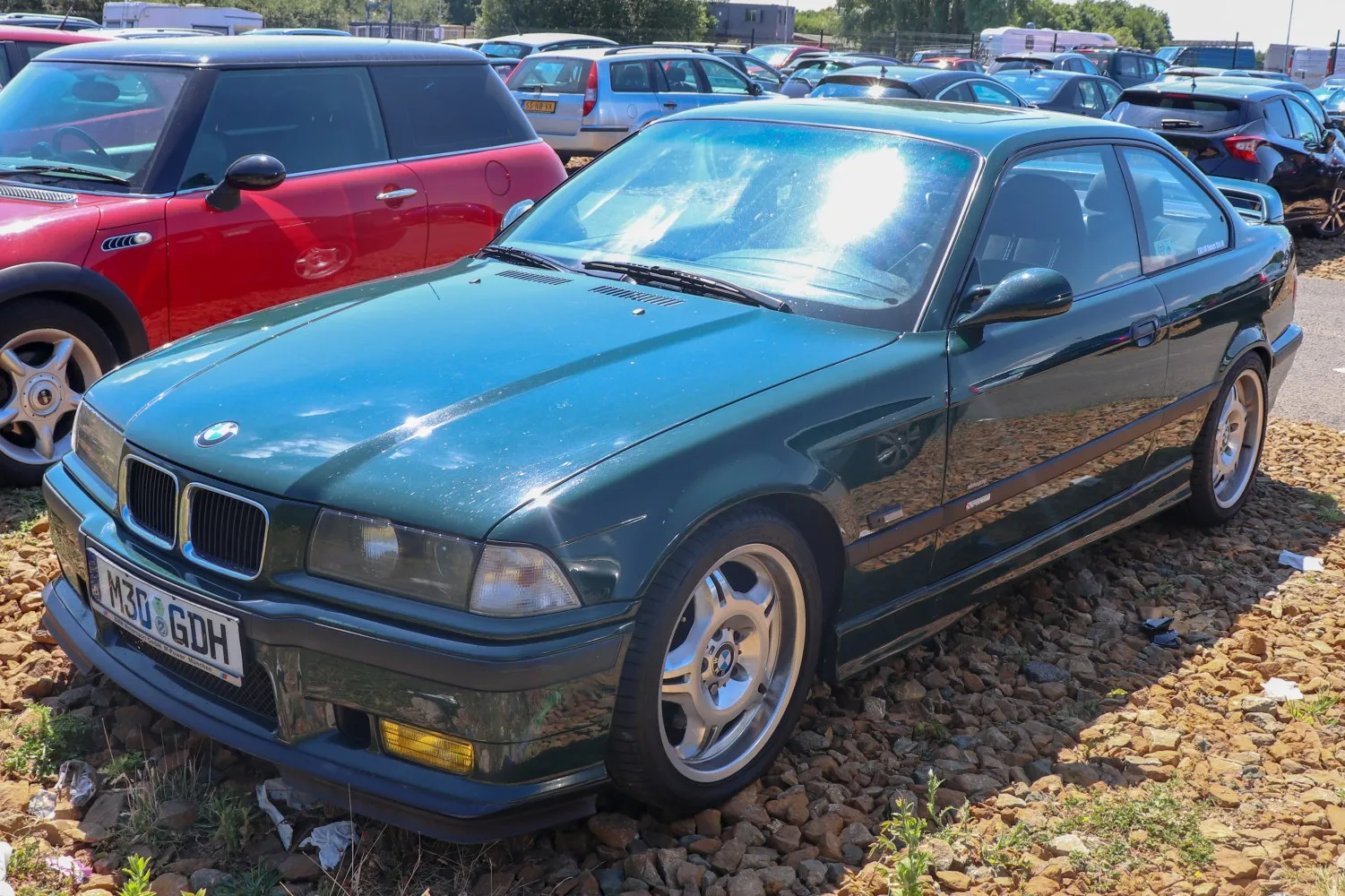
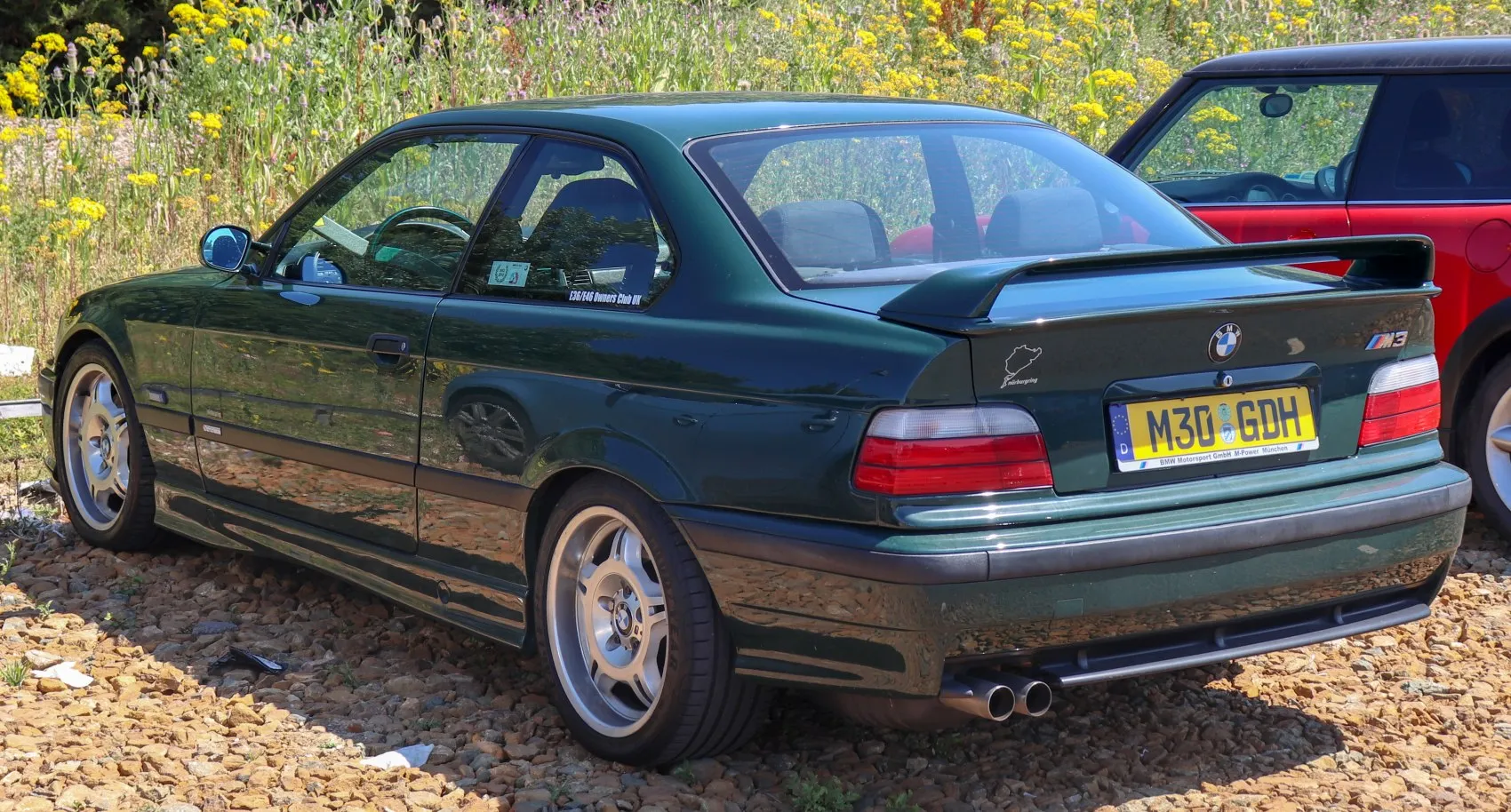
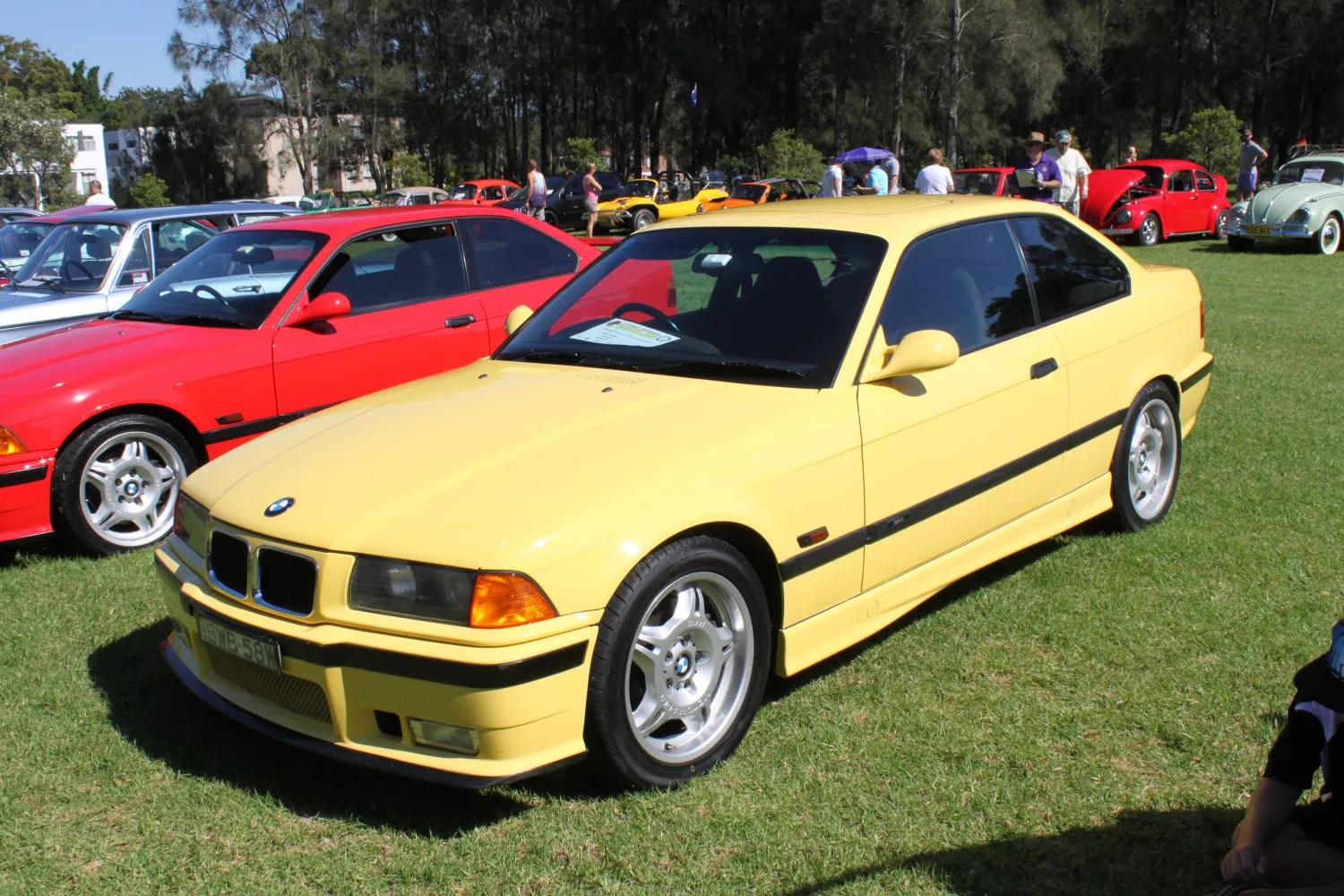
BMW M3 Coupe (E36) 3.2 (321 Hp)
Overall Rating
BMW M3:
The BMW M3 is a high-performance version of the BMW 3 Series, developed by BMW's in-house motorsport division, BMW M GmbH. M3 models have been produced for every generation of 3 Series since the E30 M3 was introduced in 1986.
The initial model was available in a coupé body style, with a convertible body style made available soon after. M3 saloons were offered initially during the E36 and E90 generations. Since 2014, the coupé and convertible models have been rebranded as the 4 Series range, making the high-performance variant the M4. Variants of the 3 Series since then have seen the M3 produced as a saloon, until 2020, when the M3 was produced as an estate for the first time, alongside the saloon variant....(Read more on Wikipedia)
Coupe (E36) Overview:
BMW M3 (Coupe (E36)). With 350 Nm of torque, it offers ample pulling power. With a weight of 1460 kg, it falls in the mid‑range. Rear‑wheel drive offers dynamic handling and sporty feedback. Acceleration is excellent (0–100 km/h in 5.5 s). The top speed reaches 250 km/h. A two-door car with a fixed roof, known for its sporty design and dynamic performance. Seating for 5 makes it ideal for daily use.
3.2 (321 Hp) Verdict:

Performance Verdict
The S50B32 engine in the 3.2 'Evo' is the pinnacle of E36 M3 performance. With 321 Hp and a higher redline, it offers blistering acceleration and an even more aggressive power delivery, making it a true driver's car.
Fuel Economy
As the most powerful variant, its fuel consumption is higher at 11 l/100 km combined. This is a trade-off for its superior performance.
Pros and Cons:
Pros:
- • Exceptional handling and chassis balance
- • Legendary high-revving inline-six engines
- • Timeless, understated design
- • Engaging manual transmission options
- • Strong aftermarket support
- • Becoming a highly collectible classic
Cons:
- • Maintenance can be costly due to age and M-specific parts
- • Fuel consumption can be high during spirited driving
- • Lack of modern safety features and driver aids
- • Interior plastics can show wear over time
- • Rust can be an issue on neglected examples
Specifications:
Specifications are compared to those of the previous generation(E36: 1994 - 1996).
| General: | |
|---|---|
| Brand: | BMW |
| Model: | M3 |
| Generation: | Coupe (E36) |
| Modification (Engine): | 3.2 (321 Hp) |
| Start of production: | 1995 |
| End of production: | 1999 |
| Powertrain Architecture: | Internal Combustion engine |
| Body type: | Coupe |
| Seats: | 5 |
| Doors: | 2 |
| Engine: | |
|---|---|
| Power: | 321 Hp @ 7400 rpm. Same horsepower |
| Power per litre: | 100.3 Hp/l [1mm more] |
| Torque: | 350 Nm @ 3250 rpm. |
| Engine Model/Code: | S50B32 More details about the engine S50B32 |
| Engine displacement: | 3201 |
| Number of cylinders: | 6 |
| Engine configuration: | Inline |
| Number of valves per cylinder: | 4 |
| Fuel injection system: | Multi-port manifold injection |
| Engine aspiration: | Naturally aspirated engine |
| Valvetrain: | DOHC |
| Engine oil capacity: | 5.5 l |
| Coolant: | 10.8 l |
| Engine layout: | Front, Longitudinal |
| Cylinder Bore: | 86.4 mm mm |
| Piston Stroke: | 91 mm mm |
| Compression ratio: | 11.3:1 |
| Performance: | |
|---|---|
| Fuel Type: | Petrol (Gasoline) |
| Fuel consumption (economy) - urban: | 16.9 l/100 km |
| Fuel consumption (economy) - extra urban: | 7.5 l/100 km |
| Fuel consumption (economy) - combined: | 11 l/100 km |
| Acceleration 0 - 100 km/h: | 5.5 sec |
| Acceleration 0 - 62 mph: | 5.5 sec |
| Maximum speed: | 250 km/h |
| Weight-to-power ratio: | 4.5 kg/Hp, 219.9 Hp/tonne |
| Weight-to-torque ratio: | 4.2 kg/Nm, 239.7 Nm/tonne |
| Acceleration 0 - 60 mph: | 5.2 sec |
| Space: | |
|---|---|
| Kerb Weight: | 1460 |
| Max. weight: | 1950 |
| Max load: | 490 |
| Trunk (boot) space - minimum: | 405 l |
| Fuel tank capacity: | 62 l |
| Size: | |
|---|---|
| Length: | 4433 mm mm [1mm more] |
| Width: | 1710 mm mm [11mm more] |
| Height: | 1335 mm mm [29mm less] |
| Wheelbase: | 2700 mm mm [10mm less] |
| Front track: | 1422 mm |
| Rear (Back) track: | 1444 mm |
| Ride height (ground clearance): | 110 mm |
| Minimum turning circle (turning diameter): | 10.7 m [above average] |
| Powertrain: | |
|---|---|
| Drivetrain Architecture | The Internal combustion engine (ICE) drives the rear wheels of the vehicle. |
| Drive wheel | Rear wheel drive |
| Number of gears | 6 |
| Transmission type | Manual |
| Front brakes | Ventilated discs [Best for performance and cooling.] |
| Rear brakes | Ventilated discs [Best for performance and cooling.] |
| Assisting systems | ABS (Anti-lock braking system) |
| Steering type | Steering rack and pinion |
| Power steering | Hydraulic Steering |
| Tires size | 225/45 R17; 245/40 R17 |
| Wheel rims size | 17 |
| Front suspension | Wishbone |
| Rear suspension | Coil spring |









Help others decide – share your experience!