BAIC Senova D50 I 1.5i (113 Hp) CVT
People\'s Opinion
N/A / 5
BAIC Senova D50:
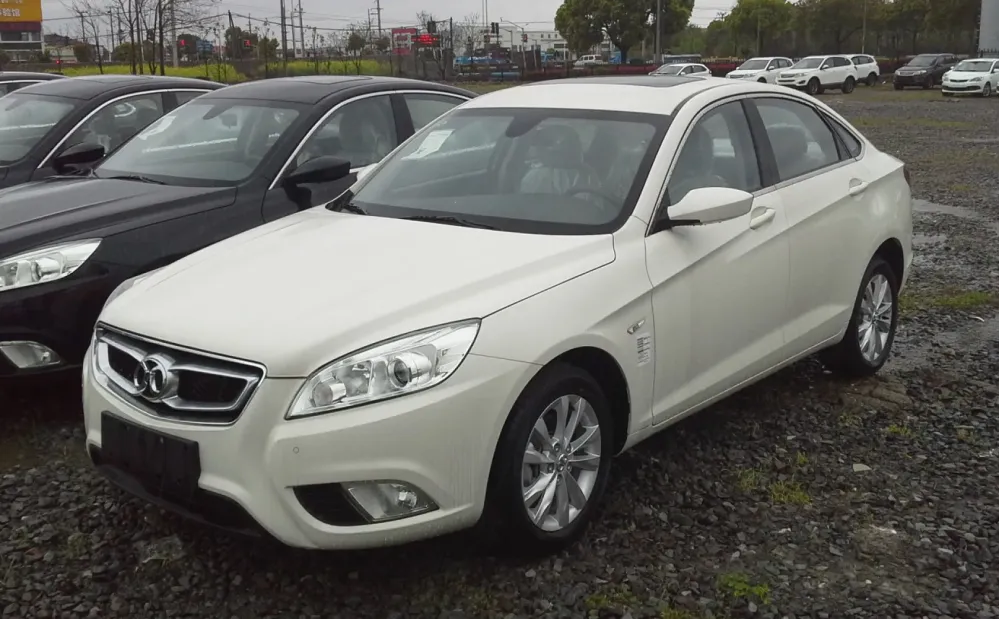
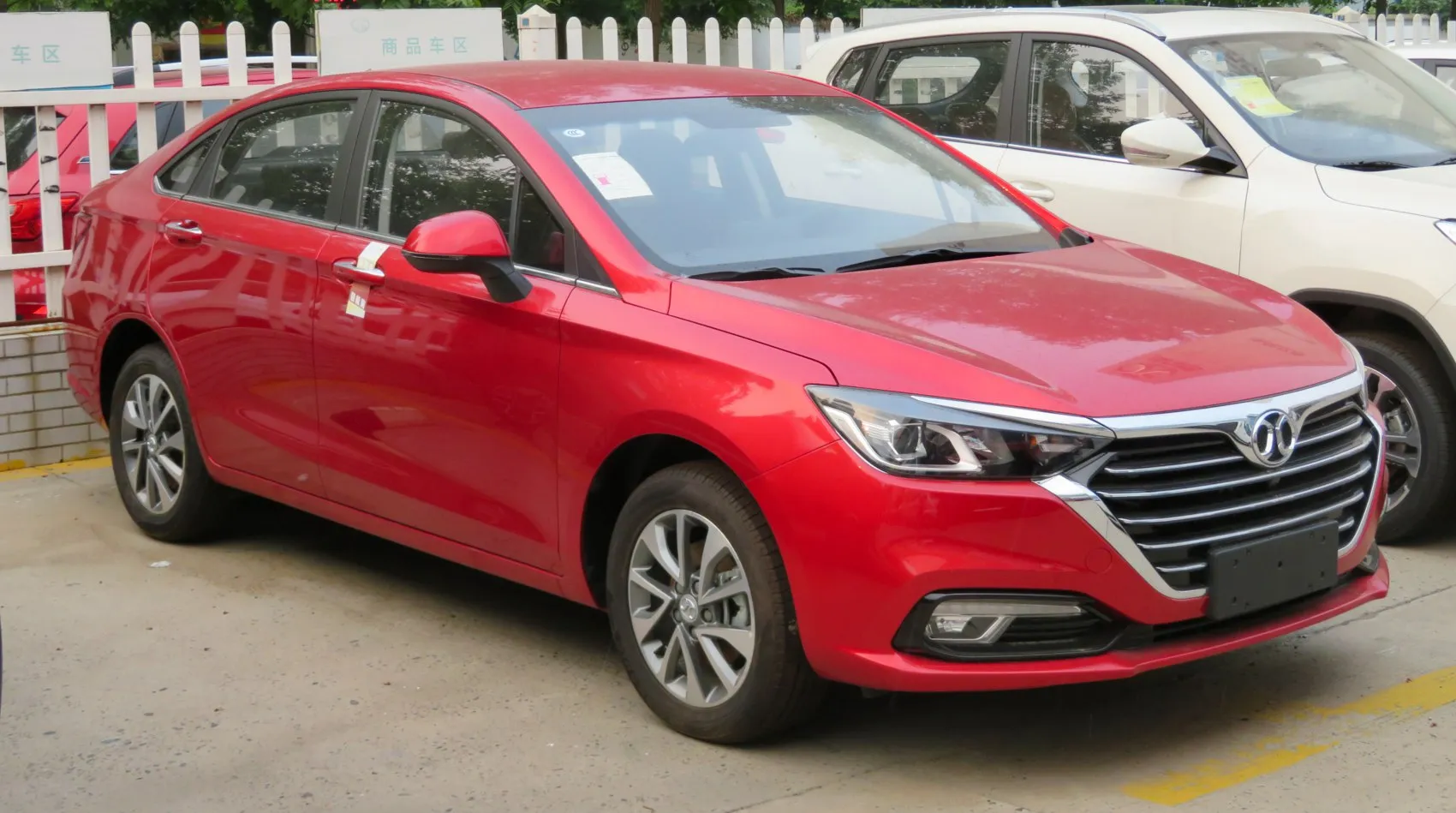
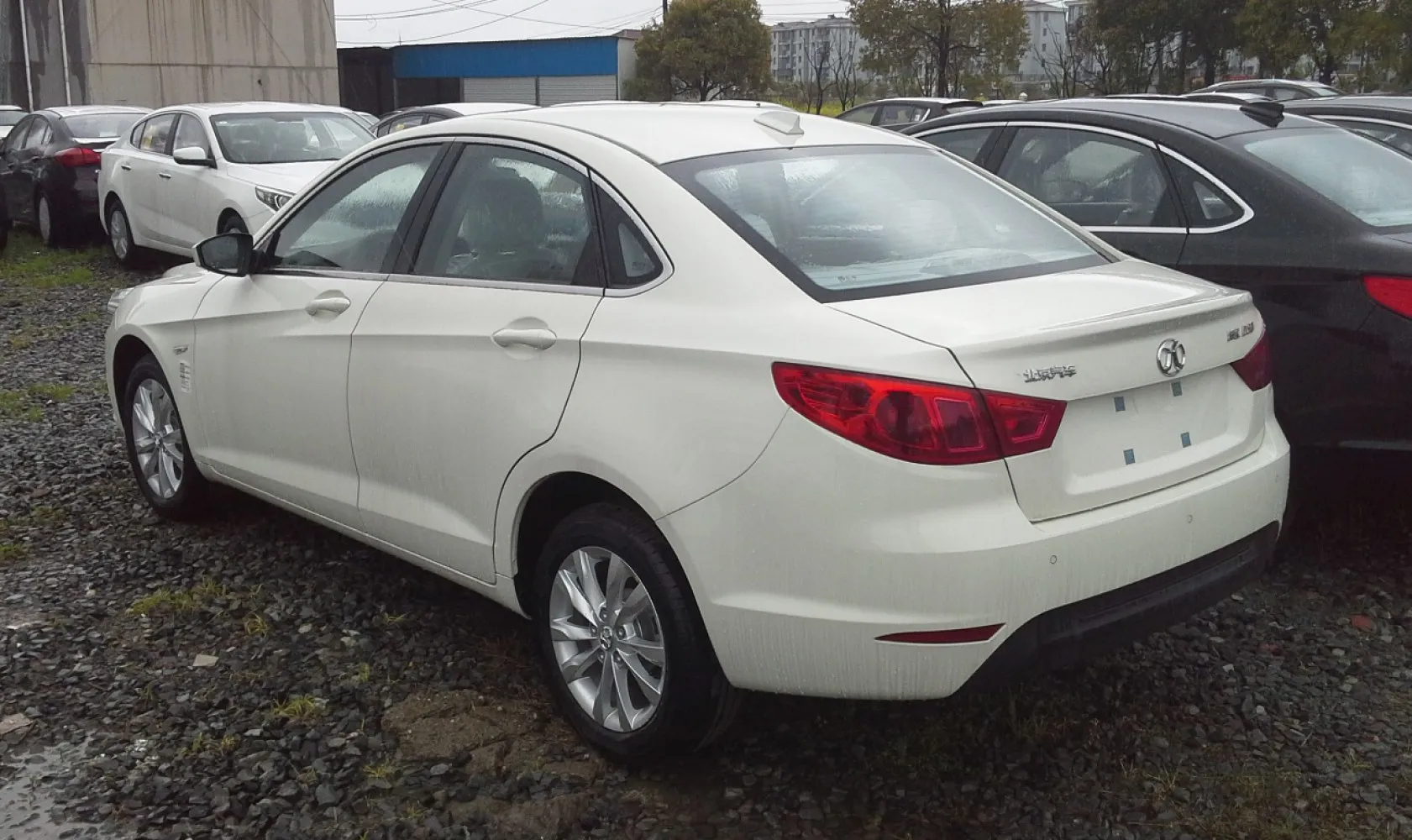
The Beijing U5 or previously the Senova D50 is a compact sedan produced by BAIC under the Senova brand and later the Beijing brand. The electric version is called the EU5, and was branded as the BJEV or BAIC EU5 before being rebadged as the Beijing EU5. The U5 and EU5 both received a facelift in 2021 and was renamed to U5 plus and EU5 Plus sold under the Beijing brand.
Originally unveiled as the Beijing Auto C50E, the first generation Senova D50 debuted on the 2014 Beijing Auto Show, and was launched on to the China car market in H2 2014. The C50E was planned to be sold under the Senova brand name with the original designation being D150. Prices of the D50 starts from 74,800 yuan to 119,800 yuan. The D50 is powered by a Mitsubishi-sourced 1. 5-litre petrol engine produced by Shenyang Mitsubishi with 163 hp and 225 N⋅m. The engine is mated to a 5-speed manual gearbox or CVT....(Read more on Wikipedia)
I Overview:
BAIC Senova D50 (I). With 147 Nm of torque, it offers ample pulling power. It has moderate fuel consumption (~9.4 l/100km). With a weight of 1321 kg, it falls in the mid‑range. Front‑wheel drive delivers efficiency and easy handling. A four-door car with a separate trunk, ideal for families and daily commuting. Seating for 5 makes it ideal for daily use.
Performance Verdict
Offers adequate performance for daily city driving, though acceleration might feel sluggish on highways due to the CVT's characteristic power delivery.
Fuel Economy
The CVT helps maintain reasonable fuel economy for its class, especially in mixed driving conditions, making it a practical choice.
Best Use Case:
City / Commuting
Pros and Cons:
Pros:
- • Affordable entry price point
- • Spacious interior for its class
- • Decent fuel economy for urban driving
- • Simple and reliable powertrain (4A91A engine)
Cons:
- • Uninspired performance and handling
- • Basic interior materials and finish
- • Limited safety features compared to international rivals
- • Lack of brand recognition outside China
Specifications:
| General: |
| Brand: | BAIC |
|---|
| Model: | Senova D50 |
|---|
| Generation: | I |
|---|
| Modification (Engine): | 1.5i (113 Hp) CVT |
|---|
| Start of production: | April, 2014 |
|---|
| End of production: | November, 2017 |
|---|
| Powertrain Architecture: | Internal Combustion engine |
|---|
| Body type: | Sedan |
|---|
| Seats: | 5 |
|---|
| Doors: | 4 |
|---|
| Engine: |
| Power: | 113 Hp @ 6000 rpm. |
|---|
| Power per litre: | 75.4 Hp/l |
|---|
| Torque: | 147 Nm @ 4000 rpm. |
|---|
| Engine Model/Code: | 4A91A |
|---|
| Engine displacement: | 1499 |
|---|
| Number of cylinders: | 4 |
|---|
| Engine configuration: | Inline |
|---|
| Number of valves per cylinder: | 4 |
|---|
| Fuel injection system: | Multi-port manifold injection |
|---|
| Engine aspiration: | Naturally aspirated engine |
|---|
| Performance: |
| Fuel Type: | Petrol (Gasoline) |
|---|
| Fuel consumption (economy) - urban: | 9.4 l/100 km |
|---|
| Fuel consumption (economy) - extra urban: | 6 l/100 km |
|---|
| Fuel consumption (economy) - combined: | 7.3 l/100 km |
|---|
| Emission standard: | China IV/China V |
|---|
| Weight-to-power ratio: | 11.7 kg/Hp, 85.5 Hp/tonne |
|---|
| Weight-to-torque ratio: | 9 kg/Nm, 111.3 Nm/tonne |
|---|
| Space: |
| Kerb Weight: | 1321 |
|---|
| Trunk (boot) space - minimum: | 405 l |
|---|
| Fuel tank capacity: | 55 l |
|---|
| Size: |
| Length: | 4582 mm mm |
|---|
| Width: | 1794 mm mm |
|---|
| Height: | 1486 mm mm |
|---|
| Wheelbase: | 2650 mm mm |
|---|
| Ride height (ground clearance): | 125 mm |
|---|
| Powertrain: |
| Drivetrain Architecture | The Internal combustion engine (ICE) drives the front wheels of the vehicle. |
|---|
| Drive wheel | Front wheel drive |
|---|
| Transmission type | Automatic |
|---|
| Gearbox type | CVT |
|---|
| Front brakes | Ventilated discs |
|---|
| Rear brakes | Disc |
|---|
| Assisting systems | ABS (Anti-lock braking system) |
|---|
| Tires size | 195/65 R15; 205/55 R16 |
|---|
| Wheel rims size | 15; 16 |
|---|
| Front suspension | Independent type McPherson |
|---|
| Rear suspension | Independent multi-link suspension |
|---|





If you could change one thing about the BAIC Senova D50, what would it be?